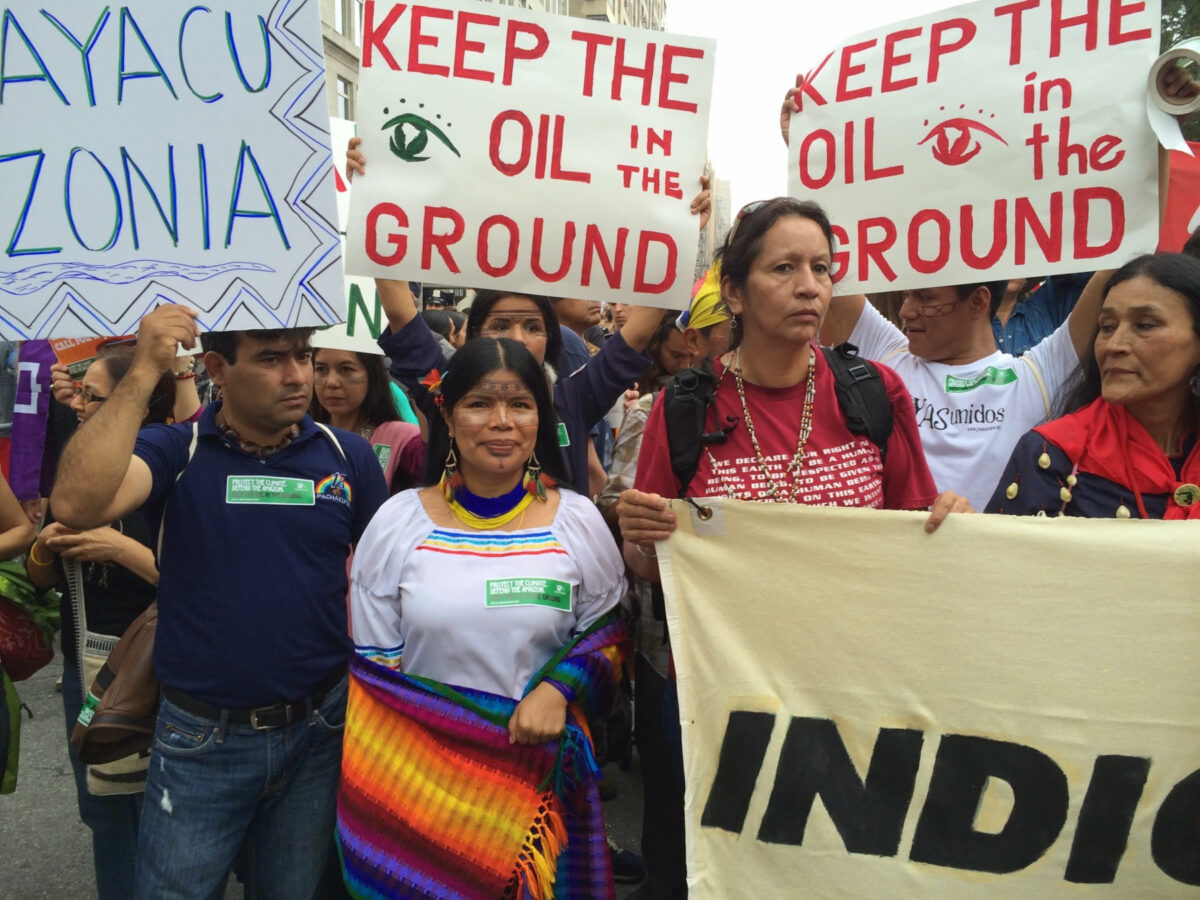
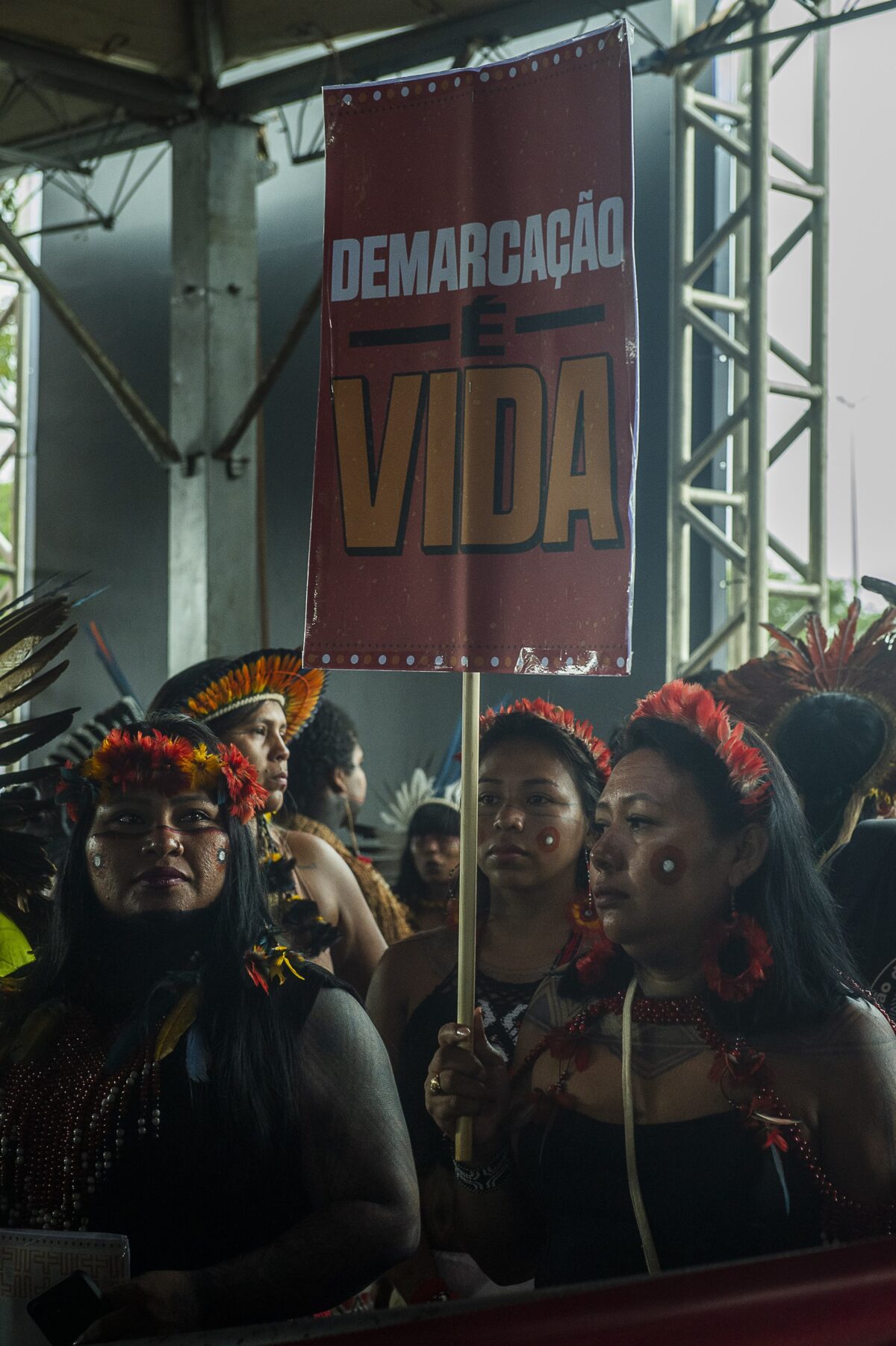
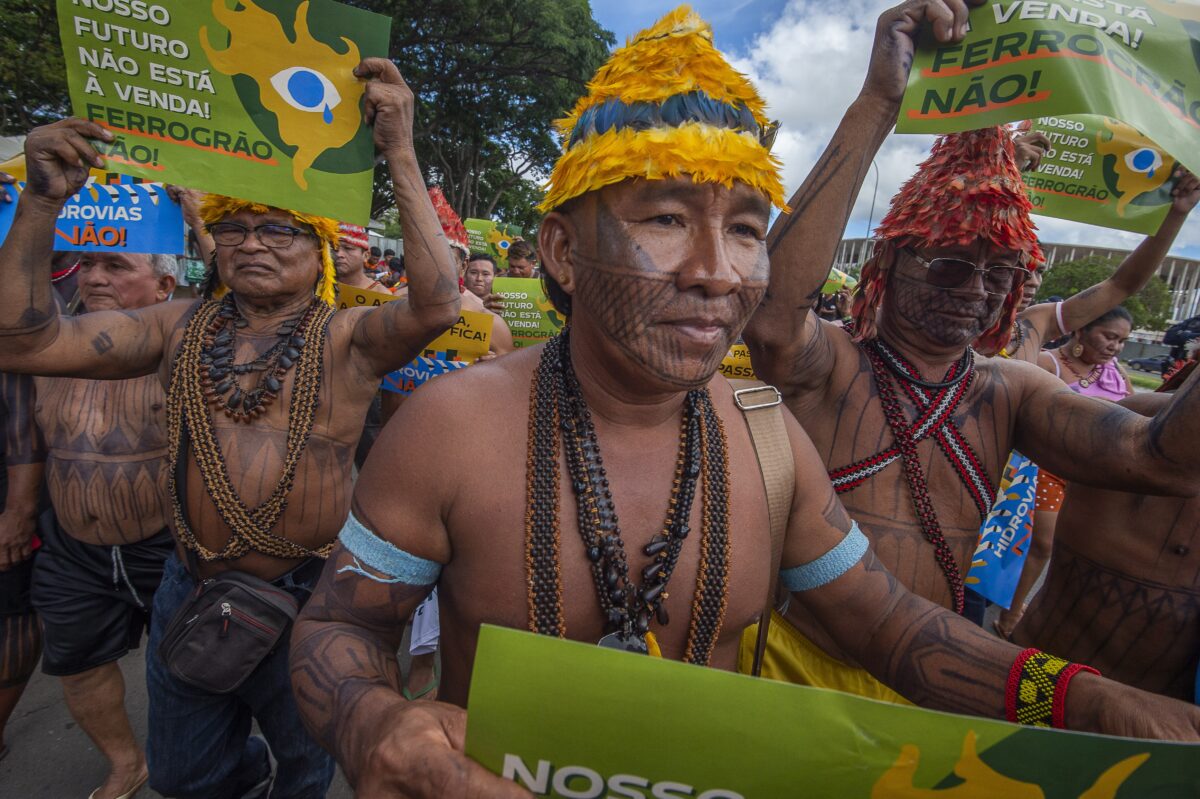
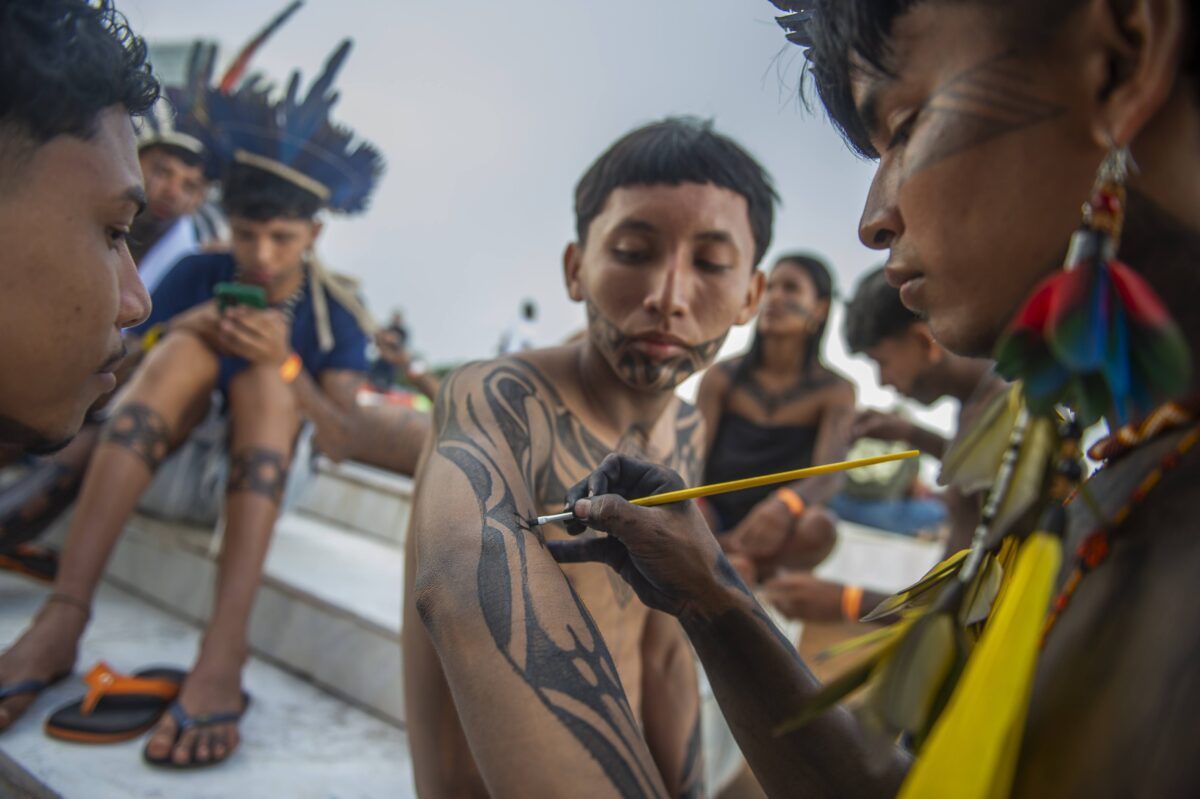
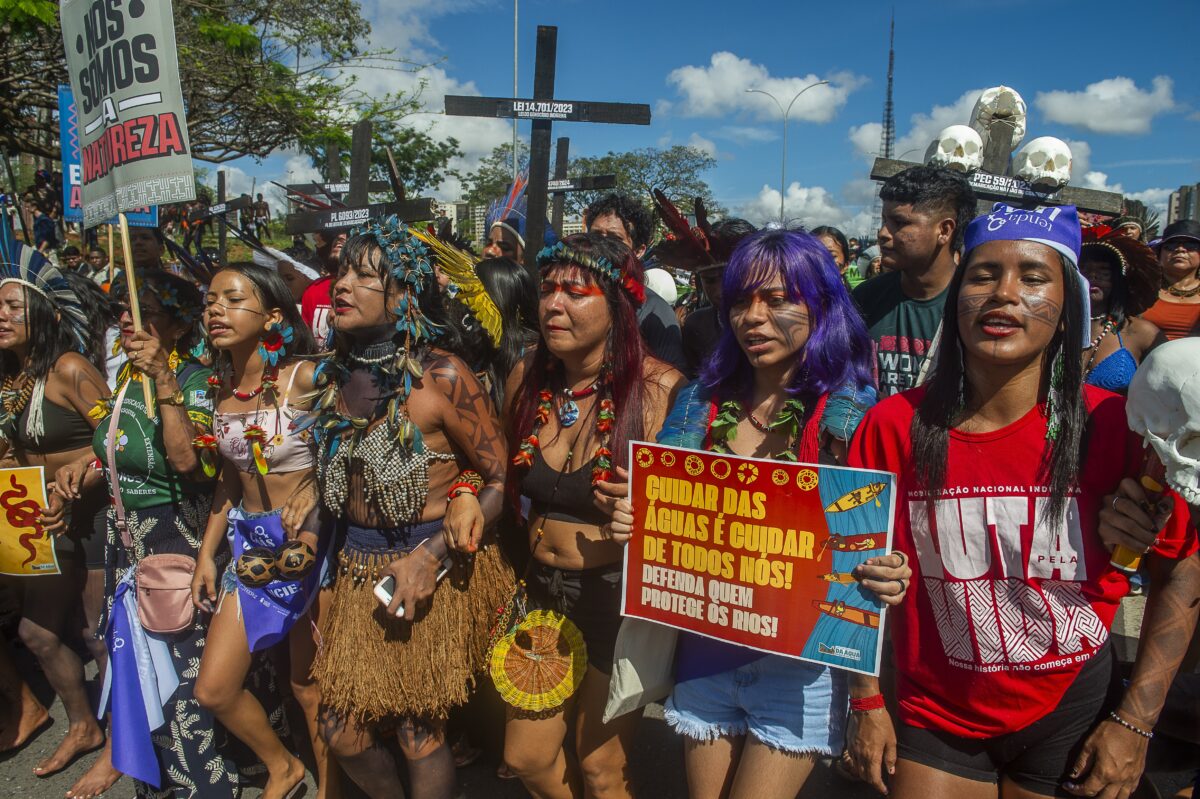
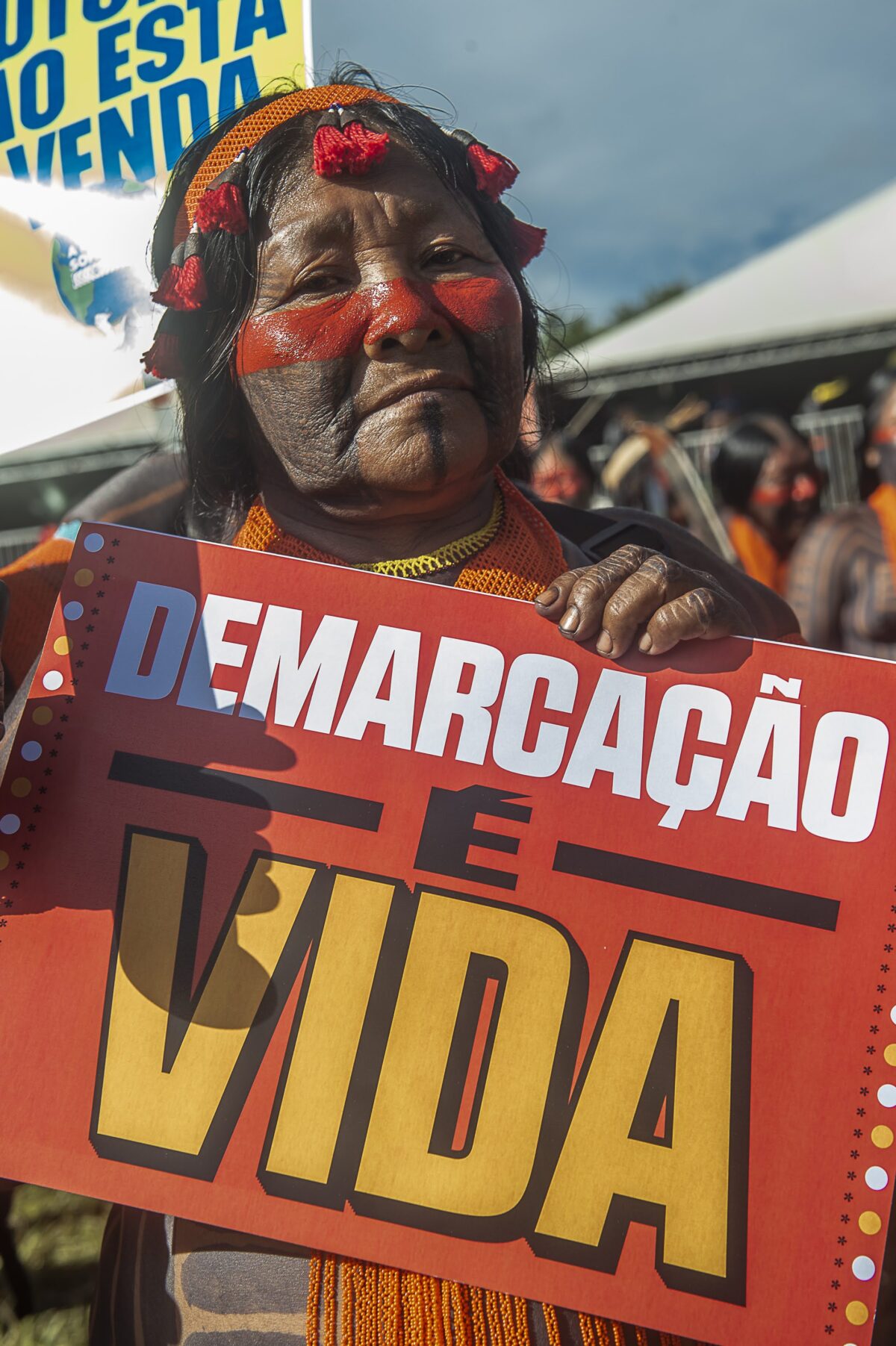
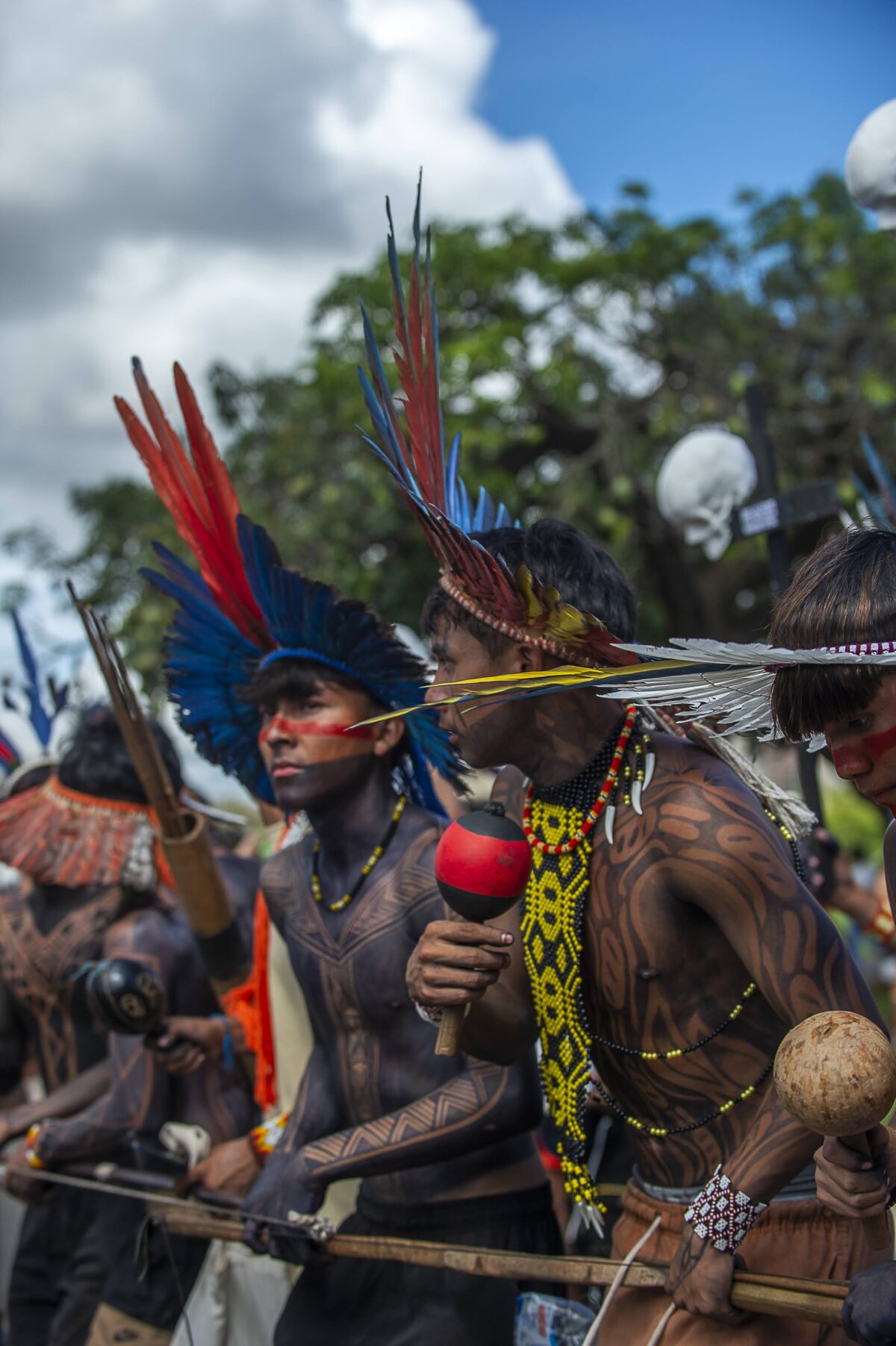
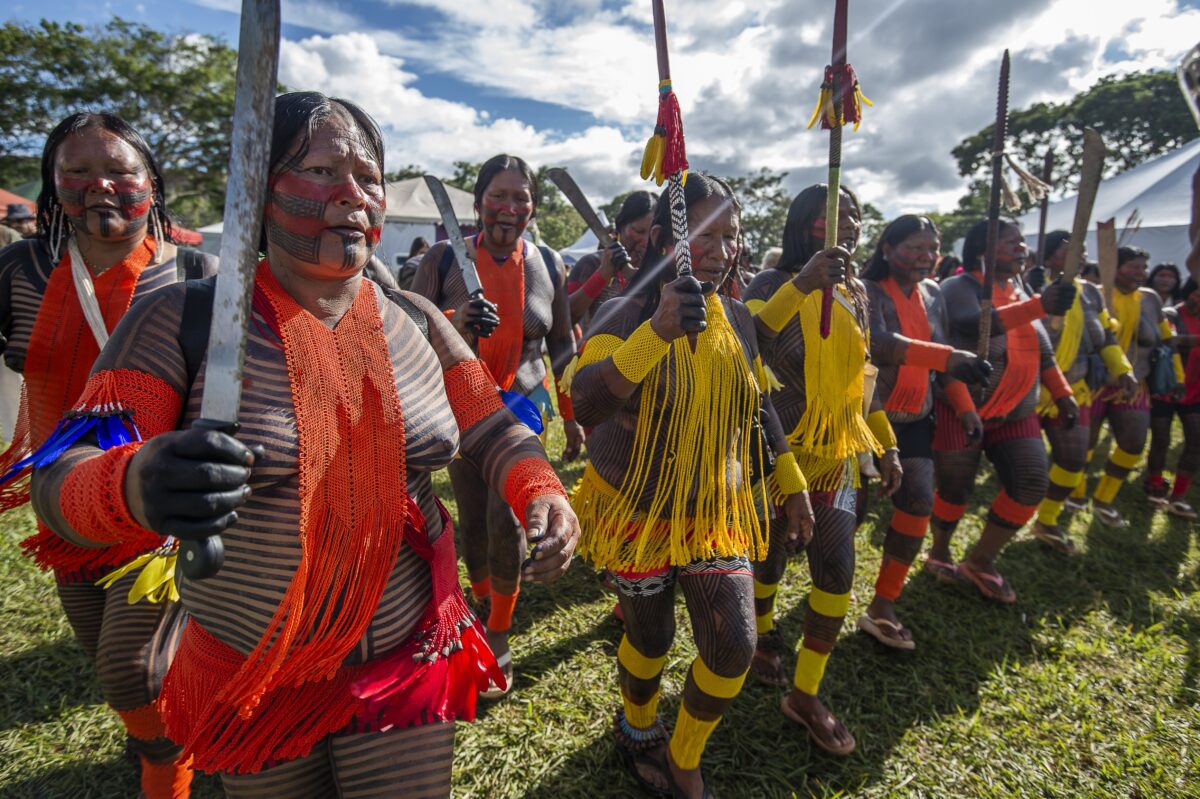
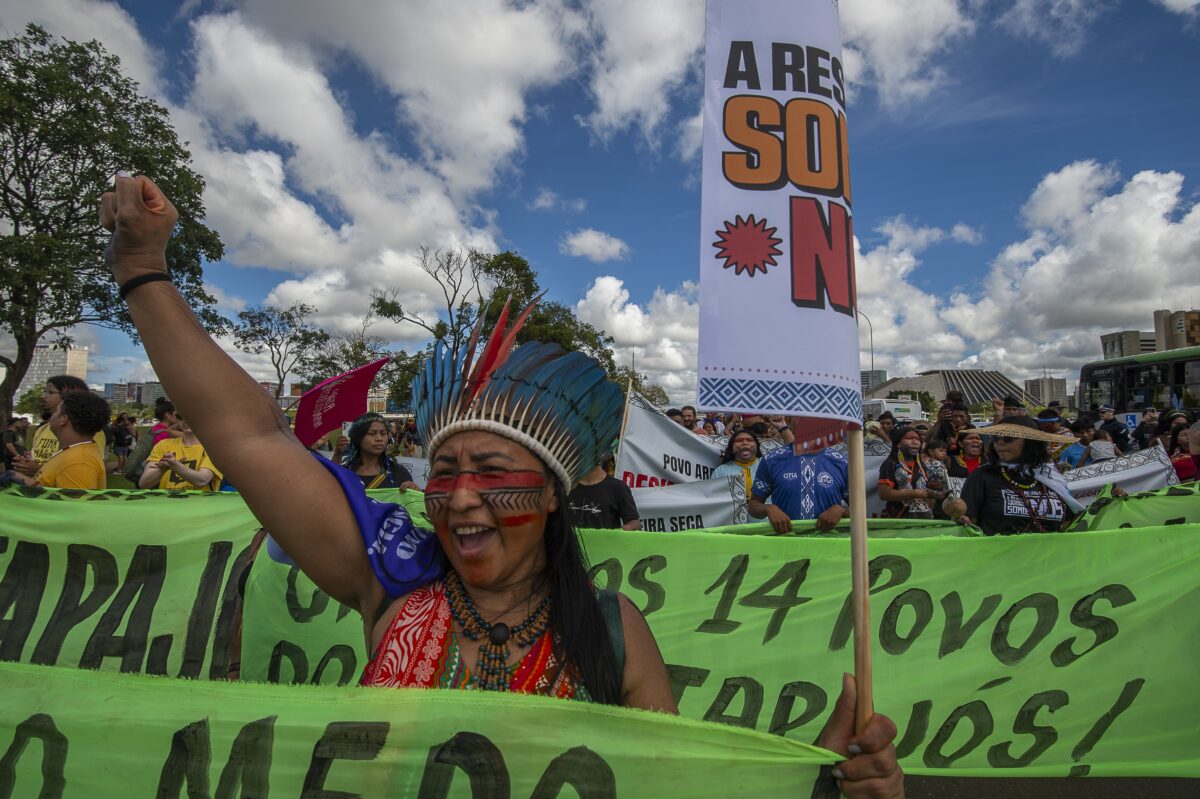
Last week, Brazil’s capital Brasília was transformed into a center of Indigenous resistance. With more than 7,000 Indigenous people occupying the capital, the 2026 Free Land Camp (ATL) pressured Brazil’s government to uphold native land rights while denouncing the predatory exploitation of agribusiness and mining projects that threaten their territories and futures.
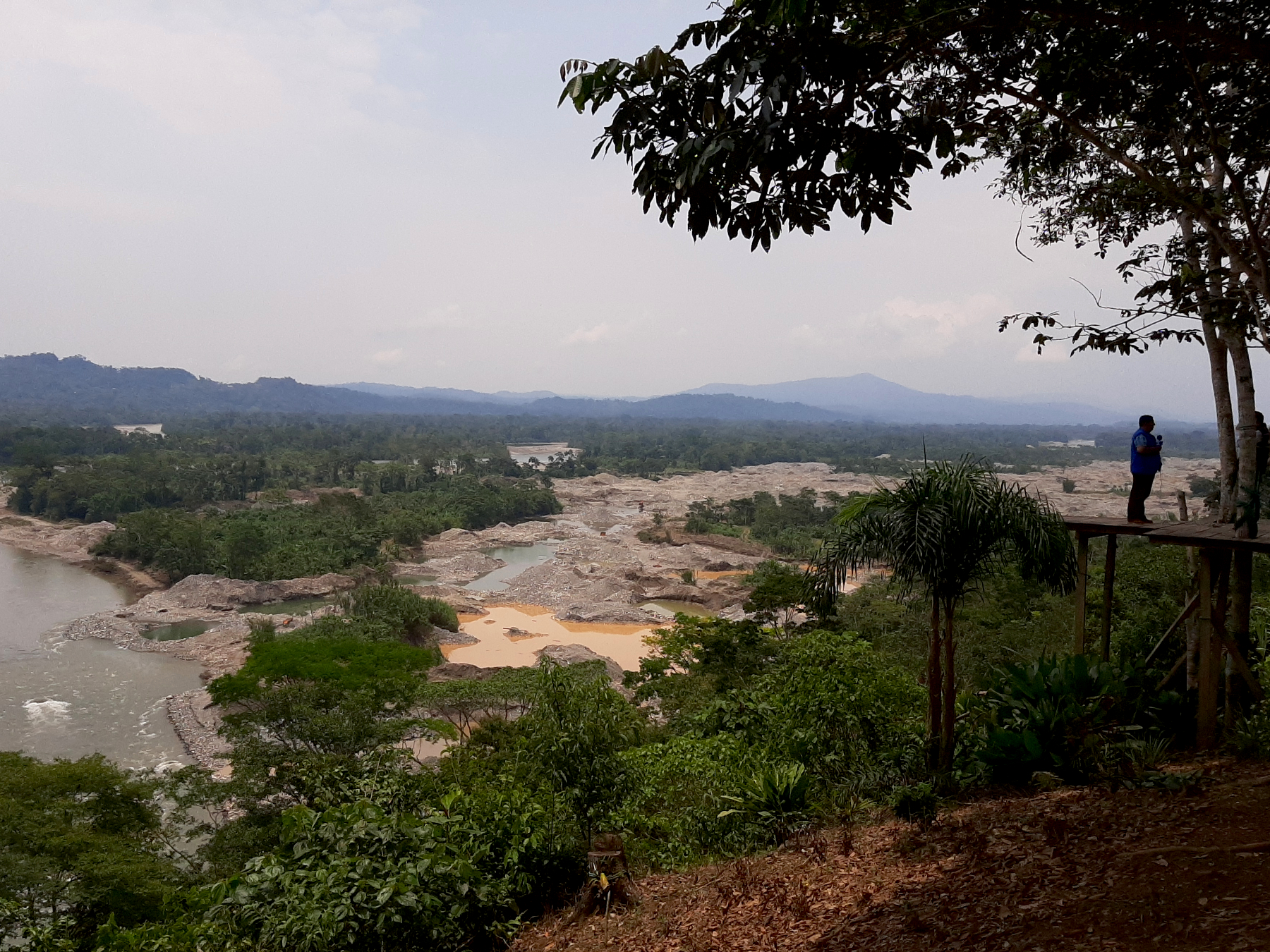
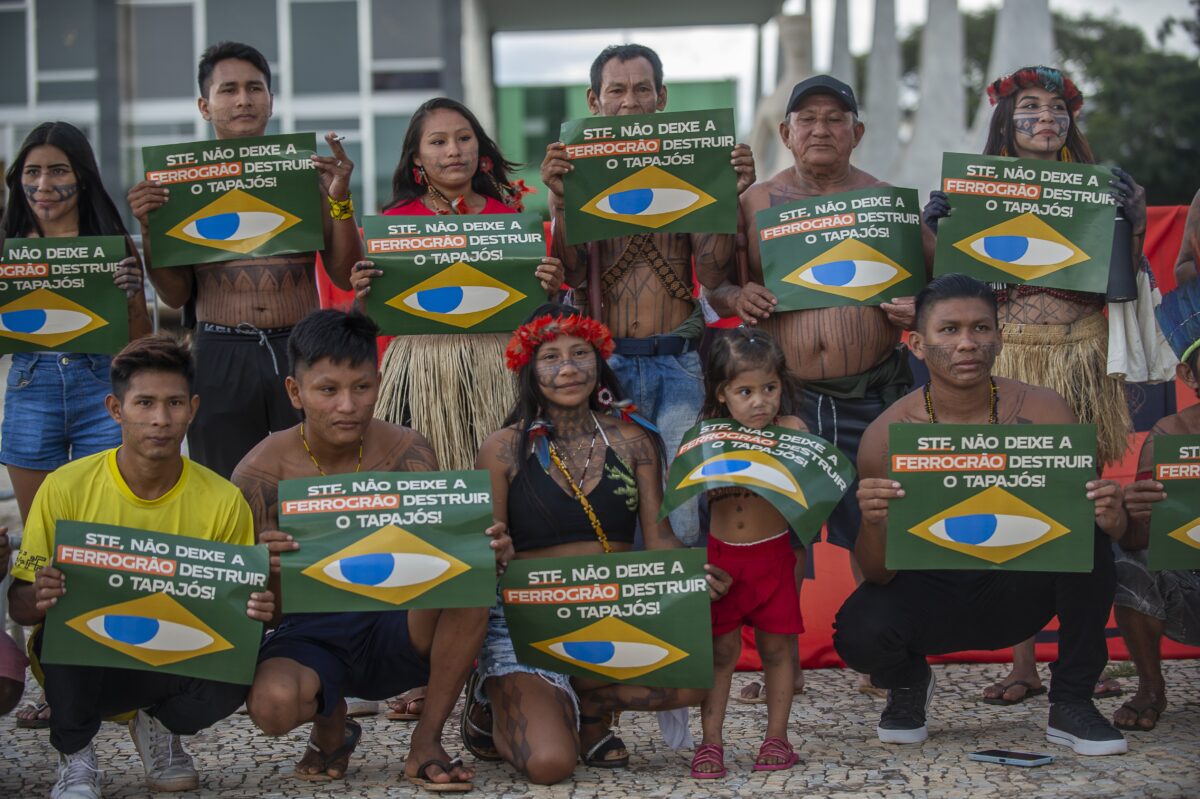
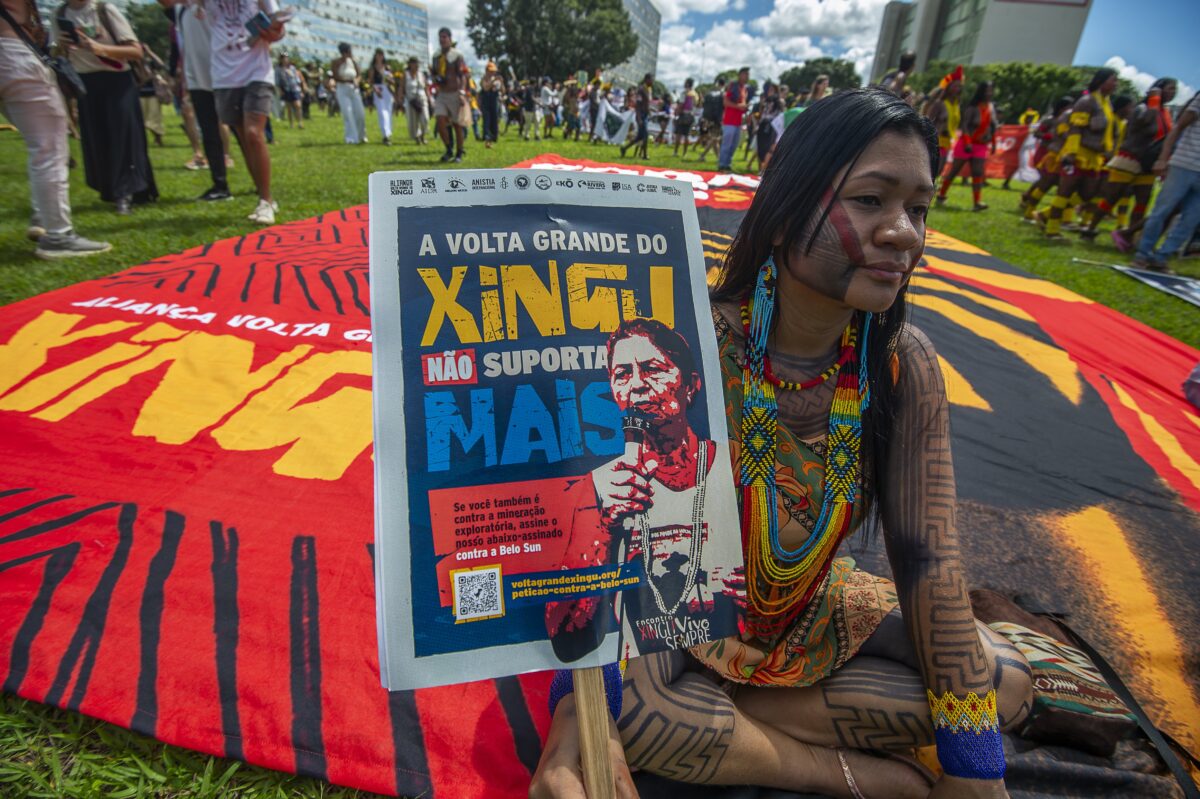
Two emblematic projects, the Ferrogrão mega-grain railway and Belo Sun’s massive gold mine on the Xingu River, became flashpoints for resistance during ATL. The Association of Brazil’s Indigenous Peoples (APIB) challenged the Supreme Court’s (STF) decision to rule on Ferrogrão, stressing that no future exists without consultation, land demarcation, and respect for Indigenous peoples’ constitutional rights. A delegation of Indigenous women from the Xingu marched through Brasília, demanding the cancellation of Belo Sun’s plans to carve Brazil’s largest open-pit gold mine into the heart of the Amazon, and denouncing the project’s many illegalities to government officials.
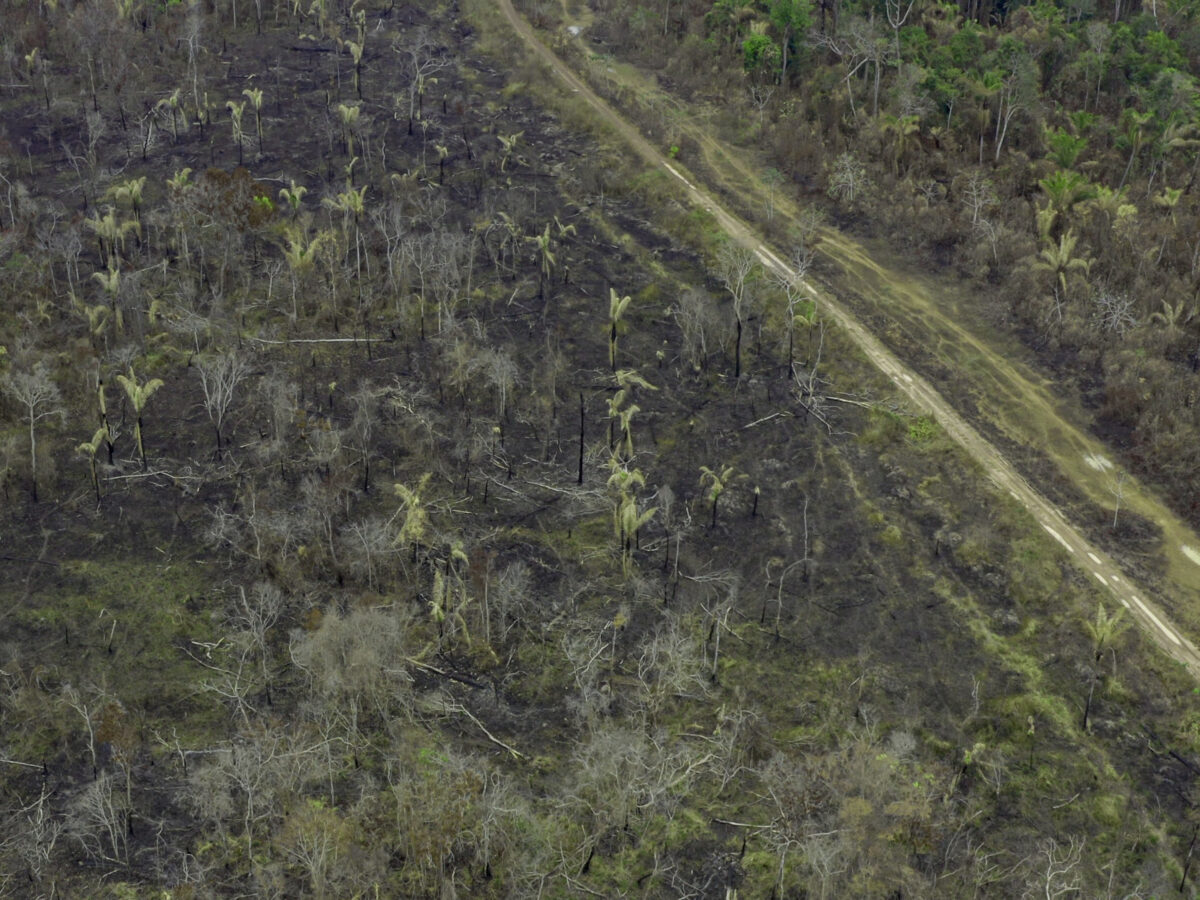
ATL was defined by sustained mobilization. Through marches, rallies, and seminars, Indigenous peoples called out Brazil’s Congress as “The Enemy of the People” – advancing legislation that assaults Indigenous rights in favor of industrial interests. Building on February’s historic Indigenous victory on the Tapajós, peoples from the Madeira, Tocantins, and Tapajós River basins joined forces to affirm a shared message: the so-called Northern Arc logistics corridor is not a set of isolated infrastructure projects but an imposed model of agrocommodity export expansion that imperils rivers, forests, and ways of life, with Ferrogrão as its cornerstone.
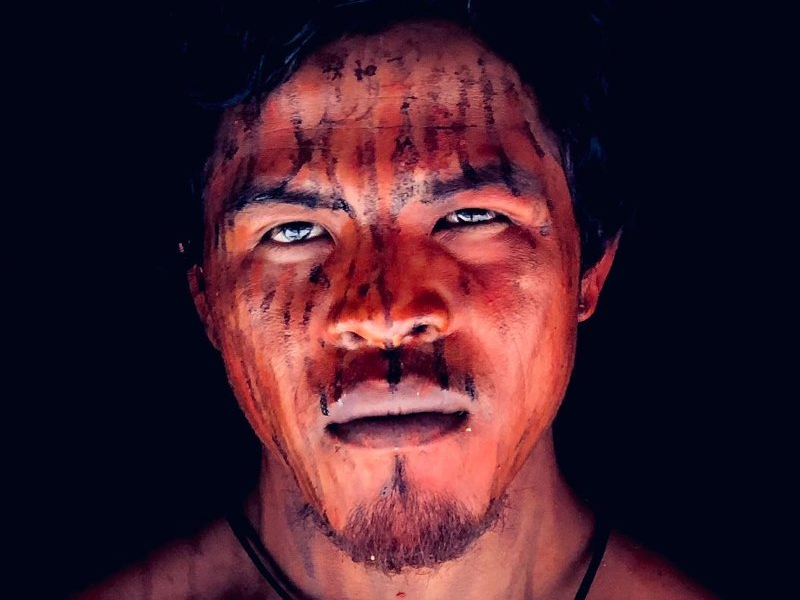
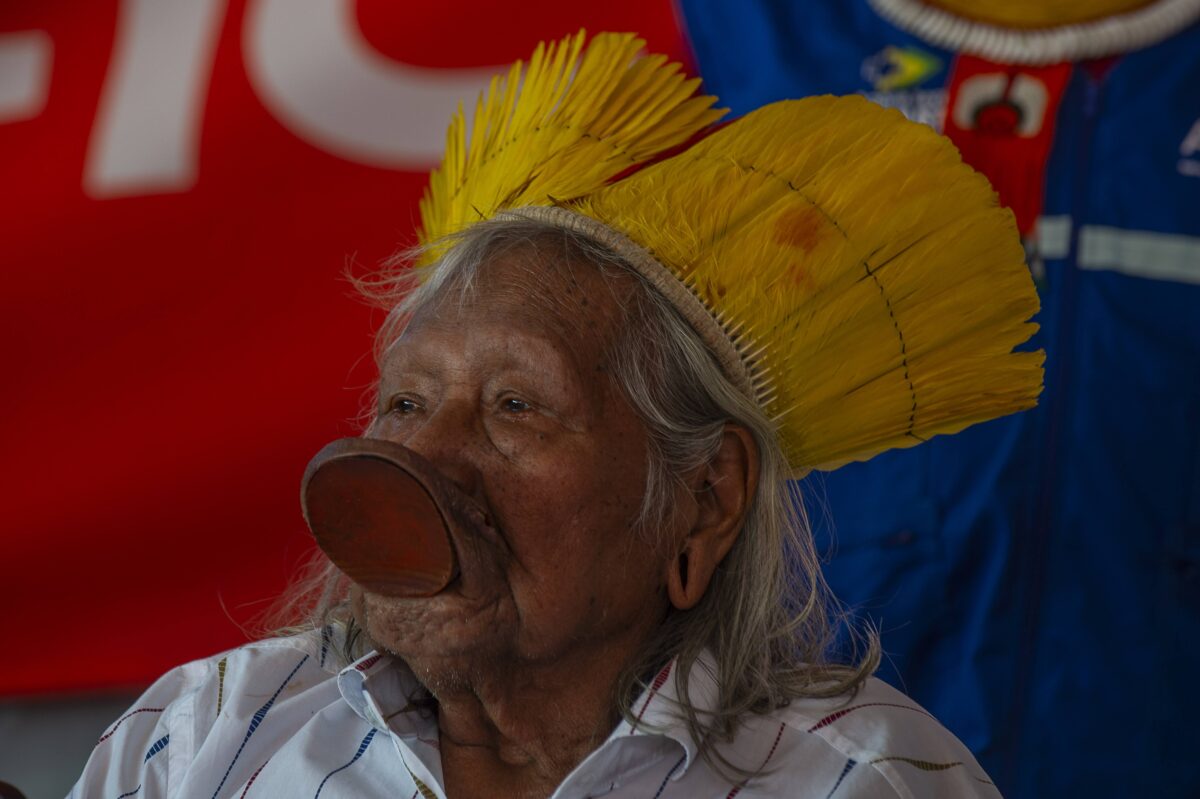
The presence of legendary Chief Raoni gave the mobilization greater political weight. He returned to ATL in a decisive year, called for more land demarcations, and spoke out against the expansion of soy, mining, oil, and Ferrogrão. Amazon Watch coordinated a press conference featuring Raoni in partnership with the Raoni Institute.
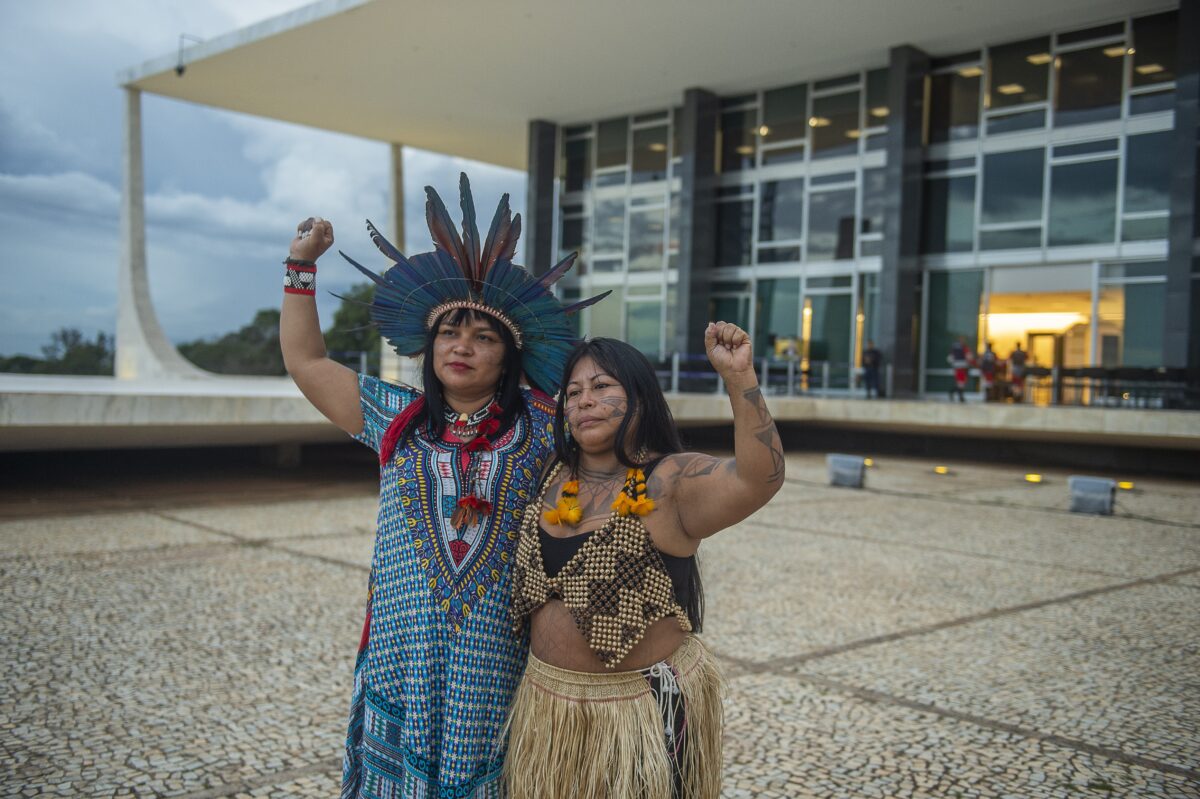
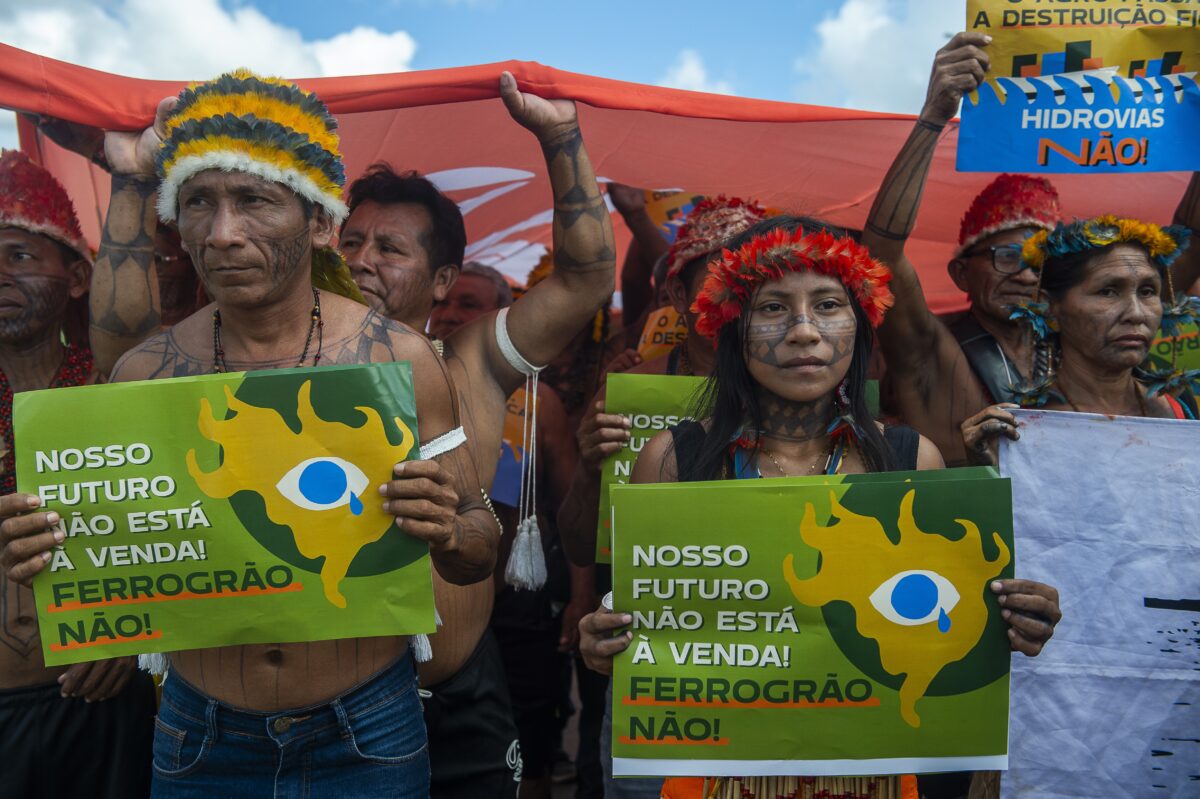
As the STF threatened to issue a ruling that could advance Ferrogrão, around 200 Indigenous people from the Tapajós and Xingu regions mobilized outside of its doors to deliver a message: do not let Ferrogrão destroy our lands. Kayapó, Munduruku, Borari, Tupinambá, Panará, and other peoples stood before the Court alongside journalists and allies and made clear that the mega project will not move forward without firm resistance.
The court postponed the ruling twice during ATL, and the movement’s power and message remained unmistakable: Indigenous pressure is alive, organized, vigilant, and determined.