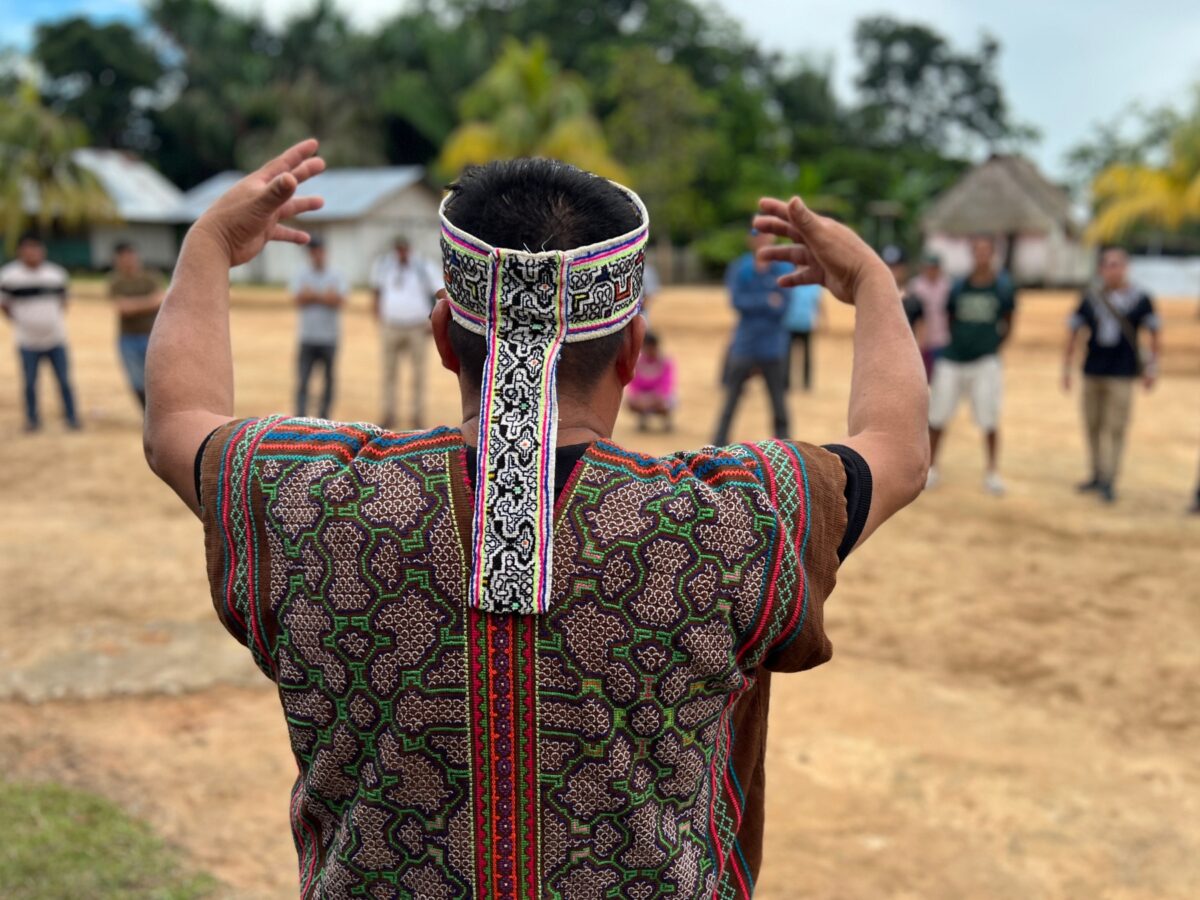
In February 2026, more than 60 Indigenous leaders from Brazil, Colombia, Ecuador, and Peru gathered in the Peruvian Amazon to confront a rapidly growing threat: the expansion of organized crime and illicit economies into Indigenous territories. Convened by AIDESEP Ucayali (ORAU) and Amazon Watch, the meeting produced the Pucallpa Declaration, a collective call to defend life, territorial autonomy, and the future of the Amazon. The declaration will be presented at the United Nations Permanent Forum on Indigenous Issues this April, bringing Indigenous proposals for confronting organized crime, protecting territories, and safeguarding one of the planet’s most vital ecosystems to the global stage.
At the gathering, the leaders had a clear purpose: to shape a collective response to the expanding reach of illicit economies and organized crime threatening the survival of Indigenous peoples and the future of the Amazon.
Over two days, participants shared testimonies from their territories, mapped the spread of illicit activities across the region, and discussed collective strategies to strengthen Indigenous governance and territorial defense. They also sought to advance alternatives to state policies rooted in repression and militarization – approaches that have proven insufficient and, in many cases, counterproductive.
“For us, everything is interconnected, and therefore any harm affects everything,” said a Colombian leader at the start of the dialogue. This holistic vision, where territory, spirituality, community, and life are inseparable, set the tone for what followed. At stake is not only territorial security, but the cultural, spiritual, and political continuity of Indigenous peoples, and the fate of one of our planet’s most critical ecosystems for global climate stability.

The expansion of organized crime
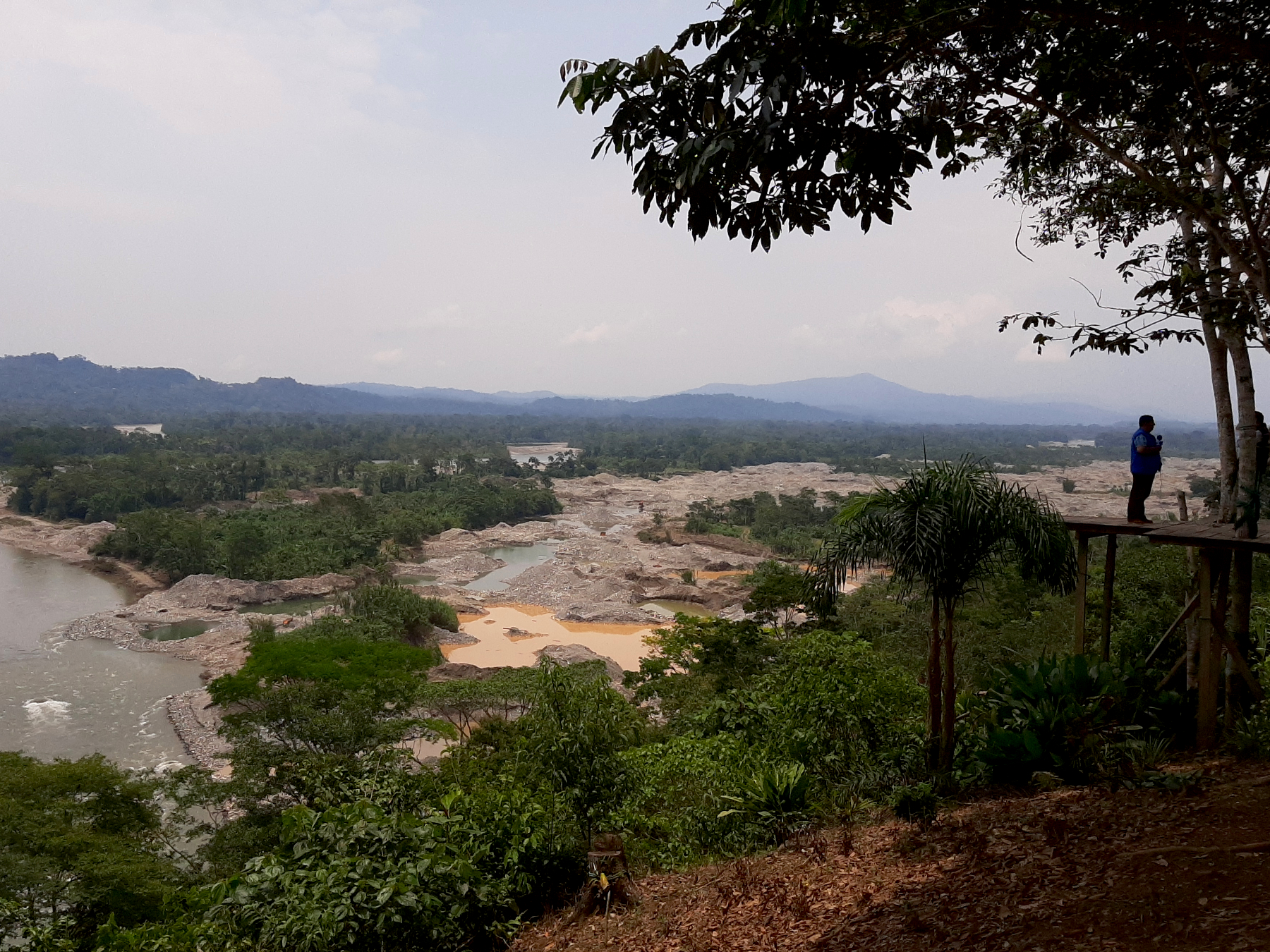
Over the past decade, surging global demand for cocaine and skyrocketing gold prices have driven illicit crops, illegal mining, logging, biodiversity trafficking, and human and arms trafficking into increasingly remote areas of the forest. Many of these areas coincide with Indigenous territories, rich in biodiversity and anchored by strong community organization. “It is the heart of the Amazon and its peoples that is under attack,” commented one analyst at the meeting.
In several places, criminal governance has taken hold, as we documented in our recent report on the tri-border region of Ecuador, Peru, and Colombia. Across the Amazon, armed groups such as the Comandos de la Frontera, Los Lobos, and Comando Vermelho control rivers and roads, extort communities, threaten Indigenous authorities, and exercise systematic violence. “They have taken over entire territories,” said one leader.
This expansion is consistently accompanied by corruption and the weakness – or outright complicity – of state institutions. In Peru, a specific set of regulations has even made it easier for illicit economies to expand.
Not an isolated problem
Participants emphasized that illicit economies rarely operate in isolation, they are deeply intertwined with legal activities. Illegal gold enters formal supply chains; roads, infrastructure projects, and extractive concessions can open corridors that criminal networks exploit to dispossess Indigenous peoples of their territories. Areas deforested for coca cultivation, cattle ranching, or land grabbing are eventually incorporated into legal markets, while the enormous profits flow back into the formal sector.
The boundary between illicit and “legal” is blurred: both logics deepen extractivism and drive territorial dispossession. These dynamics are fueled by global demand for commodities such as gold, timber, and agricultural land, and by the expansion of roads and infrastructure that carve new extractive frontiers in the forest, connecting local violence in the Amazon to international markets and extractive economic systems.
“We cannot separate this from large extractive projects; everything impacts the territory at the same time,” said one Colombian leader. A Peruvian Indigenous woman leader was even more direct: “We are survivors of the violence of different forms of extractivism.”
The risks of repressive policies
Faced with this reality, governments have largely responded with militarization and stricter interdiction policies. But these strategies focus on repression while leaving structural causes untouched: poverty, exclusion, lack of territorial recognition, and corruption.
On the ground, military presence often increases tensions, exposes communities to abuses, criminalizes local populations, and weakens Indigenous authorities. In Remanso, in Colombia’s Putumayo region, a military operation resulted in a massacre that claimed 11 lives in 2022. In Ecuador, repressive operations targeting communities themselves are on the rise. In general, the renewed U.S. security doctrine is pushing countries to go back to old, and failed, repressive security strategies, now presented as “war against narco-terrorism”.
And when security forces withdraw, criminal groups frequently return with greater violence. As several participants made clear, security cannot rest on repression alone. Without addressing territorial rights, corruption, and the absence of sustainable economic alternatives, enforcement strategies risk reproducing the very conditions that allow illicit economies to thrive.
Life itself is at risk
The consequences are profound: rivers contaminated with mercury, devastated forests, forced displacement, threats, and the killing of Indigenous leaders. The Amazon has become one of the most dangerous regions in the world for those who defend their territory. “In Peru alone we have lost 36 leaders. In my own people as well. Anyone who opposes these activities is at risk,” said a Peruvian leader.
But the damage runs deeper than the environmental and the physical. When a territory becomes fragmented, the intergenerational transmission of ancestral knowledge breaks down, Indigenous governance weakens, and pressure mounts on youth and families to enter illicit economies. Violence fractures community cohesion and wounds spirituality. “The very survival of our peoples is at risk,” warned a Colombian leader.
Autonomy as a response
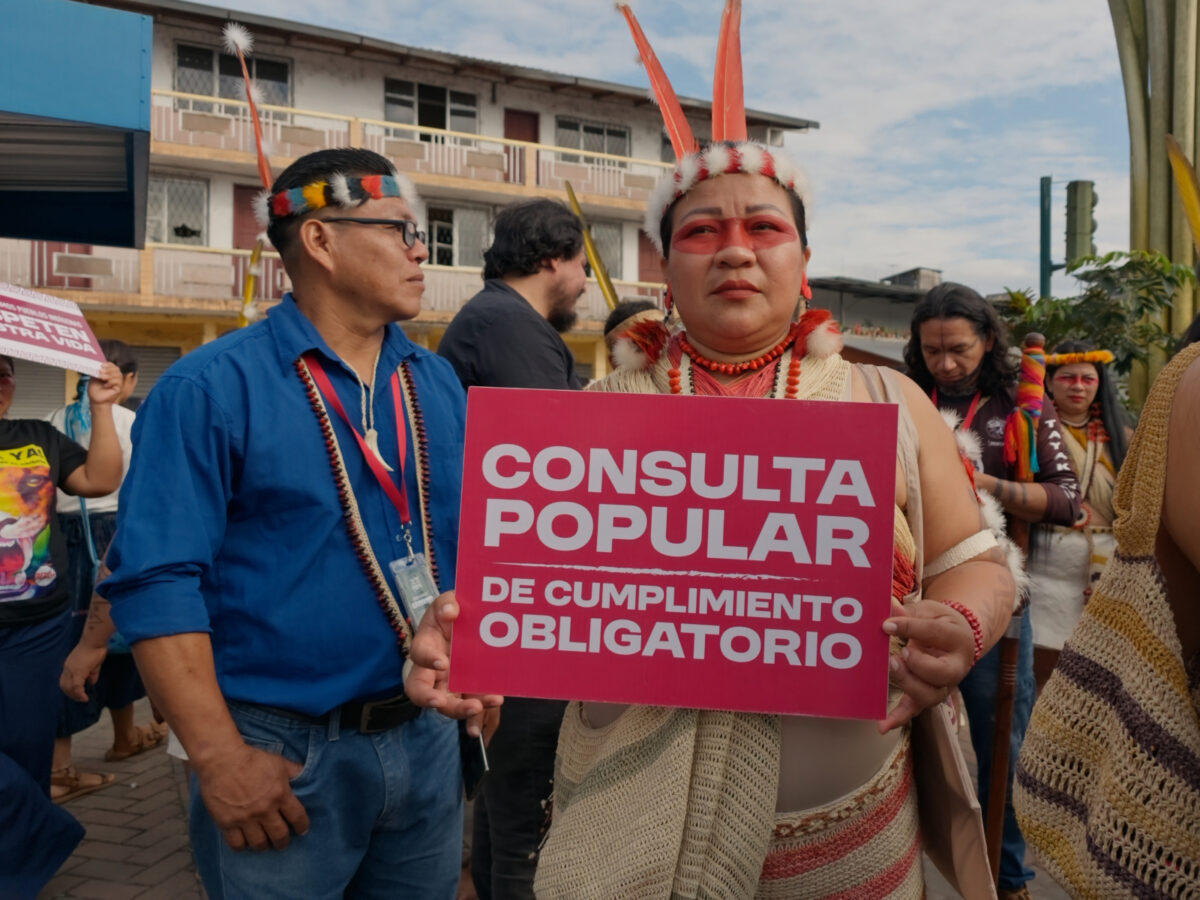
During the meeting it became clear that Indigenous peoples are not waiting for external solutions. Because illicit economies affect life in its entirety, the response must be equally comprehensive. Under international law, states are obligated to recognize and uphold Indigenous peoples’ right to autonomy and self-governance. As a Colombian leader said: “What should happen is that states recognize our own structures and collaborate with them as equals, not as subordinates.”
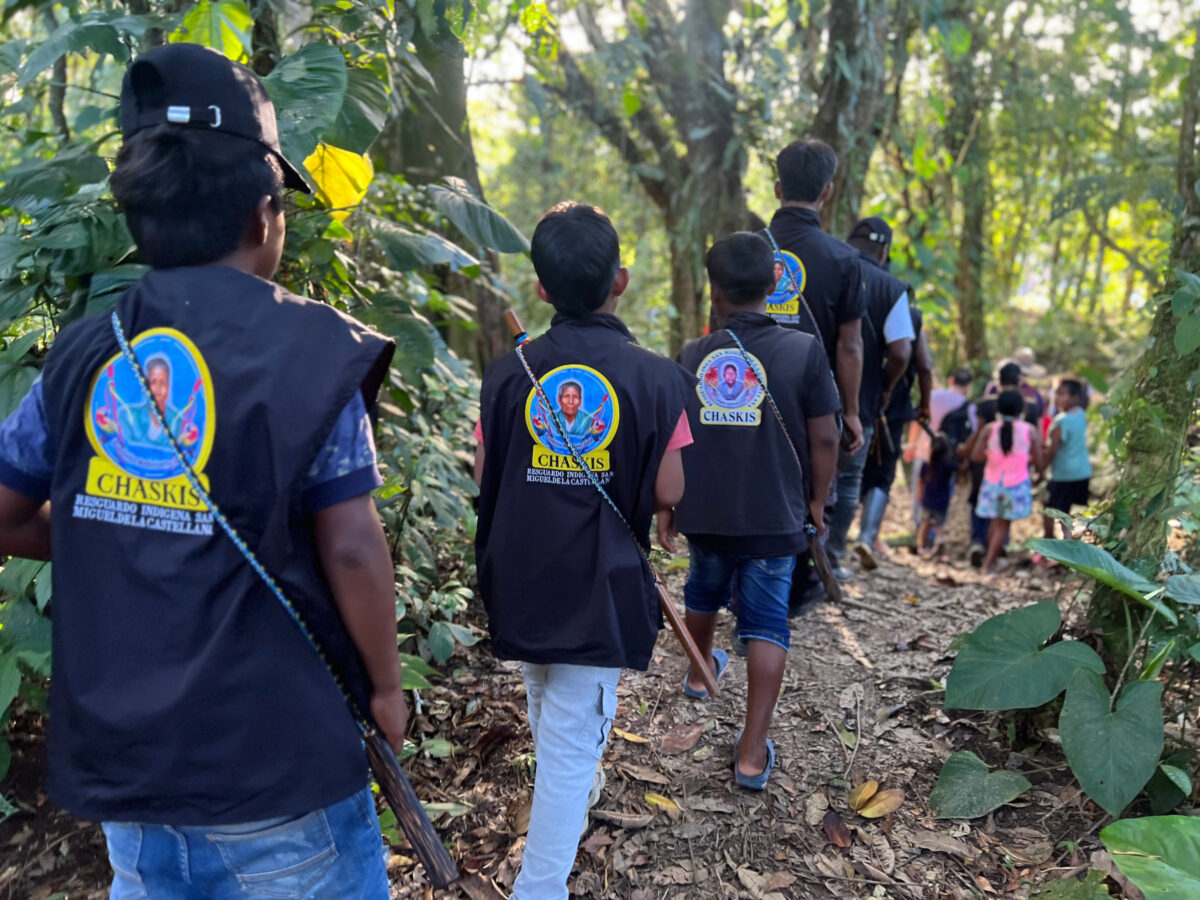
Autonomy is built gradually through concrete institutions and capacities: creating their own norms, exercising their own justice systems, ensuring territorial control, defending culture within public education, guaranteeing intercultural health, and building sustainable economic projects. Across the region, communities are consolidating Indigenous guards, community monitoring systems, and territorial control mechanisms — among them the Wampis people’s Charip guard.

In Flor de Ucayali, Peru, organic production and local economies offer concrete alternatives to illicit markets. In Sarayaku, Ecuador, the Kichwa peoples have stopped the advance of extractivism and illicit economies through the concept of Kawsak Sacha (the Living Forest). “We have it as a political proposal, and we build our governance and economy from it.”
Participants were equally clear that strengthening autonomy requires the full participation and leadership of Indigenous women. Women leaders called for guaranteed political participation, greater economic independence, and direct attention to the specific forms of violence they face as territorial defenders.
“We need to de-border ourselves; illicit economies do not recognize boundaries. We must work together,” said a leader from ORAU. One example is the cross-border commission between peoples of Ucayali and Brazil in the Yuruá region, which demands that both countries guarantee their territorial rights.
Indigenous participation in global decision-making
The meeting concluded with the approval of the Pucallpa Declaration, which reaffirms that self-determination, self-government, and effective territorial control are essential tools to confront illicit economies. These rights are internationally recognized, yet their implementation remains painfully limited.
Indigenous peoples are demanding that states combat corruption, fully recognize Indigenous territories, protect defenders, and respect Indigenous systems of justice and security. They are also calling on the international community to recognize that organized crime in the Amazon is a threat to our global climate threat.
Yet international policies on organized crime and drugs continue to be designed without them. “Indigenous peoples cannot continue to be seen only as victims or beneficiaries of external programs. They are territorial authorities with concrete proposals,” said a Peruvian leader. This is not only a matter of rights, it is a matter of survival. Without their direct participation, no policy will truly protect the lives of defenders or the future of the Amazon.
That is why, together with them, Amazon Watch calls for the full and effective participation of Indigenous peoples in spaces such as the United Nations Office on Drugs and Crime (UNODC) and the Amazon Cooperation Treaty Organization (ACTO). ILO Convention 169, the UN Declaration on the Rights of Indigenous Peoples, and the American Declaration are unambiguous: Indigenous peoples must participate in the design, implementation, and evaluation of every policy that affects them.
An urgent call
Without autonomous Indigenous peoples and the full leadership of women, there will be no climate solution or lasting justice for the Amazon. An Indigenous delegation will bring these proposals and demands to the United Nations Permanent Forum, and later this year to the UN conference on Transnational Organized Crime.
The defense of territory is, above all, the defense of life. And today, more than ever, that defense demands that we listen to, and stand behind, those who have protected the Amazon for generations.