

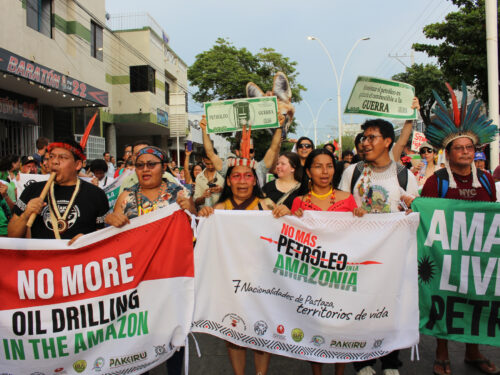
"Yesterday's announcement changes nothing on the ground. Indigenous nations have opposed oil extraction in these territories for decades, previous rounds failed to deliver, and the fundamental obstacles remain."
"Yesterday's announcement changes nothing on the ground. Indigenous nations have opposed oil extraction in these territories for decades, previous rounds failed to deliver, and the fundamental obstacles remain."
"Regardless of the election outcome, decisions involving mining, oil, and infrastructure must respect Brazil’s sovereignty, environmental laws, and the rights of Indigenous peoples and traditional communities.”

“The Amazon cannot be treated as a strategic reserve available for competition among global powers."
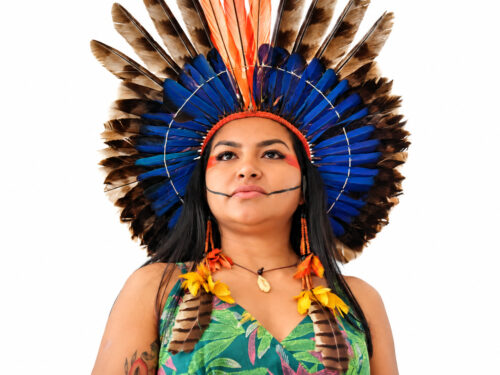
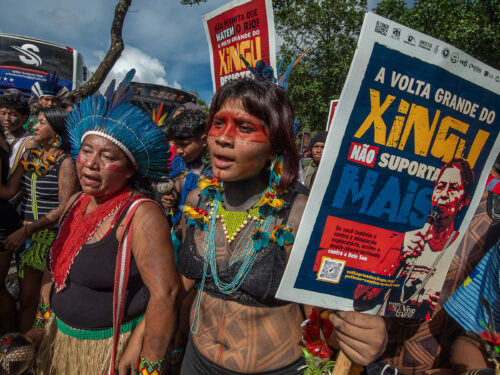
“Listen to the Indigenous peoples who are saying no to this project of death,” said Juma Xipaia, founder of Instituto Juma.

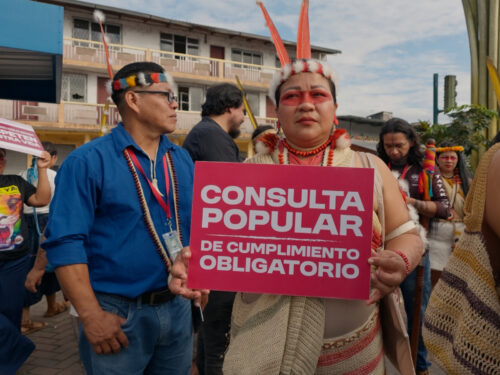
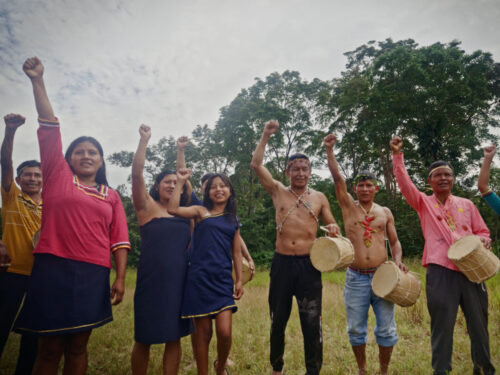
The Waorani people took to the streets of Puyo to mark the three-year anniversary of Ecuador's historic Yasuní referendum and protest the government’s failure to carry out the will of voters.
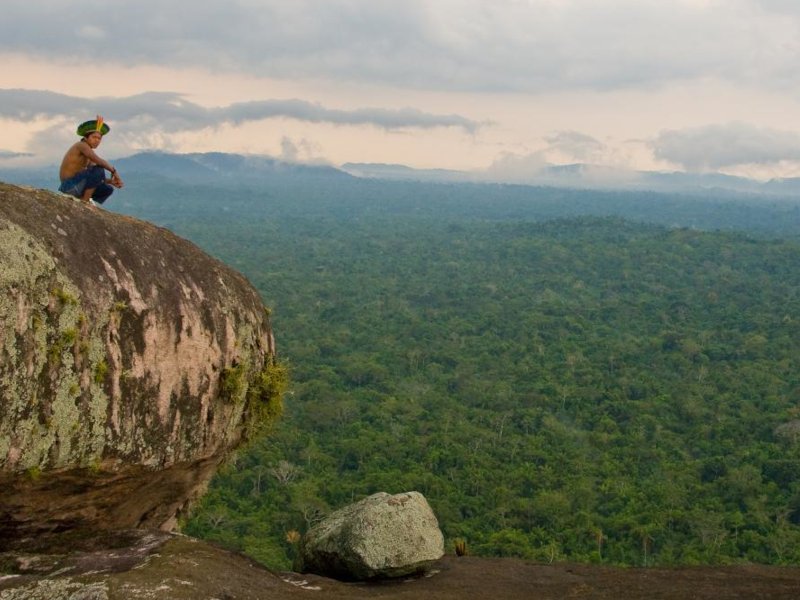
At its core, the Mandate asserts that Indigenous peoples’ territories, their governance systems, and their knowledge are most effective for protecting the Amazon and their living territories.

Sumaúma | "After so many years of violations and irregularities that have marked the project’s environmental licensing process, we hope the Supreme Court will examine the case with the attention and responsibility it requires.”
“The Trump administration’s hyper-militarized approach to addressing ‘narco-terrorism’ in the Andean-Amazon region is likely to fail, while exacerbating violence against communities caught in the crossfire.”
“We cannot afford to abandon our struggle. For now, we need clean water, but we will keep fighting to heal the rivers and secure alternative livelihoods for our community.”
"We are defending the life of the entire planet, that is why we ask ourselves: will we one day make a soup of gold or a soup of dollars?"
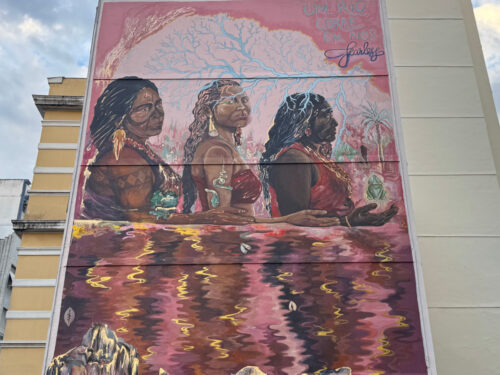
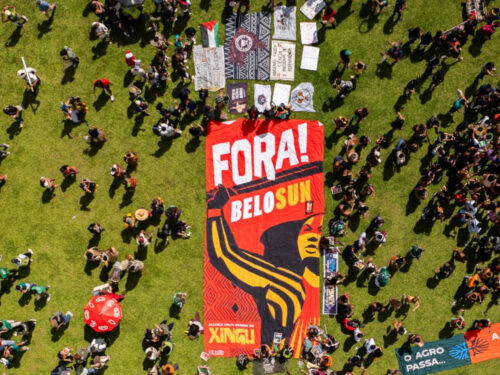
Yesterday, I participated in the inauguration of a monumental new mural in Rio de Janeiro celebrating Indigenous, Quilombola, and riverine women who defend the Amazon’s rivers and territories.
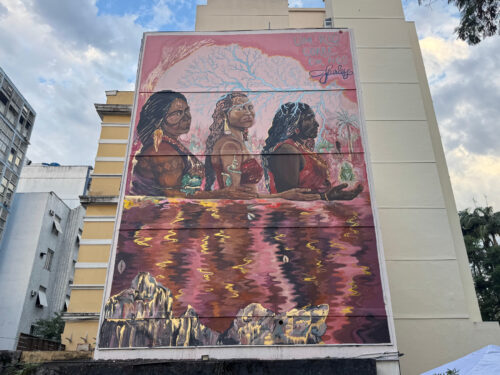
“When I look at these three women – Indigenous, riverine, and Quilombola – I also see a message about where many of the answers to the climate crisis lie: in the territories and in knowledge that generations have passed down.”
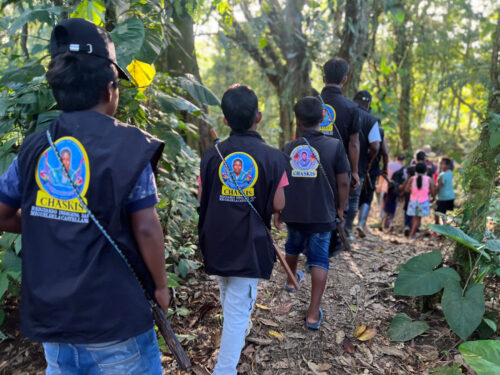
“For us Indigenous Peoples, security is not about weapons. It is about taking care of our territories."
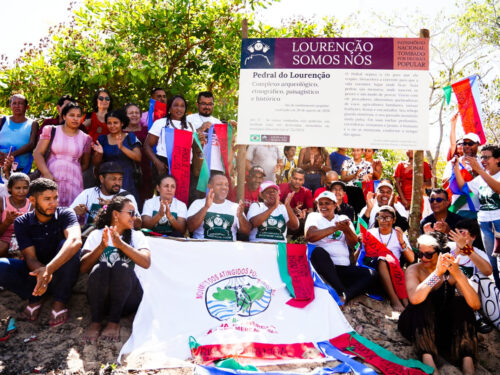
“We learned to fish by knowing every rock, every eddy, and every path through the Pedral. You cannot separate our lives from the Pedral do Lourenção.”
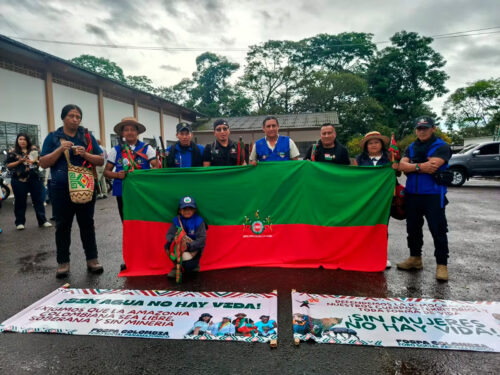
El País | We know another kind of wealth. It is in our rivers, in the animals and plants, in the knowledge passed down by our elders, and in the relationships that allow the world as we know it to continue to exist.
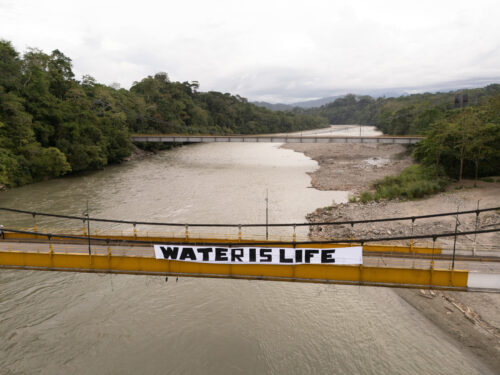
On the Jatunyaku River, community representatives unfurled two banners bearing the messages that have echoed for years: "Water is life” and "Love the Amazon."
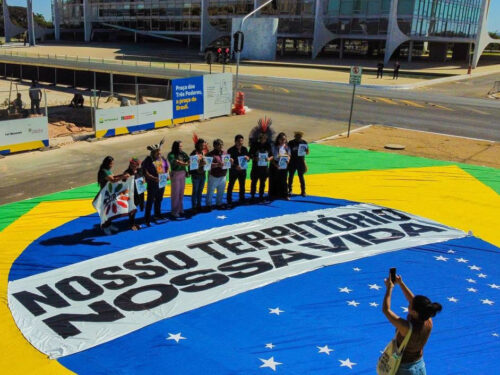
“The outcomes of these cases could either weaken or reinforce the safeguards that limit the expansion of mining, agribusiness, and infrastructure into Indigenous territories."
“Belo Sun has an established pattern of making questionable statements to investors about the standing of its mega-mine, both concerning its legal standing and level of standing with affected communities.”
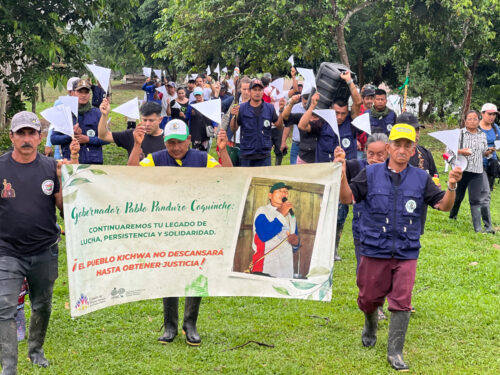
The Remanso Massacre was not an isolated act. It is part of a wider pattern of violence sweeping across the Colombian Amazon and the tri-border zone where Colombia, Peru, and Ecuador converge.
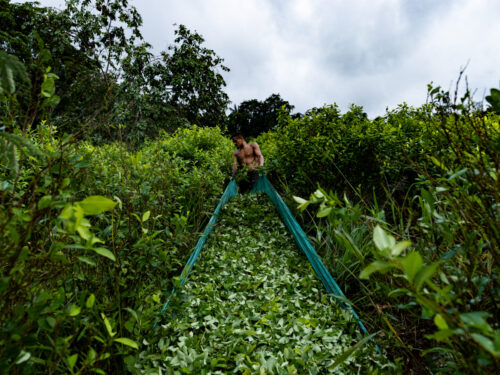
A new report by Amazon Watch and Amazon Underworld documents how U.S.-backed militarization, expanding criminal economies, and incoming right-wing governments are converging in one of the most volatile regions of the Amazon.
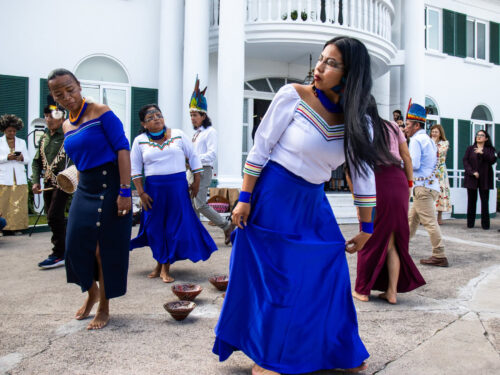
More than two decades ago, helicopters, soldiers, and oil workers descended on the territory of the Kichwa people of Sarayaku, in the heart of the Ecuadorian Amazon.
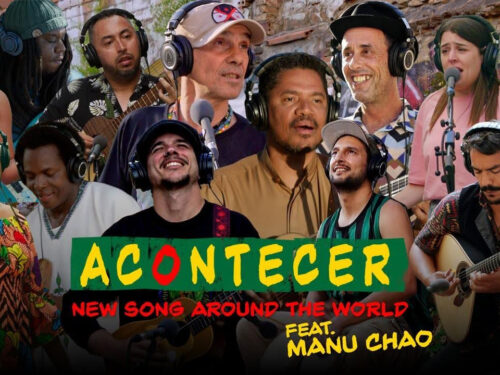
Today, Playing For Change, a global project known for bringing together musicians from different countries in collaborative videos, released the song “Acontecer,” an international call to protect the Amazon, Indigenous peoples, and the planet.
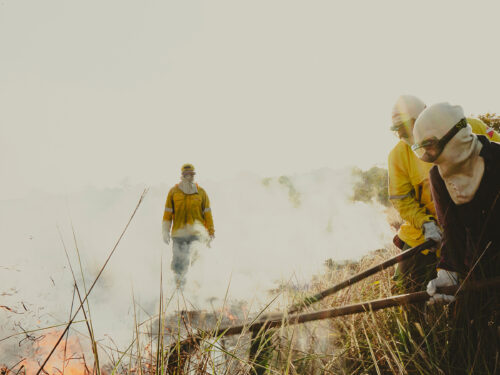
A future where forests thrive and Indigenous rights are respected is possible. But it requires acting with far greater urgency than the world has managed so far.
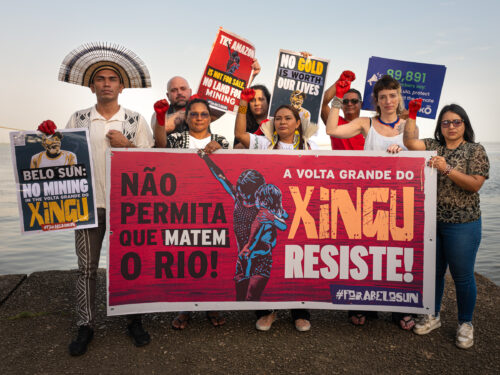
O Globo | Canadian mining company Belo Sun has changed the leadership of its operations in Brazil. The move comes as the company works to convince investors that the project is moving forward.
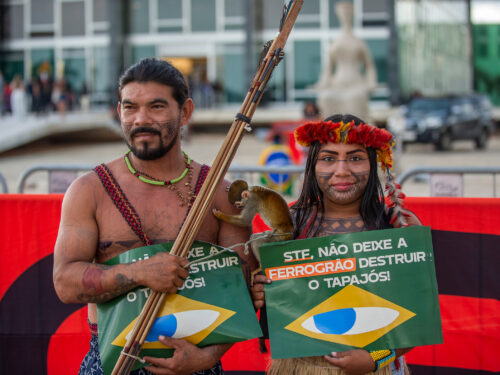
Brazil’s Supreme Court upheld a law reducing the size of the Jamanxim National Park, allowing the Ferrogrão railway project to move closer to environmental licensing.
“Waking up to this news brought us extreme happiness. Every victory, small or large, strengthens our work even more."
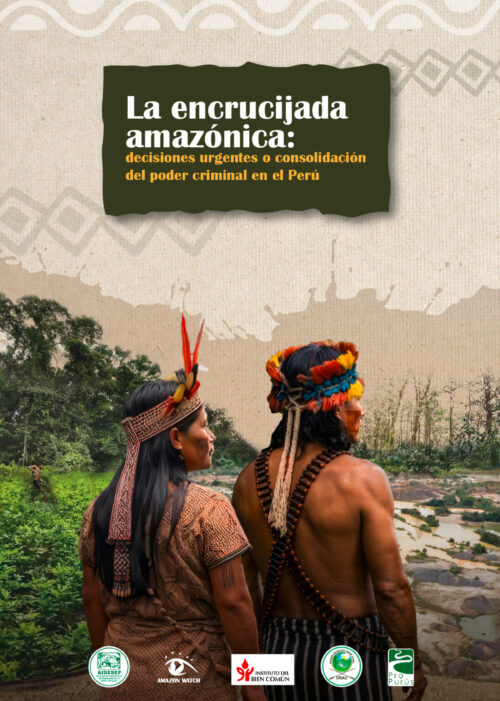
A new report on the impact of drug trafficking on Indigenous Peoples in Peru warns that the country faces a defining decision: confront the rapid expansion of organized crime in the Amazon, or risk allowing new systems of criminal power to take root across vast regions of the country.
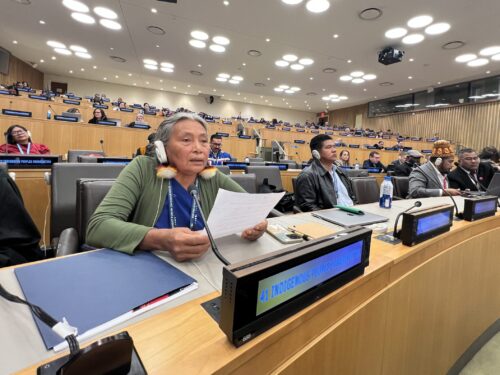
“It is fundamental that states understand Indigenous peoples are crucial actors when it comes to security and containing organized crime."
Associated Press | Scientists said that any dam failure could send toxic waste rapidly into the river, threatening Indigenous and riverine communities as well as the ecosystem.

We look forward to celebrating 30 years of achievements with Indigenous leaders, supporters, and allies. Amplify! will feature a cocktail reception, delicious vegetable-forward dinner, inspiring program with special guests from the Amazon, live entertainment, and after party.


