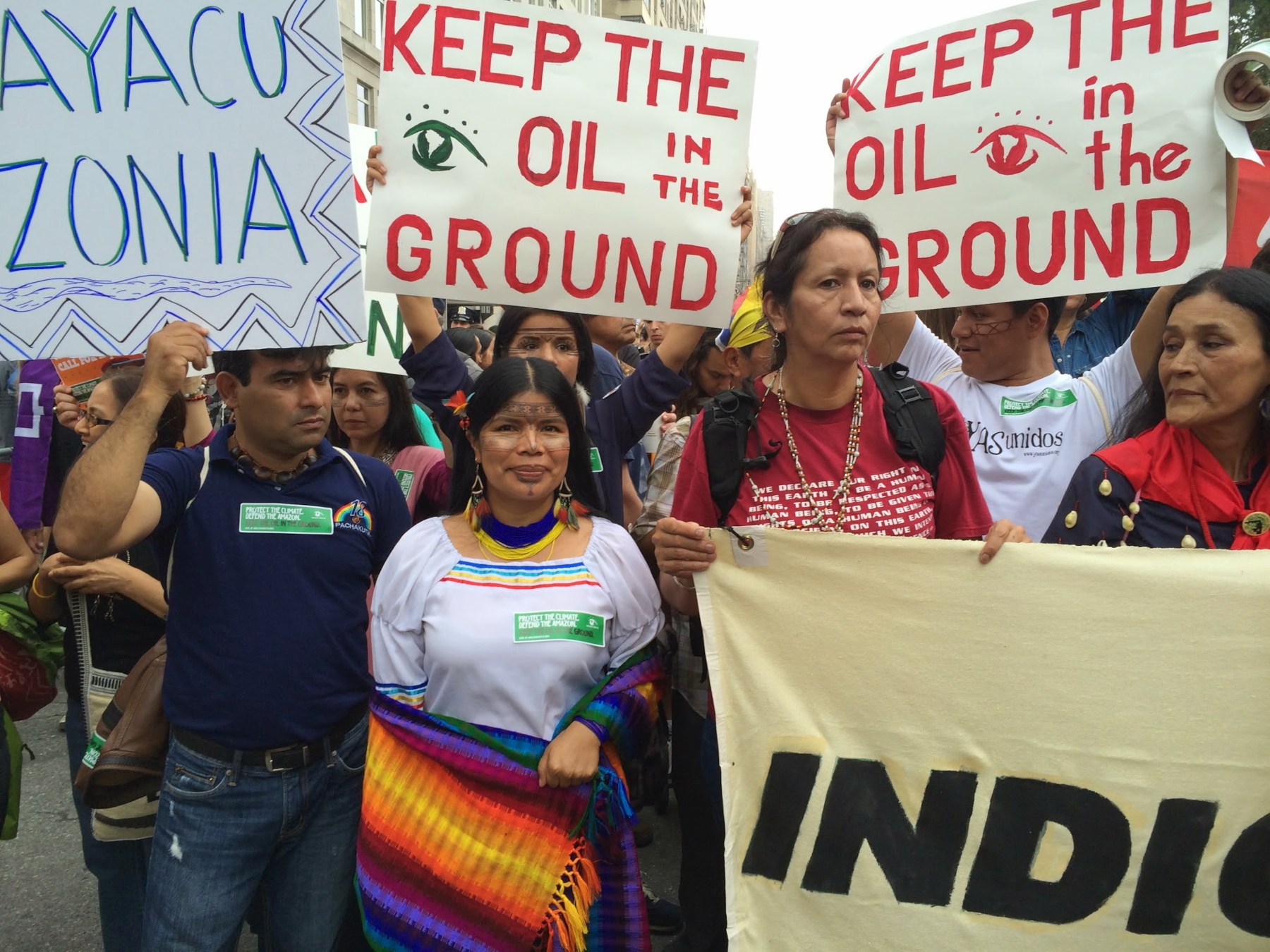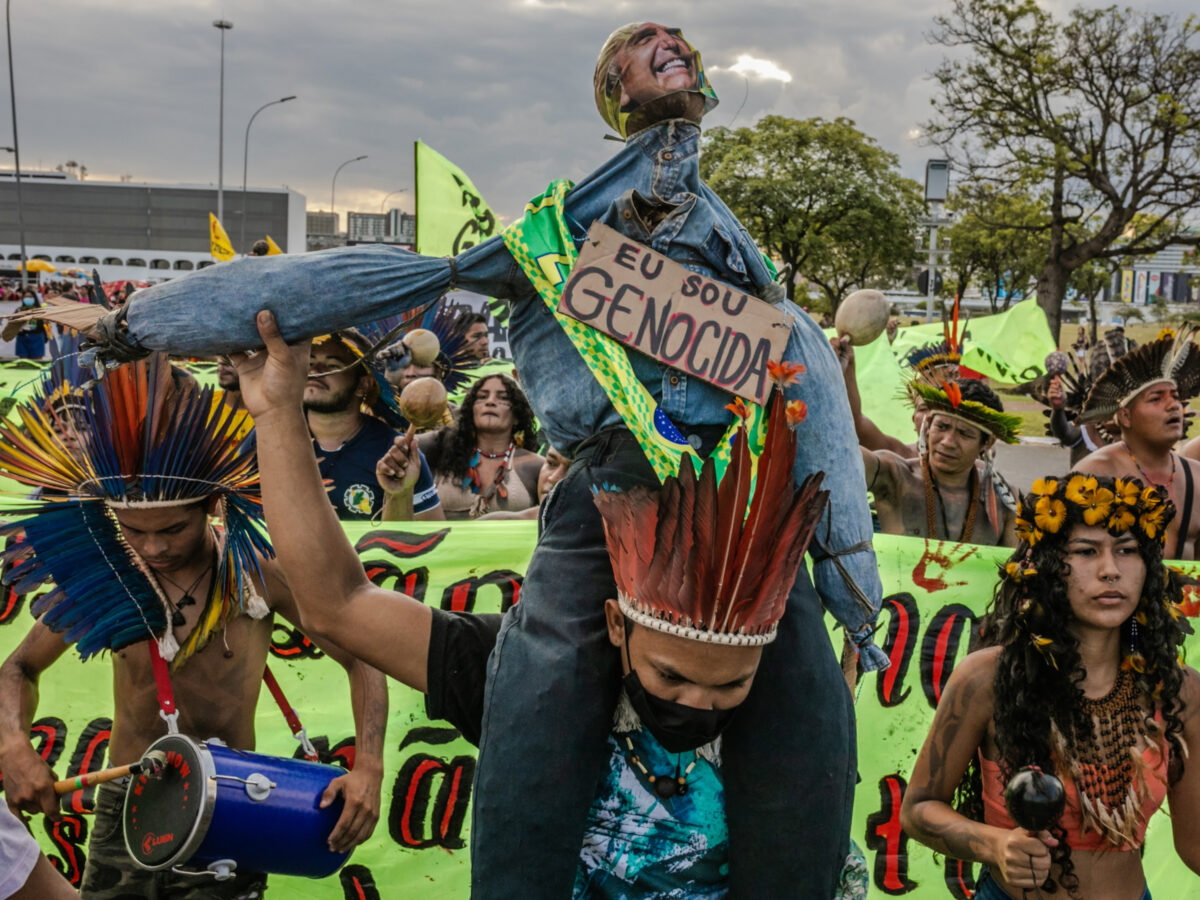
Brasilia, Brazil – More than 7,000 Indigenous people marched through the streets of Brasília yesterday under the banner “Demarcate, Lula! A sovereign Brazil is one with demarcated and protected Indigenous lands,” pressing key demands on Brazil’s federal government and Supreme Court during the final mobilization of the 2026 Free Land Camp (ATL). As the country’s largest annual Indigenous gathering draws to a close, the movement underscored the urgent need to demarcate Indigenous lands and reject destructive projects such as the Ferrogrão mega-railway, which imperils the Amazon and the Cerrado.
During the march, the Association of Brazil’s Indigenous Peoples (APIB) delivered a letter to the Ministry of Mines and Energy and to the Presidency’s General Secretariat. The letter denounces threats to Indigenous rights and calls for an end to policies that permit natural resource extraction on Indigenous lands without consulting affected communities. The letter demands “the prohibition of any work, project, program, concession, licensing process, or administrative measure supported by the Executive Branch without free, prior, and informed consultation.” It adds that “there can be no legitimate climate policy, nor a just energy transition, if Indigenous territories continue to be treated as sacrifice zones.”
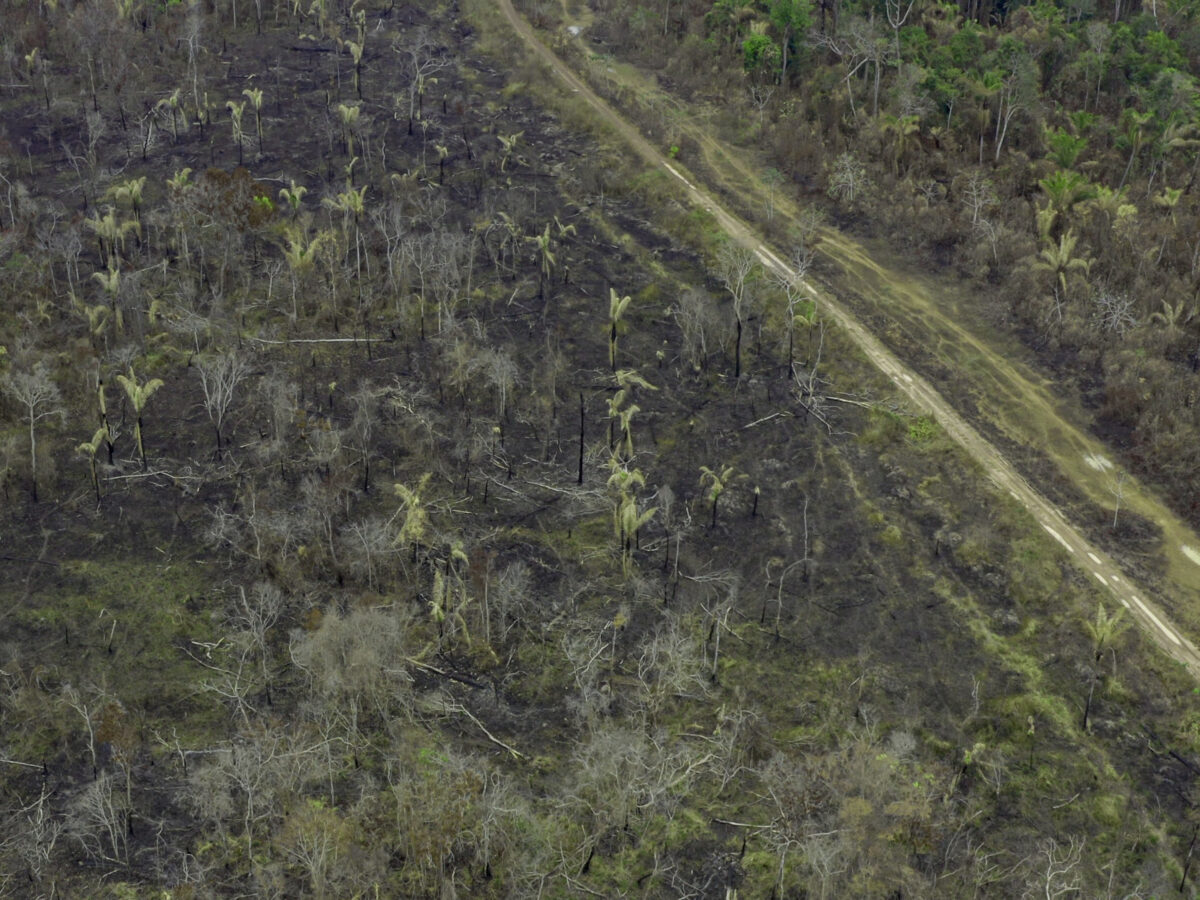
Throughout the week, Indigenous peoples from the Tapajós and Xingu River basins denounced the expansion of the so-called Northern Arc logistics corridor. This corridor combines highways, railways, ports, and waterways to transport soy and corn from central Brazil through Amazonian rivers. Leaders from the Munduruku, Borari, Kumaruara, Tupinambá, Panará, and Kayapó peoples, among others, took part in debates and organizing efforts at ATL. They outlined how this infrastructure model fuels deforestation, pesticide contamination, pressure upon rivers and Indigenous territories, and the destruction of sacred sites and traditional ways of life.
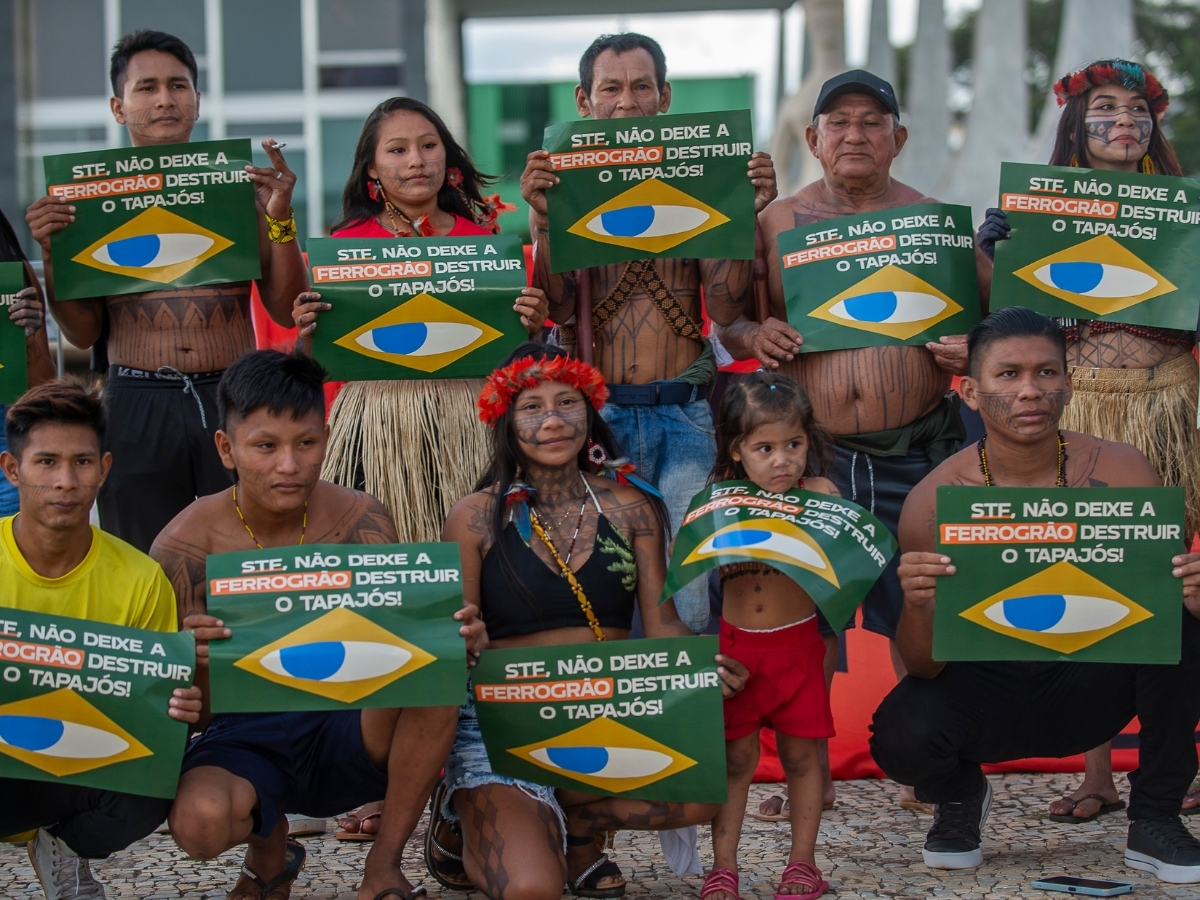
In this context, Ferrogrão emerged as a principal symbol of destructive development condemned during ATL. The project would connect Mato Grosso and Pará states, and Indigenous peoples view it as central to expanding the agroindustrial export corridor. The issue gained urgency because Brazil’s Supreme Court (STF) was expected to rule this week on the project’s constitutionality, a decision that could allow environmental licensing to proceed. Following strong public pressure, authorities postponed the ruling. Around 200 Indigenous people gathered outside the STF to follow the proceedings and urged justices not to pave the way for the project.
“We came to the Supreme Court because we will not give up caring for the Tapajós River. Ferrogrão threatens our river, our territory, and the future of our children, and the justices need to hear that,” said Alessandra Korap Munduruku, who attended the STF during both days when the court was expected to rule, alongside dozens of other Indigenous people mobilized in defense of the Tapajós.
At an event organized by the Enough Soy Alliance, legendary Chief Raoni criticized Ferrogrão and warned of the environmental damage the project could cause.
“Ferrogrão will cause a great deal of damage to the environment. This kind of project threatens the forest, the rivers, and our territories, and it cannot move forward,” said Chief Raoni.