
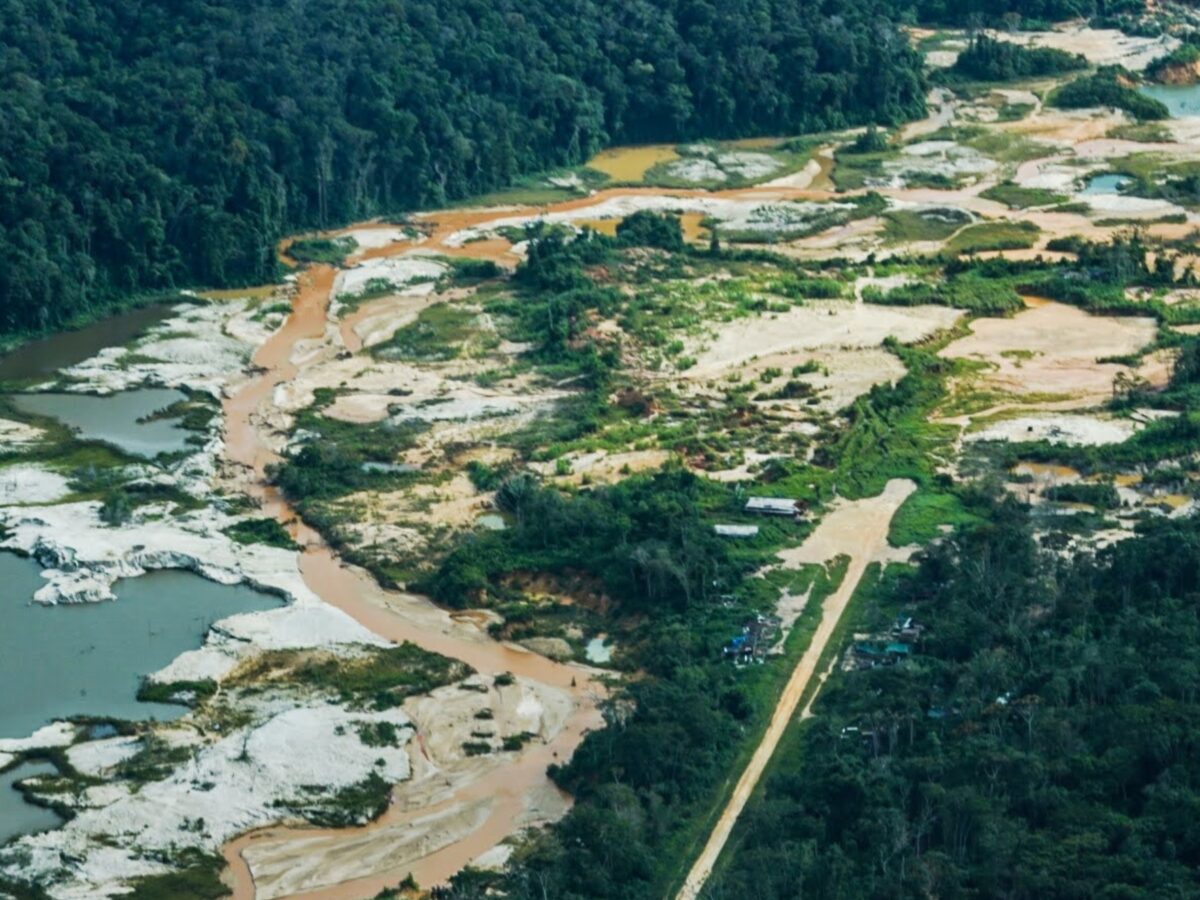
Rising gold prices intensify a predatory logic that turns rivers into sludge, strengthens illegal networks, and deepens violence. The effects do not remain confined to the Amazon: they reach our water, our food systems, and exacerbate the climate collapse already hitting cities and urban peripheries.
Whenever gold returns to the center of global geopolitics, the Amazon comes back into the crosshairs. The war between the United States and Iran has put the metal back on the radar of markets, investors, and the extractive industry. But from where we stand, this does not look like an opportunity. It looks like mounting pressure on territories, harassment of community leaders, the advance of illegal mining, violence, and the recycling of old mining projects as though they were inevitable solutions.
While thousands of soldiers and civilians are killed or wounded on the other side of the world, companies move quickly to unlock projects that feed strategic supply chains in times of war. In this context, the Brazilian Amazon – a living territory home to more than 180 Indigenous peoples – is once again being treated as a sacrifice zone. Escalating conflict, rising gold prices, and the race for critical minerals are intensifying a predatory logic that turns rivers into sludge, strengthens illegal networks, and deepens forms of violence that rarely enter economic calculations, including violence against girls and women.
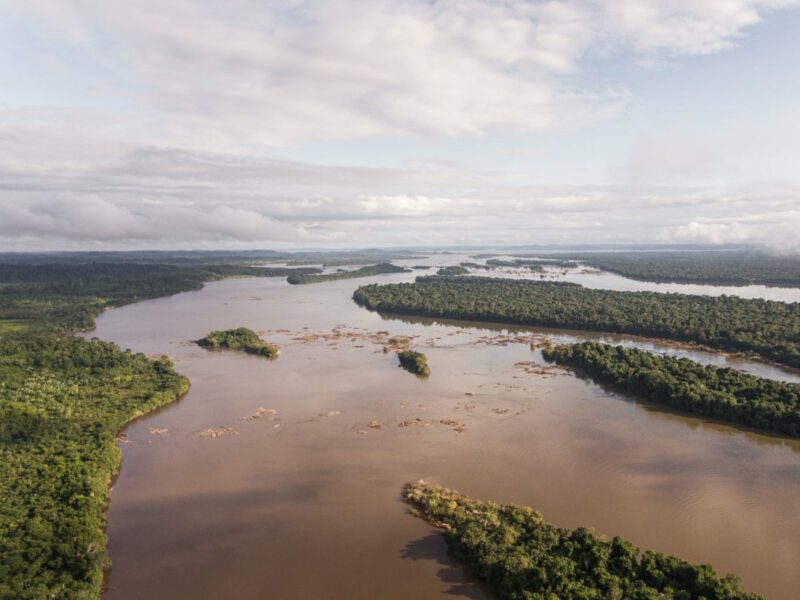
In the Xingu region, there are plans to install the largest open-pit gold mine in Brazilian history in an area already devastated by the Belo Monte dam. This is the Volta Grande Project, owned by Canadian company Belo Sun Mining, which includes open pits, cyanide use, and a tailings dam. If that structure were to fail, the destruction of one of the Amazon’s largest rivers would be irreversible. There is nothing “beautiful” about Belo Sun: the project advances across a region already marked by deforestation, biodiversity loss, socio-environmental conflict, and the absence of proper consultation with affected peoples. It targets the Volta Grande do Xingu, an area already suffering from reduced river flow, disrupted ecological cycles, and worsening food insecurity.
In Roraima, in the Raposa Serra do Sol Indigenous Territory, operations against illegal mining identified cyanide pools used for gold processing in the municipality of Normandia. The same substance planned for use in Belo Sun’s project threatens rivers, soils, wildlife, and the communities that depend on these waters. Investigations have also revealed the cross-border scale of the problem, with mining activity along the border with Guyana impacting Indigenous lands in Brazil. In the Yanomami Indigenous Territory, rising gold prices continue to fuel illegal mining, contaminating rivers with mercury and financing criminal networks both inside and beyond the forest.
That is why it is a mistake to treat rising gold prices as merely a market story. Gold travels through shadowy routes, blurs the line between legality and illegality, and connects to opaque global supply chains.
The impact is not limited to Amazonian peoples: it reaches water, food, violence, and exacerbates climate collapse already affecting cities and urban peripheries.
They call this development, but development for whom? Our territories continue to be destroyed by large-scale projects that violate rights and destroy cultures, ancestral knowledge, and bodies.
In the name of energy transition and progress, the forest is being pushed into a new rush for natural resources, driven by mining, soy, organized crime, dams, and railroads.
This logic must be rejected. The Amazon is not a warehouse of gold, energy, and “economic potential” at the disposal of panicked markets or warring powers. Its value lies in what sustains life: rivers, rainfall, food, climate stability, biodiversity, and ways of life.
If the world wants to talk about security in times of crisis, its first obligation should be to defend what still keeps the planet habitable. To drill into and destroy the Amazon in order to feed arsenals, speculation, and empty promises of progress is to choose scarcity as a political project.
We have lived in a state of war for centuries. And just as mineral destruction in the Amazon produces effects far beyond our territories, the wars now underway do not remain confined to their borders either: they reverberate through the climate, the economy, and growing pressure on regions treated as reserves for plunder.
Juma Xipaia
Chief of Kaarimã village in the Xipaya Indigenous Territory; former National Secretary for the Articulation and Promotion of Indigenous Rights at Brazil’s Ministry of Indigenous Peoples
Ivo Makuxi
Makuxi Indigenous lawyer and member of the Executive Committee of the Brazilian Institute of Human Rights (IBDH)