
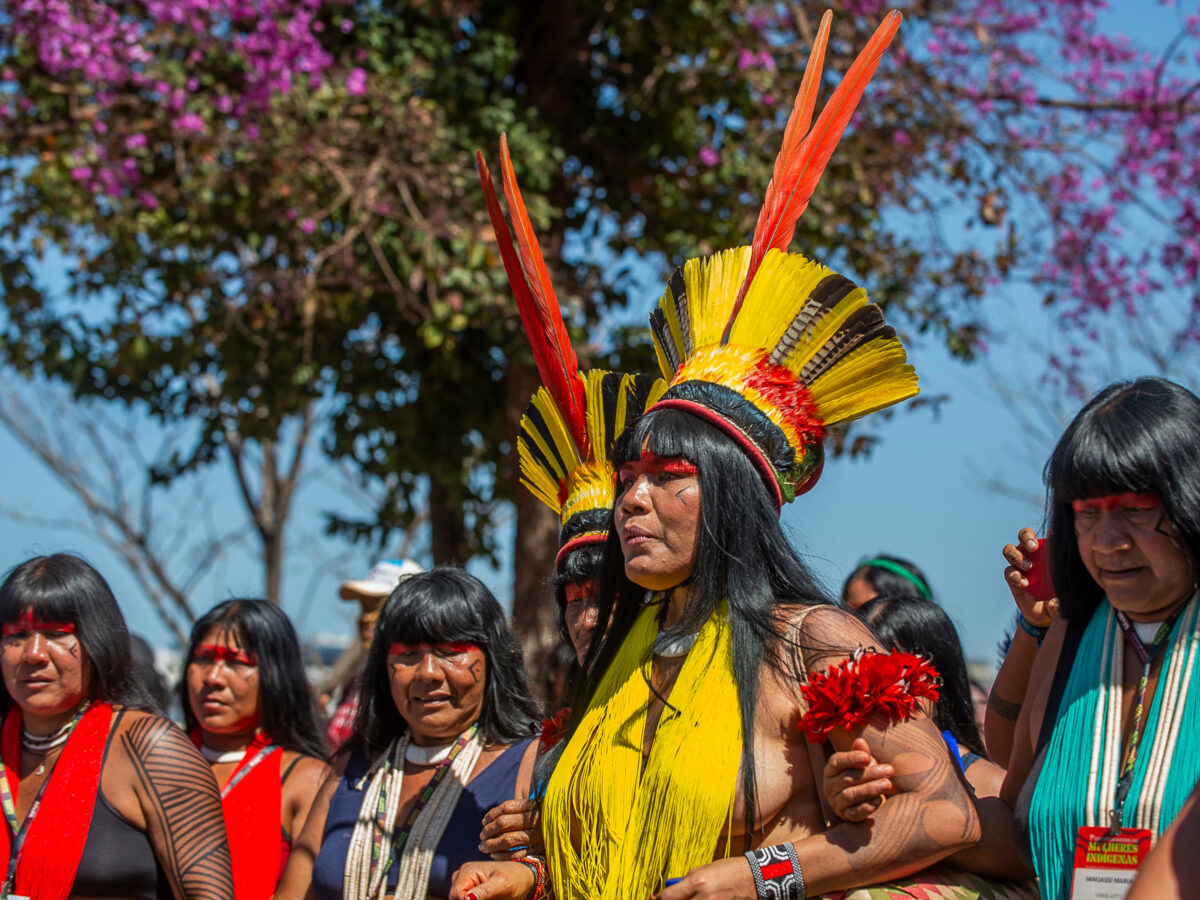
The past year has been defined by deep contradictions.
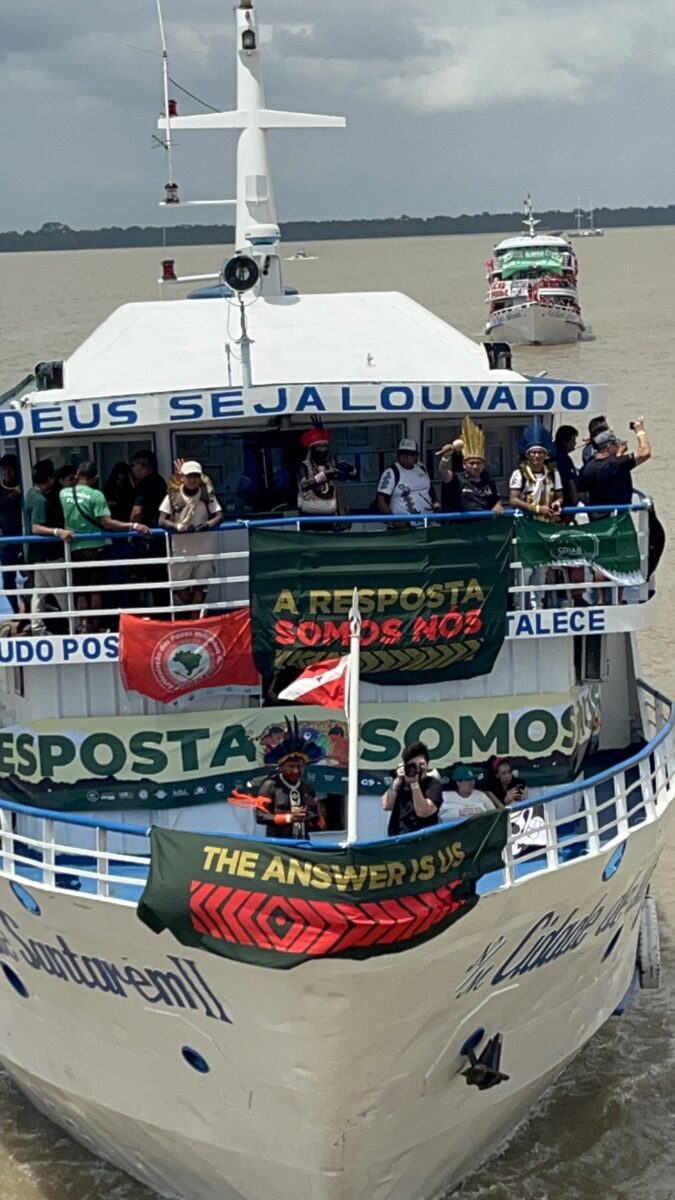
As climate denial gained renewed political traction and governments moved to restrict civic space, Indigenous peoples and grassroots movements across the Amazon advanced bold, collective visions for the future.
While extractive interests pushed harder than ever to expand oil, mining, and criminal economies, Amazon Watch worked tirelessly to help communities on the ground assert their rights, defend their territories, and reshape the terms of what is possible.
Together we achieved important victories for the Amazon. Ones which we can and will build upon in 2026.
This wave of resistance was built through Indigenous leadership, long-term organizing, and international solidarity that connected local resistance to global pressure points. Building that solidarity is critical, because as it grows it offers a clear reminder that the Amazon’s future is inseparable from Indigenous sovereignty and collective action. That’s why Amazon Watch exists.
Indigenous peoples are not only defending the rainforest. They are sustaining one of Earth’s most vital living systems and strengthening climate resilience far beyond the Amazon Basin. As scientists warn that the forest has reached a dangerous tipping point, these struggles are increasingly central to the global fight for climate stability.
In 2025, Indigenous-led movements and their allies, including Amazon Watch, achieved meaningful breakthroughs across the Amazon. Below are some of the moments that grounded us in collective power and pointed the way forward.
Here are just some of our campaign wins this past year:
End Amazon Crude
Block 64 defended from drilling
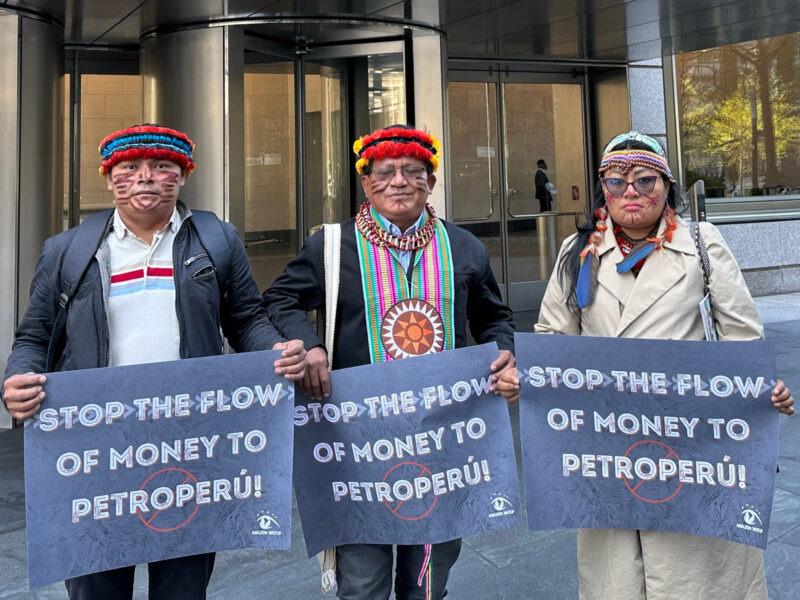
After years of resistance by the Chapra, Achuar, and Wampis Nations, plans to expand oil drilling in Peru’s Block 64 stalled. Petroperú, the state oil company, was unable to secure a financial partner to move the project forward in Indigenous territories.
This outcome reflected sustained Indigenous organizing combined with pressure on international banks considering investment in Petroperú. The result was the protection of more than 764,000 hectares of ancestral rainforest and a clear signal that Indigenous opposition remains a decisive force in shaping the future of Amazonian energy development.
California confronted its role
California remains the world’s largest buyer of crude oil extracted from the Amazon. In 2025, we publicly challenged that reality.
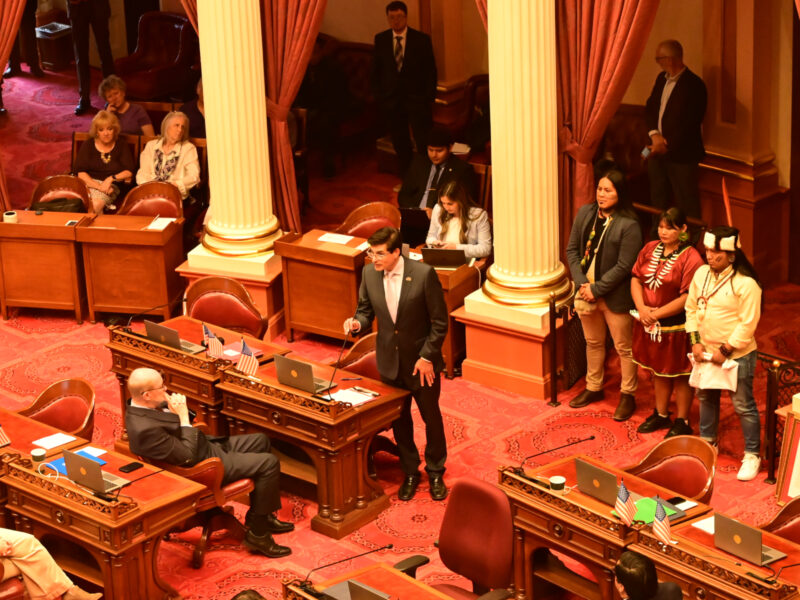
Amazon Watch coordinated a delegation of leaders from Ecuador to the California State Senate, placing the impacts of Amazon Crude directly before policymakers and the public. Their presence underscored how decisions made far from the forest continue to shape life, health, and survival in Indigenous territories.
Then the state passed a resolution calling for greater supply chain transparency and a phase-out of Amazon oil imports.
Mining Out of the Amazon
Belo Sun mining project blocked
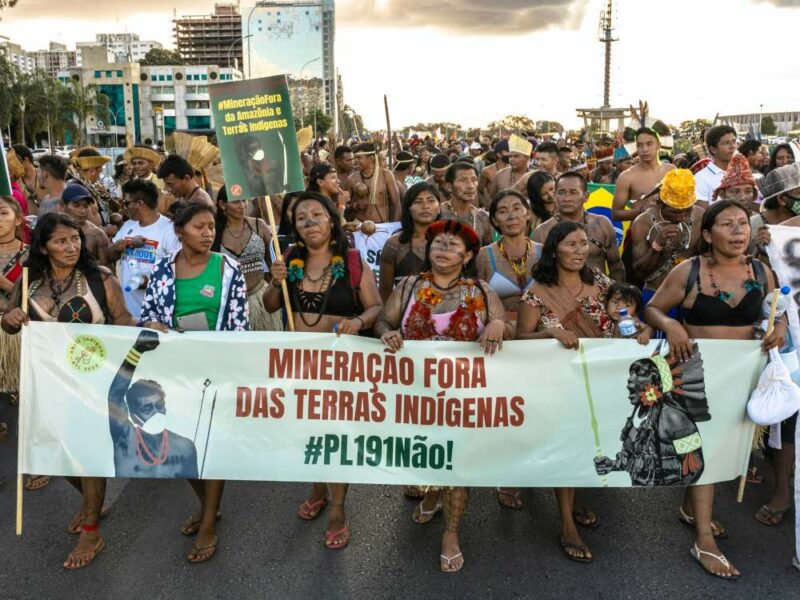
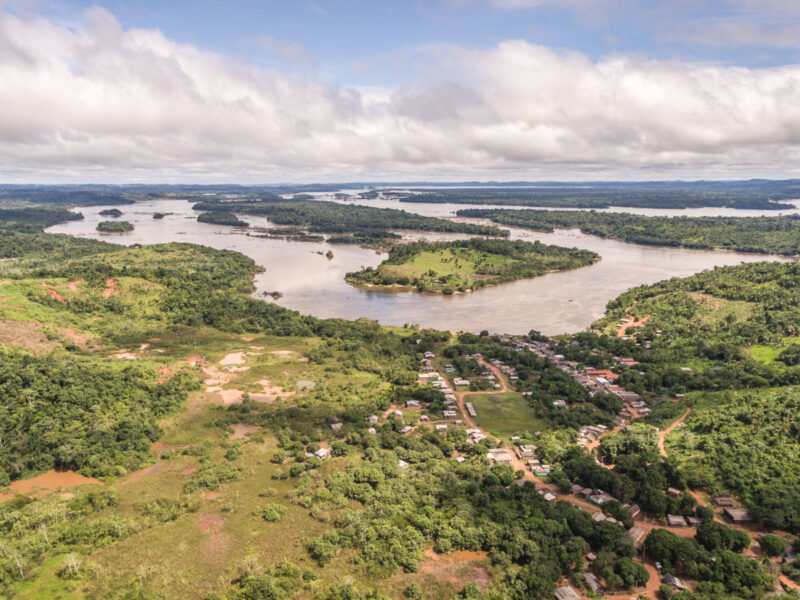
In Brazil, a federal court canceled the mining contract for the Belo Sun project, which would have established a massive open-pit gold mine along the Xingu River. The ruling responded to legal action challenging the project’s violations of Indigenous rights and environmental protections.
The decision represented a significant barrier to mining expansion in one of the Amazon’s most sensitive regions. This victory and our work strengthened coordination among Indigenous peoples across Brazil who are confronting similar threats, reinforcing shared strategies for defense, accountability, and self-determination.
Securing Indigenous Land Rights
Territories recognized at COP30
At COP30, held in the Amazon, the Brazilian government announced significant progress towards the recognition of ten new Indigenous territories. Among them was the Munduruku people’s Sawré Ba’pim territory, covering 150,000 hectares after decades of resistance and advocacy.
Each recognized territory represents more than a legal boundary. These lands are living systems that protect forests, rivers, and biodiversity while affirming Indigenous governance and cultural continuity.
The announcements reflected the growing political force of Indigenous movements demanding that climate commitments translate into concrete land rights.
Amazon Crime
Exposing the systems behind deforestation
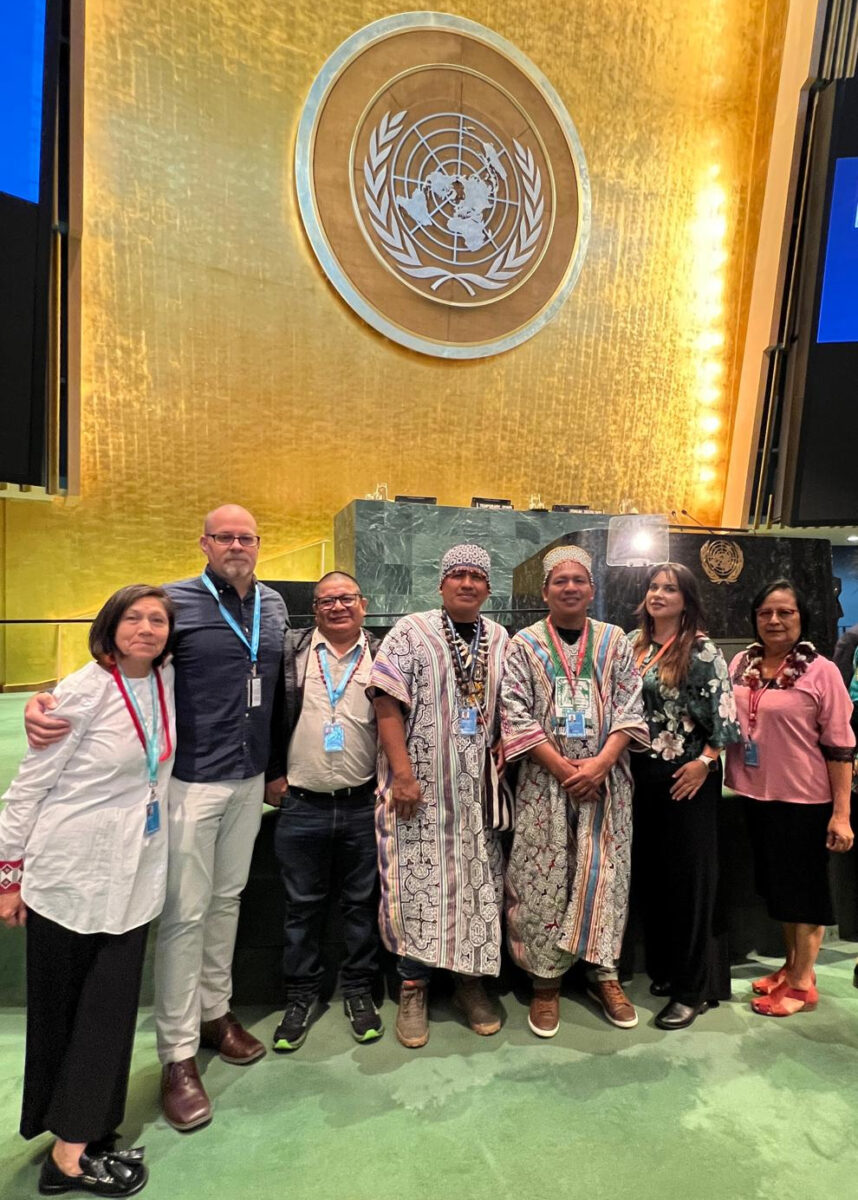
In 2025, new research revealed how transnational criminal networks are driving deforestation, illegal mining, and violence across the Amazon. These findings challenged simplified narratives that obscure the organized, profit-driven structures behind environmental destruction.
Our research was carried to international forums, including the U.N. Convention Against Transnational Organized Crime, where Indigenous perspectives helped shape emerging discussions on accountability and response.
Centering Indigenous rights in these spaces pushed back against approaches that militarize territories while ignoring community-led solutions.
Looking ahead
These victories are neither isolated nor guaranteed to last. Across the Amazon, extractive industries, criminal networks, and political interests continue to target Indigenous lands. At the same time, Indigenous movements are deepening alliances, strengthening governance, and asserting visions for the future rooted in care for territory and life.
That is why Amazon Watch must expand our campaigning in 2026.
In a year of mounting pressure, these moments remind us where real power lies. In Indigenous leadership. In solidarity. In collective action. In the defense of living systems that sustain us all.
As we move forward, these struggles continue to guide the path ahead. Join us!