

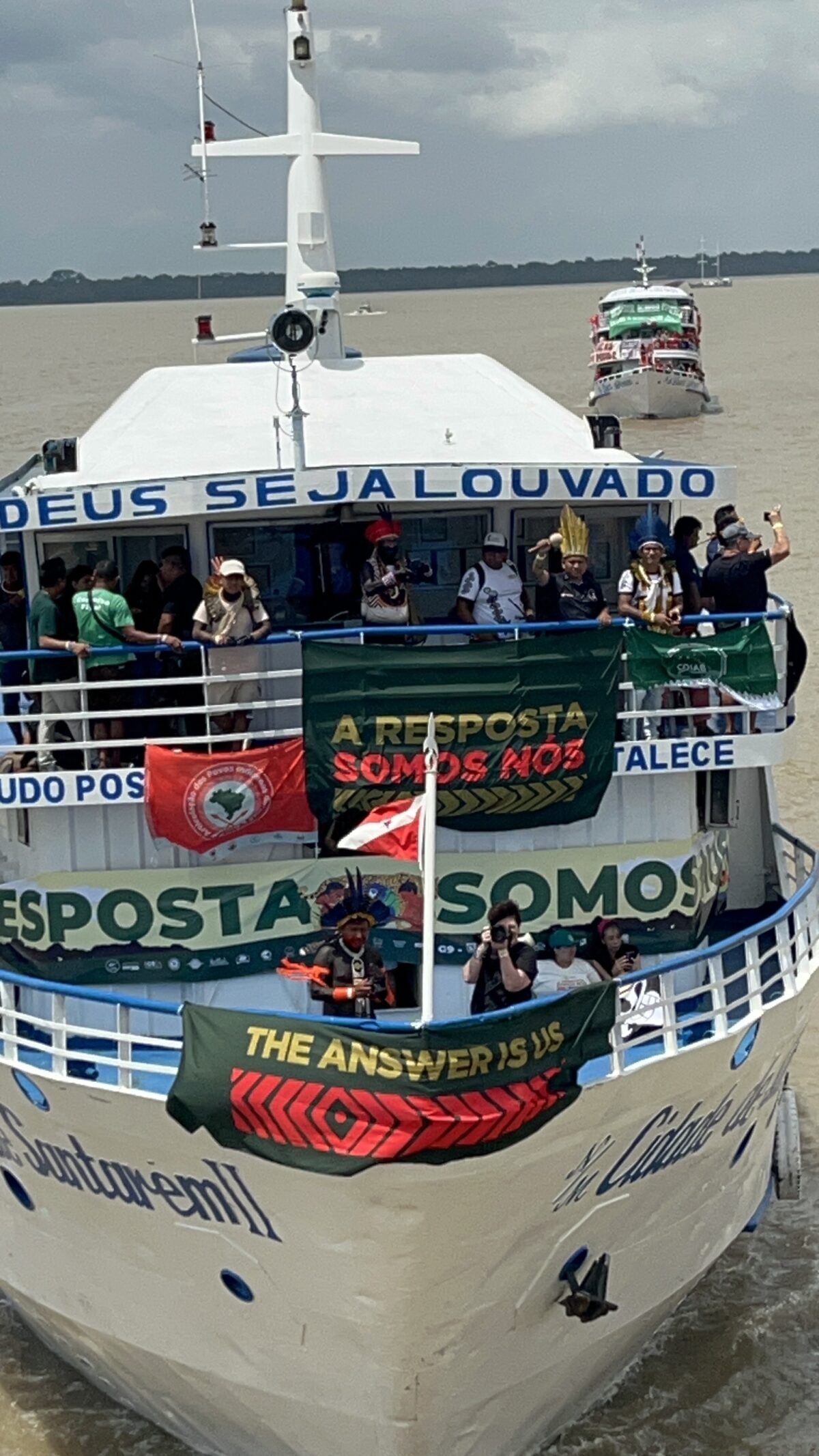
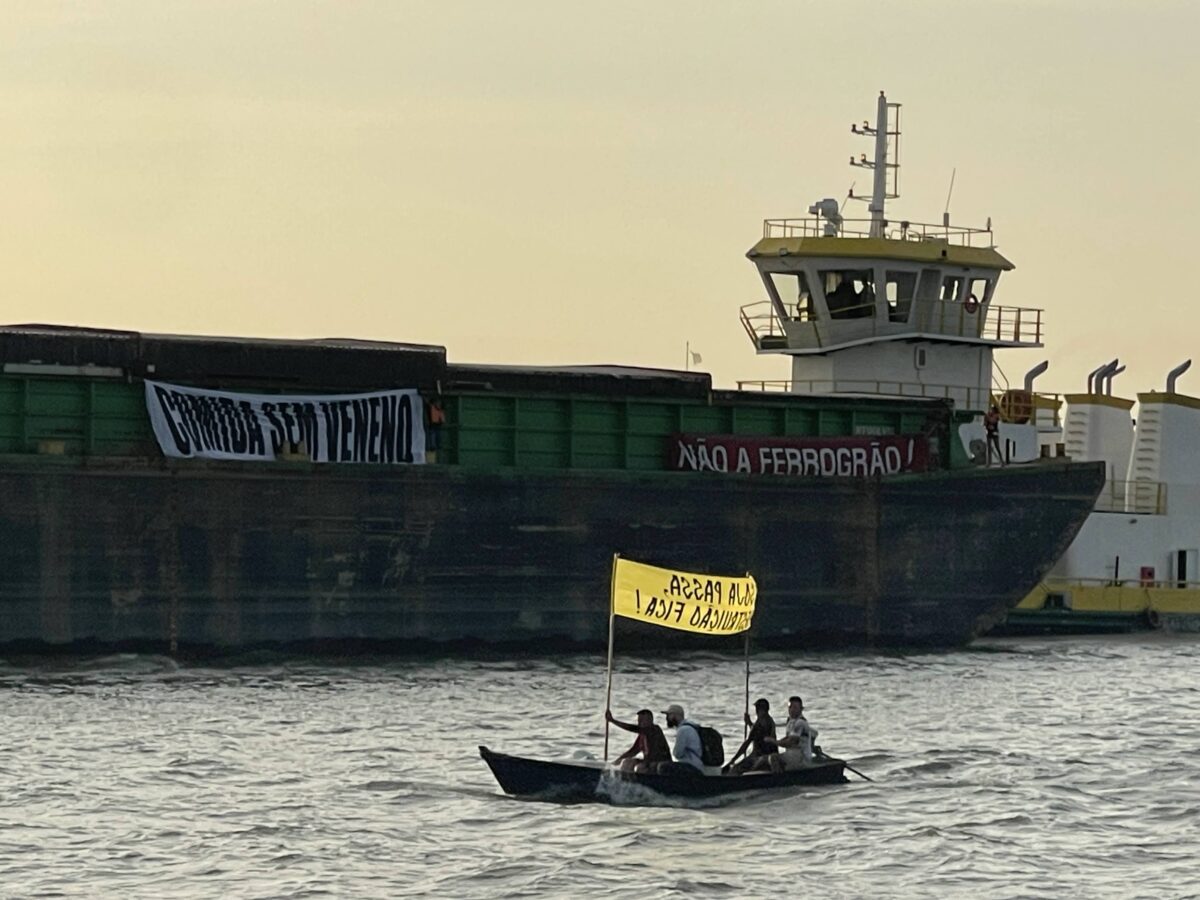
Led by the Tupinambá people, we set out before dawn for a daring action on the mighty Tapajós River to intercept massive barges transporting soy and other commodities to global markets.
Our goal was to deliver a resounding message to Brazilian and international agribusiness: Stop the destructive expansion of agroindustry across the Amazon and Cerrado – the world’s largest tropical rainforest and savannah – and respect the rights and territories of forest peoples.
Known as the “Ancestral Cry,” this direct action formed a central part of the Answer Caravan, a mobilization that energized powerful and pivotal civil society activism in the Amazonian city of Belém for the COP30 climate summit.
COP30 showed more clearly than any other global climate event in the last decade the power of civil society in demanding and ensuring meaningful climate action. It was the first COP in four years held in a democratic country, and the Brazilian government promoted it as “The People’s COP” and “The Forest COP.” Although the summit was heavily influenced by fossil fuel, agribusiness, and mining interests that continue to block progress, it also became a platform for strong and inspiring calls from civil society for the urgent action needed to face the tipping point of the Amazon and the climate crisis.
Although we are fully aware of the limitations of the multilateral system, we traveled to Belém with our partners because we cannot step away from the struggle for our collective future.
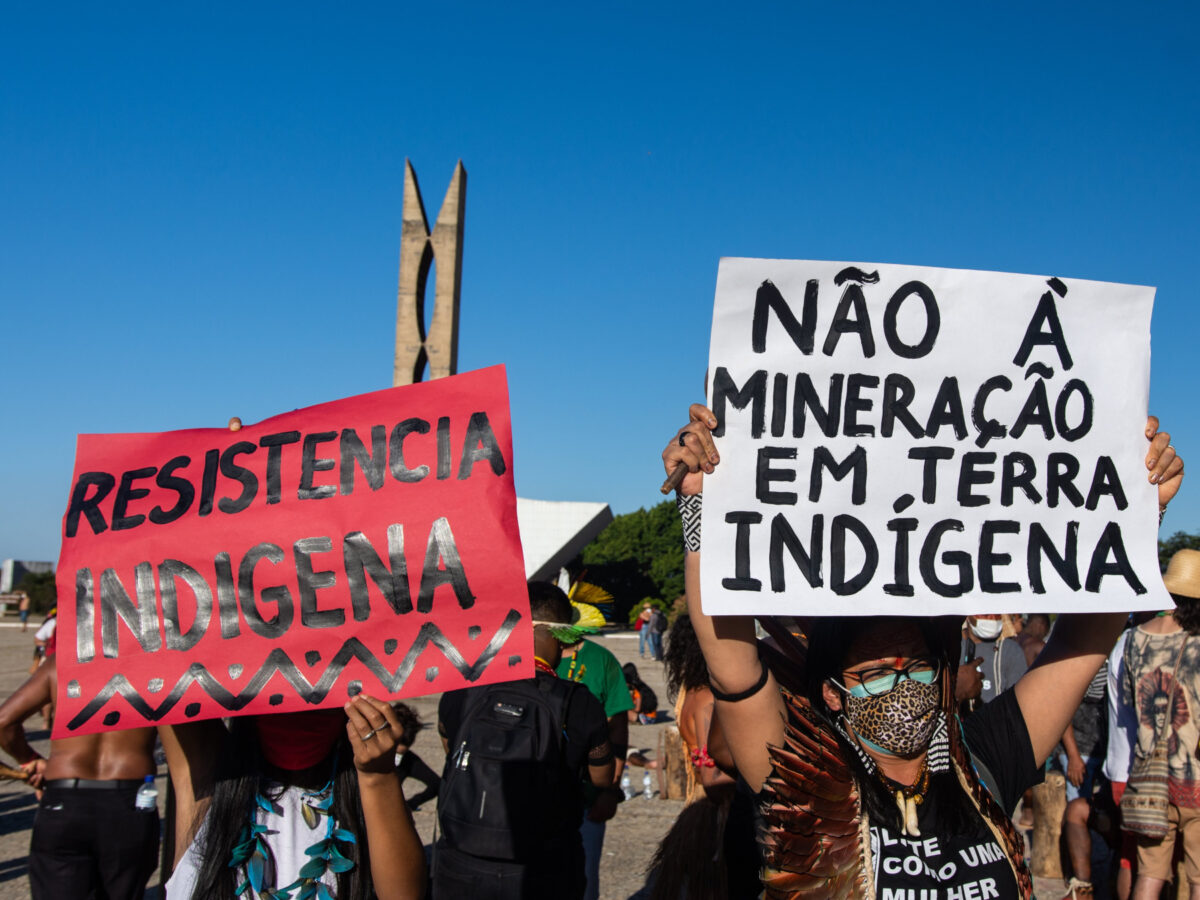
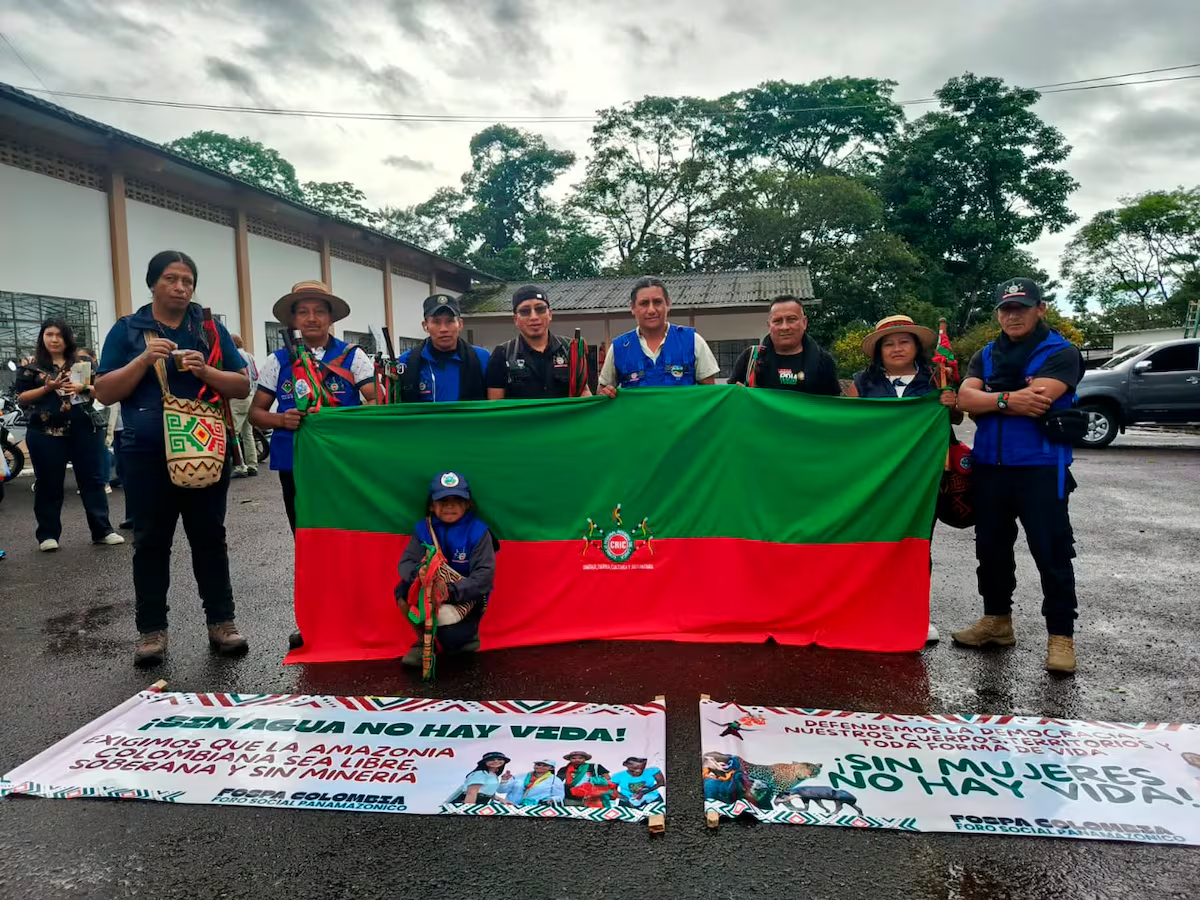
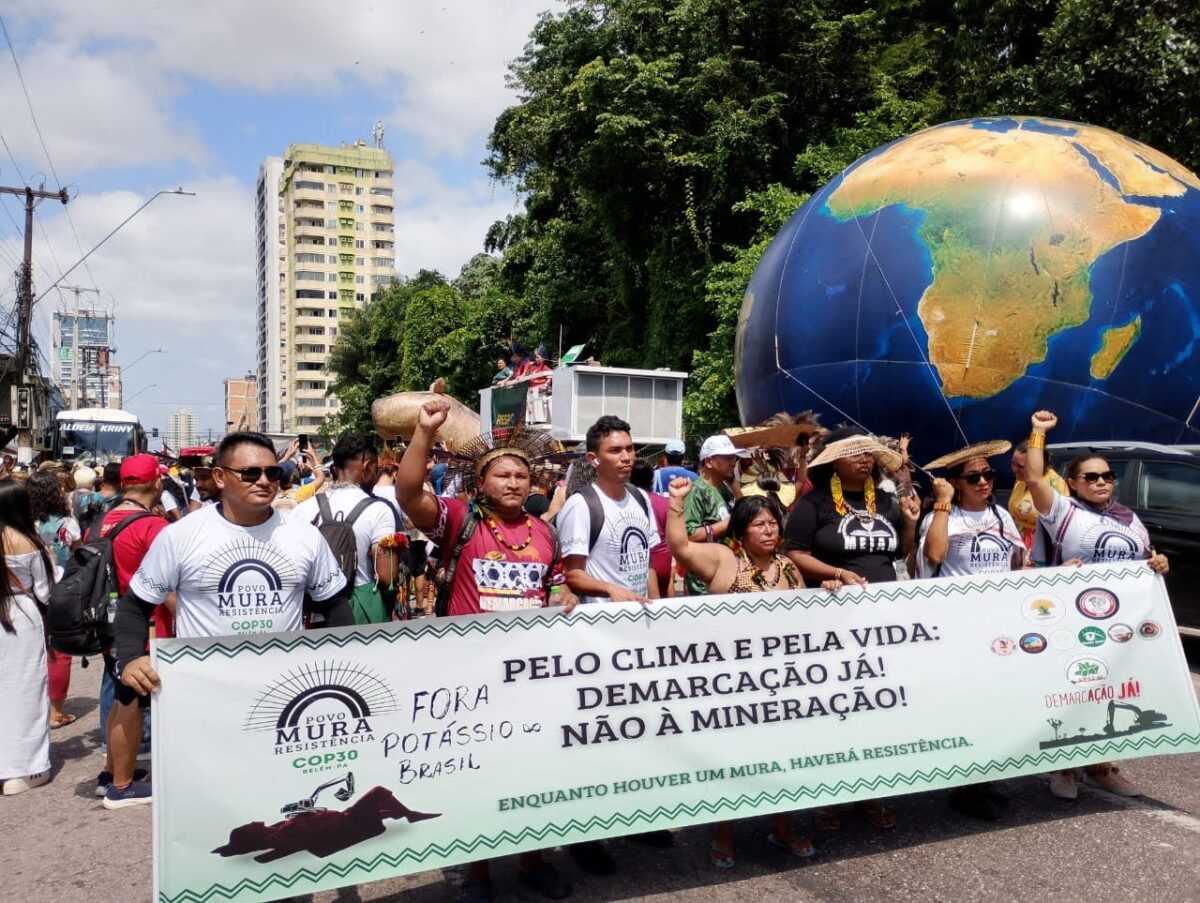
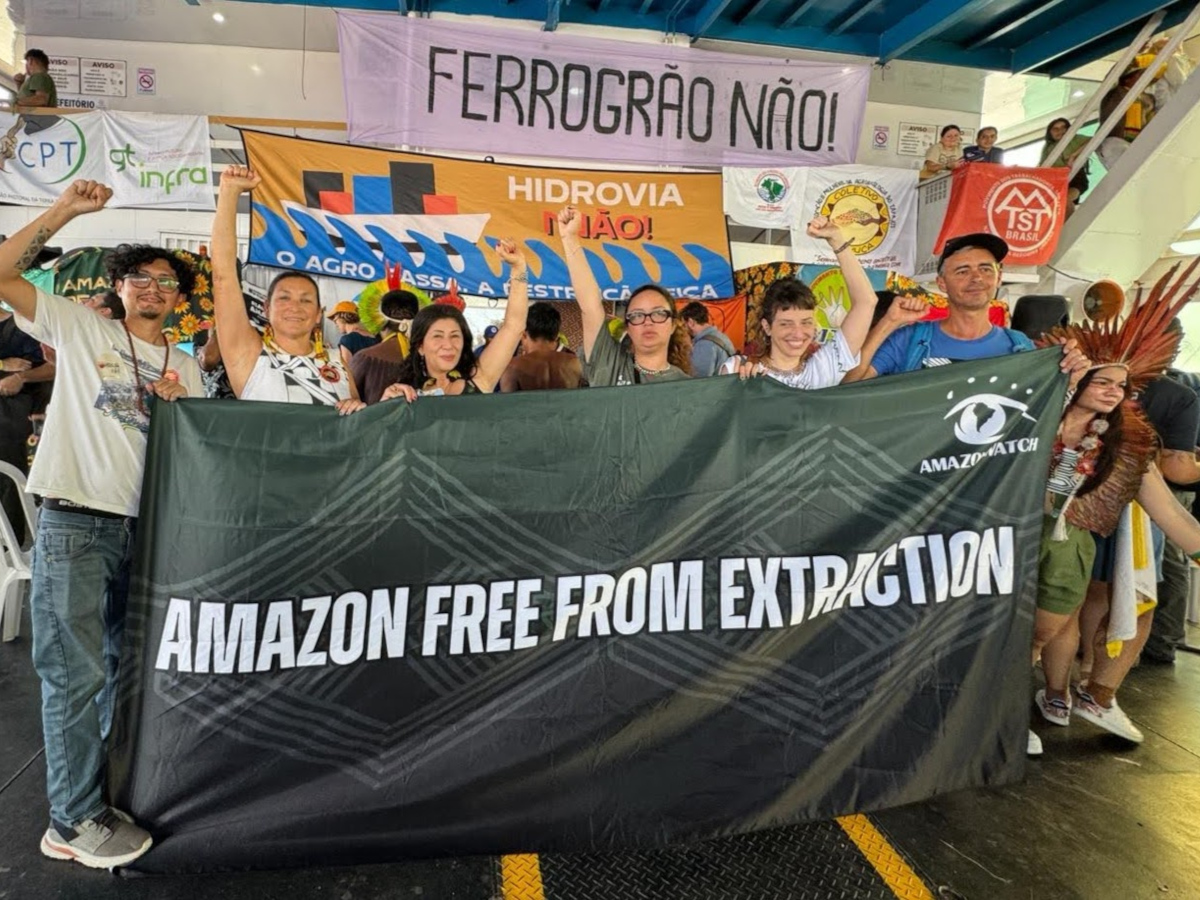
We came in solidarity with our partners’ priorities to respect and demarcate Indigenous lands, ensure direct climate finance to Indigenous Peoples, and to call for an Amazon free of extraction. We came to denounce the expansion of Amazon oil drilling, mining, and agribusiness; the conversion of vital rivers into industrial shipping corridors; and the growing attacks on human rights and environmental protections by organized crime. We emphasized the central importance of Indigenous self-determination and territorial defense, the need for alternative food systems that truly feed people rather than agribusiness, and the principle that any energy transition is only legitimate if it respects forests and forest peoples.
In contrast to the energy in Belém’s streets and waterways, the official negotiation spaces at COP30 felt closed, dominated by technical delegations, and crowded with false solutions like carbon markets.
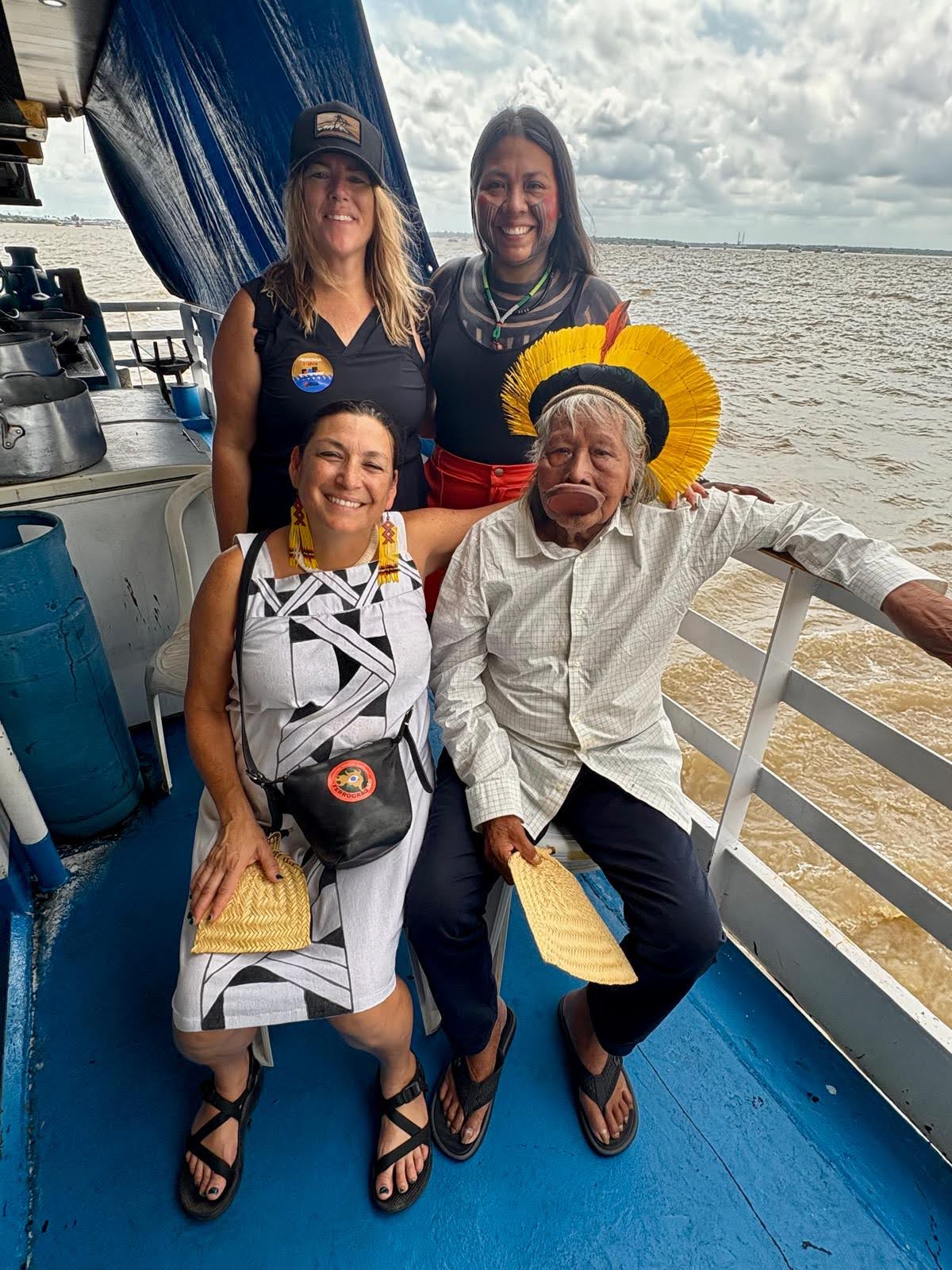
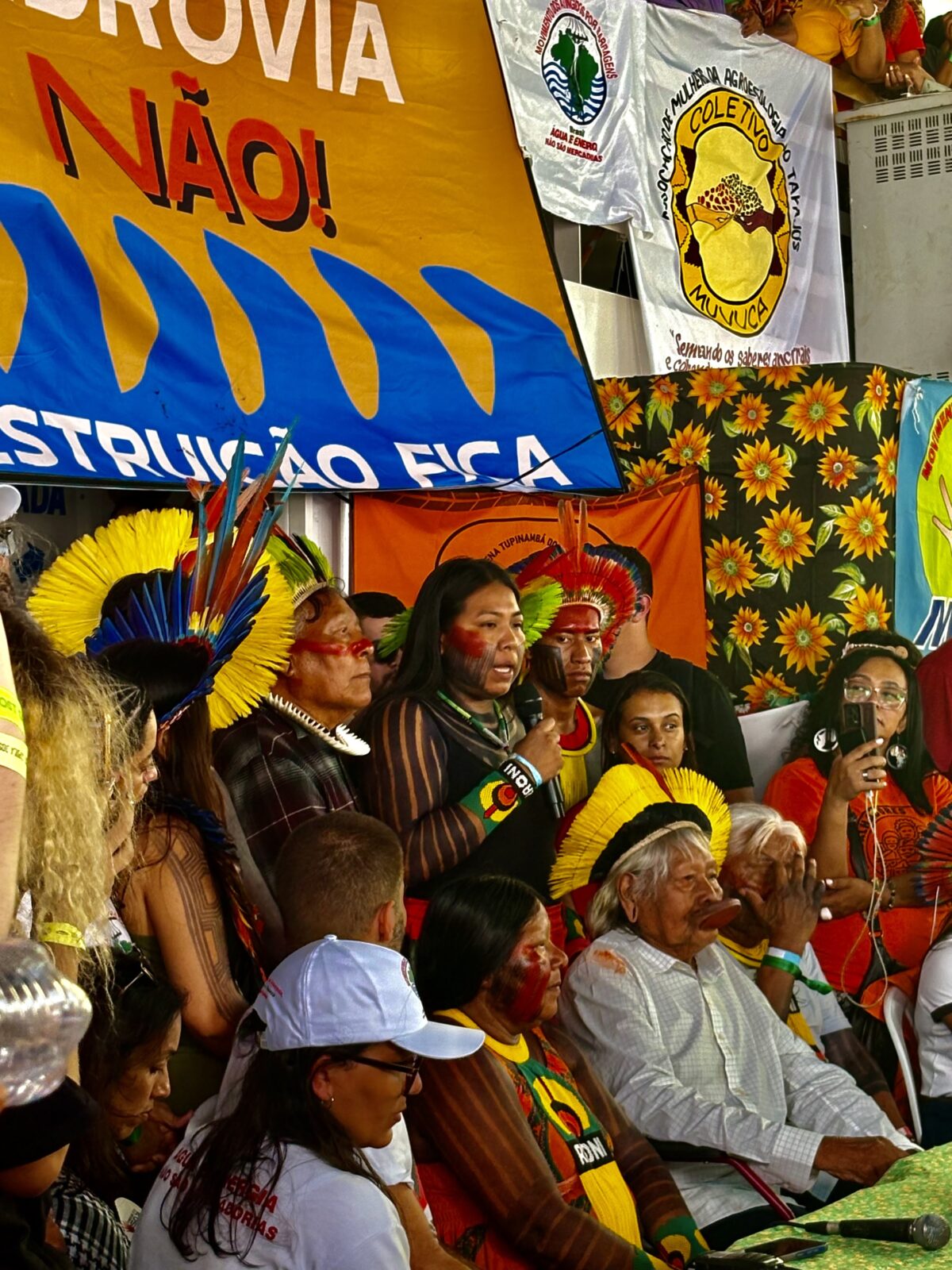
While key decisions had already been set prior to negotiations, the energy in Belém shifted when the Indigenous caravans arrived. The Yakumama Amazon Flotilla traveled for weeks from Ecuador, and the Answer Caravan came down the Amazon River from Santarém. They converged into a powerful “Barqueata” bringing together 200 boats, dozens of movements and organizations, and more than 5,000 people in one of COP30’s most striking and influential actions, culminating with remarks by legendary Kayapo Chief Raoni Metuktire, a historic figure in the Indigenous struggle in Brazil and around the world.
“When I was younger, I spoke about these problems with your leaders. For a long time, I’ve been warning that we must avoid these bad outcomes. Now you see the rivers drying up, and it is because of deforestation,” said Raoni. “The government wants to drill for oil in the Amazon and build a railway. We will all face problems if this continues. I told Lula not to exploit oil in the Amazon and that we don’t want the Ferrogrão. And if necessary, I’ll scold the president. He must show respect,” he stated.
The chief also made an appeal to the international community: “I’ve spoken with heads of state from other countries. I always tell them we need to preserve. When I travel abroad, no one offers me money for minerals or wood. They understand that our territories must be protected. That’s what we want: respect and commitment to life.”.
In the days that followed, thousands participated in the Peoples Summit, and over 70,000 took to the streets for the Peoples Global March.
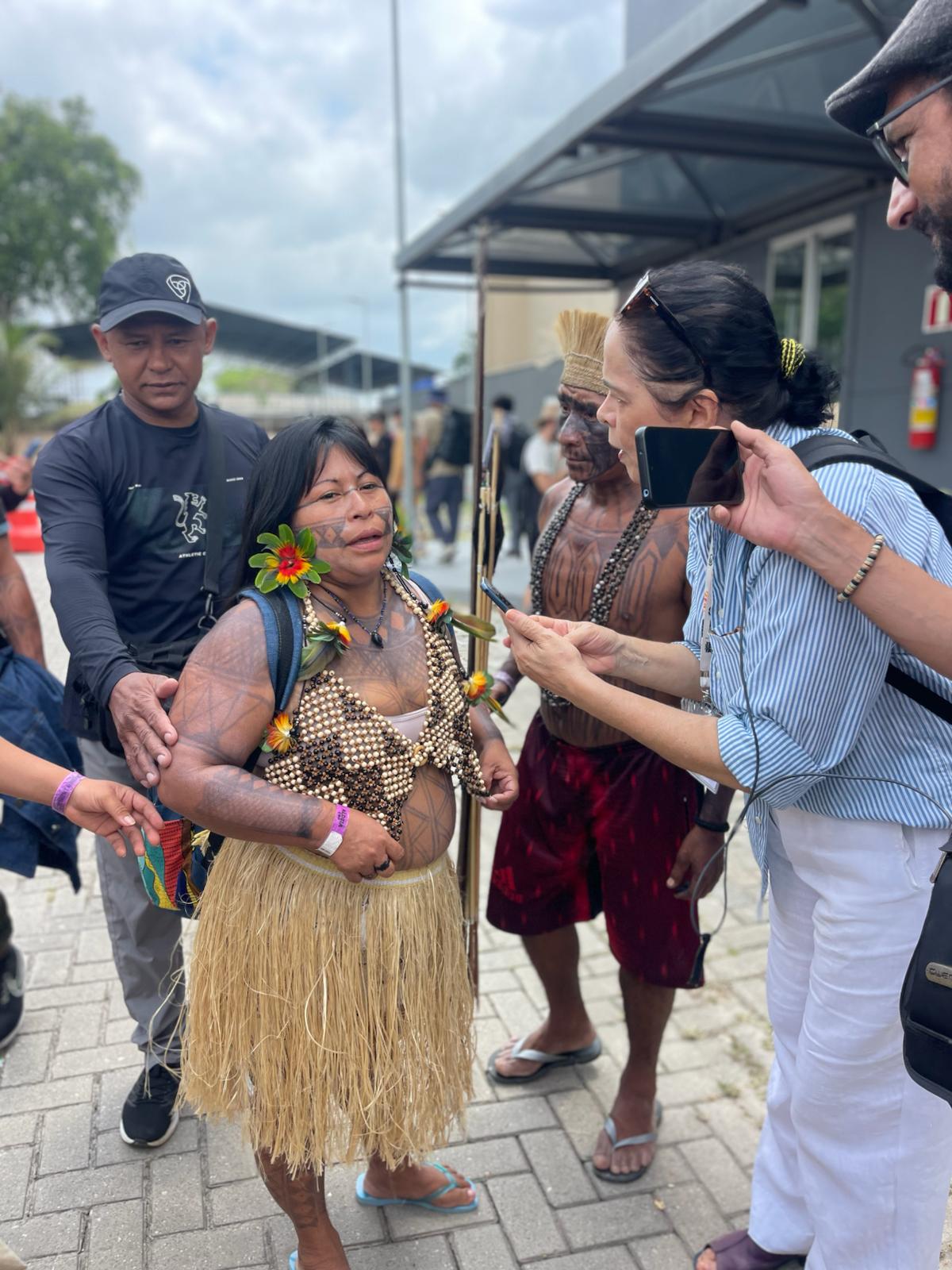
At the end of the first week of COP30, a delegation of approximately 100 Munduruku men, women and children blocked the entrance to the Blue Zone for several hours demanding a meeting to discuss their demands. COP30 President André Corrêa do Lago, Ministers Marina Silva and Sonia Guajajara agreed and received the delegation. A few days later, the Brazilian government announced ten Indigenous land demarcations, including Sawre Ba’pim, Munduruku territory.
This news was celebrated and brought hope that Indigenous demands were being heard. Alessandra Munduruku told Democracy Now!, “we’re very happy that our lands advanced in the demarcation process, but there are so many lands that still need to be recognized and demarcated in Brazil.”
At Amazon Watch, we join the Indigenous Amazonian movement in celebrating the official demarcation of Indigenous lands, the initial reference to territorial rights in the Mutirão text, and reference to the specific inclusion of Indigenous Peoples Living in Voluntary Isolation in the Just Transition Work Programme, but we also regret that ambition was limited and influenced by the fossil fuel and extractive industry that prevented the establishment of Amazon Exclusion Zones.
We are made hopeful, however, by the leadership of Colombia and the announcement of the Belém Declaration on the Transition Away from Fossil Fuels and the call for a conference in April 2026. We look forward to collaborating with our Indigenous and civil society partners and parliamentarians to phase out fossil fuels from the Amazon and beyond.
Phasing out fossil fuels goes hand in hand with a just transition toward a low carbon economy. A major victory for the climate justice movement was the creation of the Belém Action Mechanism (BAM), a proposal for states to drive action on a just transition towards a low-carbon economy supported by governments representing 80% of the world’s population.
For Amazon Watch, COP30 was also an important space to expose the rapid advance of organized crime in the Amazon. Illegal mining, drug trafficking, corruption networks, armed violence, and criminal groups spreading along rivers and forests are now among the greatest threats to Indigenous lives and autonomy. At COP30, we finally saw the issue gain traction in international discussions including early signs of coordination among Amazonian countries that could lead to real policy to protect those who defend their territories by putting their own bodies on the line every day.
None of what happened in Belém would have been possible without the vibrant network of the Brazilian social movement, which supported thousands of people arriving from across the Amazon and all of the biomes of Brazil with dignity and solidarity. It was also made possible by parliamentarians who used their access to open doors and carry into negotiation rooms the urgent concerns of women and men who face persecution in their home countries for resisting oil expansion.
We offer special gratitude to Mídia Ninja, Mídia Indigena, and all community media who, with limited resources but immense commitment, came to Belém to document, amplify, and protect the voices of the Indigenous and civil society movements. Their images of dignity now form part of the collective memory this COP30 leaves behind.
We also thank the international journalists who traveled to the Amazon with a clear ethical commitment to listen and share the truth of Indigenous Peoples and local communities across all nine countries of the basin and to the over 300 artists and influencers who joined Amazonía Calling in solidarity with the Indigenous Declaration.
With COP30 behind us, our work to protect and defend the Amazon and climate in solidarity with Indigenous Peoples continues. They continue to show us the way through resistance and persistence.
We are inspired by what we witnessed and experienced in Belém, especially the fierce leadership of grassroots Amazonian Indigenous women like Alessandra Munduruku, Olivia Bisa, and Patricia Gualinga, Mujeres Amazónicas and more who brought the energy and spirit of the Amazon – the heart of the world – to the streets and stages of COP30. They are the true climate leaders that will guide us out of this climate crisis! Let us all follow their lead.
“What are you doing to the environment? What is your country doing to the environment? What are your corporations, your companies, and your representatives doing to the environment and to Indigenous rights? Do you know what they are doing? Are they respecting the rights of Indigenous Peoples and of the environment? Are you monitoring where investments are going? Are you monitoring how corporate activities are taking place on the ground?
“You need to know, because we, here, we do not eat soy. We do not eat gold. We do not eat iron ore. We eat the fish, and we eat the fruits from the forest. And we need our forest standing. So, I ask you, please, monitor your corporation. Monitor your company. Monitor your governments. Watch your representatives. Be aware of what they’re doing. We need you to do this for us here in the forest. This is my message to you.”
– Alessandra Korap Munduruku