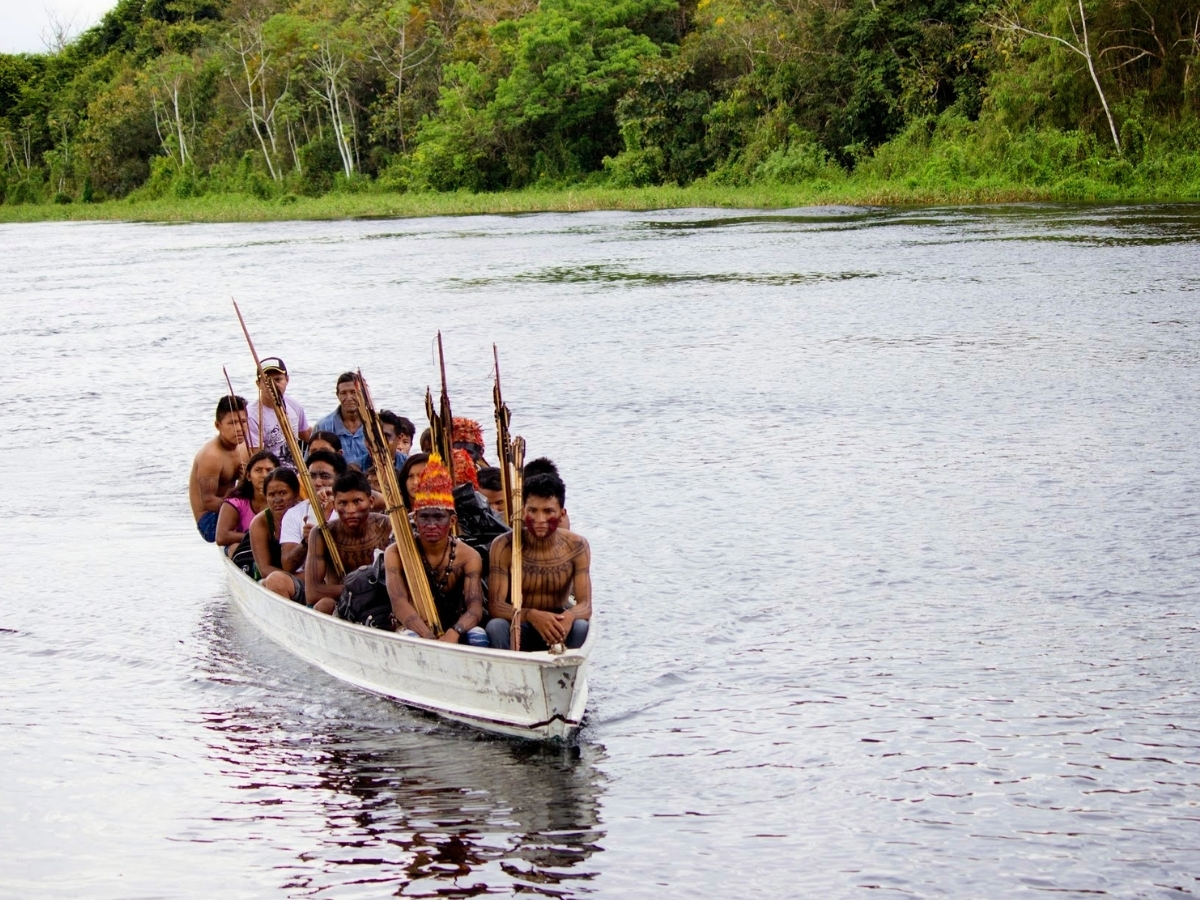
New York, NY – In the context of the United Nations Permanent Forum on Indigenous Issues, Amazon Watch, together with allied organizations, presents the first report to analyze how illicit economies and repressive government responses threaten the rights, territories, and physical and cultural survival of Indigenous peoples. From illegal gold mining to drug trafficking, these activities operate as interconnected and highly adaptive systems across the Amazon, integrate into global markets, and reshape power, control, and security dynamics in the region.
“The expansion of illicit economies in the Amazon cannot be understood solely as a problem of criminality or public security, but as an existential threat to Indigenous peoples,” said Sofía Jarrín, Advocacy Advisor at Amazon Watch.
The analysis, which compares Indigenous territories across Brazil, Colombia, Ecuador, Peru, and Venezuela, shows how these dynamics create forms of criminal governance that replace or weaken both state and community governance systems and impose mechanisms of social and economic control over local populations.
“Criminal networks restrict access to natural resources, pressure or co-opt leadership, sabotage land titling processes, and force communities to reorganize daily life under regimes of fear, surveillance, and dependency,” the report states.
Criminal governance not only drives public security risks, it also alters the material, cultural, and spiritual conditions necessary to sustain life systems in the Amazon, with direct implications for global climate stability.
The report draws on testimonies that Indigenous leaders shared during the International Gathering of Defenders held in Pucallpa, Peru, earlier this year, where more than 60 leaders from the western Amazon denounced how illicit economies and organized crime violate their rights to a healthy environment, health, self-determination, autonomy, and full exercise of self-governance.
The report recognizes the need for state intervention but concludes that governments continue to prioritize reactive strategies centered on militarization and securitization of territories, in line with a global trend that favors repression over rights-based approaches. This approach remains limited because it exacerbates existing risks and fails to address the structural causes driving the expansion of illicit economies in the Amazon.
“It is urgent to incorporate intercultural approaches into security policies and to control the supply chains that connect these illicit economies to global markets. Without recognizing, financing, and strengthening Indigenous authorities, any strategy will fail,” said Raphael Hoetmer, Western Amazon Program Director at Amazon Watch.
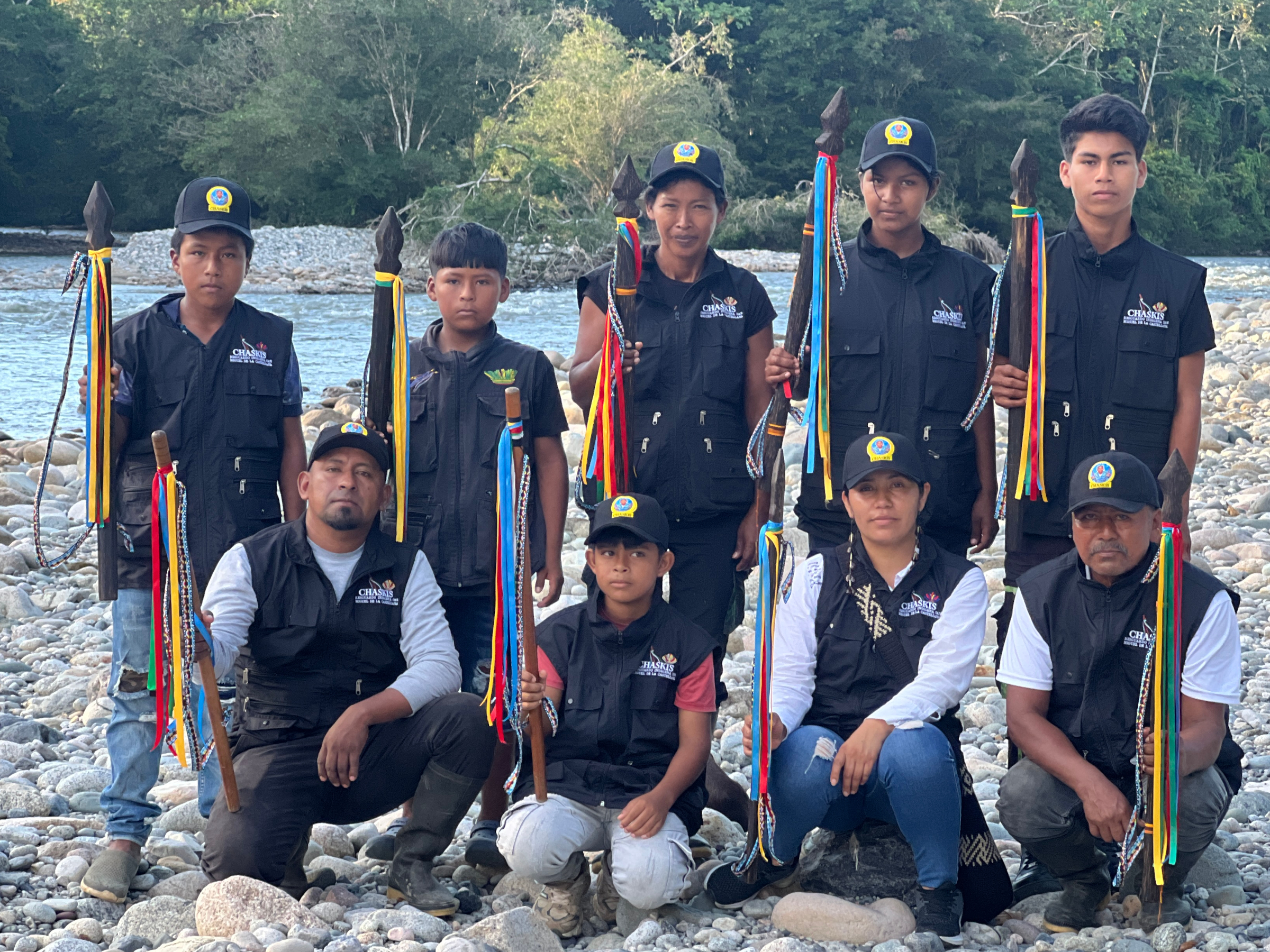
In the face of state absence, limitations, and, in some cases, permissiveness, Indigenous peoples have strengthened their own systems of territorial control and surveillance, including community guards and environmental monitoring networks. The Wampis Nation’s Charip Guard provides a clear example, documenting and reporting the impacts of oil and mining contamination on rivers and forests to the Peruvian state.
“States hold specific responsibilities toward communities that face structural vulnerability due to colonization, exploitation, discrimination, and dispossession. These responsibilities include preventing harm, protecting affected communities, repairing damage, and investigating and sanctioning those most responsible,” Jarrín emphasized.
International Call to Action
Amazon Watch and Indigenous organizations call on the international community, particularly the United Nations Office on Drugs and Crime (UNODC) and States Parties to the Convention against Transnational Organized Crime, to recognize the threat that criminal economies pose to Indigenous territories and rights, as well as the vital role Indigenous peoples play in protecting nature and social peace. This recognition must translate into stronger political and financial support and binding participation mechanisms.
They also call for the development of an international protocol on environmental crimes that recognizes their transnational nature, strengthens cooperation, and addresses their links to global supply chains, while guaranteeing the full and effective participation of Indigenous peoples.
Key Data
- Armed groups recruit children, traffic women and girls, perpetrate sexual violence, and drive conditions that erode cultural continuity and intergenerational knowledge transmission.
- The Amazon basin covers approximately 7.8 million square kilometers and Indigenous peoples manage much of this territory, representing more than 2.2 million people across 511 peoples, including at least 66 in voluntary isolation or initial contact.
- In Amazonian countries, criminal networks or armed groups operate in at least 67% of municipalities, and more than one criminal organization contests control in 32% of these territories.
- Amazon regions report homicide rates higher than national averages, in some cases comparable to conflict zones. Colombia ranks as the most dangerous country in the world for environmental defenders.
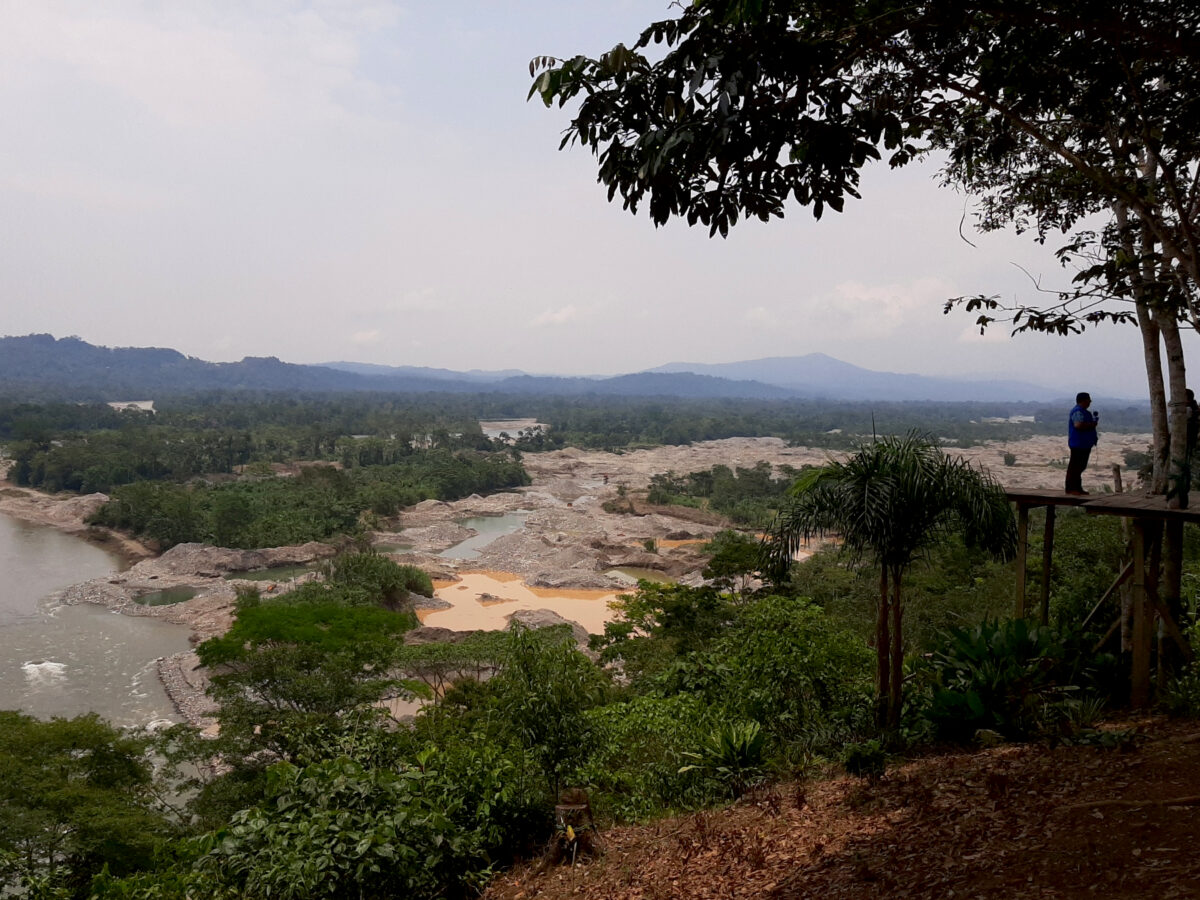
- Between 1985 and 2023, actors destroyed more than 88 million hectares of Amazon forest, including over 2 million hectares linked to illegal mining.
- All cases analyzed report health impacts, including mercury contamination above World Health Organization standards, affecting water, fish, and Indigenous communities.