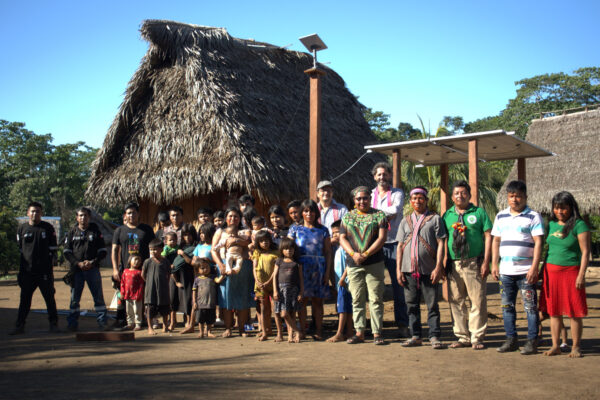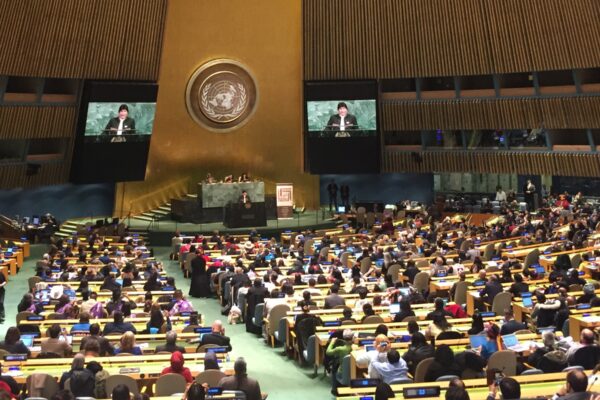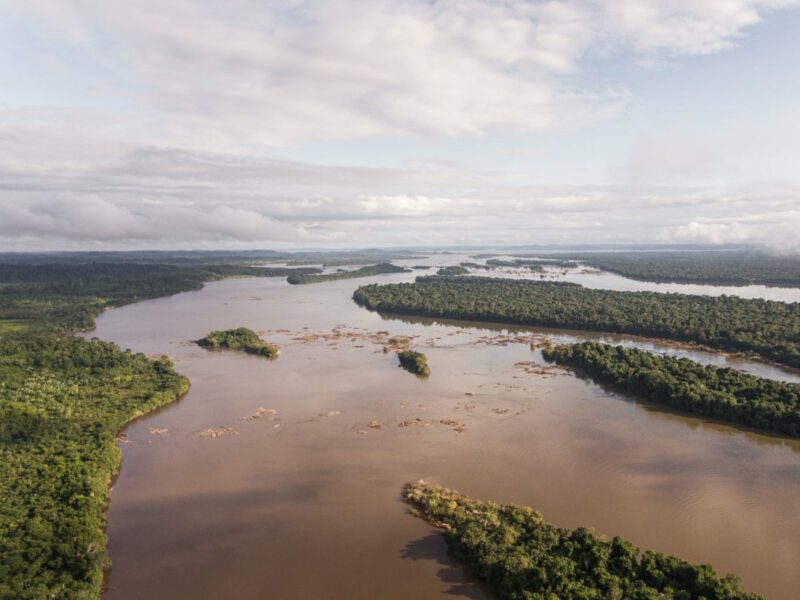

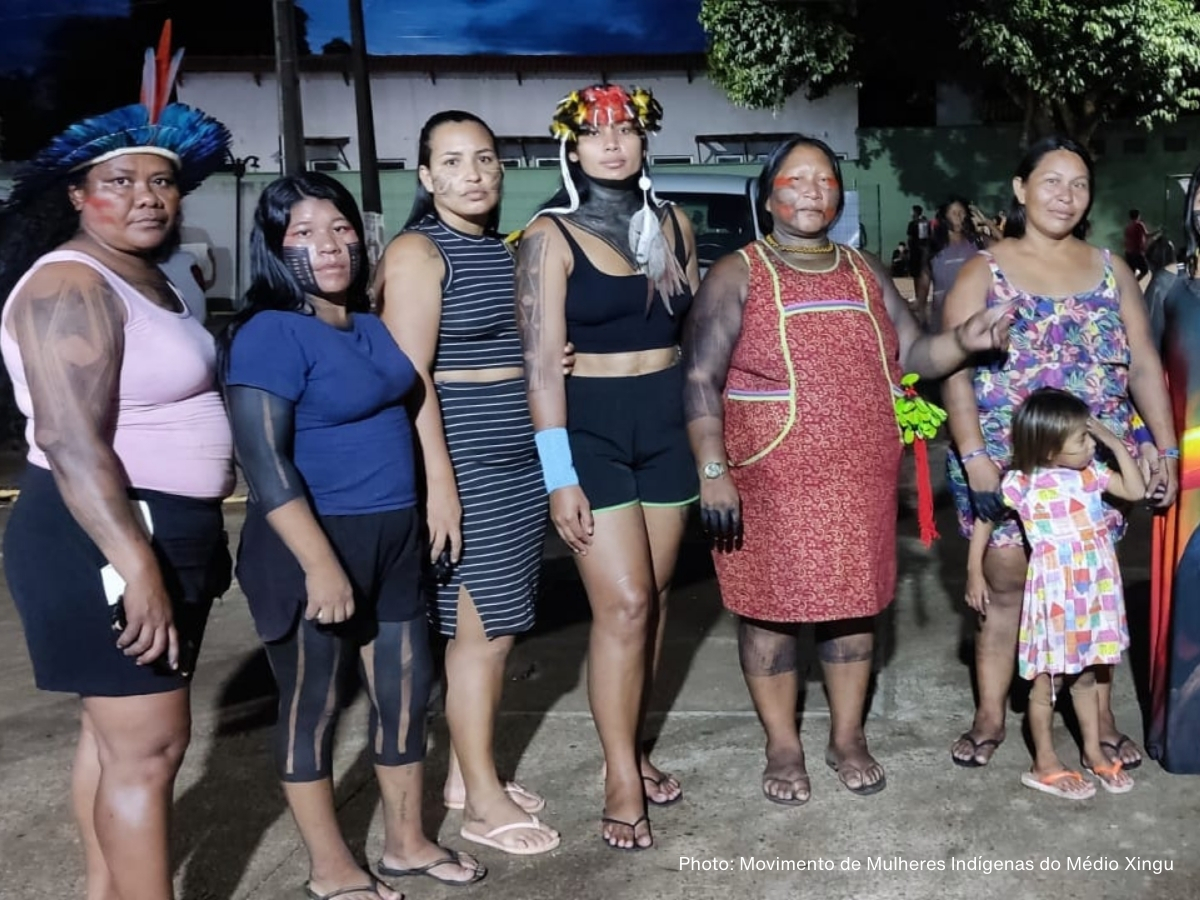
Belém, Brazil – Since February 23, more than 140 Indigenous people, led by the Middle Xingu Indigenous Women’s Movement (MMIMX), have occupied the Brazilian federal Indigenous agency FUNAI’s regional office in the Amazonian city of Altamira to demand the suspension of Belo Sun’s mining license for its “Volta Grande” gold mine on the banks of the Xingu River. Indigenous women from the region have emerged as leading defenders of the river and their territories, organizing resistance to projects that threaten water, food systems, and community health. The proposed open pit mine would sit along the Volta Grande stretch of the Xingu, an area already severely impacted by the Belo Monte mega dam and home to dozens of Indigenous communities, which leaders say cannot withstand another large scale industrial project.
The mobilization brings together representatives of the Juruna, Xikrin, Xipaia, and Curuaia peoples, who are calling for the suspension of the Canadian company’s license for the Volta Grande project, slated to become Brazil’s largest open pit gold mine in the heart of the Amazon. Protest leaders also demand that authorities transfer Belo Sun’s licensing process from the Pará state government to the federal level under the authority of the Brazilian Institute of Environment and Renewable Natural Resources (IBAMA), arguing that the project threatens Indigenous territories and the ecological stability of the Xingu River basin.
The protest follows a ruling last month in which a judge in Brazil’s First Circuit Court (TRF1) reinstated the project’s installation license. In response, the Federal Public Prosecutor’s Office (MPF) filed an appeal that seeks the immediate suspension of that ruling. Prosecutors state that Belo Sun has not fully complied with legal requirements that protect threatened communities and warn that allowing the project to advance could cause permanent socio-environmental and cultural damage.
“We are trying to overturn Belo Sun’s installation license, and we also want this process taken out of the hands of the state government and transferred to IBAMA, because for the moment now it remains under [the authority of the Pará state environmental agency] SEMAS,” said Sol Juruna, a MMIMX leader from Paquiçamba Indigenous Territory, one of the areas most threatened by Belo Sun’s mega-mine.
According to a manifesto released by the movement, the peaceful occupation of FUNAI has suspended the agency’s operations and began after the government delayed responding to demands previously presented by Indigenous women from the Middle Xingu. “This extreme measure was taken due to the delay and inefficiency of the state in guaranteeing our rights and protecting our territories,” the document states.
The letter also rejects the ruling that reinstated Belo Sun’s installation license and states that authorities did not conduct the required Free, Prior, and Informed consultation with Indigenous peoples directly affected by the project. The document calls for the suspension of Belo Sun’s installation license and explains how the region has already suffered severe impacts from the Belo Monte mega dam. It demands adherence with FUNAI’s 2015 technical opinion, which recommended blocking any new large scale projects along the stretch of the Xingu most impacted by Belo Monte because the dam redirected 80 percent of the river’s flow to an artificial canal.
Mounting pressure from Indigenous women comes amid warnings from public institutions and researchers about flaws in the Volta Grande project. The report Minando Direitos (“Mining Rights Away”), released in November 2025 in partnership with Brazil’s Ministry of Indigenous Peoples and the Latin American Social Sciences Faculty (FLACSO), describes the Belo Sun case as emblematic of Indigenous rights violations in the Amazon. The study states that authorities licensed the project without adequate studies of all threatened Indigenous communities and without conducting Free, Prior, and Informed consultation with those communities.
The same report states that the Volta Grande Project includes two open pit mines, two reservoirs, and a tailings dam with a capacity of 35.43 million cubic meters, with structures located adjacent to the Xingu River. The report shows that at least 20 Indigenous villages already experience or may experience direct and indirect impacts from the project, including risks of contamination from toxic compounds such as cyanide, arsenic, and lead, along with cumulative impacts from the Belo Monte dam.
These warnings align with a 2022 report published by Amazon Watch and the Association of Brazil’s Indigenous Peoples (APIB), which demonstrates how Belo Sun’s proposed mega mine poses a serious threat to biodiversity, the climate, and the livelihoods of communities in the Volta Grande region. The document notes that industrial mining can drive deforestation within a radius of up to 70 kilometers and compares the risks of the project’s tailings dam to those of recent, major mining disasters in Brazil such as Mariana and Brumadinho.