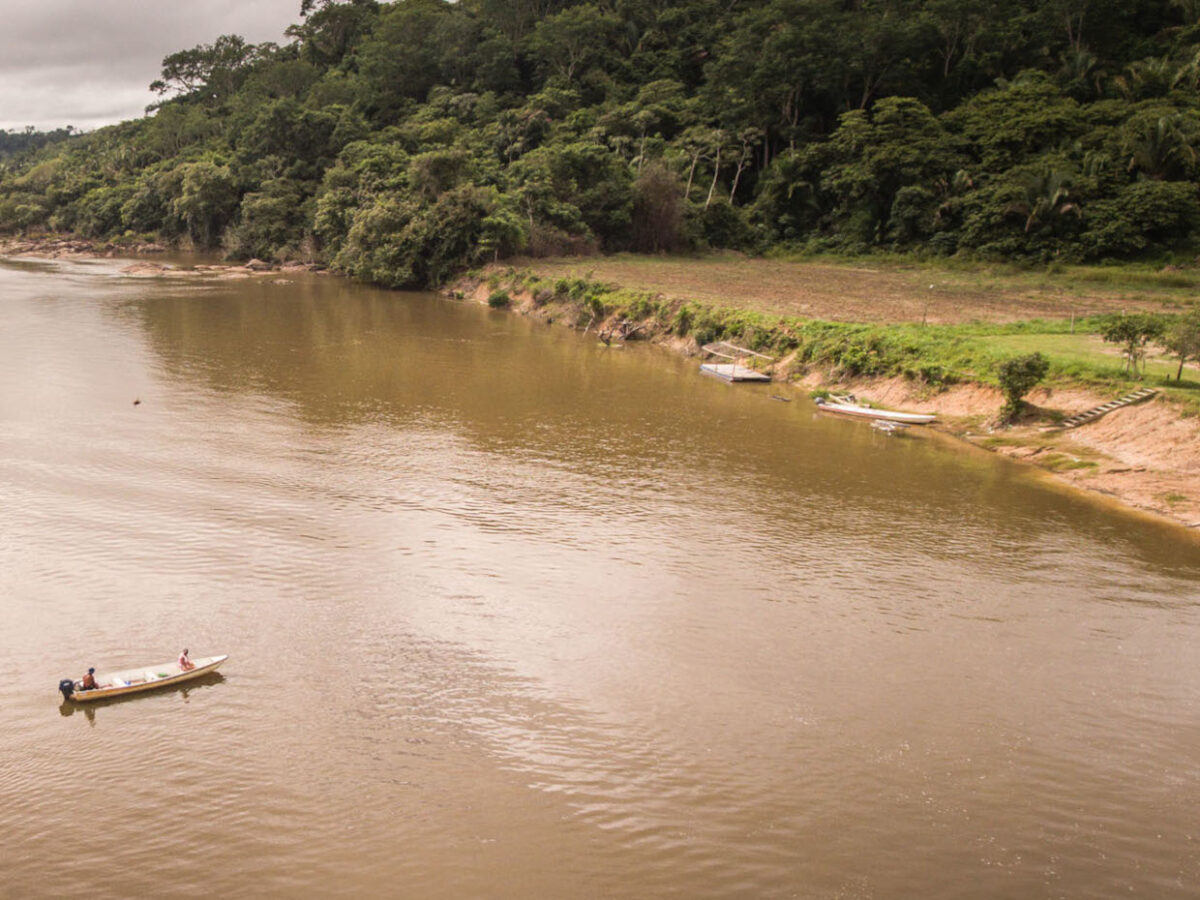
From the U.S. to Brazil, unchecked corruption and corporate greed are creating multiple severe threats. Along the Xingu River in the Brazilian Amazon, Belo Sun’s long-stalled Volta Grande mega-mine is dangerously close to breaking ground, and the consequences could be catastrophic.
A recent cash infusion from Luxembourg-based investor La Mancha Resource Capital, combined with a shocking court ruling, has given the Canadian company new momentum to push forward with one of the most destructive mining projects the Amazon has ever faced.
In December, La Mancha quietly acquired a significant stake in the mega-project, doubling its stock price while touting its self-proclaimed “environmental and social programs and close collaboration with local communities and stakeholders.”
“La Mancha” means “The Stain,” and it is living up to its name by pumping financial oxygen into an extractive project that threatens to generate obscene wealth for a few while irrevocably defiling a unique and highly sensitive ecosystem that sustains hundreds of communities.
La Mancha’s surprise acquisition of 17% of Belo Sun’s stock came on the heels of another shocking setback for the environment and the peoples of the Xingu’s Volta Grande. Last month, a Brazilian court ruled that the mine’s environmental licensing process, which has been suspended since 2017 due to the company’s failure to consult Indigenous communities impacted by the projected mining operations, should be wrested from the federal environmental agency IBAMA and handed over to the Pará state agency, SEMAS. Unlike IBAMA, SEMAS is largely known for rubber-stamping highly destructive development projects to benefit powerful economic and political interests. The move sent Belo Sun’s stock soaring.
The same court had previously ruled in 2023 that Belo Sun’s Volta Grande Project fell within IBAMA’s federal jurisdiction because the mine would have compounding negative impacts with the Belo Monte hydropower dam, which is under the authority of IBAMA, and because it would affect Indigenous lands.
It is plausible that La Mancha was aware that this key regulatory hurdle would be overturned when it bought shares of Belo Sun, allowing it to double its investment overnight. Regardless, it is clear that the financier is more concerned with lucrative profits than the social and environmental well-being of communities, given the catastrophic risks of the project. Imagine Brazil’s horrific Mariana or Brumadinho mining dam disasters playing out in the heart of the Amazon, with megatons of mining sludge laced with arsenic and cyanide released into one of the basin’s most important tributaries. Specialists have shown how Belo Sun’s proposed tailing dam design represents an “unacceptably high” risk of triggering such a calamity.
What stands in the way of Belo Sun plundering the Volta Grande? The company remains deprived of its critical land concession since a court annulled its dubious contract with INCRA in early December last year. Without approved access to the land under which lie the rich seams of gold, a license to operate the project is essentially meaningless.
INCRA’s role is pivotal and could be the next domino to fall, clearing a path for Belo Sun to operate after more than 13 years of attempting to mine the Volta Grande. Important sectors within INCRA continue to execute the predatory vision of the Bolsonaro regime that granted Belo Sun access to a vast land concession in 2021, even threatening to arbitrarily displace hundreds of families to a far-flung settlement.
Brazilian news outlet Estadão reported that INCRA agreed to Belo Sun’s terms after the company offered the agency farmland as well as two large 4×4 trucks, 10 notebook computers, two tablets, four scanners, and four GPS devices. Belo Sun’s devious tactics, and the willing corruption of INCRA, demonstrate how tenuous the 2024 ruling annulling the project’s land concession could prove to be.
All of these dynamics are playing out amid a backdrop of Belo Sun’s aggressive behavior in the Volta Grande region, where it has been accused of steamrolling opposition to its project through a campaign to divide and conquer communities. The company’s heavy investments to coerce or purchase the acquiescence of local inhabitants also indicate that it may know something about which we can only speculate: that its mega-mine is poised for final approval.
The lower Xingu basin and its peoples simply cannot survive another devastating mega-project so near to the Belo Monte dam, which has already caused incalculable environmental and humanitarian harm. Additionally, the planet cannot withstand the further destruction of the Amazon rainforest that Belo Sun’s project would bring about.
The importance of stopping the Volta Grande mine for our collective climate and future cannot be overstated. This mine would not be just a local disaster – it would cause a global crisis. The Amazon is the heart of our planet’s weather system, and Belo Sun is on the verge of tearing another gaping wound in that heart. We cannot allow this to happen. The time to act is now in solidarity with frontline defenders in Brazil.