
A new report by Amazon Watch and Amazon Underworld documents how U.S.-backed militarization, expanding criminal economies, and incoming right-wing governments are converging in one of the most volatile regions of the Amazon. Indigenous and Amazonian communities are bearing the disproportionate cost – caught between armed group control and government violence.
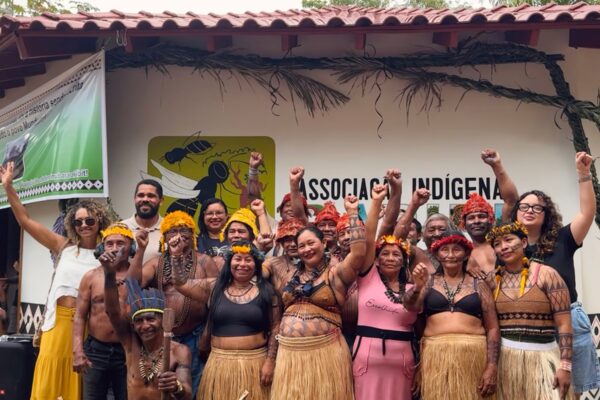
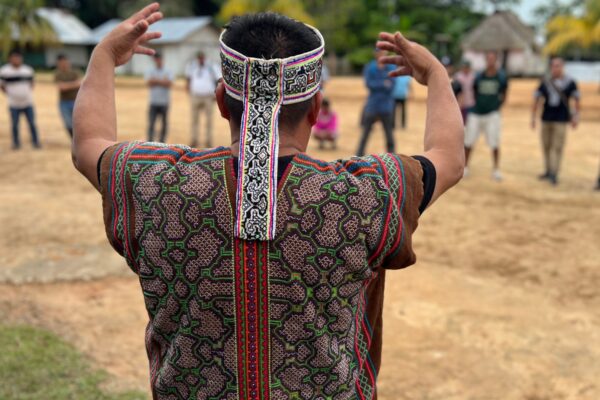
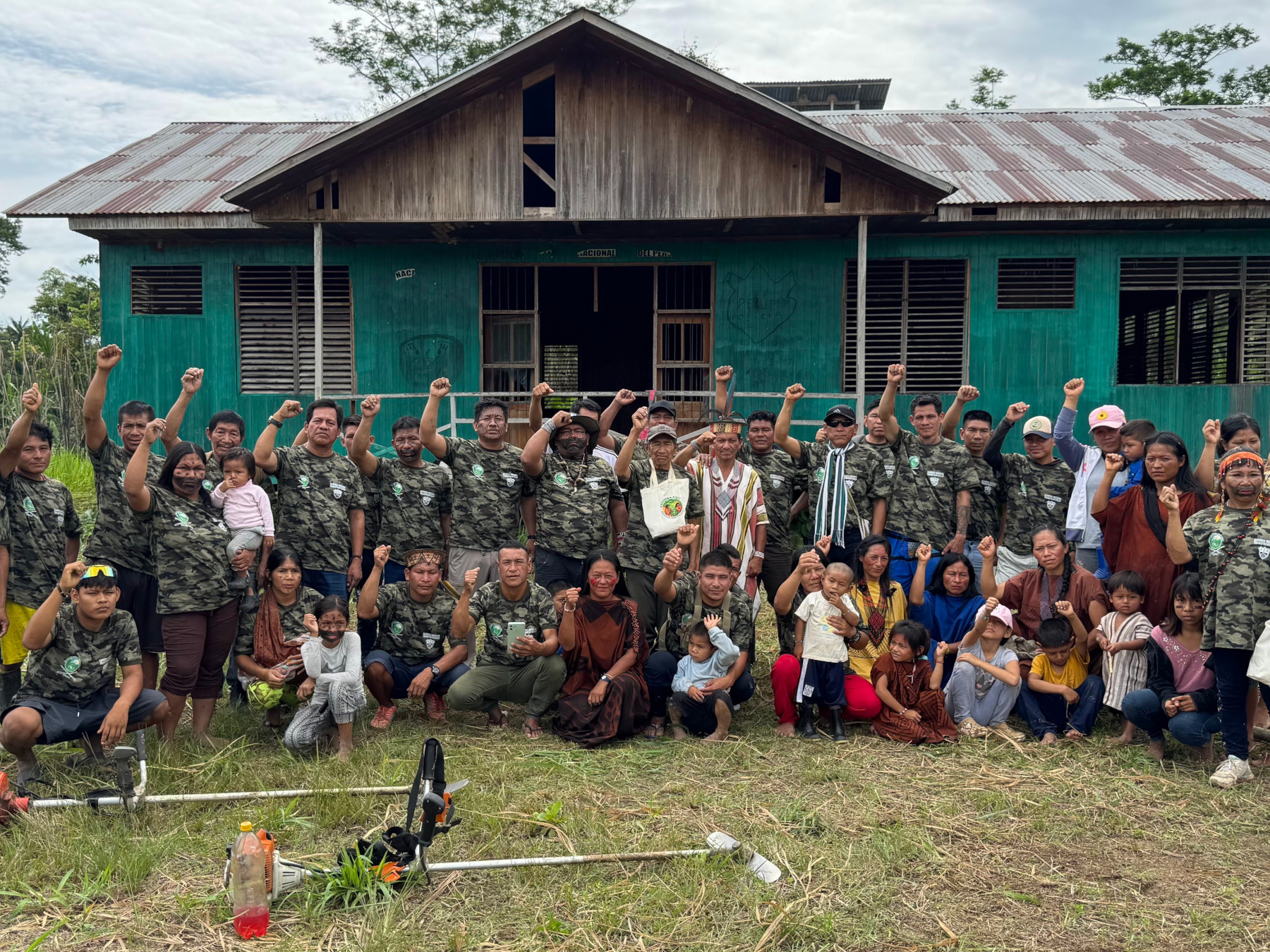
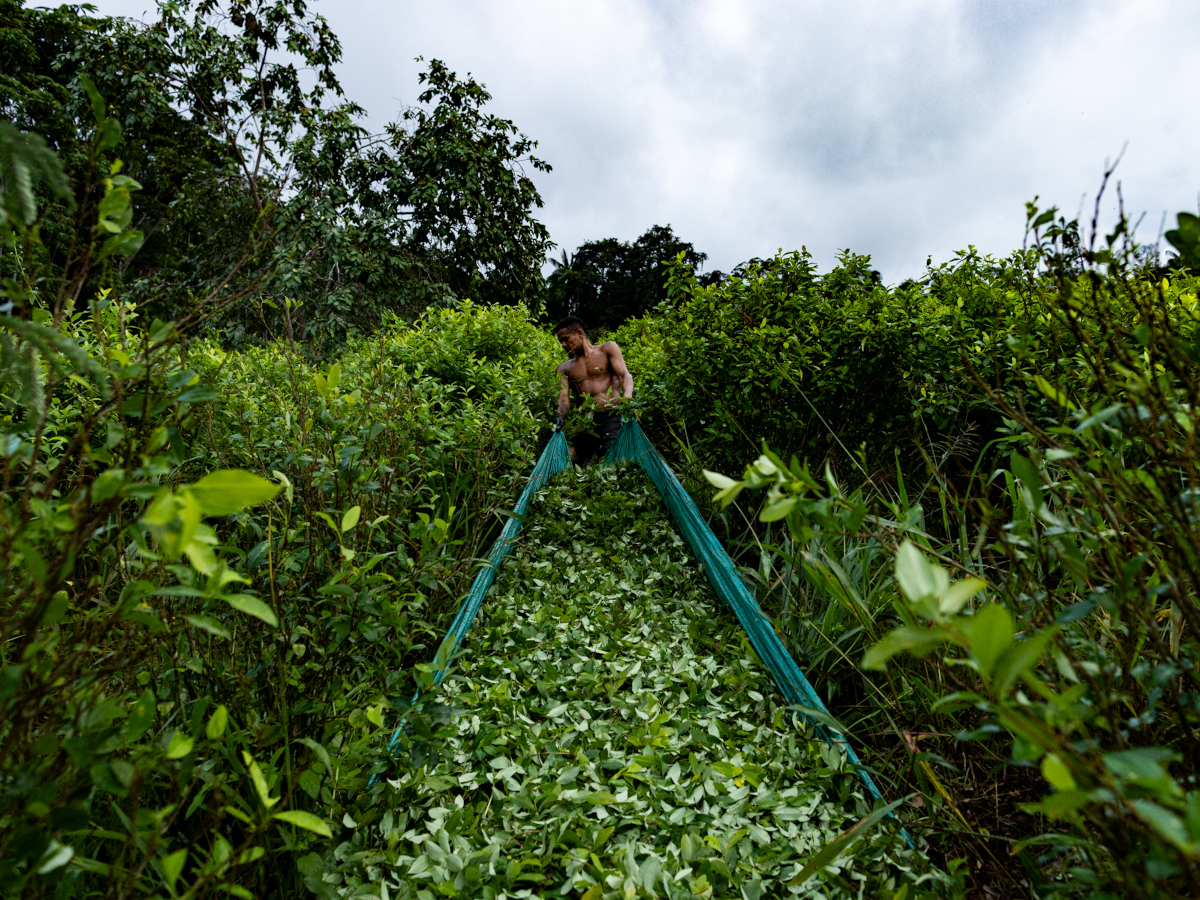
Photos available here (credit: Tom Laffay)
Lima, Peru – A new investigation by Amazon Watch and Amazon Underworld reveals how organized crime, U.S.-led militarization, and extractive expansion are converging in the Colombia-Ecuador-Peru tri-border region, with Indigenous peoples and Amazonian communities caught in the middle.
Triple Trouble: Geopolitics, illicit economies, and the risks of the “war against narco-terrorism” in the Colombia-Ecuador-Peru tri-border draws on four recent field trips, interviews with government officials, community leaders, and researchers, and a review of security documents and journalistic materials. It documents how the United States has deepened its military involvement through the Shield of the Americas initiative and the designation of criminal groups in all three countries as foreign terrorist organizations.
A hardline political realignment is sweeping the region. The rise to power of Abelardo De la Espriella in Colombia and Keiko Fujimori in Peru, joining Daniel Noboa in Ecuador, is cementing ‘mano dura,’ or ‘iron fist,’ policies as the dominant response to armed groups and illicit economies, in close alignment with the United States’ Shield of Americas initiative.
Gold displaces cocaine as the dominant criminal economy
The report documents a structural shift in the tri-border region’s illicit economy. Illegal gold mining has emerged as the primary revenue stream for armed groups, reshaping territorial control, environmental destruction, and community dynamics across all three countries. As one community leader from the Napo-Orellana area in Ecuador told researchers: “The strong [economy] now is illegal mining, because even in Colombia there is not much talk of coca anymore, as they are not buying, there is no commercialization of it.”
Comandos de la Frontera (CDF), the most influential armed group in the region, has moved from providing security to mining operations to directly controlling production and commercialization. In June 2026, CDF issued warnings that no one could buy gold locally without the group’s prior approval, while also setting prices for approved buyers. Mercury from illegal gold mining has spread across major waterways – including the Putumayo, Napo, Caquetá, and Nanay rivers – causing neurological disorders, skin conditions, and cognitive impairment in affected Amazonian communities.
Bram Ebus, Co-Director of Amazon Underworld said:
“With a shift in the region’s geopolitical landscape, the risk of militarized security responses is increasing – responses that tend to fail without a comprehensive government strategy. If community security is not prioritized, there will be no real solution to the current crisis of criminal governance.”
Raphael Hoetmer, Western Amazon Program Director at Amazon Watch added:
“The consolidation of organized crime across the Colombia-Ecuador-Peru tri-border region is one of the most urgent threats facing the Amazon today. Indigenous communities are being caught between armed groups and state security operations, yet they are also the region’s strongest line of defense. Lasting security will only be possible if governments invest in Indigenous-led community protection, strengthen local sustainable economies, and recognize Indigenous peoples as essential partners – not bystanders – in confronting organized crime.”
Indigenous communities caught between armed groups and government security forces
Armed groups have imposed codes of conduct on Indigenous and Amazonian communities, ordered lockdowns and movement restrictions, required residents to carry group-issued identity cards, and inserted themselves into internal decision-making.
Government forces have also committed serious abuses. In June 2026, an operation in Shuar communities of Taruka and Etsa in Ecuador’s Cascales canton killed three Shuar men, with community members disputing the military’s account. In January 2024, Indigenous guards from the Kichwa community of San José de Wisuya were arbitrarily arrested without evidence, legal justification, or access to counsel.
A regional inflection point
The report concludes that criminal dynamics, militarization, and state violence could harden into open armed conflict involving three countries, or the region could become a testing ground for trinational cooperation that prioritizes community wellbeing. It calls for de-escalation and a regional agenda of conflict mitigation and peacebuilding, placing community safeguards and environmental protection at its centre.
Among its ten recommendations, the report calls on governments and international institutions to:
- Mandate joint financial investigations targeting cross-border illegal gold flows, including mercury trading networks and equipment supply chains
- Maintain peace negotiations with the CDF with necessary adjustments, including a cross-border monitoring arrangement involving the UN Verification Mission
- Condition crop substitution funding on maintaining existing agreements and expanding coverage to communities involved in gold mining
- Ensure international security cooperation frameworks – including the Shield of the Americas – include binding human rights safeguards and exclude foreign military deployments from Indigenous and civilian-populated border areas, in accordance with the UN Declaration on the Rights of Indigenous Peoples
- Fund and formalize Indigenous territorial monitoring networks as a front-line security and early-warning layer