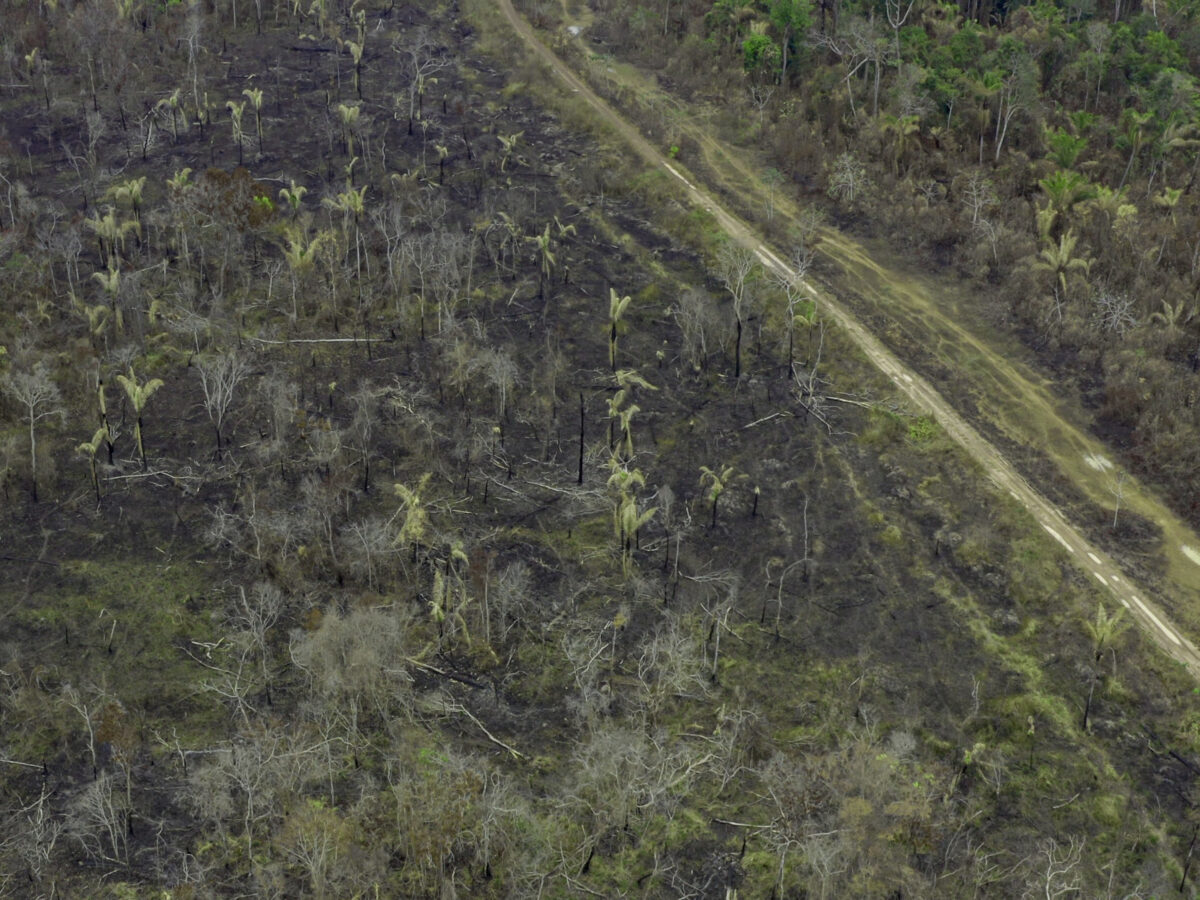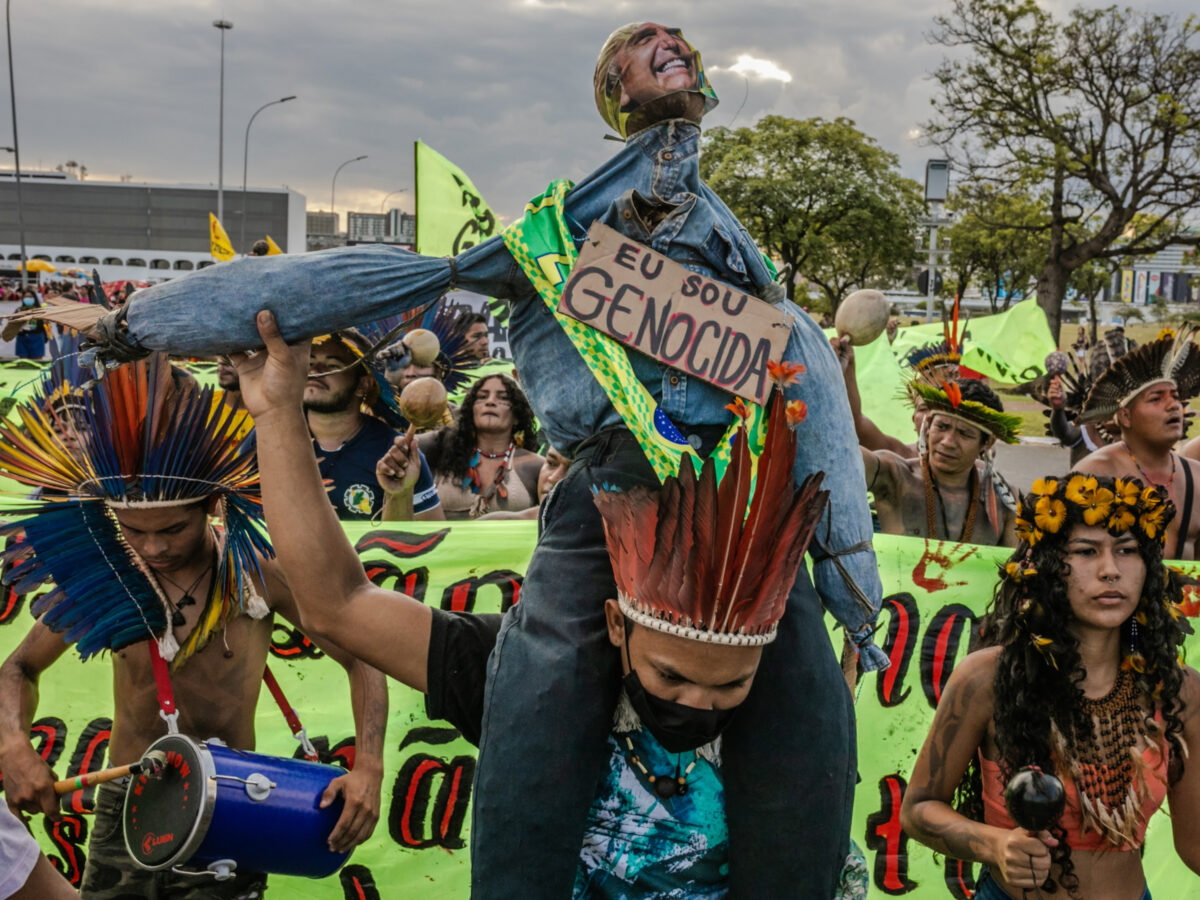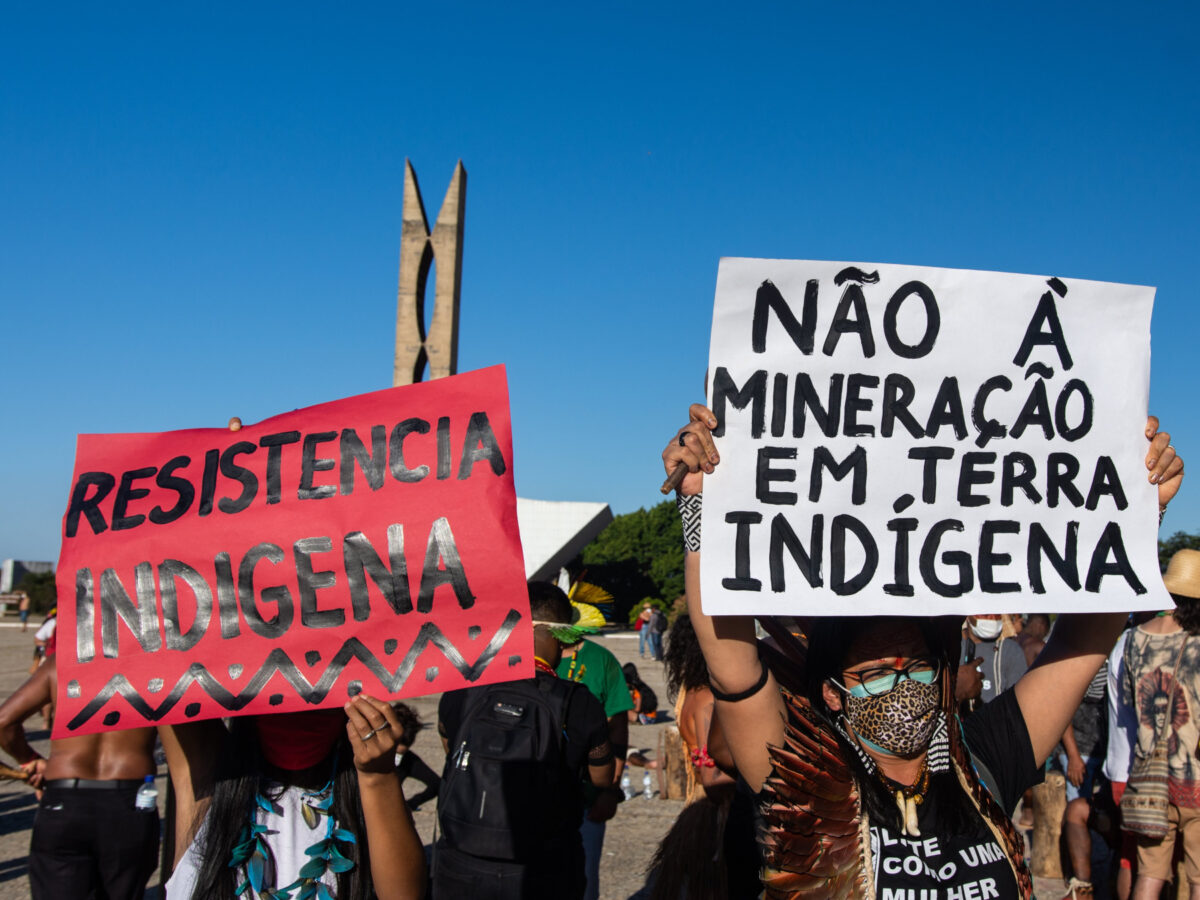

Brasilia, Brazil – On Tuesday, December 9, Brazil’s Senate approved a Constitutional Amendment Proposal (PEC48) in an expedited and irregular vote that seeks to enshrine the so-called Marco Temporal (“time limit” clause) into the Constitution. If enacted, the measure would allow individuals illegally occupying Indigenous lands, including land-grabbers such as cattle ranchers, to claim rights over territories already recognized as Indigenous territories. It would also expose some of Brazil’s most preserved ecosystems to escalating land grabs and economic pressure.
“What happened yesterday will go down in history as one of the most shameful chapters promoted by those who were elected to defend the people and the Federal Constitution,” said Brazil’s Minister of Indigenous Peoples, Sonia Guajarara. “The Brazilian Senate just ruled against Indigenous rights by authorizing PEC48. This represents a major rollback for Brazil’s democracy and for the demarcation of Indigenous territories.”
“This amendment represents the most profound attack on constitutional guarantees of territorial protection since 1988. By opening the door to new land disputes and enabling the expansion of mining in the Amazon, Brazil jeopardizes its climate commitments, its international credibility, and the very survival of Indigenous peoples. Original rights cannot be rewritten, and they are not negotiable,” said Ana Alfinito, legal adviser at Amazon Watch.
The amendment would have major consequences for climate-critical regions. Brazil’s National Mining Agency (ANM) reports nearly 11,000 mining applications overlapping Indigenous Lands, whether fully demarcated or still in process.
Among the companies seeking the most claims is Canadian mining corporation Belo Sun, responsible for the controversial Volta Grande project in the Xingu region. Belo Sun holds the second-highest number of mining requests on Indigenous Lands, surpassed only by Vale. Approval of the amendment would intensify territorial conflicts and expand industrial pressure across areas essential for stabilizing the global climate.
Brazil’s largest Indigenous organizations warn that the amendment dismantles the country’s constitutional framework for territorial protection.
COIAB (Coordination of Indigenous Organizations of the Brazilian Amazon) stated that the temporal cutoff “opens the door to legal uncertainty, rising conflicts, and the legitimization of invasions, ignoring historical expulsions and state violence that displaced Indigenous peoples.” The organization emphasizes that titling Indigenous lands is “an act of historical reparation and fundamental for safeguarding Brazil’s most preserved ecosystems.”
APIB (Association of Brazil’s Indigenous Peoples) describes the amendment as “the institutionalization of the denial of Indigenous rights.” According to APIB, it legalizes forced removals, prevents the correction of past state abuses, and subjects the Constitution to private interests. “Original rights cannot be reduced through legislative maneuvers,” the organization stated, affirming that Indigenous peoples “will remain in permanent struggle for the Constitution and for life.”
The Senate’s vote directly contradicts the 2023 ruling of Brazil’s Federal Supreme Court (STF), which rejected the temporal cutoff framework. The amendment asserts that Indigenous peoples would only hold rights to lands they physically occupied on October 5, 1988 – a standard that ignores decades of expulsions, forced removals, and state-sponsored displacement before Brazil’s return to democracy.
Legal experts warn that the proposal violates a non-amendable clause of the Constitution: Indigenous peoples’ original, inalienable, and imprescriptible rights to their lands. These rights predate the Brazilian state and are recognized in the 1988 Constitution and in international instruments such as ILO Convention 169, the UN Declaration on the Rights of Indigenous Peoples (UNDRIP), and the Escazú Agreement.
The amendment also contradicts global biodiversity and climate commitments Brazil endorsed under the Kunming–Montreal Global Biodiversity Framework (COP15), as well as environmental and human rights safeguards required in trade negotiations such as the Mercosur–European Union Agreement.
The proposal now moves to Brazil’s Lower House of Congress. If approved and sanctioned by President Lula, it would significantly weaken protections for Indigenous territories, imperil human rights, open the floodgates to destructive industrial projects, and undermine Brazil’s global climate leadership.