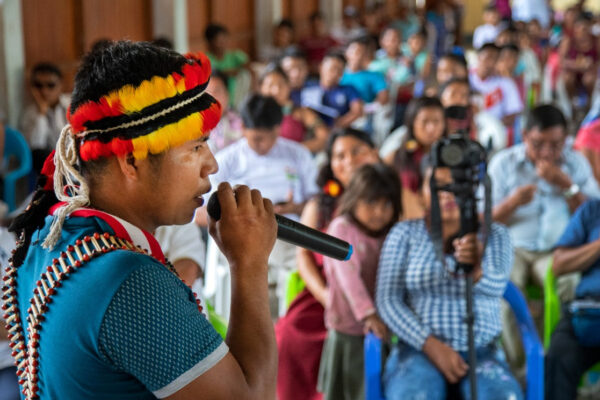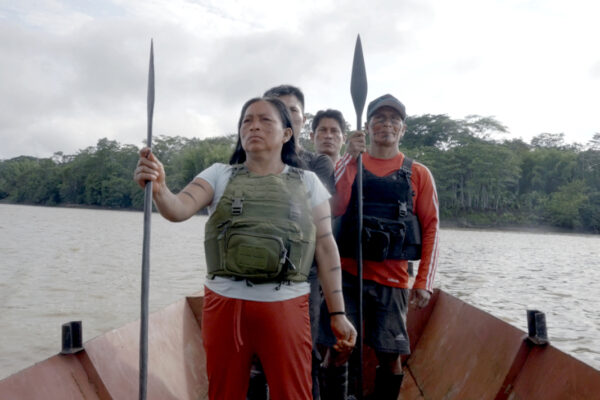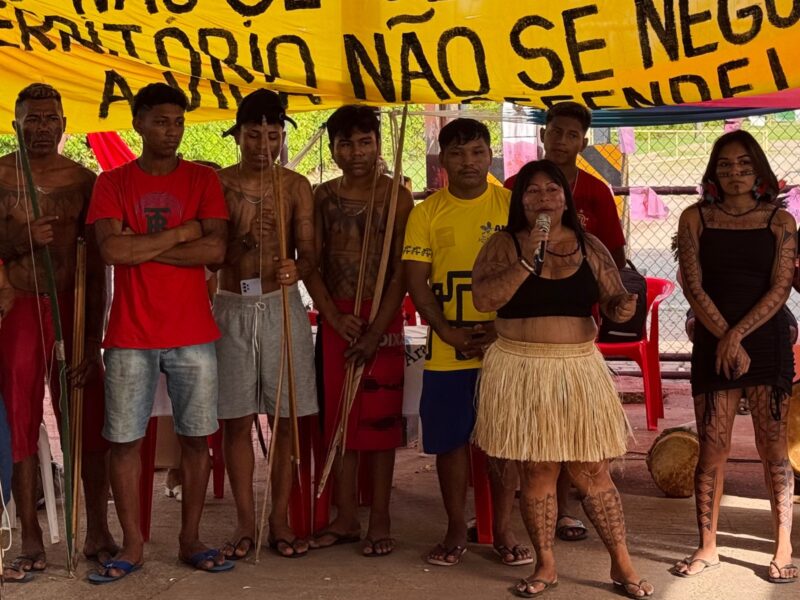


Santarém, Pará, Brazil – For the past week, Indigenous peoples representing 14 ethnicities from the Lower and Middle Tapajós River region have blockaded facilities operated by agribusiness multinational Cargill in Santarém, protesting industrial interventions designed to accelerate agro-commodity exports.
In December, Brazil’s federal government issued a public tender calling for three years of river dredging between Santarém and Itaituba. The plan moves forward despite the absence of an environmental license and without respecting the right to Free, Prior, and Informed Consultation of affected communities, as required under ILO Convention 169.
The tender is part of the broader policy shift driven by Decree No. 12,600, which authorizes the concession of Amazonian rivers to private companies, and expands large-scale interventions into sensitive areas, including regions with archaeological sites and sacred territories. These measures are directly linked to the expansion of soy transport and export infrastructure across the Amazon. Around 150 people remain camped at the entrance to Cargill’s river terminal, denouncing the privatization of the Tapajós River and demanding the immediate suspension of the dredging project.
For Lucas Tupinambá, president of CITA, the Indigenous Council of Tapajós-Arapiuns, the blockade is the direct result of the Brazilian state and global corporations recklessly pushing forward infrastructure projects in the Amazon while ignoring long-standing demands from the peoples who live in the region:
“We are entering the seventh day of protests on the banks of the Tapajós River, showing that we will not accept a model that prioritizes commodity exports while ignoring Indigenous rights and environmental law. We want our river alive, not a dead export corridor that only favors corporations such as Cargill. For the sake of our communities and everyone’s future, the Brazilian government must stop this dangerous waterway privatization process and prevent the advancement of this destructive soy route!”
During a recent Caravan to COP30, more than 40 social movements and organizations traveled along the so-called soy route to expose and denounce the impacts of commodity exports and to promote agroecological alternatives. According to Pedro Charbel, Amazon Watch Brazil Campaign Advisor, the Tapajós conflict reflects a much broader national and international dynamic:
“The Tapajós River is a central piece of a much larger project led by agribusiness and global commodity traders to transform Amazonian rivers into industrial export corridors for soy and corn. Corporate waterways, grain ports, and proposed mega-projects like the Ferrogrão railway are threatening Indigenous peoples and pushing both the Amazon and the Cerrado biomes toward irreversible collapse. The so-called Northern Arc export corridor is already driving deforestation and eroding sociobiodiversity, all for the profit of a very few.”