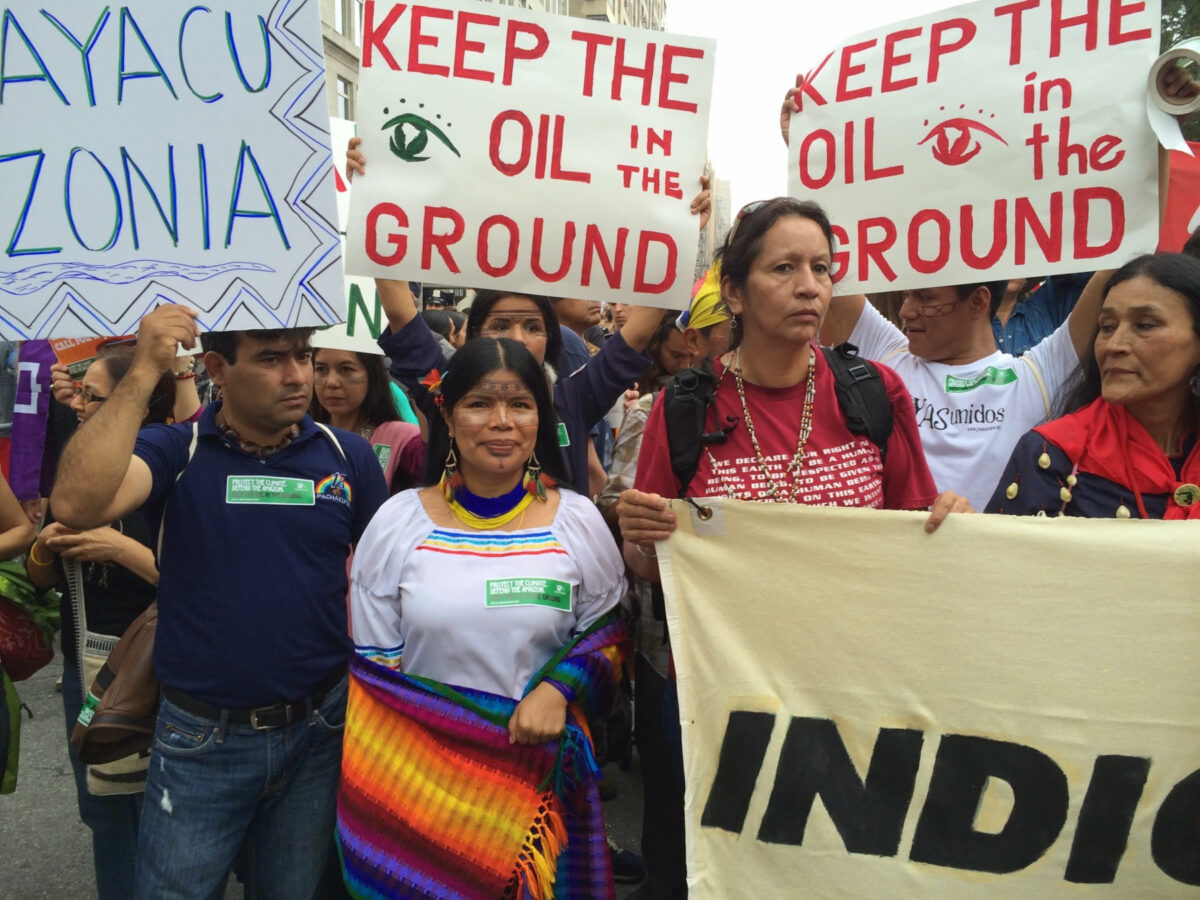


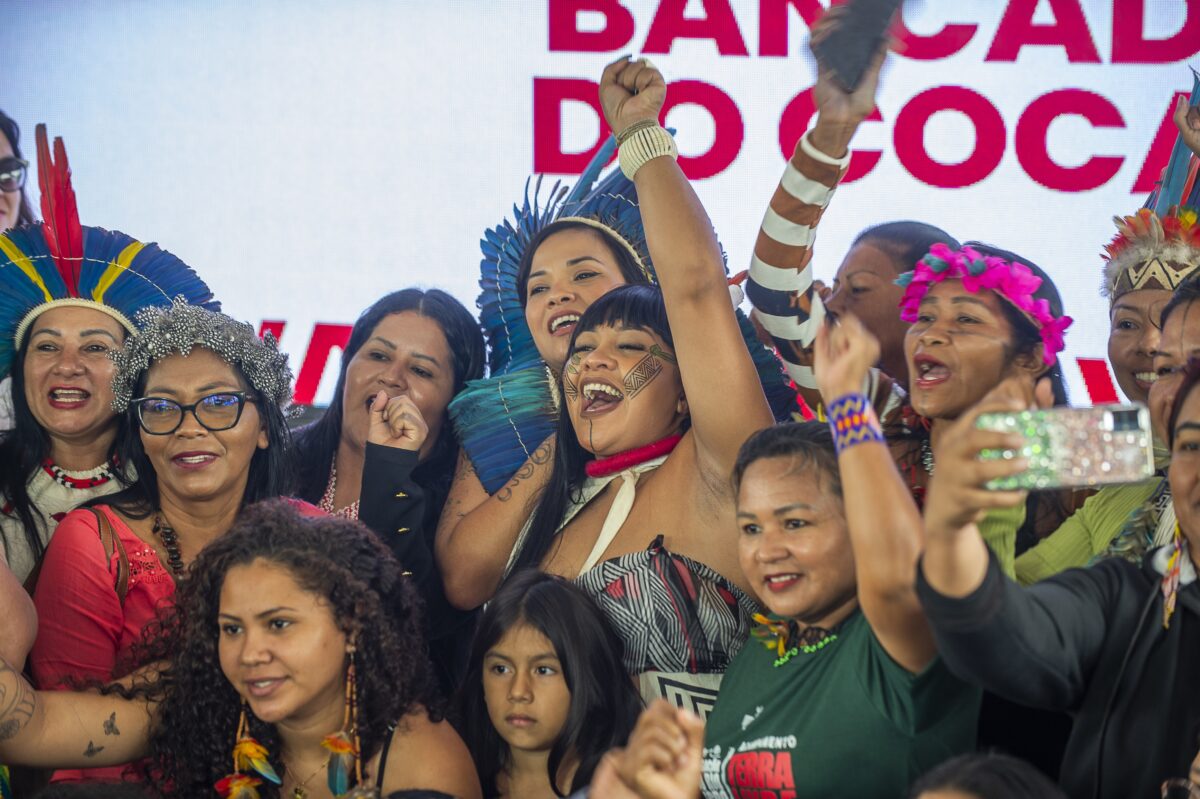


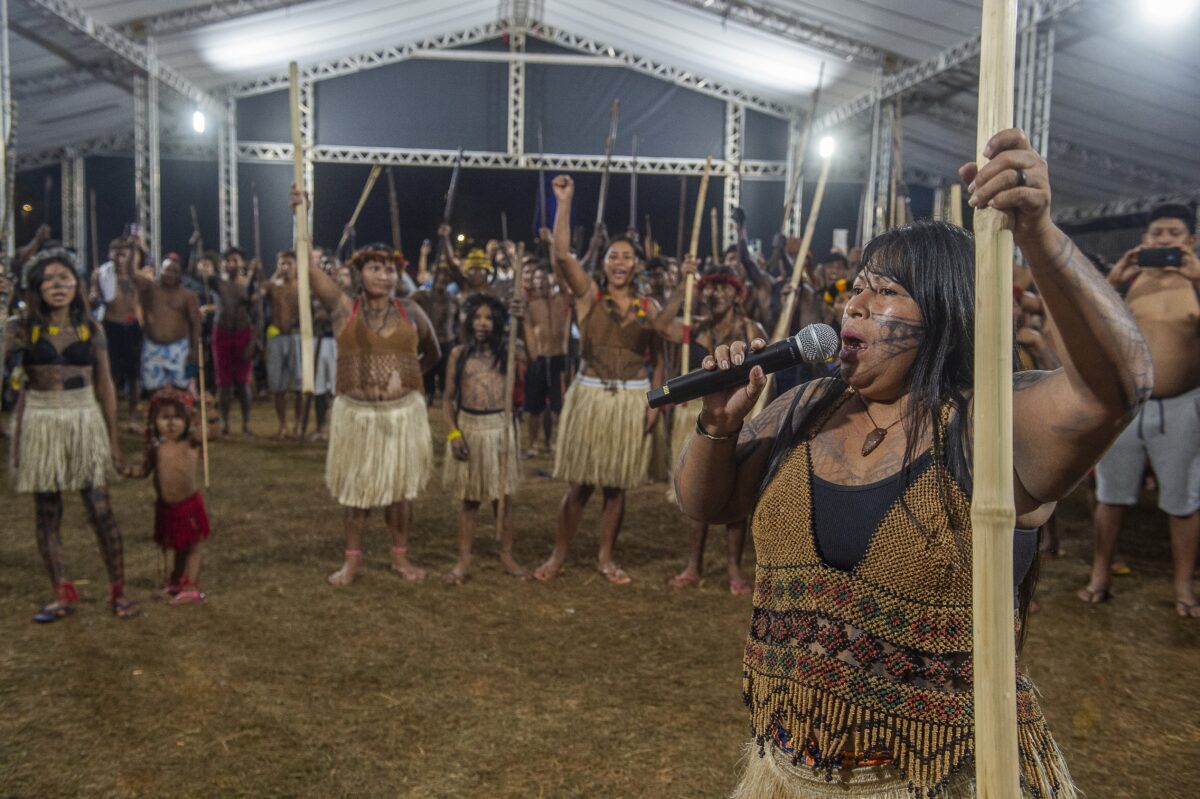
Earlier this Earth Month, nearly 10,000 Indigenous leaders and people gathered in Brasília alongside community organizers for the 21st Free Land Camp (Acampamento Terra Livre – ATL), the largest mobilization of Indigenous people in the country – and the world.
Organized by the Association of Brazil’s Indigenous Peoples (APIB) and its seven regional organizations, this year’s ATL amplified the call of the Indigenous movement: The Answer Is Us. On the path to the historic COP30 to be held in the Brazilian Amazon for the first time later this year, leaders unified demands for land rights, sovereignty, and territorial governance as the most effective strategies to defend the rainforest and our global climate.
We were on the ground at ATL this year, continuing a long legacy of resistance with our Indigenous partners in Brazil. From taking the streets of Brasília alongside our comrades at APIB and the Coordination of Indigenous Organizations of the Brazilian Amazon (COIAB) to mobilizing rapid-response resources to Munduruku community members through our Amazon Defenders Fund, our team showed up in material solidarity with the movement.
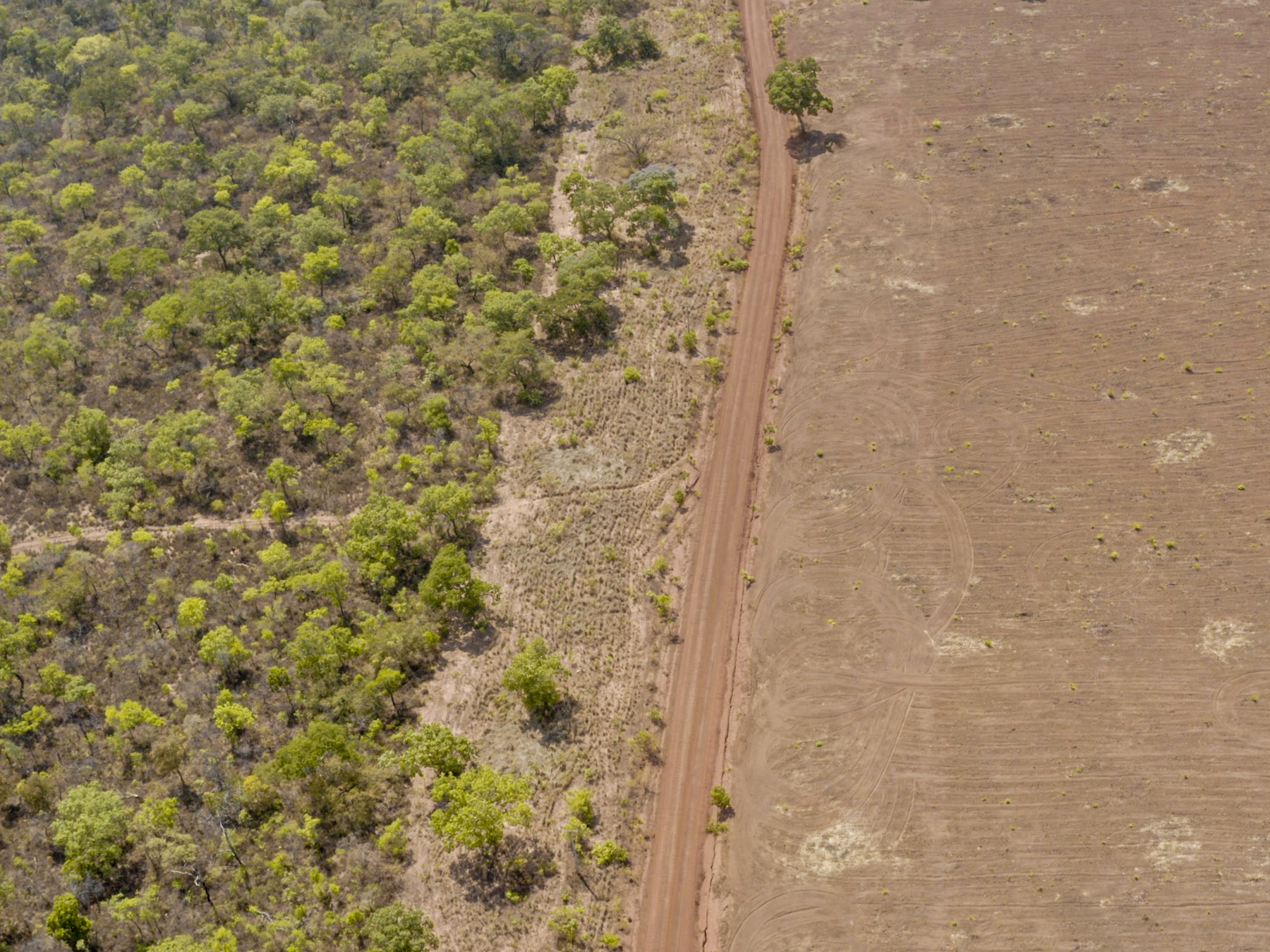
To nurture international solidarity against the imminent threats from agribusiness to the sacred waterways of the Tapajós River in the Amazon and its ancestral stewards, Amazon Watch helped organize action against Ferrogrão during the closing ATL march. Designed to transport commodities such as soy and corn to enrich multinational corporations like Cargill rather than to feed the people of Brazil, the mega railway project would cut through Indigenous territories and could deforest up to 49,000 square kilometers in the Brazilian state of Pará, the host of COP30.
“How are we going to eliminate illegal deforestation by 2030 with a project that demands more deforestation, legal or not? It’s not possible to talk about being a leader against climate change with a project to destroy the Amazon. Ferrogrão is a project designed to deforest the forest and strengthen agribusiness,” Indigenous leader and COAIB coordinator Auricélia Arapiun emphasised.
After 15 days of strenuous protest blocking Brazil’s Trans-Amazonian highway, BR-230, calling for the repeal of Law 14.701/23, the Munduruku people joined their Kayapó, Tupinambá, and Panara relatives from the Tapajós region in Brasília to denounce Ferrogrão and the broader attack on Indigenous constitutional rights. Yielding to their demands, Brazilian Justice Gilmar Mendes met directly with Indigenous leaders, including Goldman Prize winner Alessandra Korap Munduruku, on April 15, 2025.
Law 14.701/23 contains the controversial Marco Temporal Thesis, an ad hoc legal argument asserting that Indigenous peoples who were not present on their territories at the time of the Federal Constitution’s ratification on October 5, 1988, are not entitled to the recognition of their traditionally occupied lands. Driven by Brazil’s powerful agribusiness sector, the law is a catastrophic assault on Indigenous land rights.
An egregious manifestation of wider anti-Indigenous violence tragically occurred the night of the closing march on April 10, 2025, where Célia Xakriabá, Brazilian Federal Deputy of the state of Minas Gerais, and several other Indigenous representatives, women, and children were injured by stun grenades, tear gas, and pepper spray deployed by the Legislative Police Department (DPOL) and the Military Police of the Federal District (PMDF).
Célia Xakriabá filed a criminal complaint with the Brazilian Federal Supreme Court (STF) after seeking medical care for her injuries at the Medical Department of the Chamber of Deputies. Her complaints included racism, political and gender violence, bodily injury, the prevention of the parliamentarian from accessing Congress, and the omission of aid.
In a profound act of solidarity, Indigenous leaders dedicated the final ATL programming to remind Célia Xatriabá that she is not alone – the movement stands with her.
Our team at Amazon Watch echoes their declaration, standing in unwavering solidarity with Célia Xatriabá and all Indigenous women on the forefront of resistance against gendered colonial violence.
This year’s Free Land Camp grounded us in our shared struggle ahead – the answer is all of us. Frontline Indigenous communities across the Amazon and the world, as well as their comrades, must continue to unify our efforts to defend Indigenous sovereignty and our collective future.