
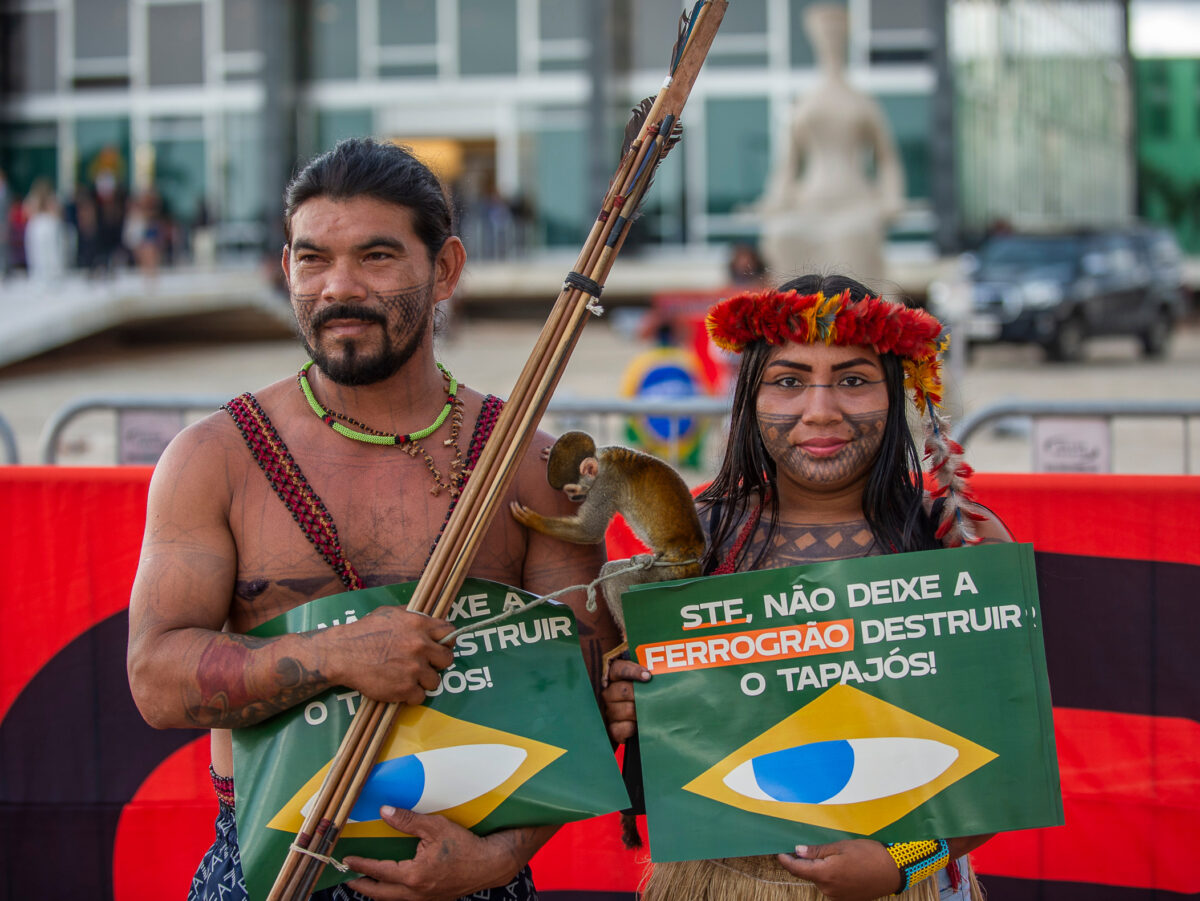
Brasília, Brazil – Yesterday, Brazil’s Supreme Court (STF) upheld a law reducing the size of the Jamanxim National Park, allowing the polemic Ferrogrão railway project to move closer to environmental licensing. While the ruling clears an important hurdle for the megaproject, it does not authorize construction, confirm the railway’s environmental viability, or resolve major technical, legal, and socio-environmental issues that continue to delay the project.
In their ruling, the STF’s justices emphasized that the decision regarding the alteration of the park’s boundaries does not approve the project. To advance, Ferrogrão’s developers must complete a complex environmental licensing process, submit updated technical studies and impact assessments, and carry out free, prior, and informed consultation with affected communities.
The Ferrogrão project remains stalled at the Federal Court of Accounts (TCU), which recommended maintaining the suspension of the concession process until the National Land Transportation Agency (ANTT) and the Ministry of Transport hold a new public hearing that demonstrates meaningful public participation and secure a Preliminary License to establish the project’s environmental viability and justify projected public funding. The TCU also identified gaps regarding public participation, socio-environmental conditions, and the railway’s financial modeling.
Brazil’s Institute of Environment and Renewable Natural Resources (IBAMA) also has not cleared the project. Documentation from Brazil’s environmental agency, IBAMA, states that Ferrogrão’s studies remain outdated and that the section addressing Indigenous communities requires additional documentation. IBAMA also continues to suspend the environmental licensing process pending updated data and a clearer definition of the project’s socio-environmental impacts.
“The STF majority decision is serious, but it does not end the dispute. Ferrogrão remains unlicensed and relies on flawed studies, promoting a false ‘green’ solution peddled by the agribusiness sector to benefit foreign companies such as Cargill. Indigenous peoples and traditional communities were not consulted. The Brazilian public must reject the destruction of the Tapajós River for the benefit of a small group of billionaires,” asserts Pedro Charbel, Amazon Watch campaigner and coordinator of the Enough Soy Alliance, a group comprising over 40 organizations and social movements opposing the expansion of agribusiness supply chains into the Amazon and Cerrado biomes.
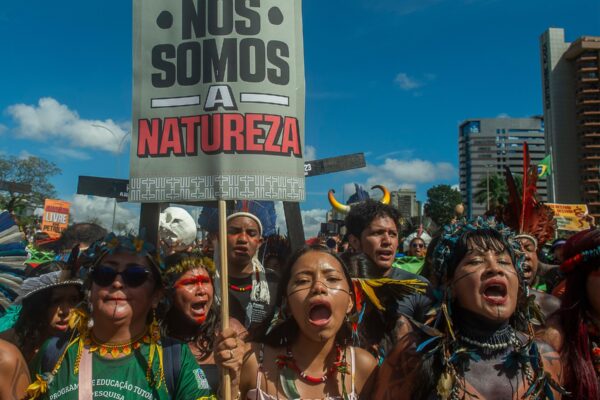
The Court’s ruling on Jamanxim Park came one day after the lower house of Brazil’s Congress voted to reduce the size of the Jamanxim National Forest by 40 percent. The Jamanxim National Forest is located merely a few kilometers from the Jamanxim Park. According to 2023 Goldman Prize winner Alessandra Munduruku, an Indigenous leader from the Middle Tapajós region and president of the Pariri Association, these actions serve only the interests of the agribusiness sector.
“Yesterday, Congress approved a bill to reduce the Jamanxim National Forest, and today the STF authorized changes to the park to advance what we call a ‘railway of death.’ These decisions do not benefit the population. They are made for the sake of agribusiness – tearing up the Constitution in the process – without a care for the death of our river or the impacts on our forest. Regrettably, we can no longer place our faith in the STF. We can no longer place our faith in the Constitution, for they are killing the Constitution, and in doing so, they are killing us,” she said.
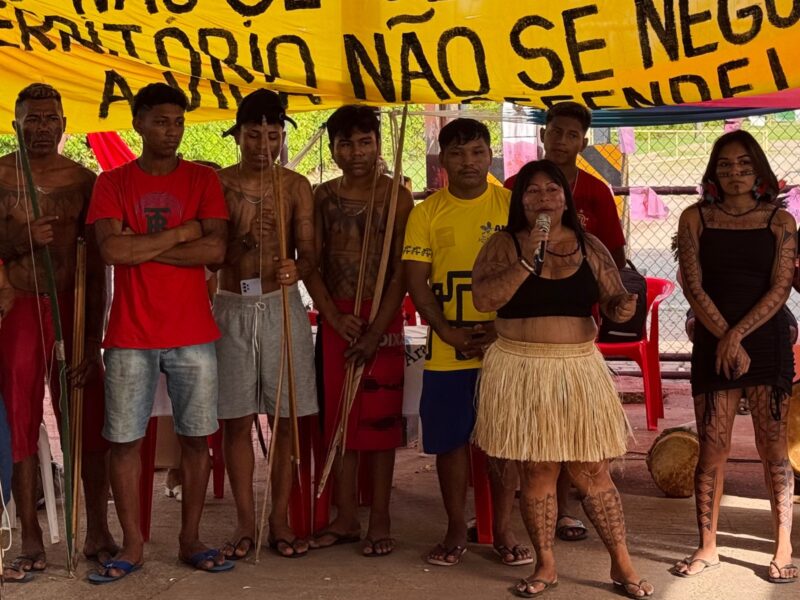
Lucas Tupinambá, coordinator of the Tupinambá Arapiuns Indigenous Council (CITA), pointed out that Indigenous mobilizations have already blocked other agribusiness infrastructure expansion projects, including proposed waterways along the Madeira, Tapajós, and Tocantins rivers.
“Agribusiness may have won this round, but the project remains stalled and contested. We already demonstrated our strength when we overturned Decree 12,600, which attempted to ram forward waterways without consulting the peoples of the region. Resistance will continue – in the territories, in the streets, in the courts, and wherever necessary. We will not accept decisions about the future of the Tapajós without the participation of the very peoples who live along and protect this river,” he emphasized.
Experts underscore that Ferrogrão continues to face opposition because it expands a development model that concentrates profits, externalizes environmental and social costs onto local communities, and transforms rivers, forests, and territories into export corridors.
“Ferrogrão disregards the socio-environmental impacts in the Tapajós and Xingu river basins, a conclusion reached by the Court of Accounts (TCU) itself when it suspended the project’s concession feasibility study (EVTEA). The railway could accelerate the expansion of agribusiness in Mato Grosso and Pará, placing pressure on traditional territories; it would also lead to an increase in port infrastructure and further degrade the Tapajós River through intense barge traffic transporting soy,” assesses Renata Utsunomiya, a public policy analyst specializing in Amazonian transport for the Infrastructure and Socio-environmental Justice Working Group (GT Infra).
According to Melillo Dinis, an attorney for the Kabu Institute, which represents the plaintiff in lawsuit ADI 6553 and the Kayapó indigenous people of Pará, the ruling will intensify illicit pressures on the territory:
“The Supreme Court’s decision reveals a legitimate pressure – exerted in favor of a development model for the Amazon focused on exporting commodities – that directly impacts the lives of local peoples and breaches every constitutional safeguard. The consequence of this situation is that it will also intensify illicit pressures – pressures that manifest as land grabbing, illegal logging, wildcat mining, insecurity, and attacks against Amazon’s peoples, particularly in the Northern Arc region. Nevertheless, these communities will continue and strengthen their resistance to Ferrogrão,” he said.