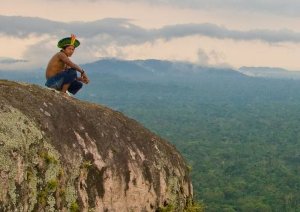

Lima, Peru — For the last three decades, in the province of Loreto in Peru, the native communities of the Indigenous Achuar People have suffered from the effects of the severe environmental and social impacts caused by the discriminatory neglect of the State. They have also been subjected to the indifference, carelessness and impunity of the companies that conduct petroleum exploration and extraction in the Achuars’ ancestral lands. These native peoples live in the Corrientes River Basin, located in the northwest Peruvian Amazon.
The Achuar people have suffered under an unrelenting environmental attack for the past 35 years. Since the early 1970s, two petroleum blocks have been superimposed on their lands. Known as Block 1AB and Block 8, these were initially run by Occidental Petroleum (OXY) and Petroperu, and are currently run by Argentina’s Pluspetrol.
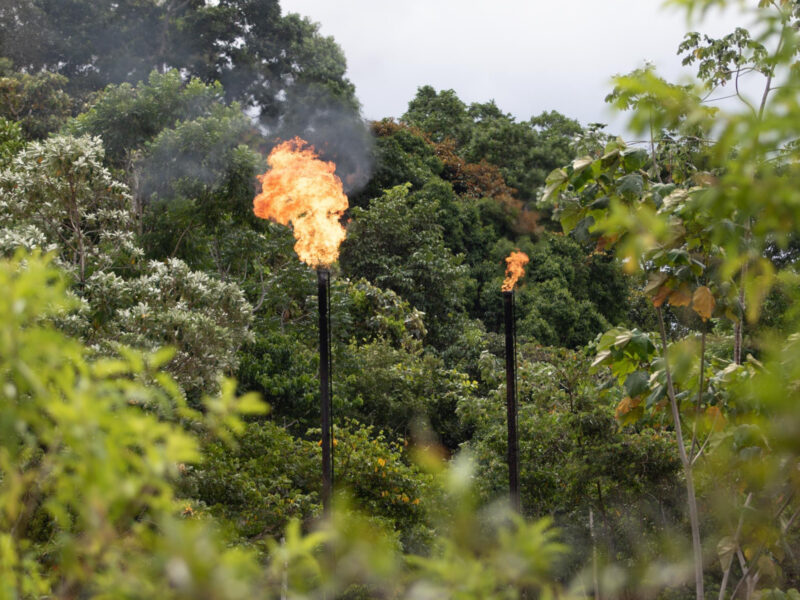
On a daily basis, 1,100,000 barrels (one barrel = 159 liters) of the run-off from the petroleum extraction process is dumped into rivers without the necessary precautions. The waters have an elevated saline content, and are high in temperature (90˚ Celsius). They also contain hydrocarbons, chlorine and heavy metals such as lead, cadmium, chromium, barium, nickel, mercury and arsenic, which cause genetic mutations and cancer, in addition to causing dire consequences for the population’s physical and mental health.
The Achuar communities are facing a health crisis so severe that it endangers their very survival – given the negative effects of contamination on the infant population.
On May 29, 2006 the Health Minister delivered a report to the Federation of the Native Communities of Rio Corrientes (FECONACO) which makes clear the grave health risks the Achuar are facing, and recognizes the extent of the harm done, thus confirming the situation that the locals had been denouncing for many years. The report, an outcome of the “Assessment Visit to Determine Health Conditions and Biological Sampling Among the Communities of the Corrientes River Basin,” was created by Peru’s DIGESA, the General Management for Environmental Health.
Among local community members, 98.65% exhibit a blood cadmium concentration that exceeds maximum allowable limits. With regard to lead concentration, 66.21% of children ages two to seventeen, and 24% of the adult population, were above the maximum acceptable levels for lead concentration in human blood. An additional 13% showed levels considered dangerous to health.
This is just the tip of the iceberg. For the first time, investigations have been conducted due to the arduous insistence of the organizations that represent the Achuar people. As in the case of a report by Peru’s energy regulatory agency, OSINERG, these investigations reveal the ongoing practice in which the companies have been creating reports, which intentionally misrepresent the truth. These reports were written in complicity with organizations in charge of environmental safety. Not only have human beings been poisoned, but also the water, land animals, fish, soil and resources are also being contaminated, which makes the Achuar’s social and family life impossible.
This situation can worsen. The Peruvian government plans to place new installations for petroleum extraction in the last pristine reserves that are within the territories of the Achuar of Corrientes. The Achuar community considers that it is their right and civic duty to not accept financial compensation from Burlington (now Conoco) and Petrolifera so as not to enable these companies to develop their new operations in their territory, especially since the Peruvian government has not set up urgently needed environmental remediation, nor has it established a comprehensive health and nutrition plan for the community. The Achaur believe the government must also demand that Pluspetrol re-inject 100% of its toxic production water as quickly as possible.
The representatives of FECONACO and the Organization of the Achuar Chayat (ORACH) arrived in Lima to speak with the authorities on a national level and the newly elected Peruvian government over this problematic environmental and humanitarian situation. The Achuar have come to Lima for the third and last time and will be here for one week until they do their absolute utmost to make this dialogue happen. They hope to speak with President Alan Garcia, the Congress, the Ministers of Health, Energy and Mines, the Ministry of Defense and the National Council on the Environment (CONAM) as well as other institutions that are involved in this case.
In addition to their frustration over the environmental problems, the Achuar feel that the government neither consults nor clearly informs them of the purposes for which in the government plans to use their territory. According to ancestral law, and as specifically mandated in the Peruvian constitution, the Achuar legitimately own and occupy these lands. The Achuar also object to the government’s neglect of their settlement — there are very few public services, no waste management, piping does not extend to local communities, and the government is not complying with a payment plan to compensate communities for using their lands. This situation stands in stark contrast to the fact that for the past 35 years, the Corrientes region has provided 60% of the country’s petroleum production, while at the same time, all regions from which this petroleum is extracted are listed officially as areas in extreme poverty.
The Achuar feel that the constitution clearly provides that human life and dignity are fundamental pillars of Peruvian society. Similarly they are clear in accepting that each citizen is responsible for contributions to public health and safety, a healthy environment and to development that is sustainable and participatory, and which takes into account the well being of future generations. Equality for all citizens must be stated concretely. It is unacceptable that the extraction of petroleum from the lands of the ancestral owners and its inhabitants destroys their physical and mental health and causes poverty, hunger, contamination, social unrest, the invasion and destruction of their property and risks their extinction while benefiting the well being of the rest of society.
The Achuar people remind the Peruvian government that the principles of authority and enforcement of the law should be applied to those who violate it. It should not just be cited in order to silence the people when their rights have been violated, but in order that the country change directions to one of respect for the law, life, health and equality. This is something that the petroleum industry has been ignoring in Rio Corrientes for the last 35 years with total impunity.