
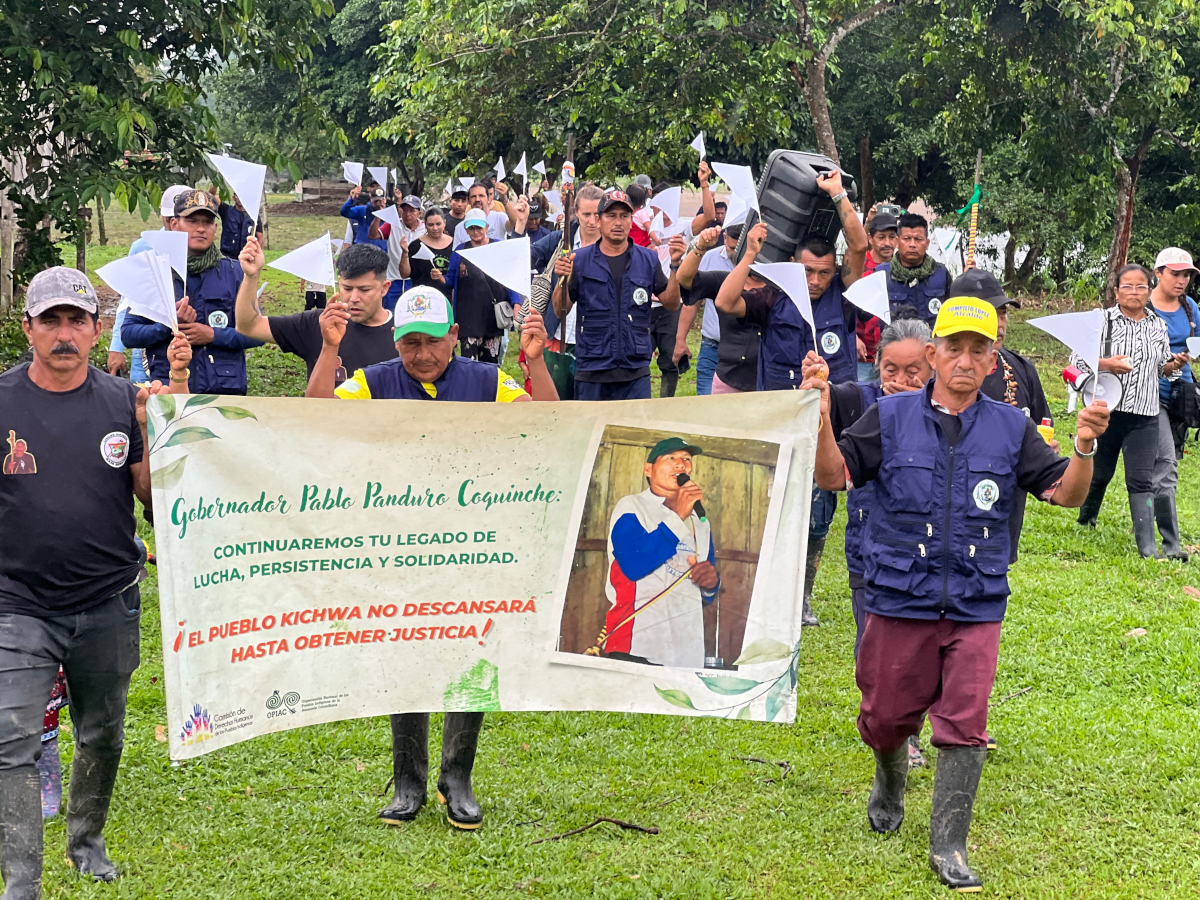
On March 28, 2022, Pablo Panduro attended a community celebration near his home in Bajo Remanso, in Colombia’s Putumayo region, when a sniper’s bullet took his life.
A governor and widely respected Indigenous leader of the Kichwa people, Pablo had dedicated himself to serving his community. The military operation that killed him is now widely known as the Remanso Massacre, which claimed the lives of eight civilians. Four years later, those responsible have still not faced justice.
The Remanso Massacre was not an isolated act. It is part of a wider pattern of violence sweeping across the Colombian Amazon and the tri-border zone where Colombia, Peru, and Ecuador converge – where Indigenous communities are caught between military operations and organized crime networks closing in on their ancestral territories.
The human cost is staggering. Since 2012, at least 296 land and environmental defenders have been killed across the Amazon, with Colombia and Brazil among the most dangerous countries on Earth for those protecting their lands. Colombia’s Constitutional Court found, in its landmark 2009 Auto 004, that 13 of Putumayo’s 15 Indigenous Peoples face a documented risk of physical and cultural extinction.
A victory decades in the making
Justice for Pablo’s killing remains elusive – but on June 19, the community achieved one of the goals to which he devoted his life.
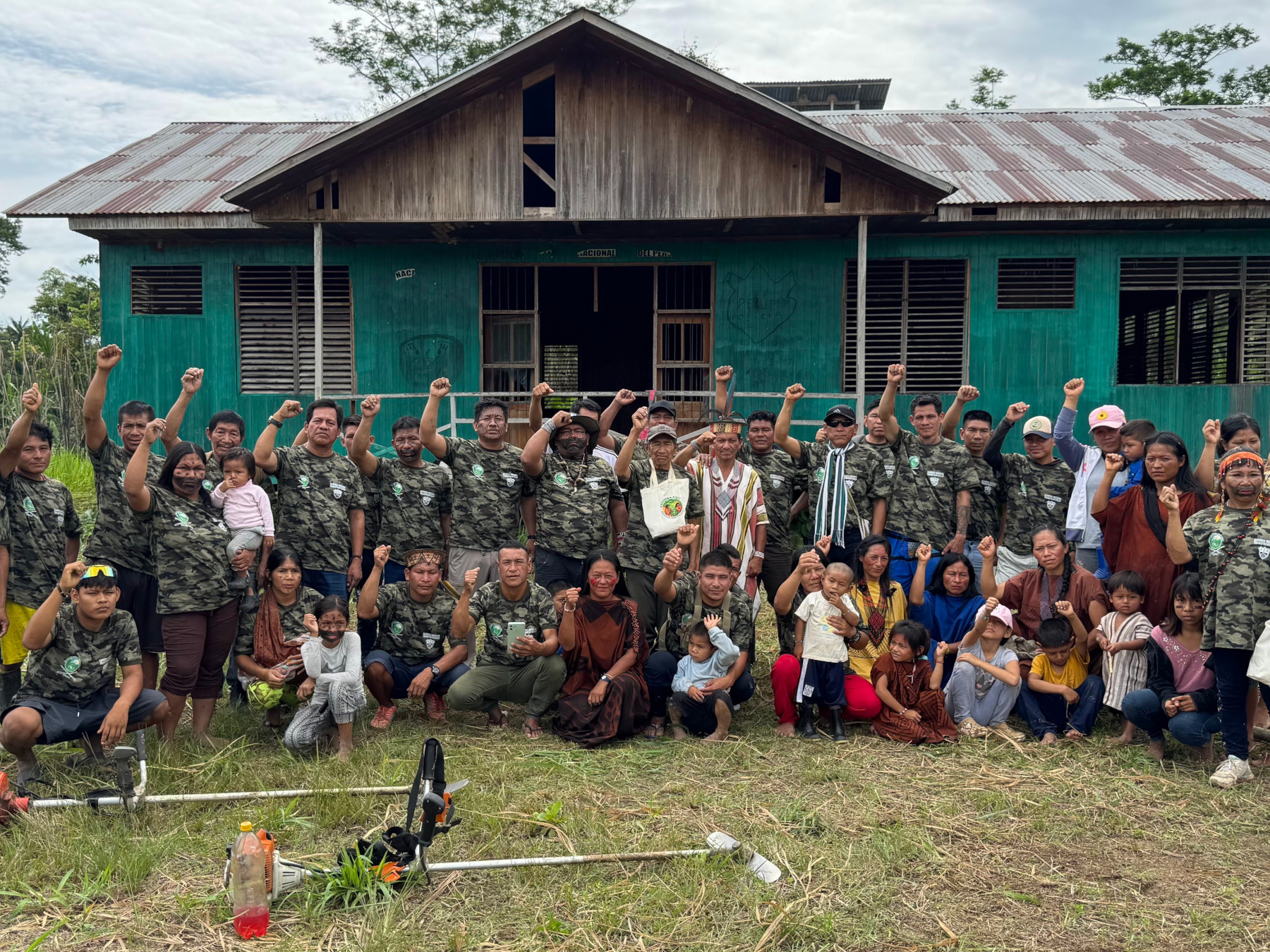
The Kichwa community of Bajo Remanso gathered with joy, grief, and everything in between, as the National Land Agency (ANT) formally delivered the legal title to the Bajo Remanso Indigenous Reserve – protecting more than 16,000 hectares of their ancestral territory, roughly the size of Washington, D.C.
For Pablo and the community, securing that title had been a defining mission and a result of decades of struggle. Legal recognition of Indigenous land is one of the most powerful tools communities have to defend their territories from encroaching threats.
For Yarley Ramírez, the community’s current governor, the title represents something far greater than a legal document. Territory is the foundation of the Kichwa people’s identity, their collective life, and their survival – the root from which their autonomy grows.
“They did not do us a favor – they did justice with the delivery of this title. The reserve title honors years of struggle and resistance. It also marks only the beginning of what the Colombian government owes a community that suffered state violence firsthand and has still not recovered from it.”
Yarley Ramírez
Recognition must lead to protection
The titling of Bajo Remanso is cause for celebration, but it arrives at a precarious moment. Colombia’s President-elect de la Espriella has signaled a return to “mano dura” – an iron fist approach that promises to deepen the militarization of the Amazon. For communities already living in the shadow of state violence, like Bajo Remanso, an iron fist will only deepen conflict across their territories.
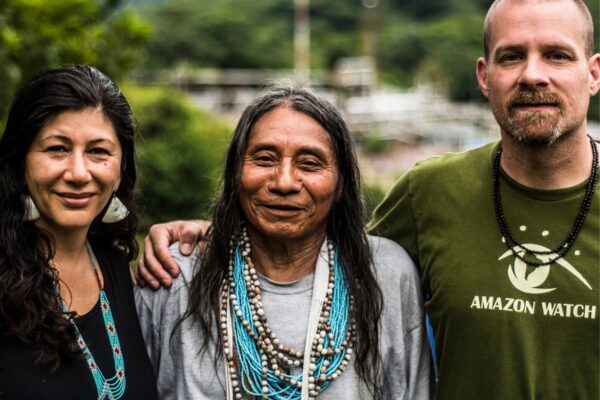
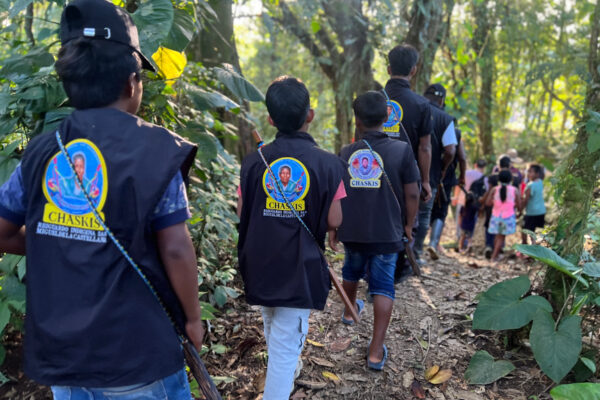
National and international solidarity has never been more essential. Amazon Watch has stood with the Kichwa community of Bajo Remanso since the massacre, and we work alongside the Colombian Amazon Indigenous Peoples Organization (OPIAC) to ensure they are not abandoned by the Colombian government. We supported their leaders’ advocacy in Bogotá, facilitated a delegation to commemorate the third anniversary of the massacre in 2025, and pushed ANT to deliver the land title in 2026 – resulting in last Friday’s ceremony in Puerto Asís. Through our Amazon Crime campaign, we are also working to support Indigenous peoples’ territorial governance, economic alternatives, and community protection systems in the face of heightened organized crime and governmental neglect.
Bajo Remanso has refused to be broken. In the face of massacre, grief, and neglect, the community has raised its voice, demanded truth, and kept walking the path toward justice.
That resilience demands an equally determined response – and it must start with accountability.
The institutions responsible must advance the judicial processes that establish who pulled the trigger on March 28 and who gave the order. The chain of command behind the Remanso Massacre cannot remain in the shadows.
The Colombian government must advance the judicial process, provide comprehensive reparations, and guarantee the conditions necessary for the Kichwa community of Bajo Remanso to continue living safely and autonomously in its ancestral territory.
Across the region, government transitions are underway and militarization is being offered as a false solution to complex problems, while distant capitals in Lima, Quito, and Bogotá continue to neglect the communities furthest from their gaze. The Amazon and its Indigenous peoples do not need to be managed from those capitals. They need recognition, resources, and the autonomy to govern themselves on their own terms.
The rise of organized crime across the Amazon demands a rights-based, Indigenous-led response. As world leaders gather for the UN Conference on Transnational Crime in Vienna this October, they must acknowledge that Indigenous Peoples must help shape every policy that affects their territories, rights, and future.
Governments cannot defeat organized crime by further militarizing Indigenous territories. They must strengthen Indigenous governance, uphold collective rights, and recognize Indigenous Peoples as essential partners in protecting the Amazon. Take action here.