The star of ‘The New World’ on oil exploration in Peru, corporate accountability, and being a 16-year-old producer
In Terrence Malick’s 2005 film, The New World, a young Q’orianka Kilcher plays Pocahontas, guiding Colin Farrell’s John Smith toward an understanding of the American wilderness and its indigenous inhabitants. If only she can do the same for an oil-hungry world. Sixteen-year-old Kilcher, whose father is of the Quechua-Huachipaeri people in Peru, recently traveled deep into the Amazonian rainforest in Peru to survey the plight of indigenous Amazonians affected by oil exploration. Already a fairly experienced activist, the trip was an attempt by Kilcher to use her time in the spotlight – new as it may be – to illuminate an environmental and human rights disaster.
Traveling up the Rio Corrientes by boat, she found a toxic legacy left behind by … Angelenos. Up until recently, the oil tracts she visited were being developed by Los Angeles-based Occidental Petroleum. And it wasn’t pretty. She found indigenous children playing in crude oil, drinking and fishing waters fouled with poisonous heavy metals, and ancestral land preserves invaded by multinational corporations with the blessings of the Peruvian government. Film crew in tow, Kilcher is making a documentary through her new production company, and recently presented her findings at the United Nations.
–Dean Kuipers
CityBeat: So, you are of indigenous Peruvian heritage?
Q’orianka Kilcher: Yes, my father is full-blooded Quechua-Huachipaeri. Almost 40 percent of the Peruvian Amazon has been parceled for [oil and gas exploration], and this is affecting my people. This is happening in my backyard. Indigenous peoples have been excluded from the decision-making process, and projects that are exploiting their lands and natural resources, and their culture, are often not being done with their consent.
How did you know about this situation? Through your dad?
No, my dad has never been in my life, actually. My mom raised me. I was looking into corporate accountability. When I had my premiere in Peru, I wanted to use the media for something really meaningful. Because the main reason I started acting was to get a more empowered voice to bring about positive changes in the world. I found out that U.S. oil companies are leading the race to the furthest corners of the Peruvian Amazon, and that U.S. government funds are being used for financing these oil companies.
So I got in contact with Amazon Watch. I did my premiere, and instead of answering for the 5,000th time “How was kissing Colin Farrell?” I was talking, in Peru, about the multinational companies … not being held accountable for violating the environment and basic rights of the local people.
What did you find on your trip to the Amazon?
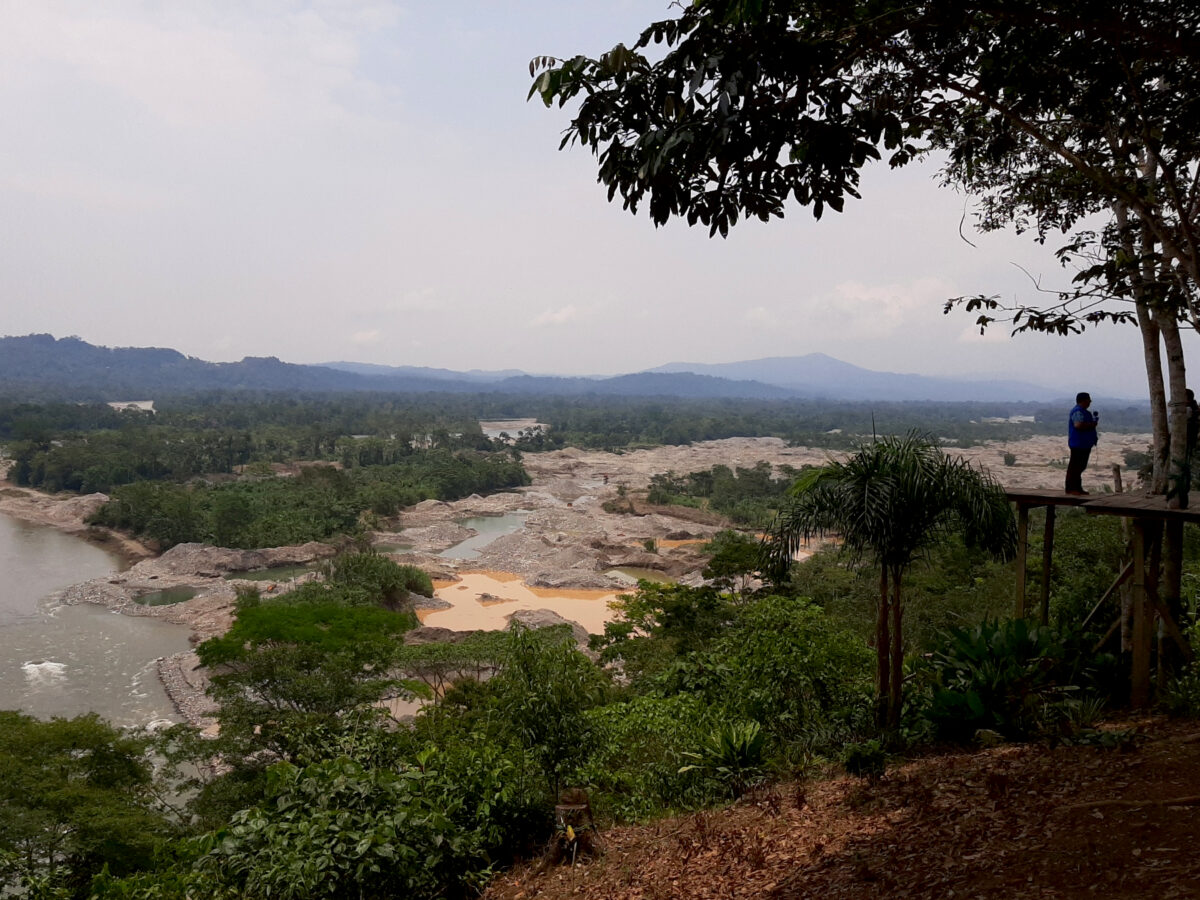
We went in a small little boat, and we went up the Rio Corrientes River visiting different affected communities. In the Northern Peruvian Amazon, I visited the Rio Corrientes region … where Occidental Petroleum has been drilling for oil since 1971 and using practices outlawed in the U.S. They pump an average of 800,000 barrels a day of salt formation water and other toxic waste-waters, containing lead and cadmium and other heavy metals, into the local rivers, with devastating consequences for the local communities.
In 2000, they passed on their contamination legacy to a company called Pluspetrol, which is an Argentinian company, and they did this without ever cleaning up or compensating the local community.
But Occidental pulled out.
They’re not there now, but they’re planning to go to other regions in Peru. I saw oil spills, polluted rivers, dead animals, and many sick children. A recent health study found alarming quantities of lead and cadmium and various other heavy metals in the blood of the children in these affected communities. Heavy metals affect the intellectual and physical performance of children. Children were playing in a schoolyard, but the soil was full of crude oil. And you see these pipes going directly into the river and dumping all this disgusting-looking stuff right into the river. And these people depend on drinking and fishing, which is their main protein resource, and bathing in these rivers. I met this little boy, who was seven or eight, and 70 percent of his body was chemical burns from swimming in the river. Here in Los Angeles, it would never be allowed to have this kind of contamination.
How much contact did you have with the Achuar people there?
Every day, because I was on the river for nine days, and I would drink their masato, which is what they give the men and guests. It’s an honor to have this. So I met with all of the tribe leaders and AIDESEP leaders in Peru, the National Amazonian Indigenous Federation of Peru, and I actually got an award from them for my humanitarian work, and to me that is better than an Oscar.
Are there other industries that are as bad?
Yeah. An American-owned smelting operation in the Peruvian town of La Oroya has made it Peru’s most polluted place. The plant called Doe Run Peru is a U.S. company that is also devastating Peru right now. Emissions from the smelting include lead, cadmium, arsenic, sulfur dioxide, and other contaminants.
What does the Peruvian government do about this?
Most indigenous peoples do not believe that the government represents their true interests. It’s very corrupt in Peru. They’re not really doing anything about it, because you have these multinational oil companies and they’re making so much money in the Amazon.
Have you made any attempt to contact Occidental or Pluspetrol?
I sent Occidental a letter and I’m still waiting for an answer. I brought a sample of water and soil, and I want to invite them for a beautiful drink of water from the Amazon and also to ask them if they would like their children or even themselves to be walking around in dirt full of crude. Because, here in America, they would at least have signs that [say] it is very toxic and causes cancer. In Peru I saw these very cute little babies playing, putting their hands in their mouths, sticking them in the dirt.
In 2003, the Peruvian government granted the international oil industries easy access to indigenous ancestral lands, throughout almost the entire Peruvian Amazon. So the indigenous territories are reserves, and some of them home to indigenous peoples still living in voluntary isolation. And they’re now within the reach of these international oil industries. And it’s very devastating to them. Because a lot of them do not have the immunities – they can die from something as common as the flu.
Did you know, when you went down there, that Occidental was involved in Peru?
I’m really embarrassed that this company was even from L.A. And I’m just learning that, sadly, it’s being replicated around the world. It’s not only in Peru.
How has this trip affected the way you view your work?
With my projects, I would really like to go in that direction. That’s my passion. In a sense, I love it more than acting. Of course, I love acting, because it’s fun, but it’s opening my eyes and it’s making me determined to bring more awareness to what’s happening in my own backyard.