Belo Horizonte, Brazil – The Inter-American Development Bank has finally acknowledged the multiple problems with the Camisea gas project, a flagship bank project that has caused devastating social and environmental impacts in Peru, including five spills in the first 18 months of operation.
IDB President Luis Alberto Moreno admitted the bank would not move ahead with a $400 million loan to partially fund a controversial gas liquefaction terminal on the Peruvian coast until the bank had conducted a review of the problematic first phase of Camisea. “We are not even close to approving the loan. Without the audit, we can’t go to the second phase,” Mr Moreno, a former Colombia ambassador, is quoted in today’s the Financial Times.
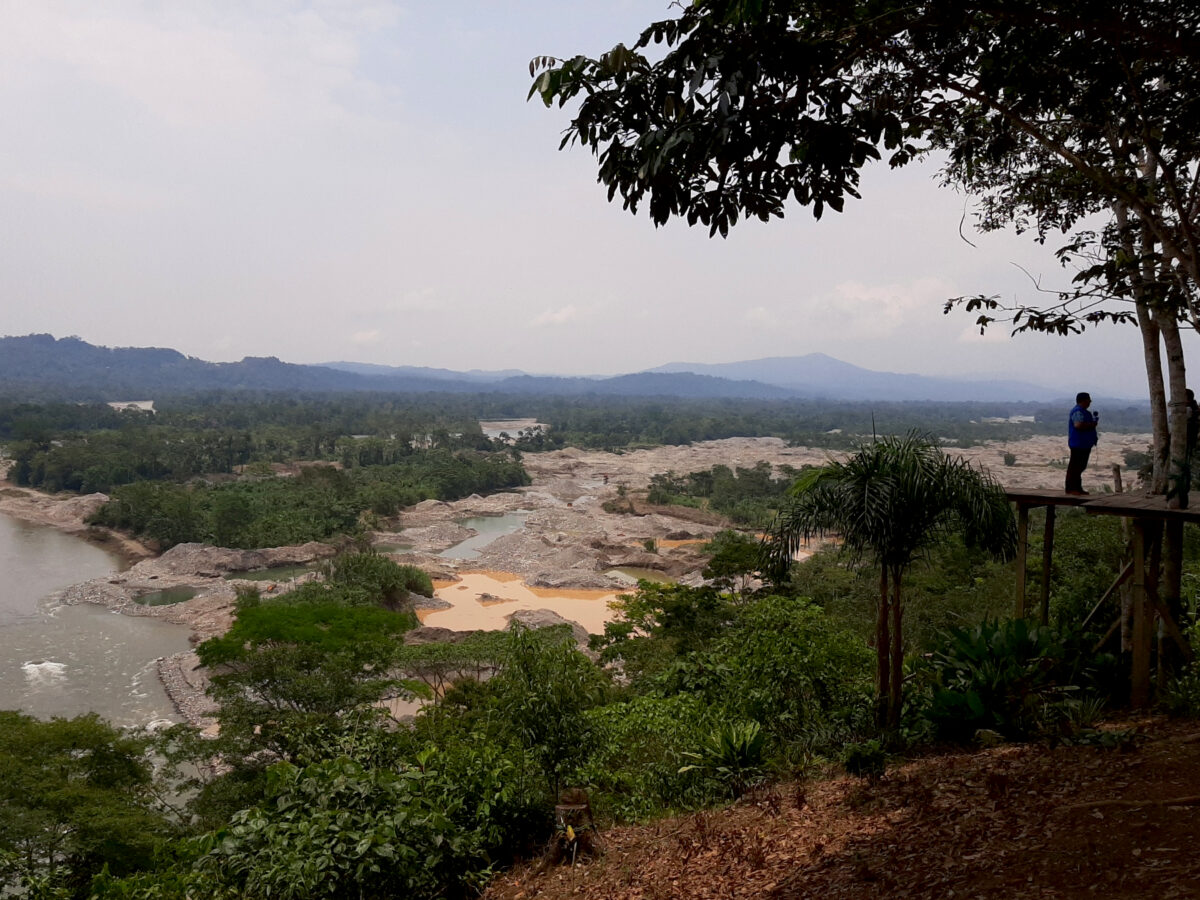
The admission comes after numerous, serious problems with Camisea including the forced contact of indigenous peoples in the Peruvian Amazon, extensive erosion, the loss of fish and game populations on which many local people survive and repeated ruptures in the pipeline. The Camisea gas field is located in one of the most remote and biodiverse areas of the Amazon basin, with some of the last isolated indigenous populations.
The affected Machiguenga indigenous communities and the Peruvian indigenous federation AIDESEP, joined by human rights and environmental campaigners including the U.S-based Amazon Watch and Environmental Defense, have long warned of the flagrant breaches of the IDB’s environmental and social conditions by the project consortia, led by Texas-based Hunt Oil. The Bank imposed those conditions under intense pressure from civil society yet the Bank disbursed 100 percent of its $75 million loan 4 days after the pipeline’s first spill and just two weeks after the Peruvian Congress voted to dedicate 40 percent of central government royalties to arms acquisition.
Now these groups, which are assembled at the IDB’s annual meeting, are demanding the IDB:
• Stop a planned $400 million loan for a gas export project until resolution of the numerous problems with Camisea;
• Shut down pipeline operation until an audit by an internationally recognized, independent body is completed and can evaluate the pipeline’s integrity;
• Perform an audit of Camisea’s socio-environmental impacts with the active participation of the affected communities and other organizations that have been monitoring the project; and
• Conduct an internal investigation by the IDB into systemic failures in the bank’s due diligence process that resulted in these disastrous outcomes.
The organizations are also requesting an urgent meeting with Mr Moreno in Lima to discuss Camisea and a high level commission involving the IDB, Peruvian government officials and the key affected communities to address outstanding problems. The Camisea project also has received $50 million in financing from CAF and $103 million from the Brazilian development bank, BNDES.
# # #