

Traveling back to Bogotá from the First Conference on Transitioning Away from Fossil Fuels in Santa Marta, Colombia, I struggled to name a feeling I had never experienced after a climate conference: hope!
Held at the end of April in a city between the Caribbean Sea and the Sierra Nevada de Santa Marta, the conference unfolded in a landscape where worlds collide. Snow-capped peaks of the world’s highest coastal mountain range descend into lush forests and meet white-sand beaches and turquoise waters, known by the region’s Indigenous peoples as the “Heart of the World.” In the region that gave birth to magical realism, an idea long dismissed as utopian fantasy – a world beyond fossil fuels – met pragmatic policy pathways for action.
The conference marked a historic shift in global climate politics. For the first time, governments focused on fossil fuels – the root cause of climate change – and identified barriers, solutions, and a tangible path to transition from oil, gas, and coal. The conference broke through three decades of climate negotiations that consensus rules slowed, fossil fuel lobbying sabotaged, and geopolitical obstruction undercut, amid war, energy conflict, skyrocketing oil prices, and worsening climate impacts. It was not perfect. But it was progress towards a fossil fuel free energy transition.
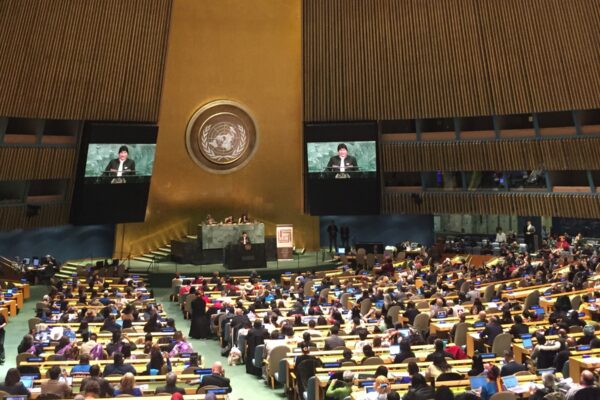
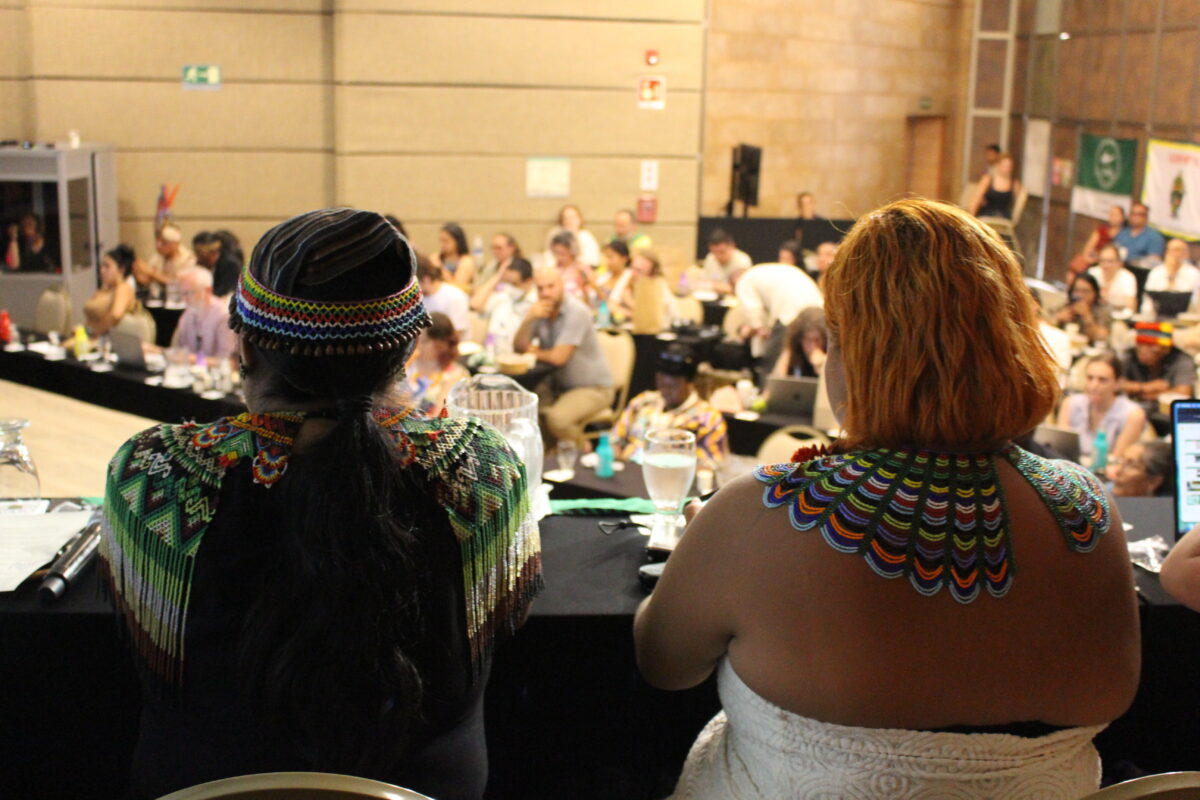
The conference moved beyond whether a fossil fuel transition was needed and focused on how to achieve it. It brought together 57 governments representing a third of world GDP in a “coalition of the willing,” along with 2,800 representatives from civil society, parliaments, Indigenous nations, youth, and labor groups. Participating governments committed to developing voluntary national and regional fossil fuel transition roadmaps. They also established working groups and coordination mechanisms on finance, debt, subsidy phaseout, trade policy, and just transition planning.
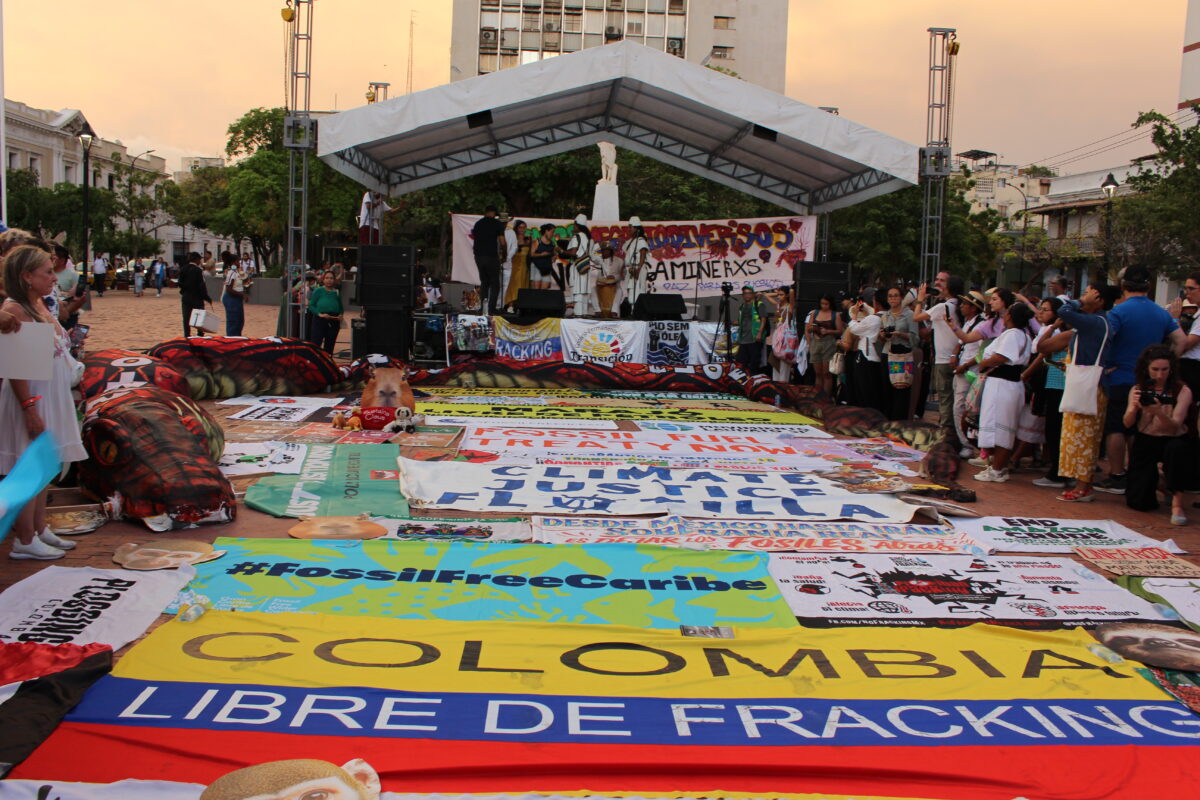
The conference marked a shift from abstract climate targets and emissions reductions toward practical implementation. Participants addressed how to overcome the financial and legal barriers perpetuating fossil fuel dependence and made a strong case for an international mechanism to coordinate multilateral cooperation, such as a Fossil Fuel Treaty, an initiative whose call for a roadmap helped inspire both the conference and broader global ambition, as well as for establishing Fossil Free Zones as an entry point for early action.
Colombia’s role cannot be overstated. The country is a significant oil producer and net exporter, and crude oil remains a major source of government revenue. Yet Colombia has halted new oil and gas exploration and, together with Netherlands, convened a conference that finally met the urgency of the moment – bringing much of the world together to demonstrate what real climate leadership can look like.
Importantly, the conference also established a Science Panel for the Global Energy Transition (SPGET), which includes Dr. Carlos Nobre, the renowned Brazilian climatologist who has warned about the Amazon’s ecological tipping. The conference elevated the role of Indigenous peoples, labor groups, and civil society in shaping transition policies through a pre-conference summit and official contributions.
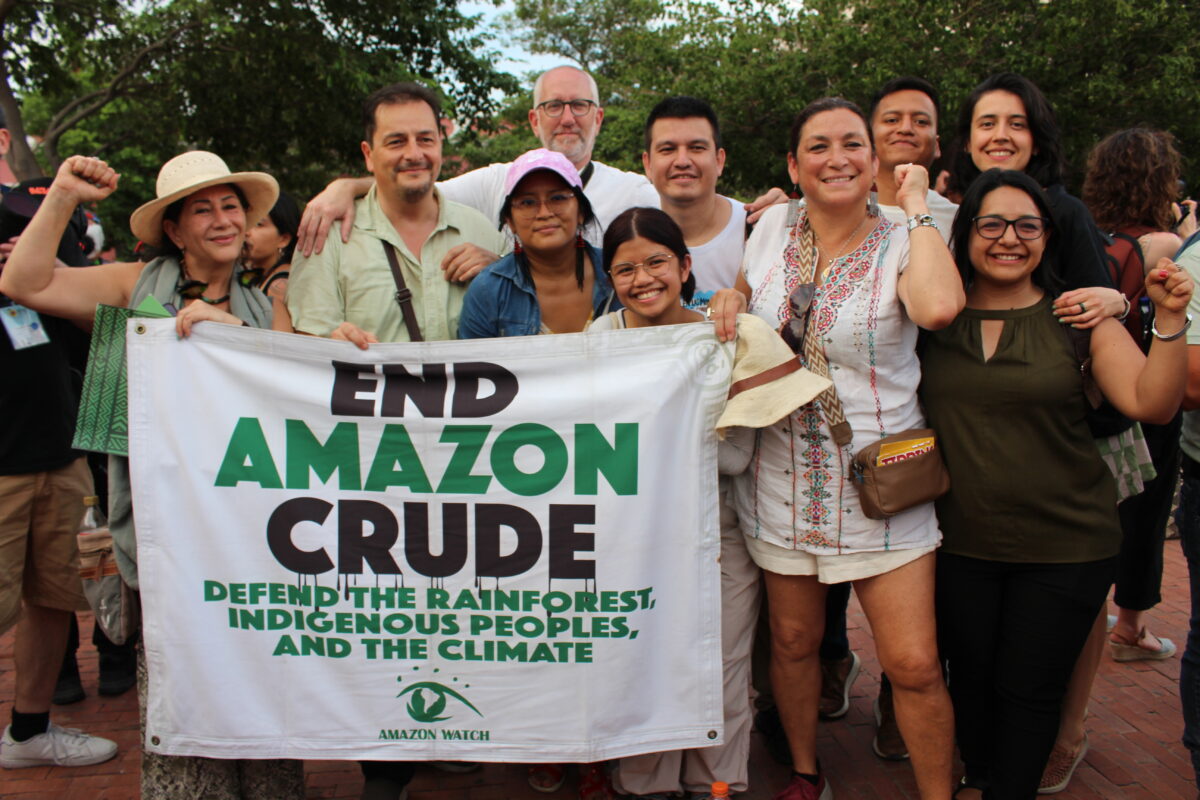
As Amazon Watch, we proudly accompanied Indigenous delegates from Colombia, Ecuador, Peru, supporting their positions and participation, and the representation at the conference from historic coalitions such as the MarAmazonía Alliance. Their frontline work to keep fossil fuels in the ground, demand remediation and justice for decades of oil harm, and assert the right to Free, Prior, and Informed Consent (FPIC) strengthened territorial solutions. Concepts like Fossil Free Zones – areas permanently protected from fossil fuel extraction due to their ecological and cultural importance – emerged as actionable pathways forward.
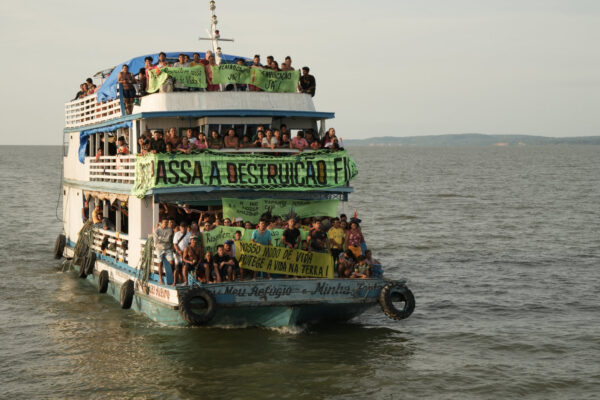
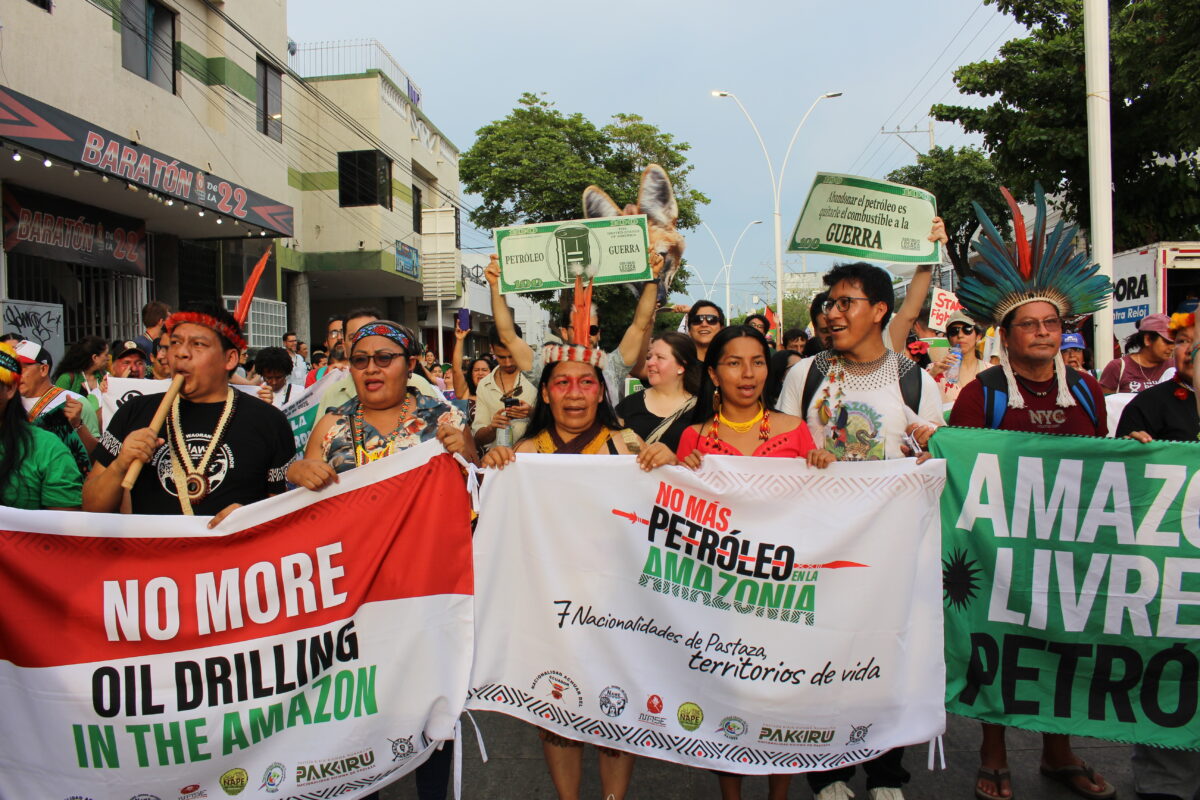
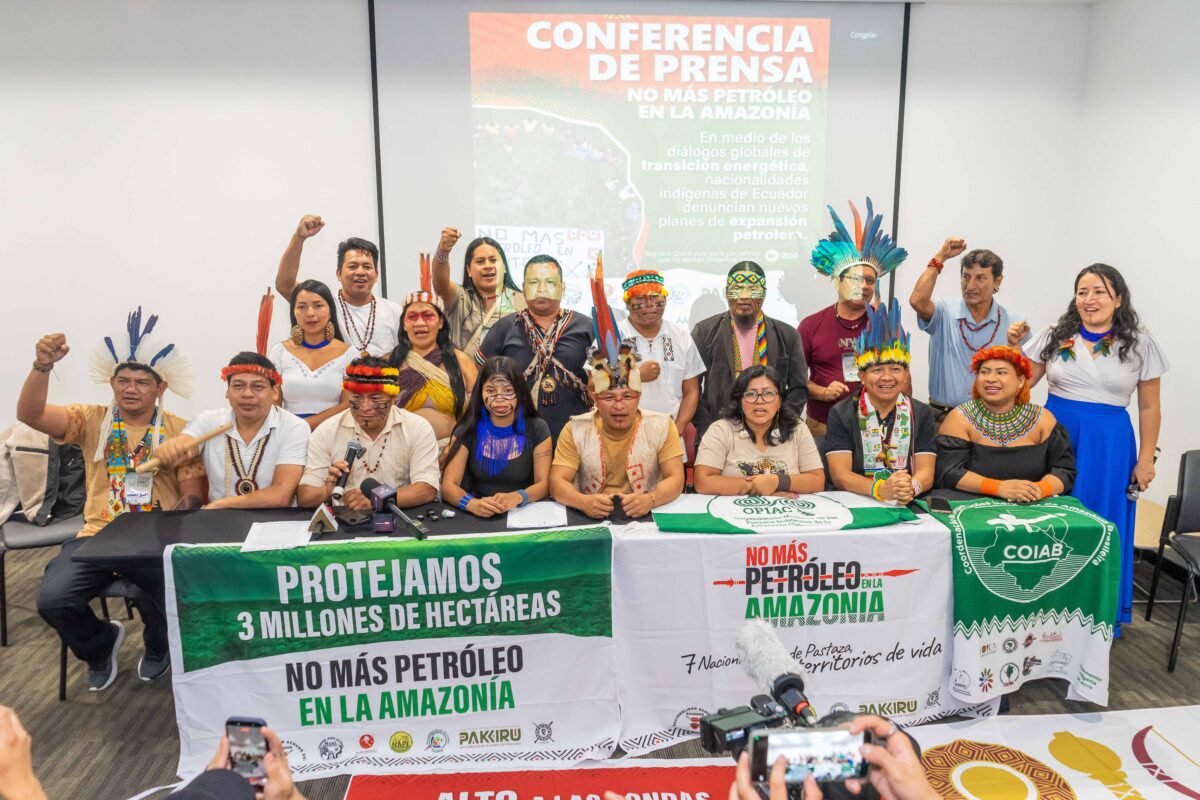
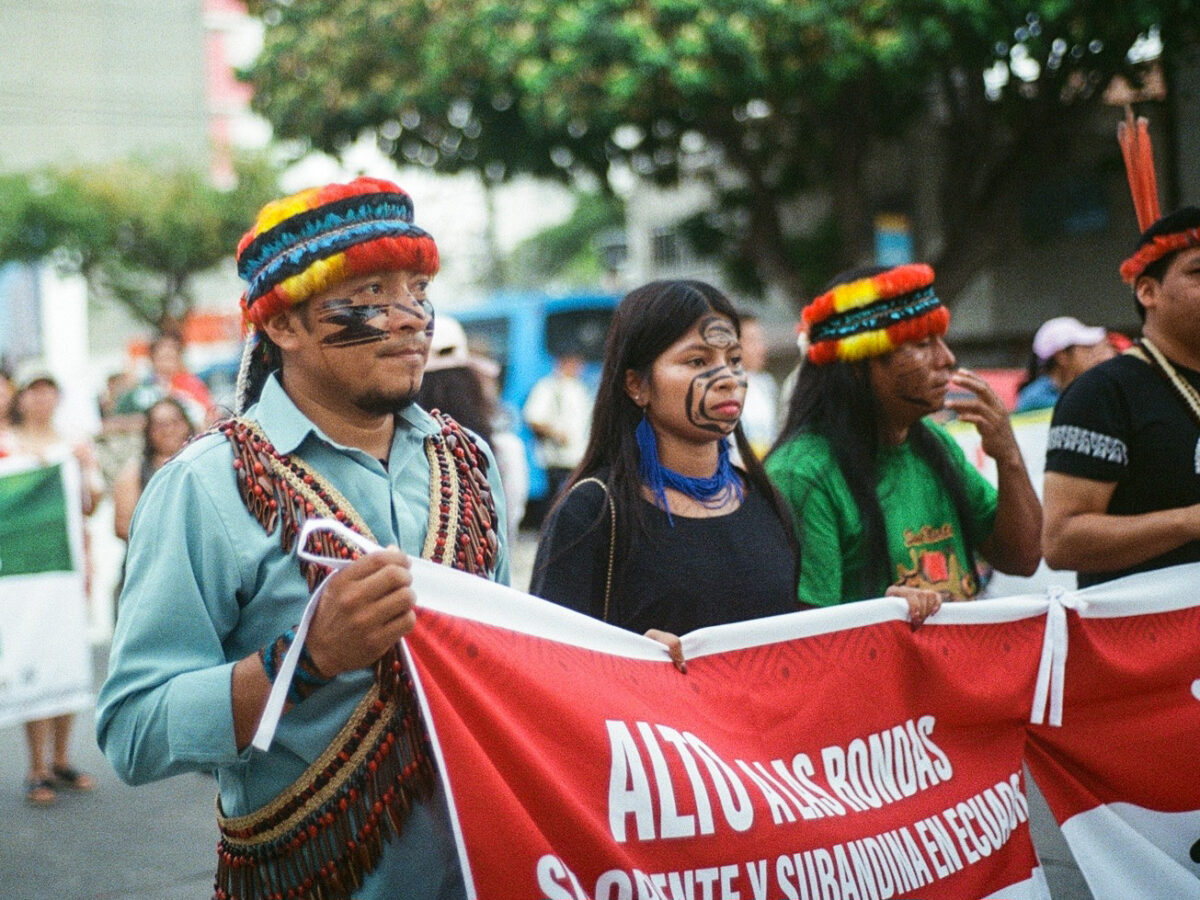
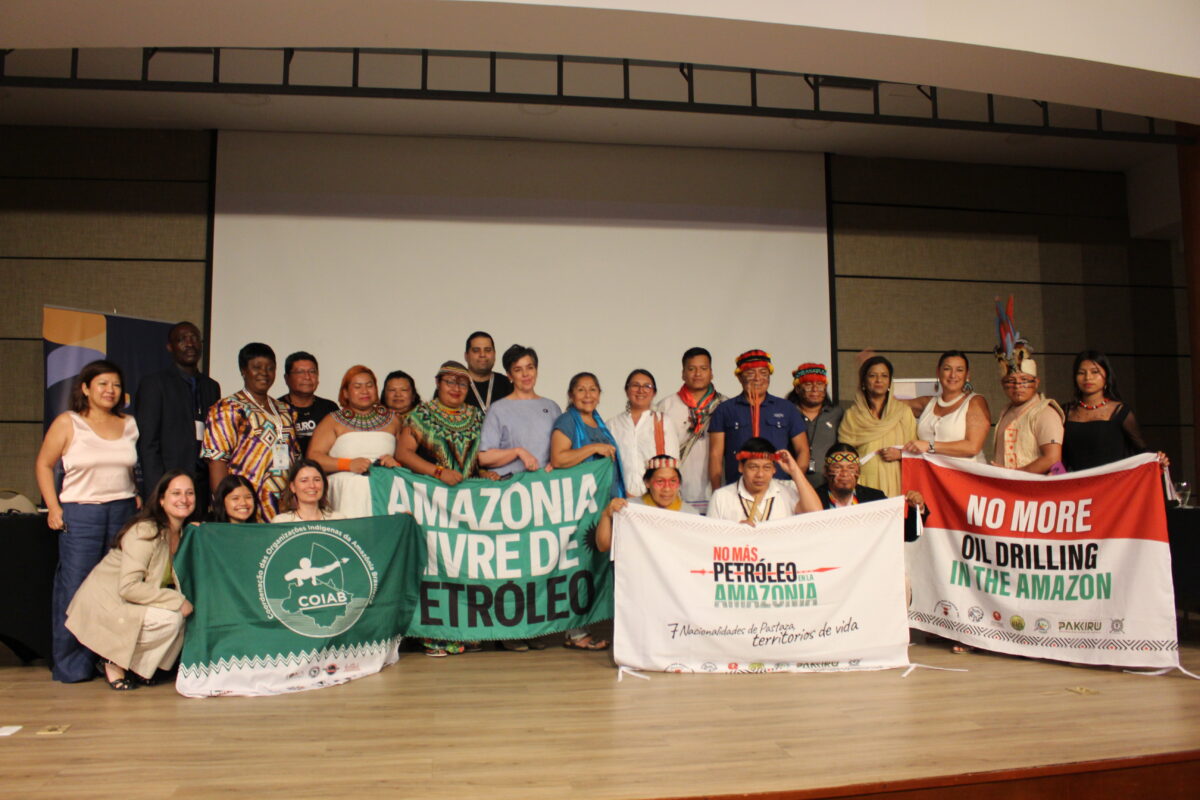
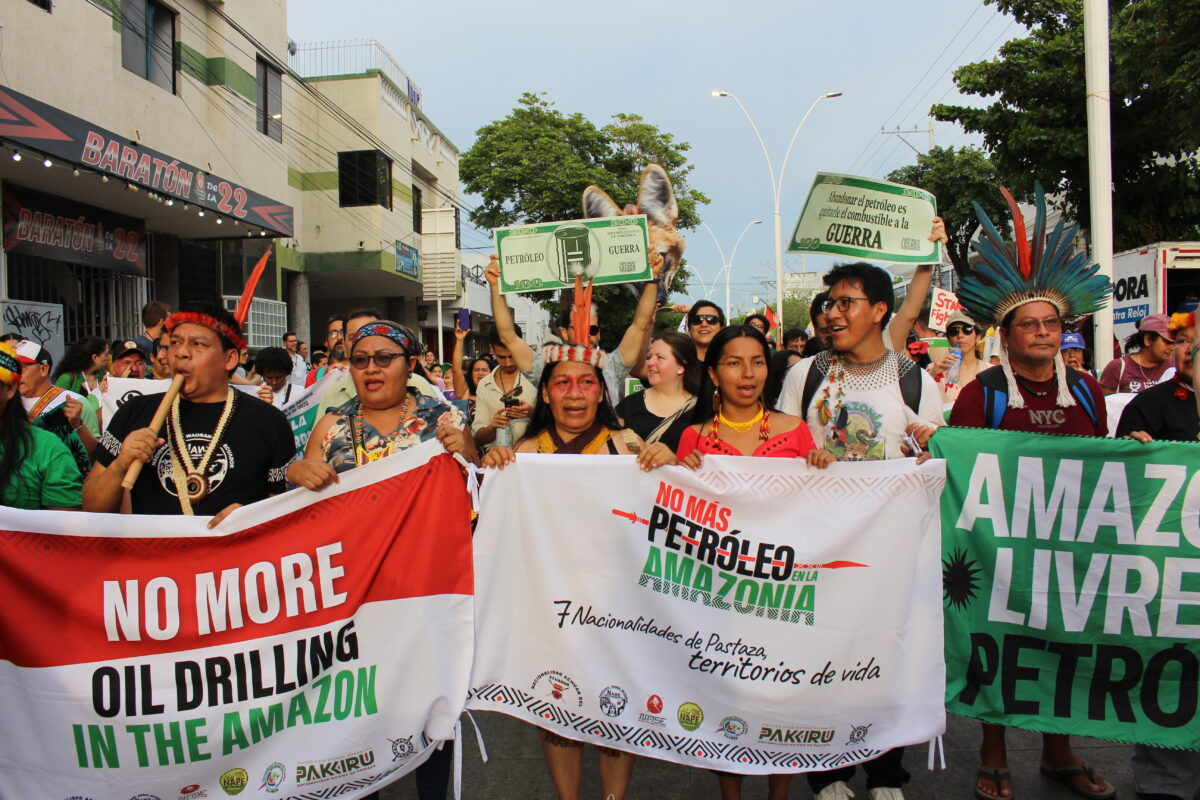
We also highlighted what the conference overlooked. While Colombia led global efforts to move beyond fossil fuels, its southern neighbor moved in the opposite direction. Ecuador did not attend and instead plans a massive expansion of extraction, with about 3.5 million hectares of rainforest and titled Indigenous lands slated for auction by the end of 2026. Representatives of seven Indigenous nationalities held a press conference to denounce the Subandean and Southeastern oil rounds and launch the No More Oil in the Amazon campaign. The conference resulted in key international press coverage for the effort.
Amazon Watch also joined Parliamentarians for a Fossil Free Future and allies such as Rainforest Action Network, Stand.earth, Banktrack, and Oil Change International to expose the fact that fossil fuel expansion is not inevitable – it is financed. Public subsidies, private banks, and global investors continue to enable oil extraction across the Amazon despite climate commitments. Through an event entitled Financial Roadmaps towards a Just Phaseout and a Fossil-Free Amazon, Amazon Watch supported Indigenous leaders from the Western Amazon, including: Olivia Bisa, President of the Chapra Nation, Brayan Mojanajinsoy, delegate of the Association of Indigenous Councils of the Municipality of Villagarzón (ACIMVIP); and Marcelo Mayancha, President of the Shiwiar Nation, to elevate a necessary demand: that banks and investors, particularly in the Global North, be held accountable for their role in perpetuating environmental harm and human rights violations. Aligning financial systems with climate and human rights goals is no longer a technical debate – it is a political imperative.
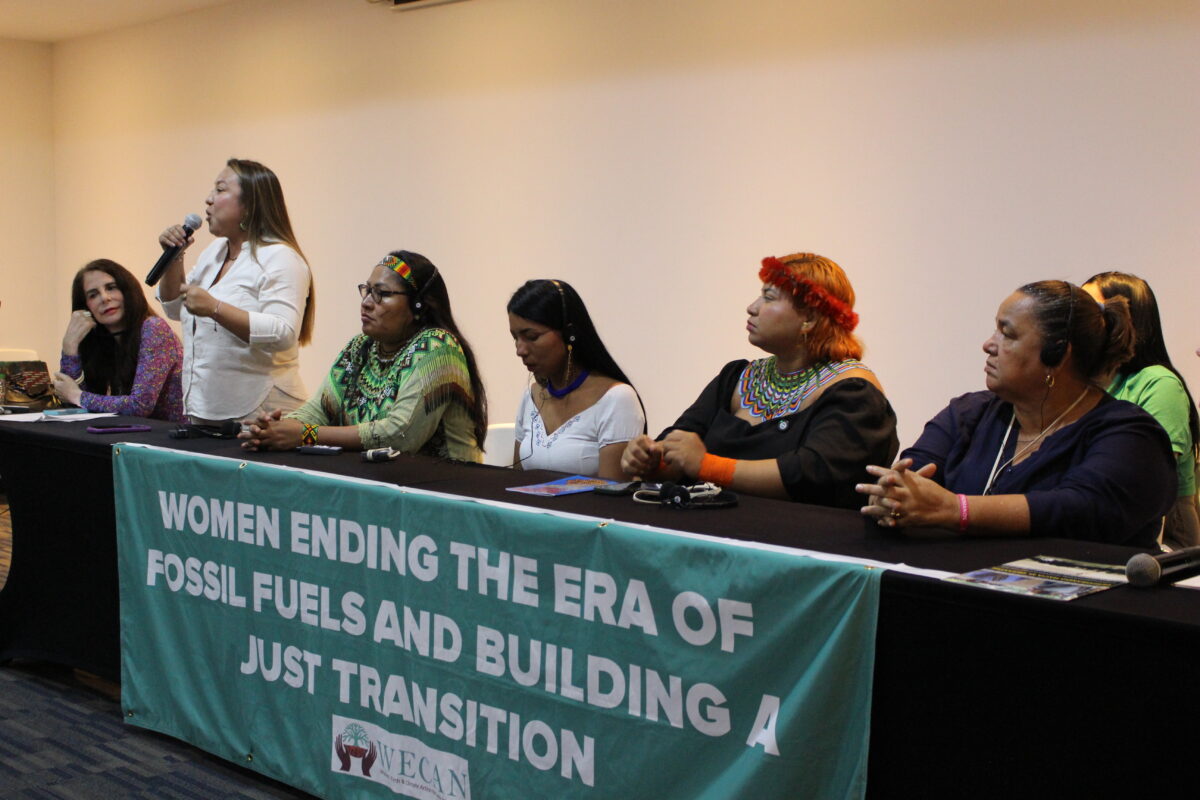
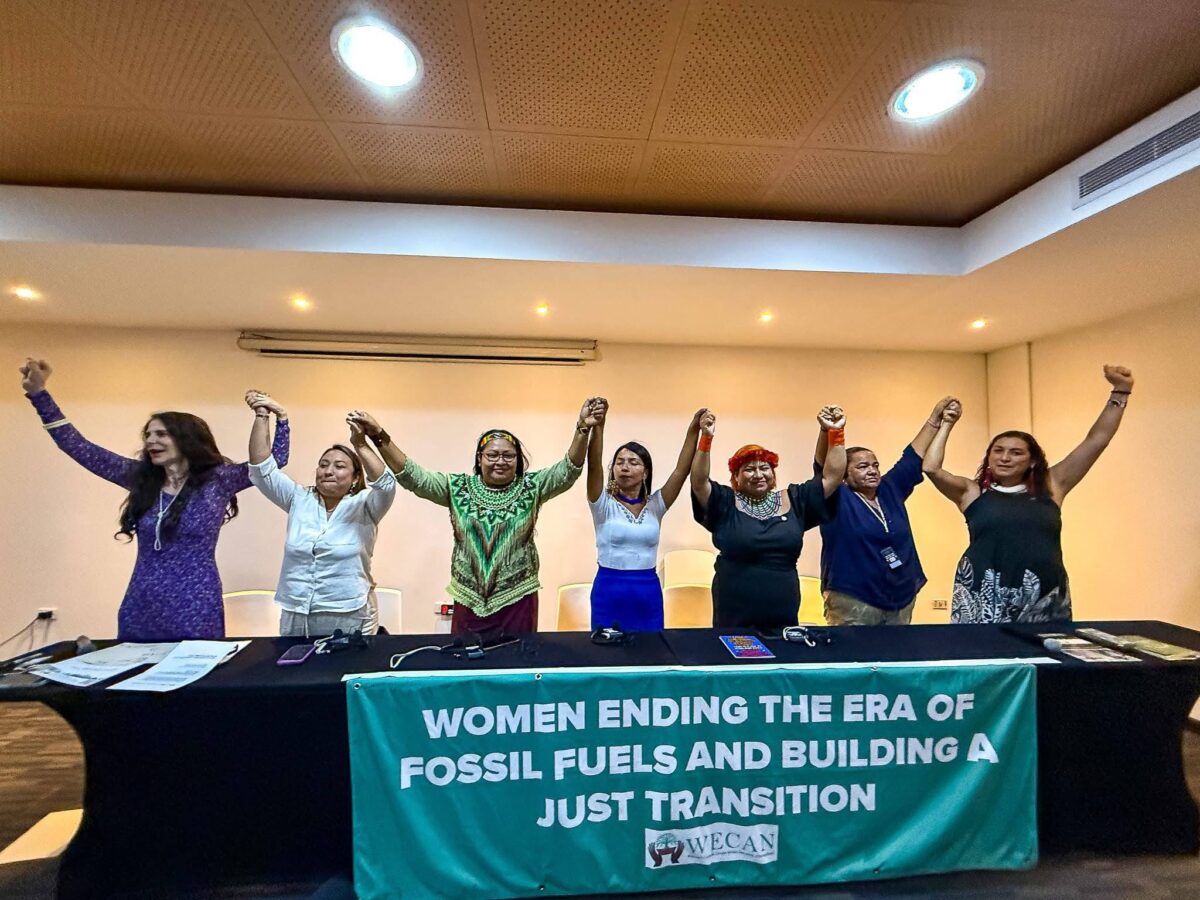
Together with WECAN International, Amazon Watch co-sponsored “Women’s Fossil Fuel Phaseout Forum: Halting Extraction and Advancing a Just Transition,” a powerhouse event that highlighted the role of frontline women in stopping fossil fuels. Featuring many long-time Amazon Watch partners, including: Jani Silva, environmental activist and campesina from Colombia’s Amazon Pearl region; Abigail Gualinga, Vice President from the Kichwa community of Sarayaku, Ecuador; Olivia Bisa, President of the Chapra Nation, Peru; and Luene Karipuna, Executive Coordinator of Indigenous Peoples of Amapa, Brazil. The event opened with remarks from Aura Tegria, a young U’wa Indigenous leader, lawyer, and Colombia’s Vice Minister of Equality and Equity. She described her people’s historic and successful fight against Occidental Petroleum, and highlighted a recent groundbreaking decision by the Inter-American Court of Human Rights, which found that the government violated the U’wa’s rights by failing to recognize and protect their ancestral territory and by permitting extractive and infrastructure projects without proper consultation.
During my years at Amazon Watch, now celebrating its 30 year anniversary, we often imagined the headline would see if we’re successful. Jonathan Watts’ headline in the Guardian comes close to capturing that vision: Could Santa Marta climate talks mark ground zero in push to ditch fossil fuels? The fossil fuel industry isn’t going down without a fight. It is pivoting to petrochemicals, plastics, and false solutions like carbon capture while fueling conflicts and authoritarian politics. The writing is on the wall. Demand could peak as early as 2030, and the “coalition of the willing” will expand as countries link climate breakdown, economic volatility, and global security to fossil fuels.
All eyes will be on the Second Conference on Fossil Fuel Transition in 2027 to be held in Tuvalu – one of many island nations facing existential crisis due to sea level rise. It will be co-hosted by Ireland, whose major coastal cities will face severe and chronic flooding by 2100 if the climate crisis can’t be curtailed. But the Santa Marta conference sparked hope that the fossil era is ending, that elected officials will lead, and that frontline communities will share a just energy transition. Hope alone is not enough, what matters now is action that matches the scale of the crisis.