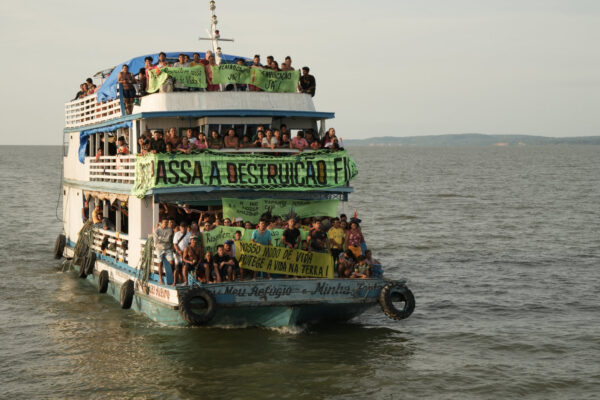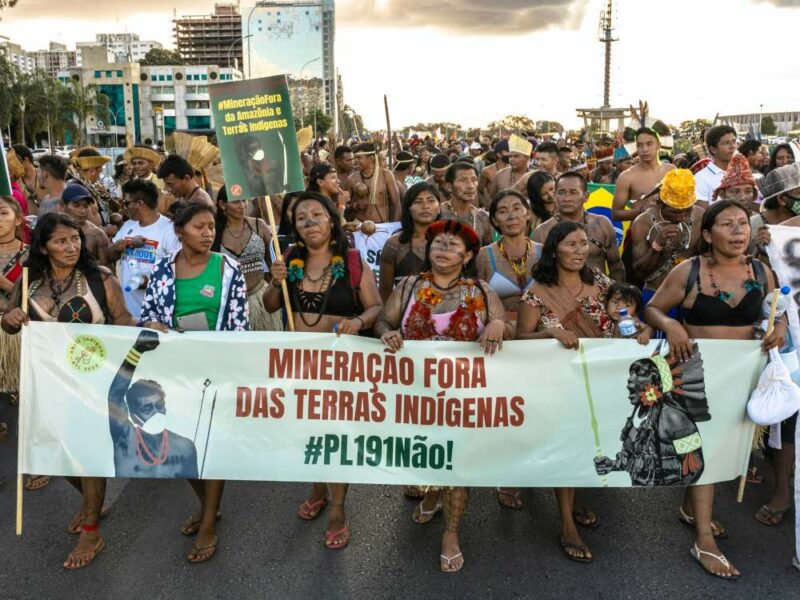

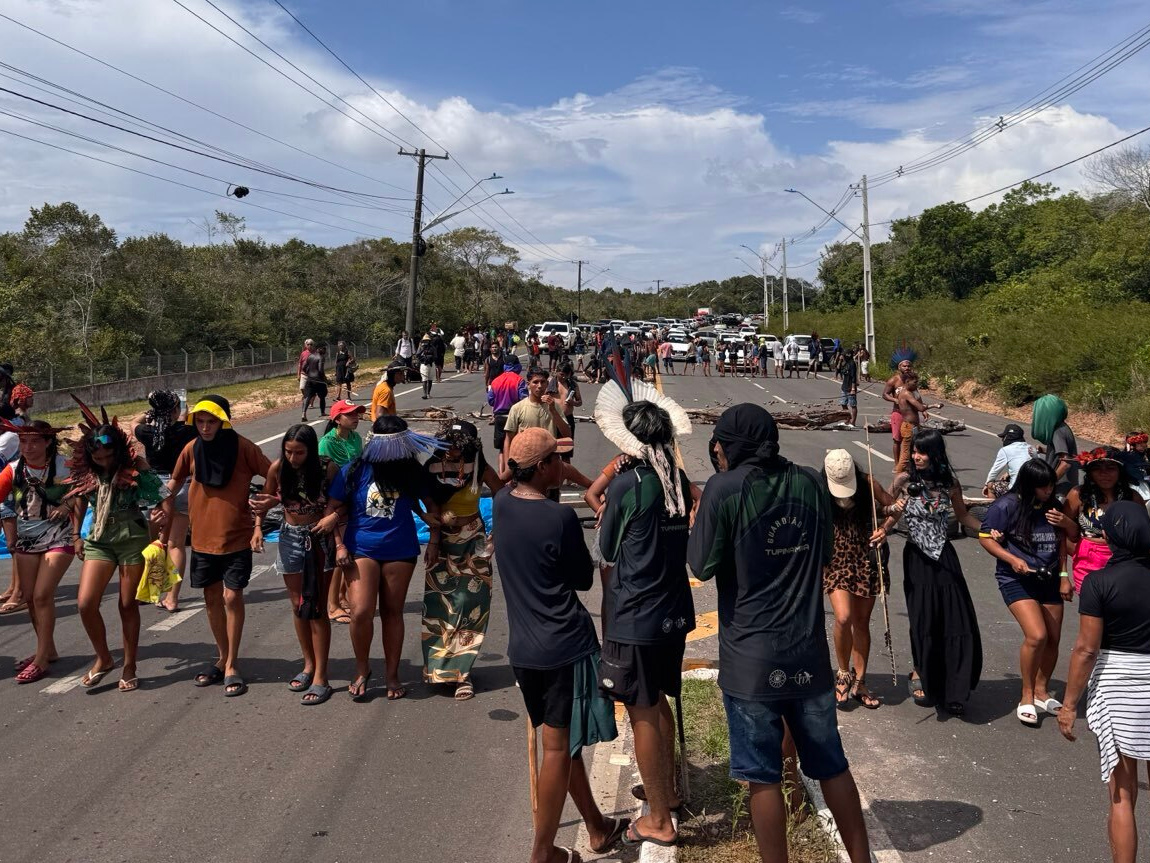
Santarém, Pará, Brazil – Indigenous Peoples from the Tapajós region blocked the main access road to Santarém International Airport today, escalating a mobilization ongoing since January 22 that blockaded the grain terminal of U.S. agribusiness multinational Cargill in the Amazonian state of Pará. The new blockade comes after the federal government sent representatives to meet with the protestors who lacked decision-making authority. Today’s escalation occurred after the government failed to appear at a Friday meeting, following Indigenous demands for in-person dialogue.
The occupation is led by 14 Indigenous Peoples from the Lower Tapajós and calls for the revocation of Decree 12,600/2025, which placed segments on the Tapajós, Madeira, and Tocantins rivers under Brazil’s National Privatization Program (PND). For the communities, the measure opens the door to concessions and to the privatization of “maintenance of navigability,” including dredging. Leaders say these initiatives are being pursued without Free, Prior, and Informed Consultation, as required by ILO Convention 169.
The movement is also challenging a federal dredging tender to open a navigation channel for the Tapajós River waterway between Santarém and Itaituba, published late last year. According to the communities, the plan accelerates an agribusiness-oriented logistics corridor, with impacts on fishing, traditional ways of life, and places of cultural and spiritual significance.
“We have been occupying the U.S. company Cargill for 14 days, and now we have blocked access to Santarém’s airport, where many people come to take photos and swim in the river without knowing about the problems we are facing. The president signed a decree that privatizes three rivers – the Tapajós, Tocantins, and Madeira – and advanced a measure that opens the way for dredging the Tapajós. Our river is at risk. The government can no longer tell Europe and the United States that it preserves the environment while destroying it here,” said Goldman Prize winner Alessandra Korap Munduruku, a leader from the Middle Tapajós region.
During Wednesday’s meeting with government representatives, Chief Gilson Tupinambá announced the blockade of access to the airport in response to the lack of effective government steps to address the movement’s demands. “I want to tell all of you that no one is leaving Santarém, the airport has just been closed. No one is leaving Santarém. And you are going to stay here with us, eat what we eat, go through what we go through, until we get an answer,” he said.
“We went to COP30 and it was a staged circus. There, they promised Free, Prior, and Informed Consultation, but now we don’t want consultation, we want this decree revoked. Revoke it now. I’m 50 years old and my concern is for our children and grandchildren. What will be left because of greed?” said Chief Gilson Tupinambá.
The movement says it will continue pressing for a political response with decision-making power, including revoking the decree and suspending measures that, according to the communities, threaten to turn the Tapajós into an export corridor for commodities, without respecting Indigenous rights and environmental rules.