For years, Indigenous organizations across the Amazon have warned that organized crime, illicit economies, and criminal governance pose some of the greatest threats to Indigenous Peoples, biodiversity, democracy, and climate stability in the region. A growing number of international actors are finally listening.
As part of our Amazon Crime campaign, Amazon Watch accompanied an Indigenous delegation to the United Nations Permanent Forum on Indigenous Issues (UNPFII) in New York, where governments, U.N. bodies, and international institutions are increasingly acknowledging both the scale and urgency of the organized crime crisis. But acknowledgement is not action. Indigenous leaders are demanding concrete political commitments – support for Indigenous territorial governance, collective self-protection systems, and direct participation in international security and organized crime policy processes.
Meanwhile, the violence devastating the Amazon cannot be understood in isolation from the global economies driving it. The booming international demand for cocaine, gold, timber, land, and other resources fuels criminal governance, territorial violence, corruption, and ecological destruction across the region.
From the Amazon to New York
Earlier this year, Indigenous leaders and defenders from Brazil, Colombia, Ecuador, and Peru gathered in Pucallpa, Peru, to confront the rapid expansion of organized crime across their territories, convoked by the regional indigenous organization ORAU and Amazon Watch.
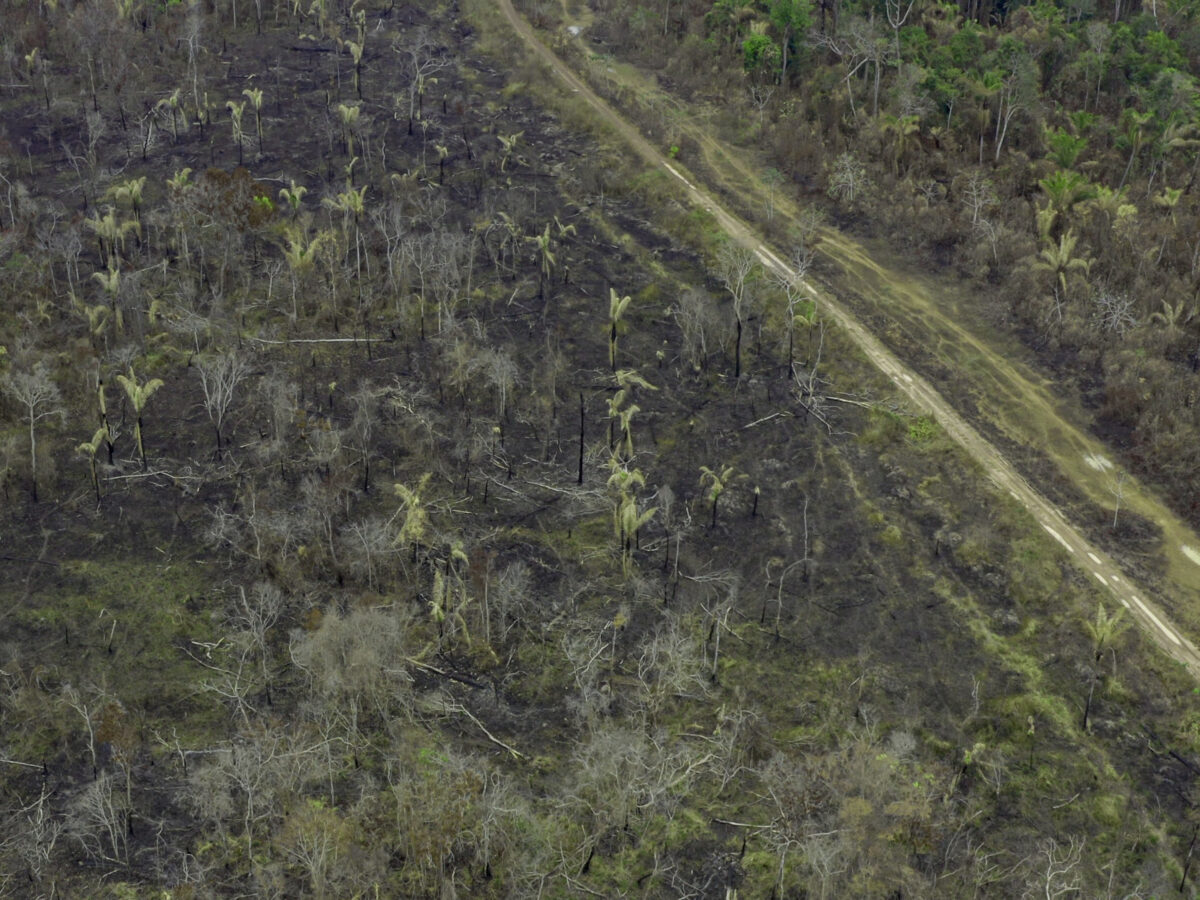
Throughout the meeting, participants analyzed how illegal mining, narcotrafficking, illegal logging, and other illicit economies are reshaping Indigenous territorial governance across the Amazon. They also discussed how state responses, often shaped by corruption, militarization, and purely security-based approaches, deepen violence and undermine Indigenous autonomy rather than protecting communities. At the Pucallpa gathering, Indigenous organizations agreed to send a delegation of leaders to the UNPFII. They also drafted a collective letter to the UN, warning that organized crime and illicit economies have become one of the greatest threats facing the Amazon today.
The letter marked a historic political milestone. For the first time, more than forty Indigenous organizations collectively called on governments, UN agencies, and international institutions to take concrete action against organized crime in the Amazon. Signatories included the regional organization Coordinator of Indigenous Organizations of the Amazon River Basin (COICA), national organizations such as Interethnic Association for the Development of the Peruvian Rainforest (AIDESEP), Articulation of Indigenous Peoples of Brazil (APIB), and Confederation of Indigenous Nationalities of the Ecuadorian Amazon (CONFENIAE), alongside dozens of organizations representing directly affected peoples.
Indigenous leaders arrived with a clear message that there is no viable response to organized crime without Indigenous participation. Governments must recognize Indigenous peoples as central actors confronting organized crime. They must also, support Indigenous territorial governance systems and sustainable economic alternatives, and protect Indigenous defenders facing violence and threats. They also called for investigations into environmental crimes and the financial structures sustaining them, and for guaranteeing Indigenous participation in all policies and international processes related to security and organized crime.
Moving the needle at the UNPFII
At the UNPFII, Indigenous leaders joined Amazon Watch and allied organizations to launch Amazon Under Siege: How Crime and Militarization Threaten Indigenous Peoples, the first systematic Pan-Amazon report documenting the impacts of organized crime and illicit economies on Indigenous territories.
Throughout the week, the delegation engaged with diplomatic missions, U.N. agencies, journalists, and international human rights mechanisms to push the issue onto the global agenda. Indigenous leaders Herlin Odicio, Jacqueline Odicio, and Josefina Tunki addressed plenary sessions and side events, bringing realities from frontline communities directly into UN discussions.
These efforts generated several important political advances. The UNPFII agreed to further investigation into the impacts of organized crime on Indigenous Peoples. Most significantly, the UNPFII formally acknowledged the crisis in its official conclusions, recognizing that illegal mining, illegal logging, drug trafficking, militarization, and illicit economies are undermining Indigenous Peoples’ health, livelihoods, cultures, and territorial governance.
In one of the Forum’s key recommendations, Member States were urged to “recognize [Indigenous Peoples’] role in territorial security, protect Indigenous human rights defenders, end impunity and guarantee Indigenous participation in security policies, including during the 13th session of the Conference of the Parties to the United Nations Convention against Transnational Organized Crime.”
At the same time, the U.N. Special Rapporteur on the Rights of Indigenous Peoples, Albert Barume, expressed strong interest in prioritizing the issue moving forward, recognizing the profound implications that criminal governance and militarization pose for Indigenous rights and territorial survival.
Following meetings with the delegation, Barume emphasized:
“It is fundamental that states understand Indigenous peoples are crucial actors when it comes to security and containing organized crime. Indigenous knowledge of territories and ecosystems, as well as Indigenous organization, are crucial. It is a big mistake of states not to work with this.”
The historic struggle for Indigenous participation
The United Nations Office on Drugs and Crime is the principal U.N. body responsible for shaping international responses to organized crime and environmental crime. In New York, the Indigenous delegation met directly with UNODC representatives and formally presented the collective letter to the organization.
While UNODC has increased engagement with Indigenous organizations in recent years, Indigenous Peoples still lack formal consultation and participation mechanisms within many international organized crime policy spaces, despite international law recognizing their right to participate in decisions directly affecting their territories, rights, and futures.
However, discussions held during the UNPFII opened important new pathways. As preparations begin for the UN Conference on Transnational Organized Crime (UNTOC COP13) in Vienna later this year, UNODC representatives acknowledged the need to explore meaningful mechanisms for Indigenous participation in discussions on organized and environmental crime, UNODC still lacks formal consultation mechanisms.
Speaking to the Associated Press, UNODC Deputy Director of Operations Jeremy Douglas stated:
“Pushing back requires territorial protection, prioritizing environmental crimes, and cooperation against transnational organized crime networks active across the Amazon.”
UNODC also noted that its offices across Latin America are already working with Indigenous communities and national authorities to strengthen territorial protection and combat environmental crimes linked to organized criminal networks.
Looking ahead
The UNPFII was an important step toward ensuring Indigenous Peoples are included as active participants in shaping strategies to combat organized crime on their ancestral territories. The challenge now is to transform that recognition into concrete political commitments, stronger protections, and structural support for Indigenous peoples on the front lines.
Amazon Watch and Indigenous partners are now preparing for the U.N. Conference on Transnational Organized Crime (UNTOC COP13) in Vienna. There, advocacy efforts will focus on advancing discussions toward a Protocol Against Crimes that Affect the Environment. Advocates will also push for stronger international recognition of environmental crimes as a central driver of climate destruction and violence in the Amazon, and securing formal mechanisms for Indigenous consultation and participation in global organized crime and security policy processes.
Across the Amazon, Indigenous Peoples continue defending forests, rivers, cultures, and life itself while confronting criminal networks, corruption, and increasingly militarized state responses. And the message brought from Pucallpa to the United Nations was clear: Indigenous Peoples are not only victims of this crisis, but they are leading some of the most effective responses to it. Their territorial governance systems, collective protection mechanisms, and ecological knowledge are indispensable, not only for the future of Indigenous peoples, but for the Amazon and the global climate itself.
The international community now faces a choice. It can continue responding to the Amazon through militarization and fragmented security approaches – or it can get behind Indigenous-led territorial governance capable of confronting both organized crime and ecological collapse at their roots. Amazon Watch will continue supporting these efforts on the ground and pressuring governments, corporations, and international institutions to do their part. Add your voice by signing our petition.