Leer la versión original en español
The Amazon is once again caught in a dangerous geopolitical dispute. The release of the new United States National Security Strategy (NSS 2025) comes at a particularly fragile moment for the region: openly bellicose rhetoric toward Venezuela, armed attacks on vessels in the Pacific and the Caribbean framed as “anticrime” operations, and a troubling diplomatic silence in the face of clear violations of international law, with the exception of Colombian president Gustavo Petro, almost alone in his condemnation.
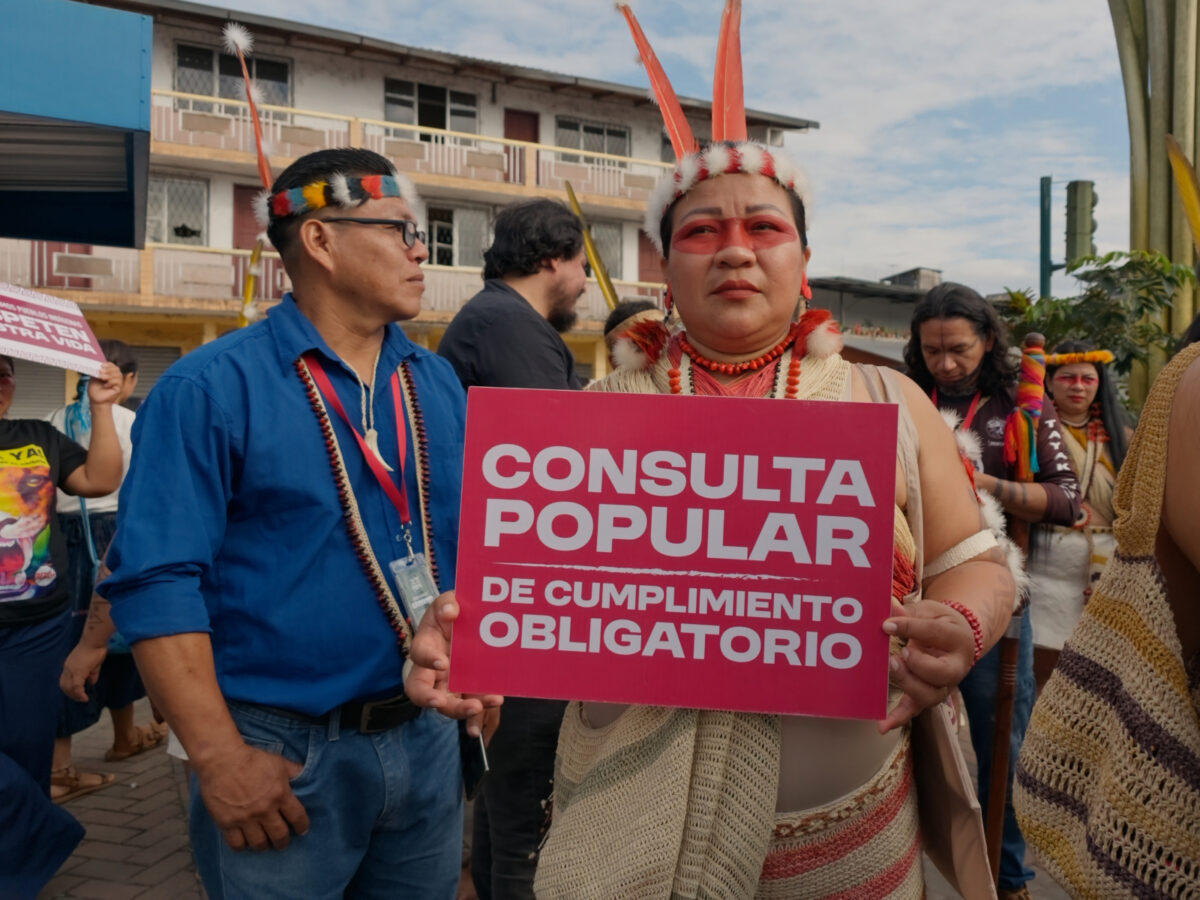
All of this is happening while Ecuador rejects, in a referendum, the return of U.S. military bases, and while Brazil, Colombia, and Peru, the three countries with the largest share of Amazon territory, move toward decisive elections in which security and territorial control will be central to public debate.
In this context, Washington’s strategy says less about organized crime than it appears to and much more about an attempt to restore a hemispheric hegemony that no longer fits Latin American reality. The document once again places the region within a “Western Hemisphere” that should remain under the “natural power” of the United States. The script is familiar: a Monroe Doctrine recycled for the twenty first century, now wrapped in the language of “narco terrorism,” migration containment, and the fight against transnational criminal organizations.
But between the lines, the message is clear: secure critical supply chains, guarantee access to strategic minerals, and protect natural resources, including those of the Amazon, from the advance of external powers, particularly China. It is no coincidence that NSS 2025 coincides almost to the day with China’s new strategy toward Latin America, which describes the region as a “wonderful land, full of vitality and hope” and appeals to a language of cooperation, though with an equally explicit interest in controlling “strategic resources.”
The U.S. approach is even more alarming as the Amazon goes through a simultaneous cycle of climate crisis, extractive expansion, illicit economies, and territorial violence. Transnational networks linked to illegal gold, cocaine, and other global markets have captured vast areas, imposing their own rules where the state arrives late or does not arrive at all. Added to this is pressure from governments that promote mining and oil extraction in highly sensitive areas, deepening social conflicts and weakening ecosystems that are essential to global climate stability.
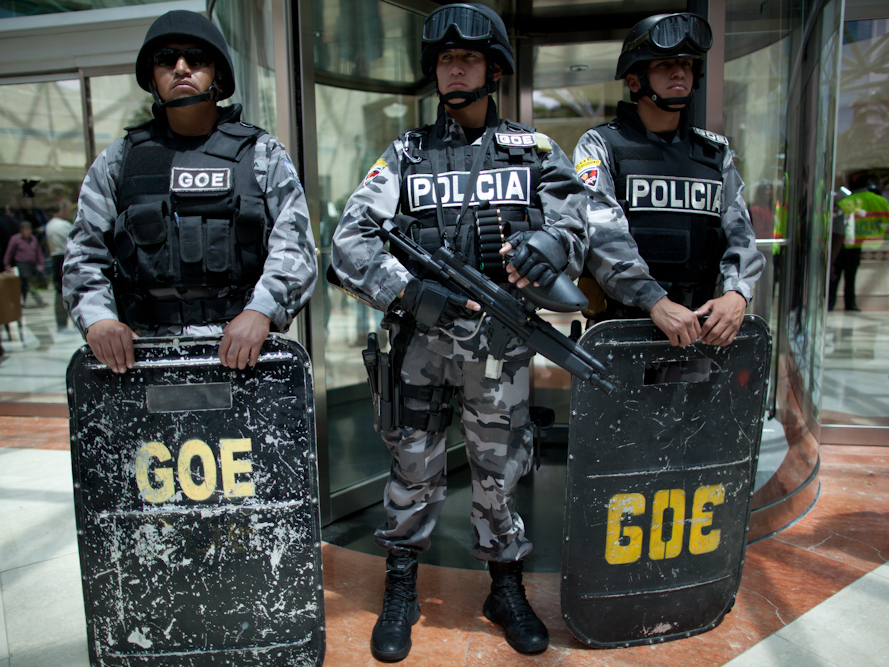
Faced with this scenario, Washington’s response is neither new nor innovative. It is a reissue of failed recipes: more weapons, more special operations, more securitization of problems that are essentially social, economic, and environmental. NSS 2025 inevitably evokes Plan Colombia, the Merida Initiative, and an entire era of interventions that militarized public policy without transforming the conditions that sustain organized crime. Far from weakening it, these strategies fragmented and intensified criminal power, without affecting the enormous profits of illicit economies.
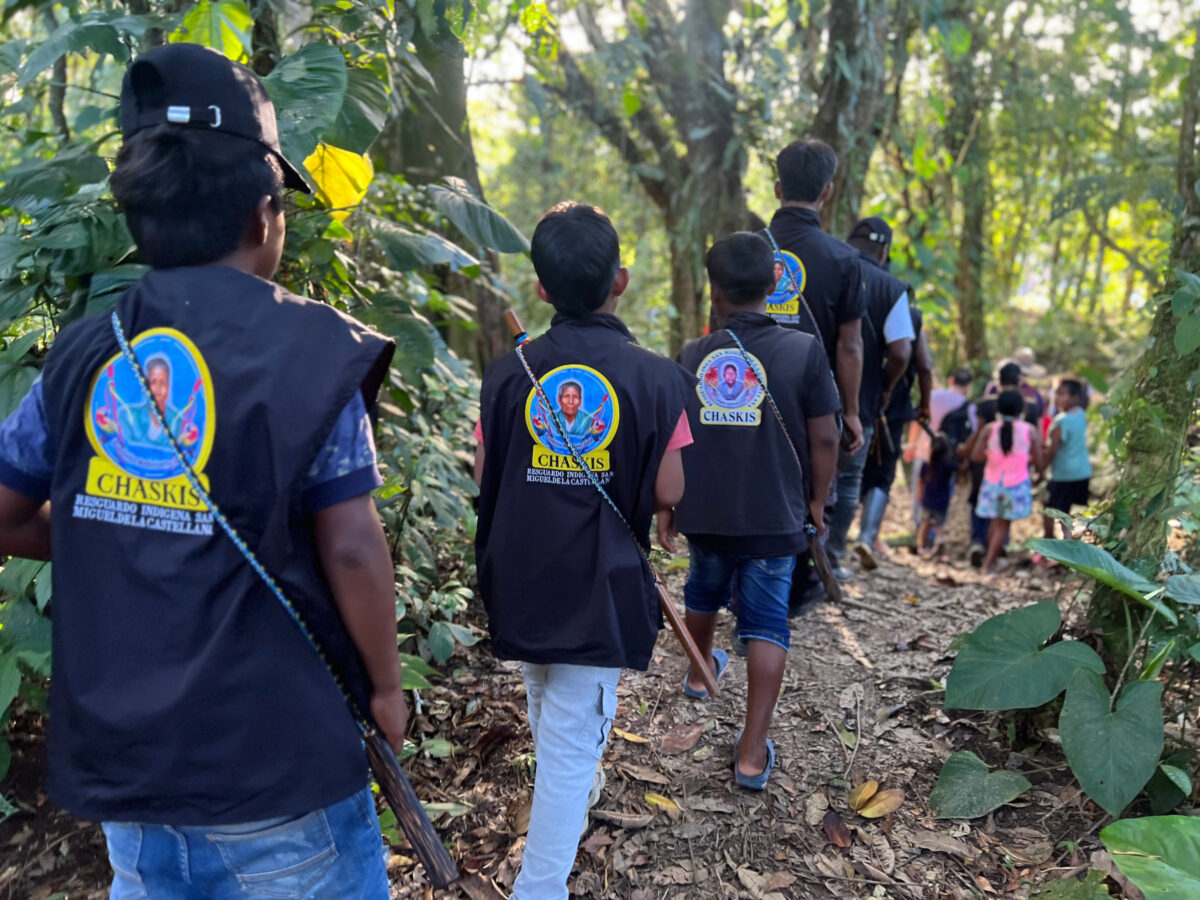
The Amazon shows every day that security is not built from helicopters, nor through aerial spraying, nor by criminalizing those who, pushed by a lack of alternatives, depend on coca or gold. Real security requires what Indigenous, peasant, and riverine communities have been repeating for decades: strong territorial rights, viable legal economies, effective access to justice, sustained state presence, and community participation. These communities are the ones who keep the forest standing, and they are the ones who pay the price when governments choose militarized responses instead of building governance.
Today the Amazon stands at a crossroads. It can move toward comprehensive security approaches based on regional cooperation and community governance, as suggested by recent efforts within the Amazon Cooperation Treaty Organization promoted by Colombia and Brazil. Or it can follow the path offered by Washington: an expanded version of Plan Colombia applied to the entire Amazon basin and designed from the outside.
The Ecuadorian referendum showed that peoples can resist these logics. By contrast, Peru’s prolonged political crisis, worsened by legislative initiatives that weaken the rule of law, has left fertile ground for the criminal capture of institutions; the government of Daniel Noboa flirts with militarized solutions; and Venezuela continues to sink into its own spiral of corruption, extractivism, and violence.
At this critical moment, Latin America is deciding its future: in referendums, elections, public debates, territorial resistance, and the construction of local autonomies. That is the path that needs to be strengthened. What the region, and the Amazon in particular, does not need is a return to schemes of external tutelage that reduce it to a space for military projection and the supply of strategic resources.
The response the Amazon demands is different. Not new wars, but a new ecosocial pact. Security policies that address the structural causes of violence: persistent inequality, absence of the state, corruption, impunity, and the lack of real economic opportunities. Security with justice, with robust public services, with science, with local economies, and with respect for international law and the self determination of peoples.
Faced with a US strategy that looks to the past, Latin America has the possibility, and the responsibility, to look to the future. A future in which the Amazon is not a territory to be controlled, but a territory to be cared for. Where security does not justify geopolitics, but guarantees a dignified life. And where the decisions that define the destiny of the continent are built from the territories and supported from Bogota, Lima, Quito, Caracas, and Brasilia, not imposed from Washington.
If history offers any lesson, it is this: every time the Amazon has been militarized in the name of order, the forest lost, its peoples lost, and democracy lost. Repeating that path is not a solution.