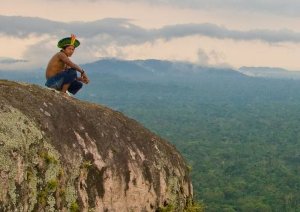


It’s nearly 6,000 kilometres from the Peruvian Amazon to Ottawa, a journey a small group of indigenous leaders began earlier this month with a walk through the rain forest. They walked to a canoe, which took them to a faster boat, which brought them to a city where they could eventually get on a plane and come to Parliament Hill.
Dressed in brightly coloured headgear and clothing, these indigenous leaders from another world might not look like they represent a real threat to one of Canada’s international energy giants. But looks can be deceiving.
The Achuar people, who have lived for thousands of years in the rain forest, have a history of taking on big business and successfully resisting oil operations in their territories. It is a determination driven by experience with an earlier operation nearby which, they say, contaminated nearby rivers, depleted wildlife and made children sick.
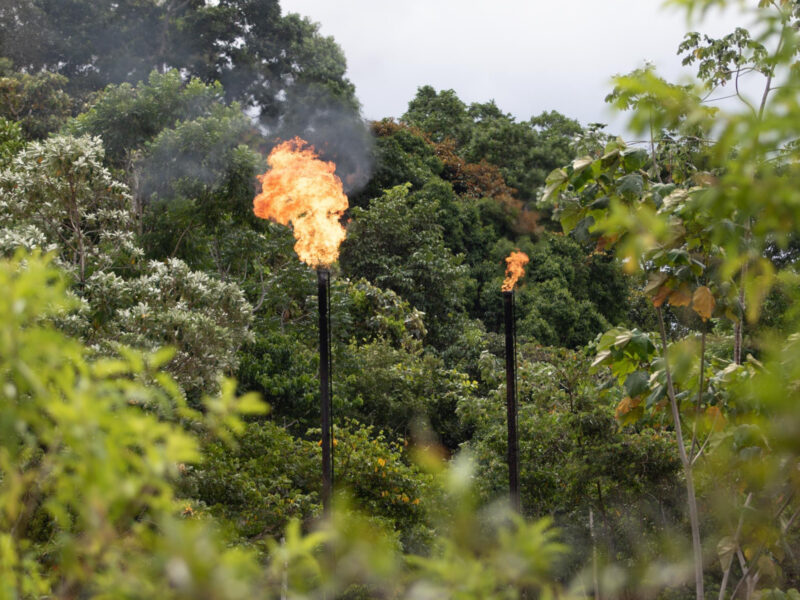
Occidental Petroleum, which pulled out of Peru, denies it caused any negative health effects, a case that is now before the courts. Now the Achuar have in their sightlines Canadian energy giant Talisman Energy, which is doing exploratory drilling in their territory without full community support, they say.
Talisman, whose officials will meet with the indigenous leaders in Calgary next week, is paying attention. It has learned through experience in war-torn Sudan, where it was accused of complicity in genocide, that a social contract is as important as business contracts for success. Talisman has since made corporate social responsibility a key part of its mandate and has in the past stated it will not work in Peru where it does not have the agreement of the community. It has also put in place environmental measures to minimize the possibility of environmental impact.
Talisman continues to state that it only operates where it has local community support and consent and says it has agreements with federations representing 66 communities in Peru. And they say the indigenous leaders visiting Canada don’t represent all Achuar people, but a federation “that groups a number of communities who do not want to see oil exploration in their lands — and we respect that.”
The indigenous leaders visiting Canada, meanwhile, say Talisman has the approval of only a handful of communities, not the majority, and that it is using corporate social responsibility measures to pit communities against each other and spark conflict.
The federal government, whose support for Canadian resource businesses overseas increasingly includes foreign aid dollars, should also be paying attention.
The case underlines the complexities and limits of corporate social responsibility, a doctrine the Canadian government has embraced and promotes, although on a voluntary basis. Corporate social responsibility assumes that responsible industrial development is a win-win, for area residents, and for companies. But what if the best thing for a company and for a community are not the same thing? And where does that community turn for help?
The Achuar say they want to be left alone. The Peruvian government wants to see resource development in their territory and has encouraged development. Talisman, meanwhile, wants to do business in the area, with the support of the Canadian government.
Not only does Canada support companies working abroad financially — Export Development Canada has provided Talisman with a $100 million-$250 million letter of credit for general financing and to support foreign direct investment which has been renewed annually since 2006 — but through foreign aid projects that support some companies’ corporate social responsibility initiatives and help countries such as Peru develop mining and resource legislation and institutions, among other things, which benefits Canadian companies working there.
While the federal government rightly touts the economic value of Canada’s resource companies at home and around the world, its support of overseas resource development as a means of improving the lives of poor people has been controversial.
Canada has particularly focused on Peru in recent years, with tens of millions of dollars in foreign aid going into strengthening the country’s agencies and institutions responsible for regulating the oil, gas and mining industries and working with communities.
But what if our foreign aid is also directly or indirectly doing harm?
The Achuar argue that development in their sensitive area is damaging and that the best thing for them and the crucial Amazon environment is for companies to respect their wishes and leave.
“We are fighting so that our children have a territory that is uncontaminated,” their spokesman Peas Peas Ayui said through a translator.
Their visit to Canada could provide a teaching moment about the complexity of resource development around the world. It could also offer a warning about the Canadian government’s all-encompassing embrace of Canada’s resource industries through foreign policy and international development dollars.
What happens when Canada’s interests overseas are not in the best interests of local people? It is a question that is unlikely to be answered any time soon. The Achuar leaders were scheduled to meet with opposition MPs during their stay in Ottawa, but had no meetings planned with Conservatives.
NDP MP Craig Scott, who was recently elected in Jack Layton’s former riding, said the Achuar’s complaints underline the need for laws that hold Canadian companies responsible for engaging in good human rights and environmental practices overseas. A Liberal bill to that effect failed to pass in the House.
Meanwhile, the Achuar leaders have a busy series of meetings with aboriginal groups in Canada, including near Alberta’s oilsands, and are attending Talisman’s annual general meeting.
Stay tuned.