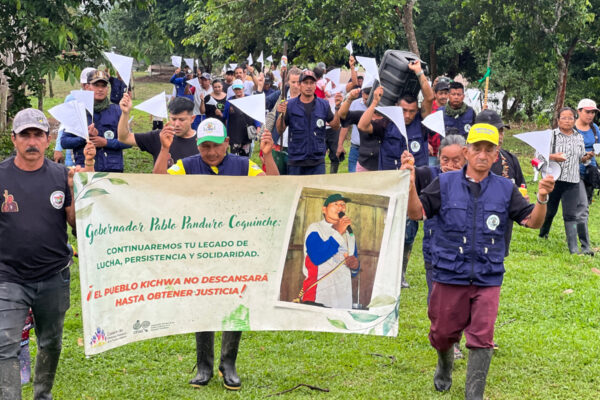

I come from Sarayaku, a Kichwa community in the Ecuadorian Amazon that has spent decades defending its territory from oil exploitation. Throughout all this time, we have heard the same argument: beneath our forest lie resources that the country needs in order to develop, and those of us who oppose their extraction are portrayed as enemies of progress.
But we know another kind of wealth. It is in our rivers, in the animals and plants, in the knowledge passed down by our elders, and in the relationships that allow the world as we know it to continue to exist. Our territory is not a reserve of resources waiting to be exploited. It is a territory of life.
This distinction is profoundly political.
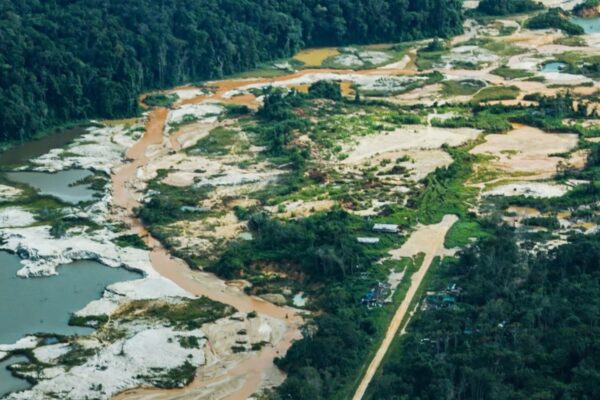
For far too long, the wealth of the Amazon has been measured by what can be extracted from it: oil, gas, minerals, timber. Today, at least 250 million hectares of the region are lands belonging to Indigenous peoples and local communities. According to Amazon Watch, 30 million hectares – 12% – are threatened by oil and gas exploitation, while another 9.2 million hectares – 4% – overlap with mining concessions. Faced with this reality, we are presented with a false choice: extraction or poverty; oil or development. Amazonian peoples know that other possibilities exist.
In Sarayaku, we speak of Kawsak Sacha, or the Living Forest. For us, the forest is a living being of which we are a part, where everything is interconnected and where our existence depends on maintaining that balance. Our struggle has never simply been against an oil well: it is about our right to decide what happens in our territory, how we want to live, and what future we build for the generations to come.
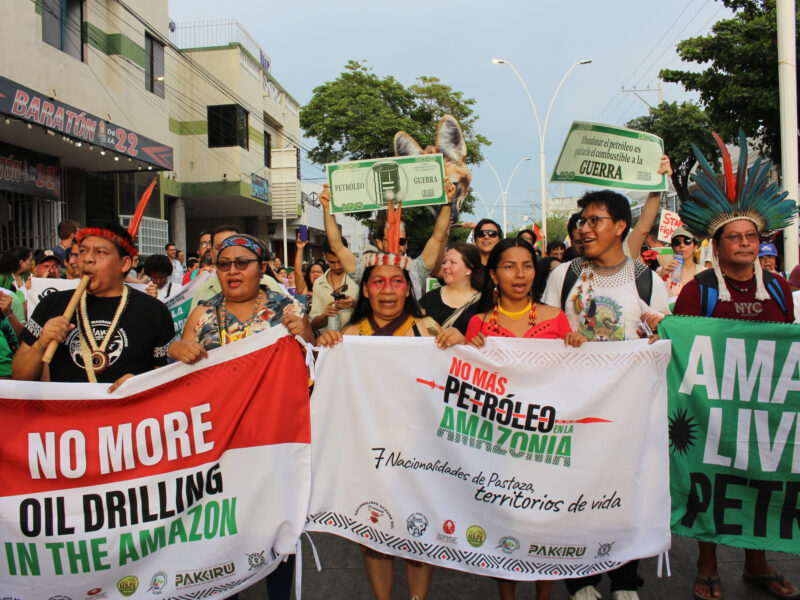
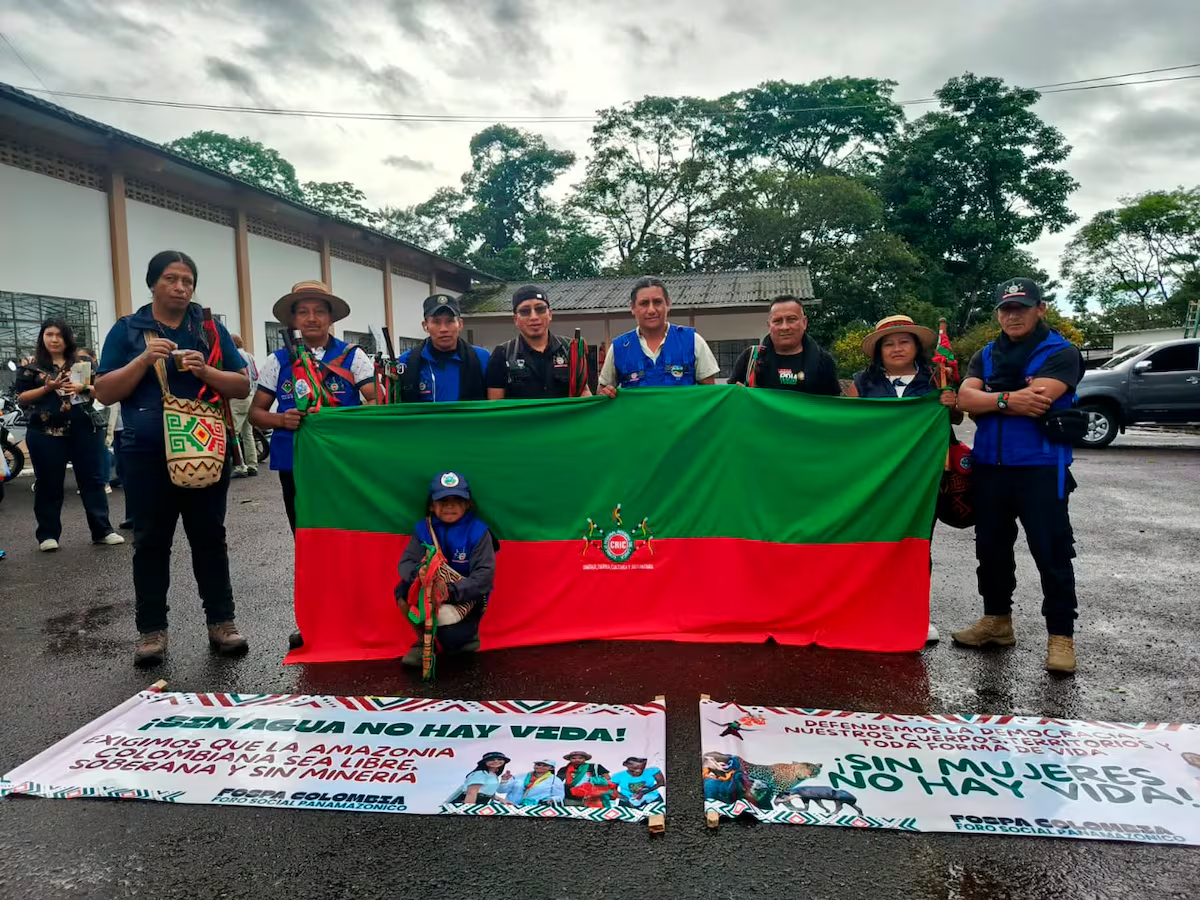
There are territories where leaving oil in the ground is especially urgent, and now, in Puyo, we have an opportunity to bring this discussion to a Pan-Amazonian scale. We know that the world needs to transition away from fossil fuels: the question is how to do so justly and where to begin. One of the proposals of the 12th Pan-Amazonian Social Forum (FOSPA) – which has been taking place since August 16 and runs through Friday, August 21 – is to advance fossil fuel-free zones. In other words, areas that would permanently protect territories that remain free from oil and gas exploitation, particularly where preventing the advance of new extractive frontiers is most urgent.
The Amazon is one of those places: it sustains peoples, cultures, rivers, forests, biodiversity, and knowledge; territories where Indigenous peoples exercise our own forms of governance. Protecting the Amazon means asking ourselves what we understand by development and what we need to preserve for life to continue. A future in which we merely decide where extraction can continue and where it cannot is not viable. A fossil fuel-free future is possible, beginning with those territories where halting expansion is most urgent.
But the Amazon is not a homogeneous reality. Where extraction has not yet arrived, we must prevent it from advancing. Where there are new plans for expansion, we must stop them. Where the oil industry has operated for decades, we must plan a transition that does not leave communities behind. Where it has left contamination and destruction, we need remediation. And where peoples have decided to end extraction, that decision must be respected and the territory must be restored.
Ecuador knows this last challenge well: 6.7 million hectares of oil blocks extend across its Amazon region, which, according to a report led by Earth Insight, threatens 5.5 million hectares of undisturbed primary forest – 57% of the primary forest in the Ecuadorian Amazon. In addition, it affects 4.4 million hectares of Indigenous territories, representing 61% of such areas in the Ecuadorian Amazon.
In Yasuní, for example, citizens decided to keep the oil in the ground. This park, which covers more than one million hectares, faces threats from oil blocks across 43% of its area, according to the same report. Now we must make the will of the people a reality. Yasuní reminds us that the transition is also a matter of democracy and self-determination. We cannot talk about protecting the Amazon while the decisions of those who live there – or of those who have democratically decided to protect it—continue to be ignored.
For years, people have tried to convince us that Indigenous peoples need oil in order to escape poverty. But a just transition requires precisely that we change this idea of wealth. We need to strengthen economies that allow the forest to remain standing, protect our forms of territorial governance, and direct resources toward activities that sustain life. As long as public and private finance continues to support new fossil fuel exploration and infrastructure in Amazonian territories, we will be financing the expansion of the very model we claim to want to transform.
If vast areas of forest still remain, it is also because our peoples have fought to defend them for generations. But the Amazon sustains more than just our lives. Its forests, rivers, and biodiversity form systems on which far more than those of us who live here depend. That is why FOSPA cannot be limited to being a space for gathering. We must leave Puyo with decisions.
For far too long, those of us who defend our territories have been portrayed as enemies of progress. The time has come to turn the question around: what kind of future are we building if, in order to develop, we must destroy what makes life possible? From the Amazon, we are not asking to return to the past. We are defending our right to decide the future.
Patricia Gualinga is a Kichwa leader from Sarayaku and led her community’s historic legal victory against oil exploitation.