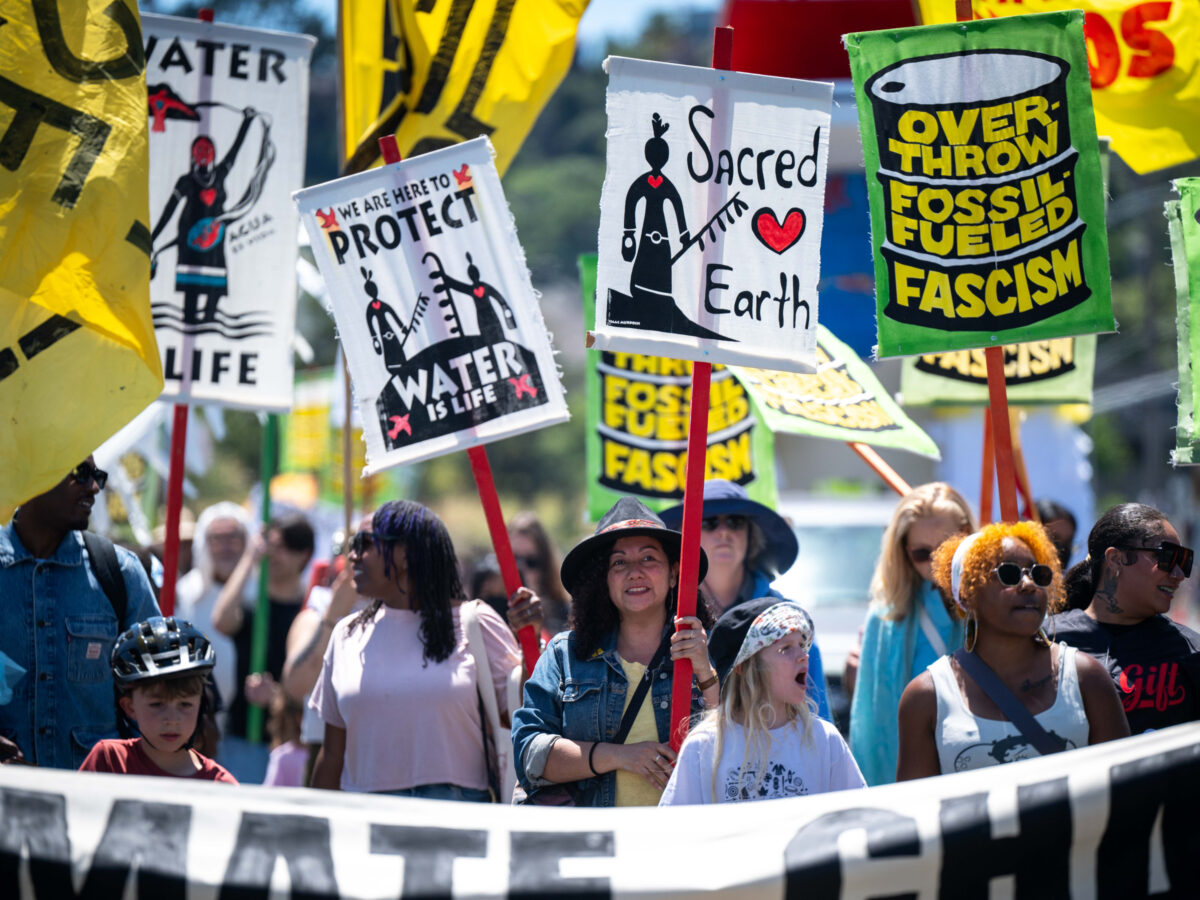
Houston, TX – Shareholders, Indigenous leaders, human rights defenders, and environmental justice advocates converged on Chevron’s Annual General Meeting (AGM) today to condemn the company’s ongoing refusal to address the devastating impacts of its operations on frontline communities worldwide.The meeting came less than two weeks after hundreds gathered in Richmond, California for the 13th annual Anti-Chevron Day mobilization, which brought together Indigenous leaders, refinery communities, climate activists, and international allies to denounce Chevron’s record of toxic contamination, fossil fuel expansion, environmental racism, and corporate abuse.
This year’s shareholder meeting further demonstrated how Chevron’s AGM process has devolved into a tightly controlled and largely performative exercise designed to insulate executives from meaningful scrutiny. The entire proceeding lasted less than 30 minutes, with virtually no substantive discussion of shareholder resolutions, minimal investor participation, and a heavily screened question process designed to shield executives from direct challenges on the company’s environmental destruction, human rights record, and growing global unpopularity.
Critics say the increasingly scripted nature of Chevron’s AGMs underscores how disconnected company leadership has become from affected communities, shareholders, and public accountability.
Shareholders used today’s meeting to force a vote on two resolutions targeting Chevron’s human rights record and the company’s ongoing exposure to severe legal, reputational, and operational risks arising from its treatment of Indigenous peoples and communities affected by conflict, extraction, and pollution.
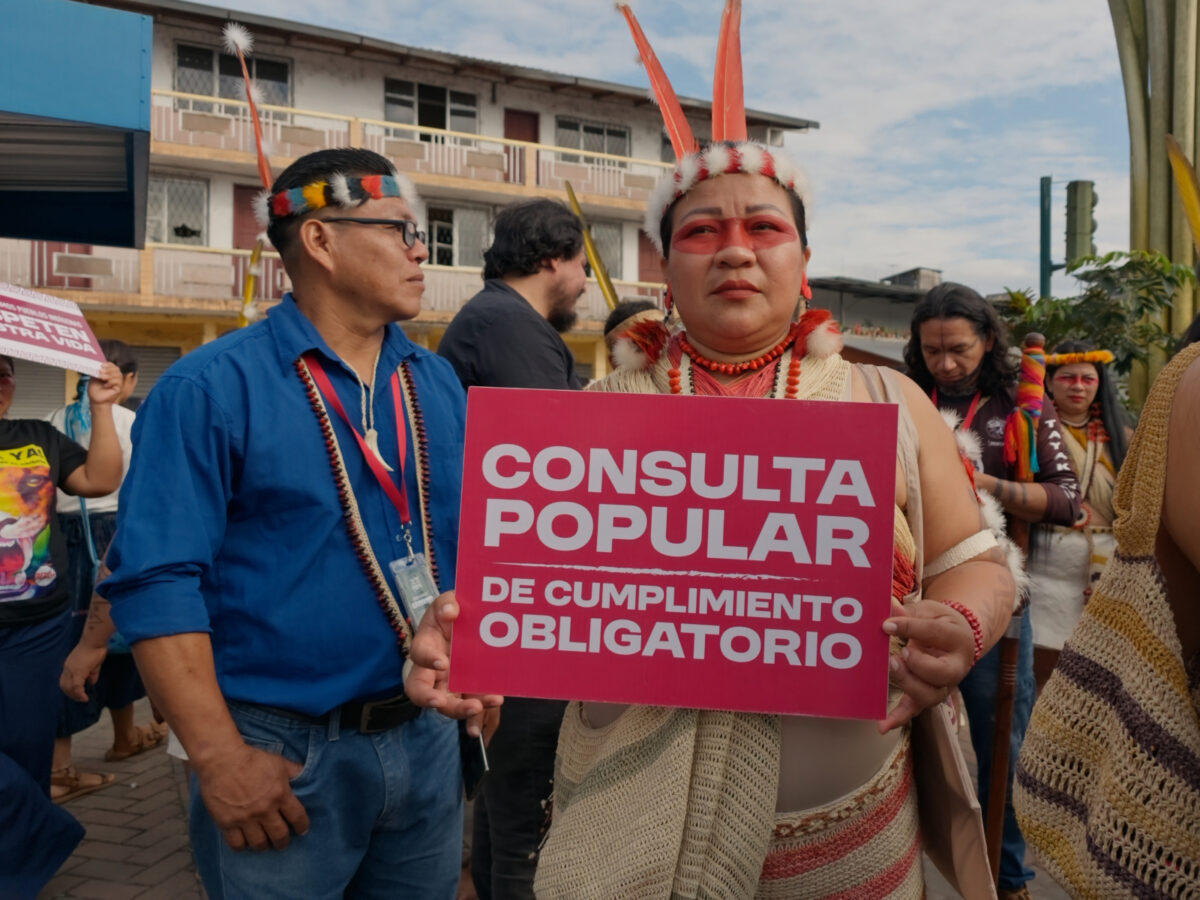
Item 5, submitted by the Franciscan Sisters of Allegany, requested that Chevron publish a report evaluating the effectiveness of its policies and practices in respecting Indigenous peoples’ rights under the United Nations Declaration on the Rights of Indigenous Peoples (UNDRIP), including the right to Free, Prior, and Informed Consent (FPIC). The proposal directly cited Chevron’s decades-long refusal to remedy contamination and human rights harms in the Ecuadorian Amazon, where Indigenous nations and campesino communities continue to suffer the impacts of the deliberate and widespread toxic pollution left behind by Texaco, acquired by Chevron in 2001, liabilities Chevron has spent decades attempting to evade.
During presentation of the resolution, shareholders also reminded Chevron that in 2025 California lawmakers unanimously passed Senate Resolution 51 (SR51), calling for an investigation and phase-out of Amazon crude imports following protests and advocacy by Indigenous leaders from Ecuadorian nations impacted by oil extraction.
“In Ecuador, Chevron’s legacy of Texaco operations left 1,000 toxic waste pits and widespread contamination of land and water impacting Indigenous communities for decades. Indigenous groups… have faced serious health impacts, displacement, and cultural harm. Cases like these still occur today as Chevron’s supply chain continues to rely on oil sourced from Indigenous territories in the Amazon,” said Ruthly Cadestin, Executive Director of Investor Advocates for Social Justice.
Item 6, submitted by the Lillian Levin Trust, called on Chevron’s Board to commission an independent third-party assessment of the company’s human rights due diligence processes regarding customers, counterparties, and business partners operating in conflict-affected and high-risk areas. The proposal referenced a 2025 report by a United Nations Special Rapporteur naming Chevron among corporations allegedly contributing to and benefiting from systemic violence and potential atrocity crimes linked to fossil fuel operations in the occupied Palestinian territories.
“In the Eastern Mediterranean, gas operations were shut down due to conflict. In Venezuela, operations depend on U.S. sanctions licenses tied to regime change that can be revoked by the international courts. These conditions create direct exposure to legal scrutiny, broken or unenforceable contracts, operational shutdowns, stranded assets, higher cost of capital, and investors need clarity on how the human rights due diligence is adequately mitigating these risks. Can Chevron verify who it is doing business with and whether contracts expose the company to risk? How does rising risk lead to real-time operational decisions?” said Deborah Sagner, Jewish Investor Network.
Chevron’s Board once again recommended voting against both proposals, dismissing allegations raised by Indigenous peoples, affected communities, human rights experts, and international bodies as “falsehoods” and “unsubstantiated allegations.” Critics argue that Chevron’s responses reflect a longstanding corporate strategy of denial and intimidation rather than accountability or remediation. Both resolutions failed to pass.
“Chevron’s shareholder meetings have become virtually meaningless exercises in corporate stage management rather than genuine accountability,” said Amazon Watch Deputy Director Paul Paz y Miño. “Chevron CEO Mike Wirth reads from a tightly controlled script, fields carefully pre-selected softball questions screened by company staff, and avoids any meaningful engagement with the growing global movement demanding accountability for Chevron’s abuses against communities and the environment. The entire proceeding lasted less than 30 minutes. Climate change was not even mentioned once, a stark contrast to past years when shareholder meetings lasted for hours and executives faced sustained public questioning documented by the press.”
For decades, communities from the Ecuadorian Amazon to Richmond, California have documented how Chevron knowingly externalizes the environmental and human costs of its operations while investing heavily in public relations campaigns, litigation tactics, and shareholder messaging designed to shield executives and investors from accountability.
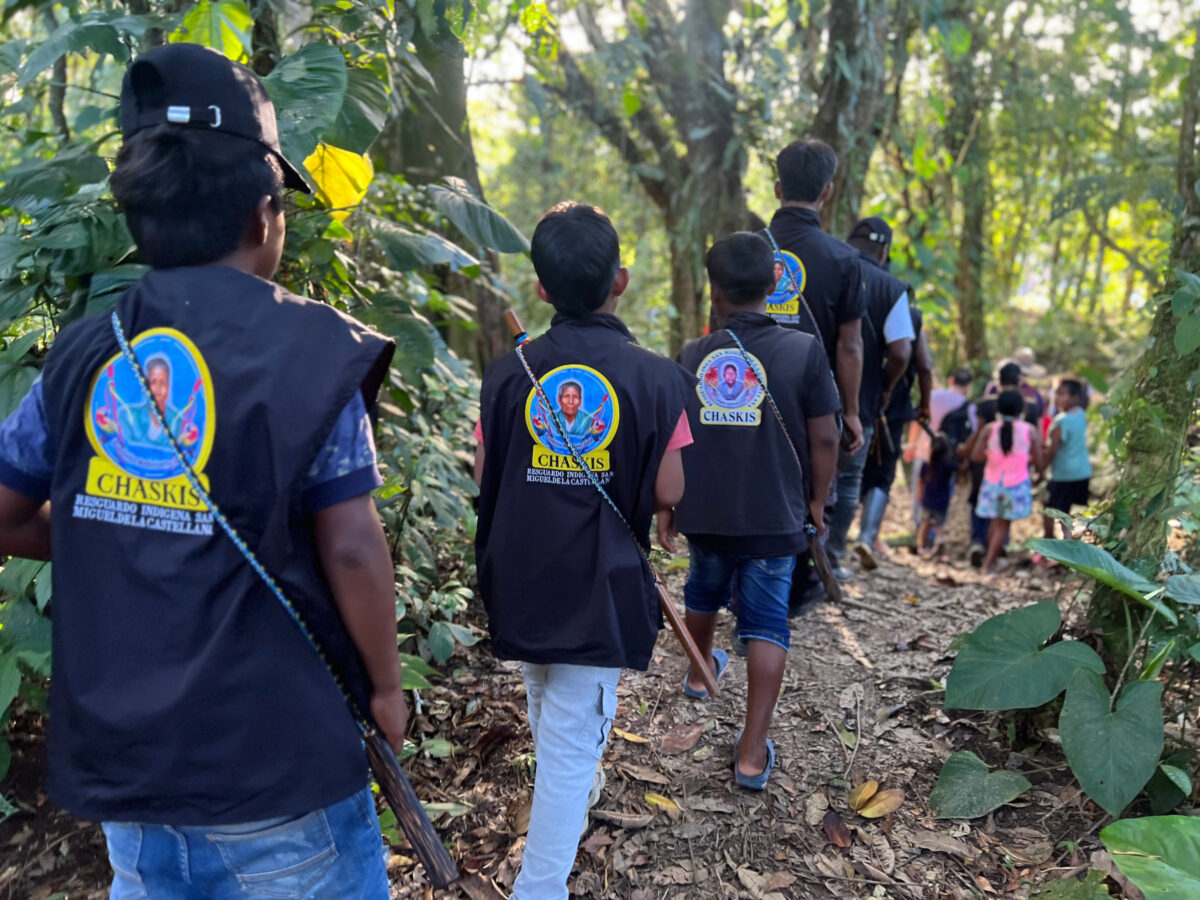
Ecuadorian communities impacted by Chevron’s operations continue to seek enforcement of a historic $9.5 billion court judgment against Chevron for the deliberate dumping of billions of gallons of toxic waste into the Amazon rainforest. Indigenous leaders and human rights advocates also continue to criticize Chevron’s role in expanding fossil fuel extraction on Indigenous territories and in conflict-affected regions worldwide.
“Chevron may continue hiding behind lawyers and corporate excuses, but affected communities will never stop demanding justice. We are fighting not only for compensation, but for dignity, health, clean water, and the survival of our peoples and cultures!” said Donald Moncayo, President of the Union of People Affected by Chevron-Texaco (UDAPT), near the gates of Chevron’s Richmond Refinery.
Chevron’s leadership used the AGM to avoid accountability. CEO Mike Wirth provided no substantive response to issues raised by Anti-Chevron Day participants, affected communities, or the expanding international boycott movement. He made no mention of the $50 billion debt Chevron owes to communities and nations around the globe and declined to address the growing Anti-Chevron movement and Boycott Chevron campaign – both of which continue to gain support among climate justice organizations, faith groups, students, Indigenous movements, and impacted communities internationally.
“Chevron continues to operate as though communities harmed by its pollution, extraction, and political influence are disposable,” said Paz y Miño. “But the resistance to Chevron is growing globally, and so is the demand for accountability.”