
Awajún and Wampis women mobilize to reinstate specialized prosecutors addressing the sexual violence crisis in Peru’s Amazon
As we begin Women’s History Month and approach International Women’s Day this weekend, we share this story from Peru’s Amazon, where Awajún and Wampis women have transformed grief into organized power, compelling the state to reverse a dangerous rollback of justice services for survivors of sexual violence. Their mobilization is not symbolic. It is a reminder that women’s history is being written now, in real time, by those who insist that justice for Indigenous girls is not optional.
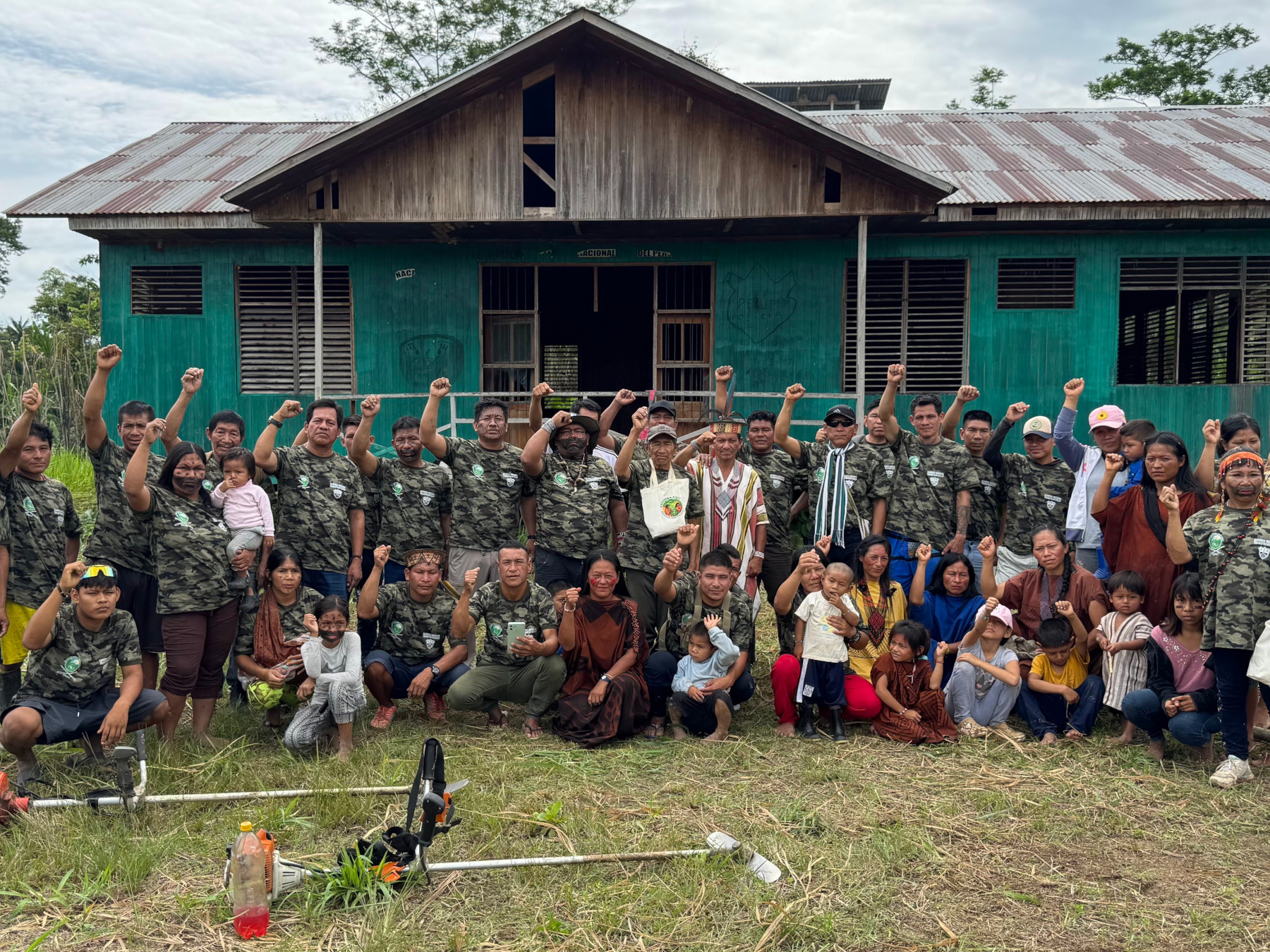
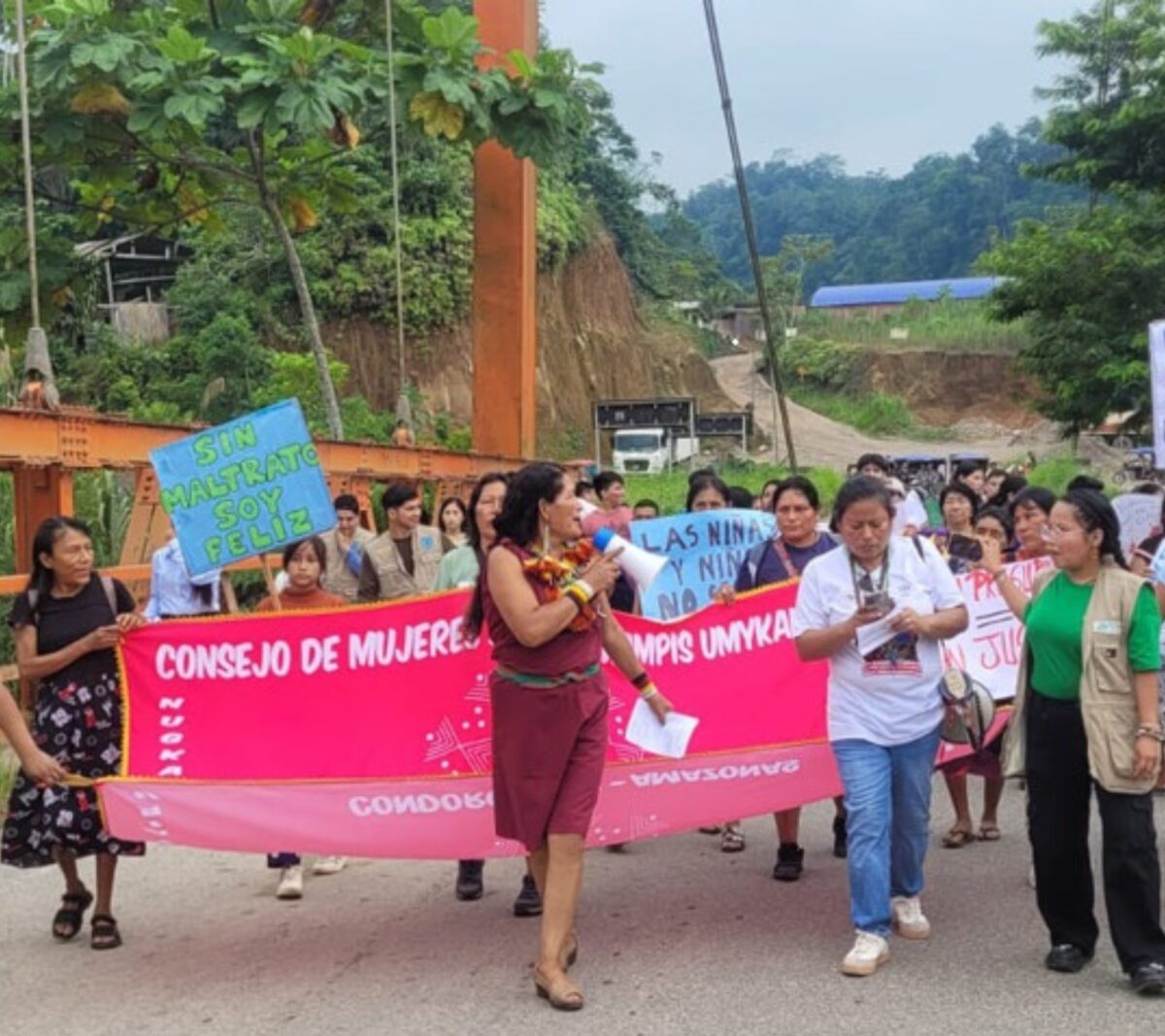
In Nieva, the provincial capital of Condorcanqui, Indigenous Awajún and Wampis women took to the streets and riverbanks demanding justice for girls and women affected by sexual violence. After two weeks of coordinated advocacy and press outreach, their mobilization forced the Peruvian state to reverse its decision to shut down specialized prosecutors’ offices and critical services that address hundreds of abuse cases.
Years of organizing by the Consejo de Mujeres Awajún y Wampis (Awajún and Wampis Women’s Council) led to the specialized investigation into patterns and individual cases of sexual violence. The Council’s persistent denunciations forced authorities to confront what they had long ignored as a national crisis. However, this struggle has only begun and will require continued solidarity, visibility, and pressure. As Rosmery Picq, charismatic leader of the Women´s Council states, explains: “Reporting is not enough. Families file complaints, but proceedings are delayed, prosecutors are changed, hearings are suspended, and the girls have to repeat their story again and again. That too is violence.”
How the Crisis Came to Light: Breaking the Silence
Condorcanqui, in Peru’s Amazon region, faces overlapping pressures from illegal gold mining, drug trafficking routes, extractive incursions, and chronic state abandonment. These dynamics have deepened structural violence, particularly against Indigenous girls and teenagers.
Over several years, the Council documented testimonies across Río Santiago and Río Cenepa and uncovered hundreds of cases of sexual violence against Awajún and Wampis girls. Many cases allegedly occurred in or around state-run boarding schools that serve remote communities.
The Council exposed systemic failures behind the crisis: abuse linked to poorly supervised education systems, barriers to reporting due to language differences, discrimination, geographic isolation, and alarmingly high rates of HIV and other sexually transmitted infections. Their findings also demonstrated how gender-based violence intensifies in territories impacted by extractive industries and illicit economies, where corruption and impunity are pervasive and patriarchal culture remain entrenched.
By presenting detailed case documentation, survivor testimonies, and territorial data, the Council drew national media attention and forced the issue onto Peru’s political agenda. In response to mounting public pressure, authorities established specialized prosecutors’ offices and medico-legal units in 2025 to address sexual violence in Condorcanqui.
A Slow and Insufficient Response
Before authorities created these specialized units, a single provincial prosecutor’s office handled nearly 800 cases of child sexual abuse and received close to six new complaints per month. Many investigations stalled, and families faced enormous logistical and linguistic barriers to accessing justice. Authorities increased Institutional capacity and brought services closer to the territories when they created the new specialized offices.
However, despite formal progress, the Peruvian State’s response to the sexual violence crisis in Condorcanqui has yielded few concrete results. The Public Prosecutor’s Office still has approximately 800 pending cases of sexual violence against minors, many in preliminary or preparatory stages without final convictions. Although the Ministry of Education has temporarily removed some accused teachers from their positions, authorities have not published consolidated public information showing a significant number of final criminal convictions. Reports indicate that officials have transferred some teachers rather than sanctioning or suspending them.
Structurally, the government has not reversed patterns of impunity or ensured comprehensive justice and reparations for survivors. Prolonged investigations, frequent turnover of prosecutors, and insufficient psychosocial and intercultural services continue to affect victims and their families. Although authorities have granted some protection measures, victims continue to report distrust in the justice system. There is no clear evidence of a meaningful reduction in new cases, indicating that current measures remain reactive rather than structural or preventive.
A Dangerous Rollback and Indigenous Resistance
The Junta de Fiscales Supremos (Board of Supreme Prosecutors) abruptly threatened this limited progress when it issued Resolution Nº 004-2026-MP-FN-JFS ordering the closure of the specialized offices and citing budget constraints. The decision would have dismantled coordinated services, including the Ministry of Women’s Warmi Ñan program and public defense support, forcing survivors to once again travel long distances in search of justice.
Indigenous women received a devastating message: authorities treated their daughters’ safety as expendable. As Rosmery Piq says: “When the specialized prosecutors’ offices were closed, we felt they were telling us that violence against our girls was not a priority.”
The Council responded immediately. After two weeks of national advocacy, women from multiple river basins converged in Nieva on February 13. Supported by Indigenous authorities, they demanded reinstatement.
Their mobilization succeeded. The Public Ministry reversed its decision, and the specialized prosecutors’ offices and medico-legal units will continue to operate. Investigations remain active, and survivors retain access to justice services. For Awajún and Wampis women, this is more than a bureaucratic correction. It keeps hope alive for life, dignity, and the right to justice within their ancestral territories. But that hope will only become a reality if mobilization and public pressure continue.
Amazon Watch in Solidarity
Amazon Watch stands in solidarity with the Awajún and Wampis women, amplifying their demands nationally and internationally and supporting the mobilization and advocacy efforts that contributed to securing the reinstatement. We have also supported the construction of a maloca, a traditional communal house, in Condorcanqui. The maloca now serves as a safe gathering space for women affected by violence, a center for assemblies and legal accompaniment, and a refuge for women and girls seeking protection. It represents collective care and Indigenous governance, a territorial response to systemic violence.
The Struggle Continues
While the reinstatement is a critical victory, urgent demands remain:
- Permanent funding for specialized prosecutors
- Full investigation of nearly 800 pending cases
- Intercultural justice systems rooted in Indigenous languages and realities
- Prevention measures in boarding schools and public institutions
- Long-term responses to HIV and STI prevalence
The February 13 mobilization marks a turning point. Awajún and Wampis women have demonstrated that organized Indigenous leadership can shift national policy. Achieving real change on the ground will require sustained pressure on Peruvian institutions.
Justice for Indigenous girls is non-negotiable.