Amazon Watch

Tapajos

Is Chinese Development Finance Enabling Rainforest Destruction in Brazil?

Brazil's current economic and political shifts and its effort to attract Chinese investment are part of a concerted effort by the Brazilian government to industrialize vast sections of the Amazon, with grave ramifications for the forests, rivers, and peoples who help sustain this irreplaceable biome for the benefit of humanity.

Watch Belo Monte Documentary Today!

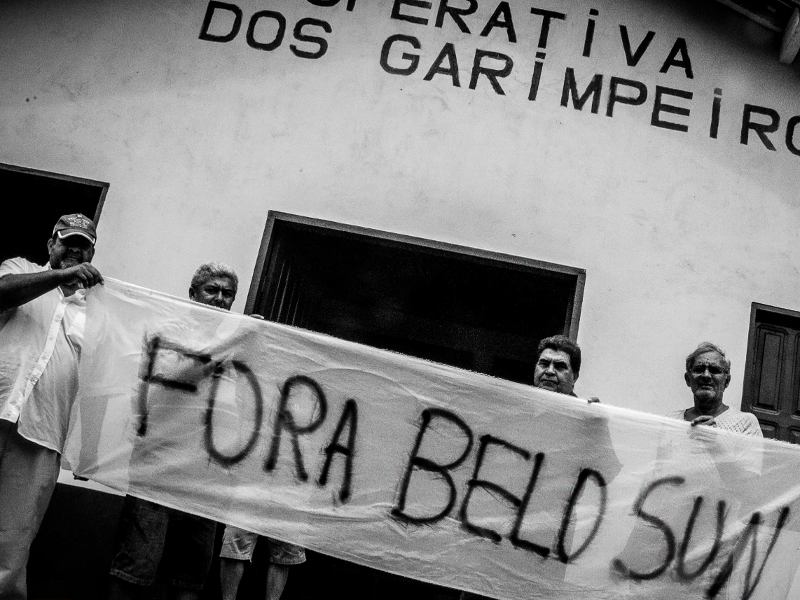
Today is International Day of Action for Rivers, and what better way to commemorate it than watching the award-winning documentary film, Belo Monte: After the Flood!

Samba Parade Spotlights Threats To Rivers, Forests and Indigenous Rights at Rio’s Carnival

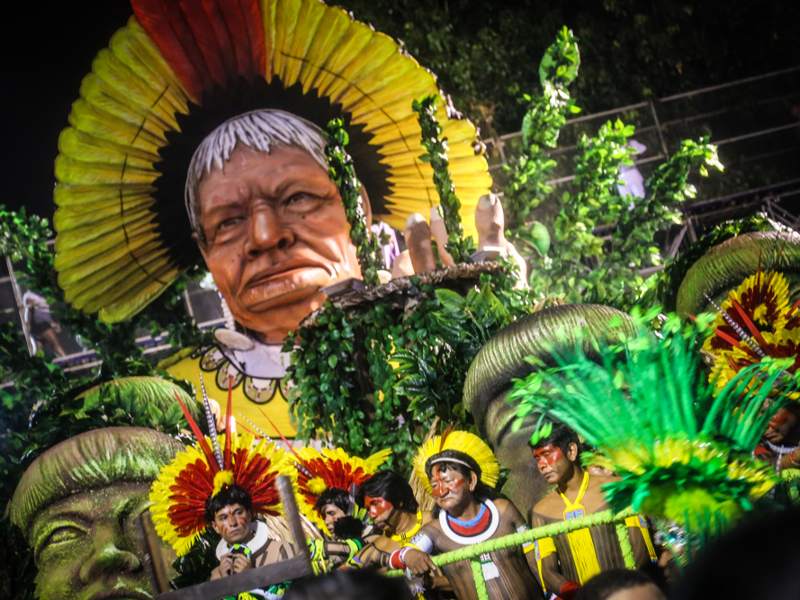
In a colorful and highly energized samba parade at Rio de Janeiro's world-famous Carnival on Monday morning, Imperatriz Leopoldinense, one of Brazil's most traditional and respected samba schools, paid a special tribute to indigenous peoples of the Amazon's Xingu River, highlighting threats to their territories, livelihoods and rights.

Brazil: Hate Speech Threatens the Xingu

Imperatriz Leopoldinense probably had no idea where it would lead them when they chose to speak out about the Xingu, but they chose the right path. Because today, to defend the Brazilian Indian is to defend the future of our country.

Counterintuitive: Global Hydropower Boom Will Add To Climate Change

"The new study confirms that reservoirs are major emitters of methane, a particularly aggressive greenhouse gas," said Kate Horner, Executive Director of International Rivers, adding that hydropower dams "can no longer be considered a clean and green source of electricity."

Amazon Watch is building on more than 28 years of radical and effective solidarity with Indigenous peoples across the Amazon Basin.

DONATE NOW

Indigenous Rights and Territories Under Attack in Brazil

Make no mistake about it, indigenous rights and territories are under attack in Brazil. We recently reported on attempts by the administration of President Michel Temer to roll back indigenous rights and environmental protections, moves that fundamentally undermine land demarcation norms while portending dire consequences for the Amazon and its...

Siemens, the Pope and the Law of the Jungle

At Belo Monte, the writing is on the wall because, all over the Amazon, new dams are planned or being built. A key role in the protection of the forests, rivers and animals will now be played by the indigenous person.

Brazil Alters Indigenous Land Demarcation Process, Sparking Conflict

With the issuance of a federal decree in mid-January, Brazil's government announced major changes to the procedure by which it formally demarcates indigenous lands – a move applauded by the ruralistas industrial agriculture lobby and large landowners, but greeted with alarm by indigenous land rights activists.

Brazil’s Hydroelectric Plans Threaten Its Paris Climate Commitments

Brazil's government wants to build dams in Amazonia with "big reservoirs." That is quite a point of departure compared to the run-of-river dams that have dominated the country's planning and construction activity over the last two decades.

Battle for the Amazon: Tapajós Basin Threatened by Massive Development

Carlos Fávaro's dream of turning the Tapajós River into "Brazil's Mississippi" is now within the grasp of Brazil's agribusinessmen – with only indigenous people, traditional riverine communities, environmentalists and the ever-increasing concern of climate scientists about the damage that will be done to the forest, and thus indirectly...

Temer Government Set To Overthrow Brazil’s Environmental Agenda

Brazil's conservative National Congress has rushed to pass a wave of legislative initiatives, which taken all together, would dismantle much of the nation's body of law protecting the environment and indigenous people – an effort likely to escalate in 2017.

Victories by Brazil’s Indigenous Movement Demonstrate Ways To Resist Authoritarianism

From North to South America and around the world, the ascendency of authoritarian leaders portends dangerous days ahead. Yet at the same time, remarkable stories continue to emerge of determined resistance to these brutal regressions, led by the continent's indigenous peoples from the Amazon to Standing Rock.

Belo Monte: After the Flood

Belo Monte: After the Flood is a documentary exploring the effects of the Belo Monte hydroelectric dam on the environment and peoples of the Brazilian city of Altamira and the Xingu River basin, a tributary to the Amazon River.

Brazil’s New Government Needs Economic Growth and May Sacrifice the Amazon To Get It

The impeachment of former president Dilma Rousseff, coup or not, represents a fundamental realigning of modern Brazil. For some in the country, the crisis is an opportunity. These politicians and businessmen are now exploiting the upheaval to roll-back environmental laws and get their hands on the vast natural resources found in protected regions...

Victory on Brazil’s Tapajós River and the Battle that Lies Ahead

Last week, in a stunning turn of events, Brazil's environmental agency IBAMA definitively shelved plans to carve the São Luiz do Tapajós mega-dam into the heart of the Amazon. Deeming the project a socio-environmental liability for its devastating impacts upon the lands and way of life of the Munduruku people, IBAMA's bold move could reflect a...

Indigenous Tribe Applauds State Move To Cancel Brazil Amazon Dam

Indigenous people living in Brazil's rainforest have welcomed a decision by the national environment agency to cancel a proposed mega-dam in the Amazon which they say would have displaced communities while opening the sensitive region to logging.

Major Amazon Dam Opposed by Tribes Fails To Get Environmental License

Christian Poirier of Amazon Watch said: "We have been awaiting such a welcome announcement from the Brazilian government for more than a decade, while witnessing the tragic and unnecessary damming of the Madeira and Xingu rivers during this time."

Indigenous People Protest Against the Violation of Their Rights in Front of Brasilia Embassies

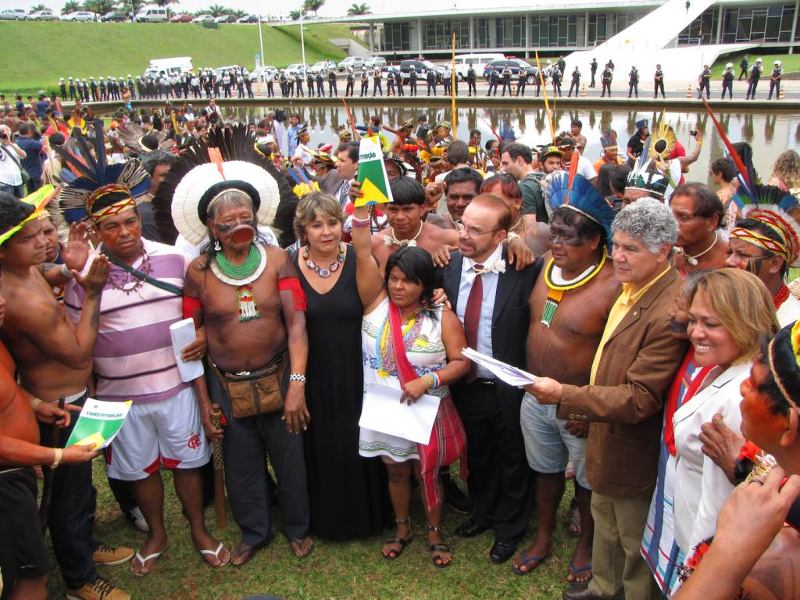
Last week's indigenous mobilization in Brasilia – detailed in the following blog from the Socio-Environmental Institute (ISA) – came as a response to the current, alarming and mounting assault on the rights of Brazil's indigenous peoples. The Brasilia protest articulated an appeal from indigenous leadership to national governments via their...

Indigenous People Draw Territorial Boundaries in Amazon Homeland

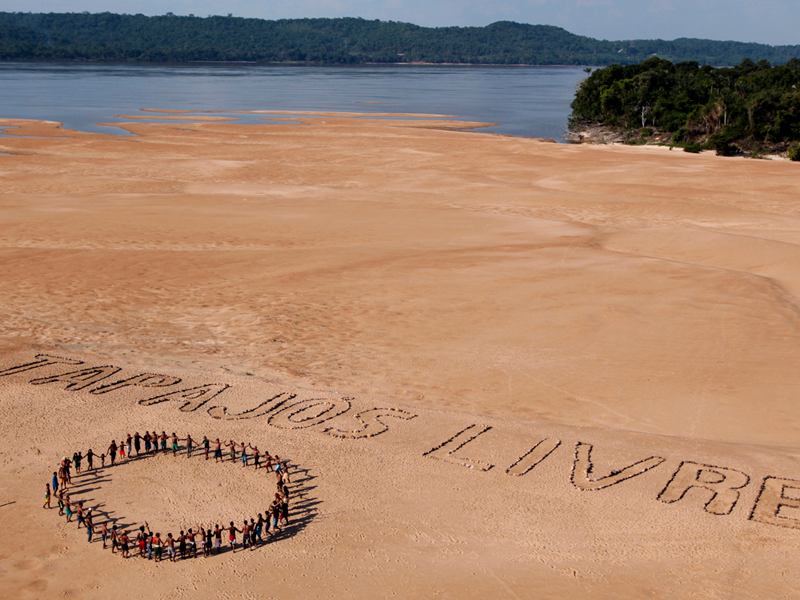
Itaituba, Brazil – Today, Munduruku representatives and Greenpeace volunteers started a community-led effort to establish the boundaries of an Indigenous land in the heart of the Brazilian Amazon with the aim of protecting traditional areas. These particular lands are threatened by the controversial proposed São Luiz do Tapajós mega dam...

Brazil: Rules Protecting Amazon Under Threat in New Political Fight

Renewed attempts by top lawmakers to remove environmental licensing requirements for "strategic" development projects in Brazil have been stalled. Controversial schemes include stalled plans for the São Luiz do Tapajós hydroelectric complex – which critics warn could infringe on indigenous lands, destroy local biodiversity and trigger...

Brazil Prepares to Roll Back Green Laws

Taking advantage of Brazil's present political turbulence, as the battle to impeach President Dilma Rousseff reaches its climax, reactionary politicians are quietly rolling back environmental and indigenous protection laws in defiance of the country's commitments under the Paris Agreement.

Brazil’s Congress Moves Ahead to End Nation’s Environmental Safeguards

A Commission in the Brazilian Senate has quietly approved a constitutional amendment that would shred the environmental safeguards currently required for public works. If ratified, the amendment could give a green light and fast track approval to major infrastructure projects nationwide including the controversial Sao Luiz do Tapajós hydroelectric...

Belo Monte and How NOT to Produce Energy in the 21st Century

The most important project of President Dilma Rousseff's energy program is also a monumental example of how energy should not be produced in the 21st century. In addition to its high price tag, the dam is associated with corruption and massive human rights violations due to its social and environmental impacts.