Coastal communities in Ecuador are still reeling from a devastating oil spill on March 13, which dumped over 25,000 barrels of crude oil into rivers and protected areas in the northwestern province of Esmeraldas.
FPIC
Ecuador: A Decisive Election for the Amazon
Amid rampant violence and the failure to implement the Yasuní referendum, Indigenous and frontline organizing will only intensify.
Yasuní: A Global Climate Victory at Risk
The people of Ecuador overwhelmingly voted to keep one of its largest oil reserves in the ground. It was a vote for hope, for the future, and for the protection of biodiversity and Indigenous rights.
Oil Spills, Indigenous Resistance, and the Fight for Justice in the Peruvian Amazon
Indigenous communities of North Perú not only question when Petroperú will adequately attend to this oil spill, but also when they will truly access justice and remediation for past pollution and contamination by the company and other bad actors in the region.
Biden’s Amazon Legacy: Bold Promises Demand Bold Actions Amid Looming Threats to the Rainforest’s Survival
As the Amazon approaches a catastrophic tipping point of ecological collapse, we welcome President Biden’s statements and increased commitment, but we are disappointed that this support comes in the final days of Biden’s administration.
Amazon Watch is building on more than 28 years of radical and effective solidarity with Indigenous peoples across the Amazon Basin.
Amazon Watch Statement on UN Biodiversity COP16
Towards True Peace with Nature: Reflections and Urgent Actions Post-COP16
On the path to the historic COP30 in 2025, it is imperative that the demands and vision of the global climate movement are front and center in negotiations to address the global climate crisis.
Indigenous Peoples on the Front Lines of Criminal Economies in the Amazon Fight Back at COP16
"Paper declarations, small projects, and militaristic approaches are failing to combat illegal mining and drug trafficking"
"Prior consultation must be a key tool for implementing strategies to fight drug trafficking in the Amazon. Enough with empty declarations. We need real combined efforts between governments and our organizations if we want to defeat criminal economies."
Murder of Peruvian Indigenous Earth Defender Underscores the Importance of Indigenous Land Rights
The discovery of murdered Peruvian Indigenous leader Gerardo Keimari Enrique underscores the need to center land titling and Indigenous rights as key strategies to protect the Amazon and Indigenous peoples
"This tragic incident is yet another case of an Indigenous leader who was targeted while advocating for a full land title for his community's territory in a contested area of the Peruvian Amazon."
¡Sí a la Vida! Yes to Yasuní!
The Waorani hold a historic summit to ensure oil stays in the ground as Ecuador misses deadline to decommission drilling in Yasuni
Ecuador’s citizens made history by voting to keep fossil fuels in the ground in Yasuní. But the government’s failure to implement the referendum sets a dangerous precedent.
Rainforest Reckoning: Almost a Year After Historic Yasuní Vote, Ecuador Has Done Little
The country's Indigenous peoples and environmental movement are mobilizing to hold the government to account
The 2023 vote was heralded as the first time that any county chose to leave significant oil reserves in the ground by popular referendum, with over 60% voting in favor.
AIDESEP Declares Permanent State of Emergency Following the Murder of Kakataibo Leader
"The Kakataibo people will not allow any more assassinations or invasions. Our guards are mobilized and firm. We are forming new alliances with our Asháninka brothers to face the danger."
Citi Shift on Amazon Oil Policy Will Still Allow Funding of Destruction
“This policy is a hollow promise that fails to state meaningful measures on how Citi will hold clients like Petroperú accountable for destructive Amazon oil expansion plans and contamination threatening Indigenous peoples today.”
Over 30% of JPMorgan Investors Support Resolution on Indigenous Rights
Over 30% investors at the biggest U.S. bank JPMorgan Chase have backed a resolution on Indigenous rights, which was presented by a Peruvian Amazon leader facing death threats over her opposition to oil drilling.
Safeguarding the Right to Self-determination at UNPFII
At the UN Permanent Forum on Indigenous Issues, Amazon Watch amplified Indigenous voices of strong female leaders underscoring the urgency of safeguarding the right to self-determination on the path to COP30
Achieving Indigenous autonomies and territorial governance, where self-determination is exercised, requires dismantling the mandates imposed by colonial and extractivist states and transforming them based on indigenous worldviews of harmony and collectivity.
Unmasking the Environmental and Human Rights Threats of Canadian Corporations
Despite its promises, Canada rejects key recommendations on the framework of the Universal Periodic Review and remains a threat to human rights and the environment
Contrary to upholding Indigenous rights, Canada rejected crucial recommendations regarding the regulation of its companies operating in Latin America and the Caribbean.
Major Brazilian Mobilization Demands Indigenous Land Rights in the Face of Mounting Threats
The Indigenous Free Land Camp strives to defend embattled constitutional rights while fighting grave threats from the agribusiness and mining sectors
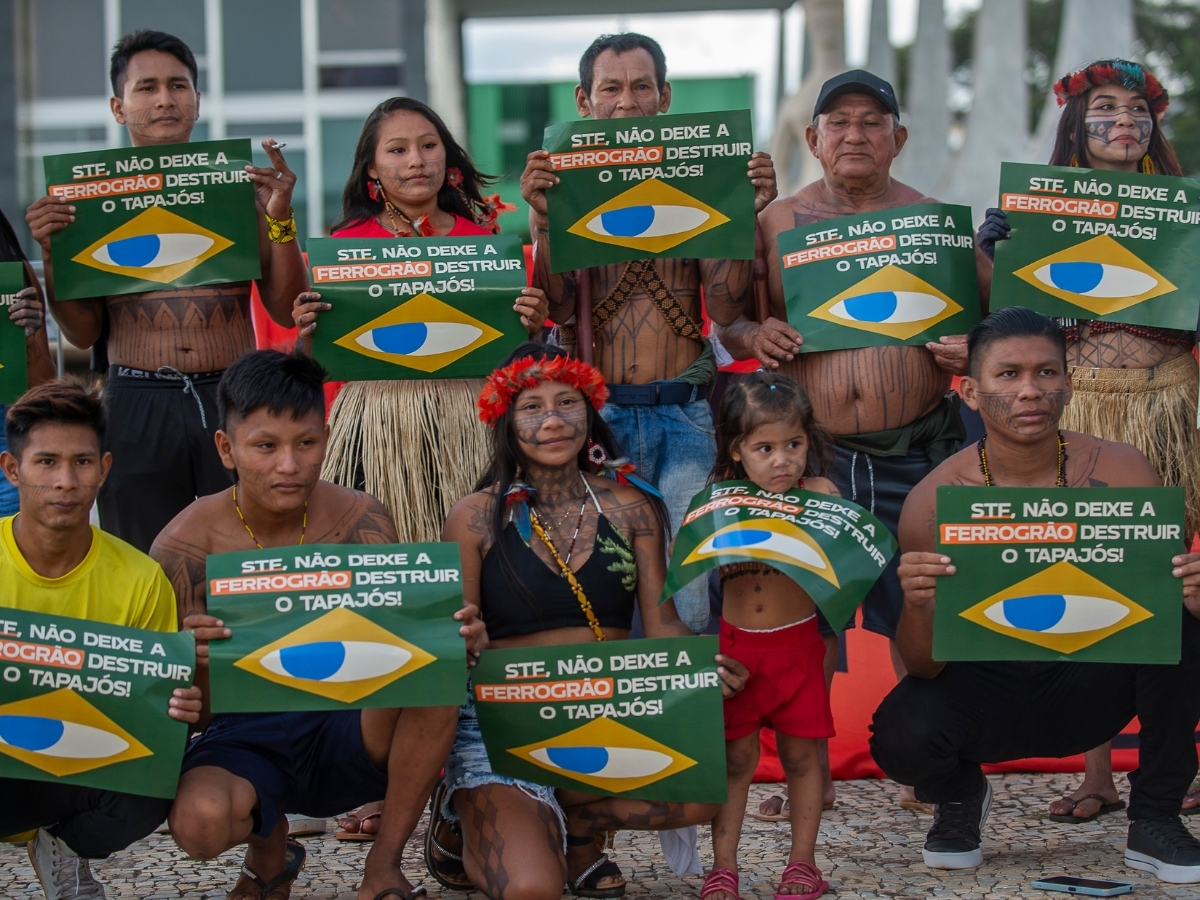
"Ferrogrão is the train of death, of deforestation. The railroad is not going to carry people, as they claim, but grain production of international companies that are financing this project."
Investors Slam JPMorgan Chase for Canceling Meeting with Amazon Indigenous Leaders
The filers of a shareholder resolution at JPMorgan Chase on Indigenous rights have criticized the bank for canceling a scheduled meeting with Indigenous leaders from Peru’s Amazon region.
New Report Exposes Risks of Investing in Petroperú Amid Controversial Oil Expansion in Amazon Basin
Amazonian Indigenous and coastal leaders travel to New York to call on leading U.S. commercial banks to halt new financing for Petroperú
Today, Amazon Watch released a new report exposing the elevated risks of financially supporting state-run oil company Petroperú) amid its controversial plans to expedite new oil drilling in the Amazon.
Assessing Petroperú’s Financial, Legal, Environmental, and Social Risks
Petroperú has plunged into massive indebtedness to complete its Talara Refinery Modernization Project and is now financially obligated to maximize its oil production to sustain itself, despite growing Indigenous and community opposition.
Brazil’s Lula Administration Faltering in Promises to Uphold Indigenous Land Rights
“This is revolting for us Indigenous peoples to have had so much faith in the government’s commitments to our rights and the demarcation of our territories."
Unity and Resilience: Pioneering Indigenous Self-Governance in the Peruvian Amazon
This movement isn’t just about reclaiming territory; it’s a profound statement of identity, culture, and the inextricable link between Indigenous rights and the health of our planet.
Shuar Arutam People Notch Major Wins Against Amazon Mining in March
In a span of only three weeks, the PSHA launch a series of successful actions at a local, national, and international level to reaffirm their opposition against Solaris Resources’ Warintza project
The past month saw significant victories for the Shuar, turning the tide against Canadian mining company Solaris Resources.
Latest Blow for Solaris Resources: ILO Finds Shuar Arutam People Were Not Consulted on Warintza and Panantza Mining Projects
“Today’s decision affirms what we’ve been saying all along. We have not been consulted. We have not provided our consent. Our land is not for sale. We will defend our territory, our forests, our rivers, and our culture."
Indigenous and Community Coalition Challenges Petroperú’s Financial Backing
Citi and JPMorgan Chase urged to protect Indigenous rights and Amazonian ecosystems
A burgeoning coalition of Peruvian Amazonian Indigenous peoples and fishing organizations are demanding to meet JPMorgan Chase & Co. and Citigroup to warn against any new financing for state-operated oil company Petroperú because of its history of oil contamination and flagrant disregard of Indigenous and human rights.
Activists Crash Canadian Mining Conference to Denounce Amazon Destruction
Amazon Watch needed to show up at PDAC because another narrative is needed - one that doesn’t accept the destruction of the world’s largest forest as a necessary byproduct of advancing modern society.
Ecuador’s Indigenous Organizations Unanimously Reject Canadian Mining
"We know the government is in Canada trying to sign agreements with mining companies, but there has been no consultation for the Warintza project. The project violates the Ecuadorian constitution and our rights. Let it be known that we have not given our consent."
Amazonian Indigenous People Stage Major Mobilization Aimed at Stopping the Ferrogrão Railway
Indigenous-led “People's Tribunal” issues searing verdict on the megaproject and works to influence a key legal ruling that could determine its future
“The Popular Tribunal against Ferrogrão revealed the strength and determination of Indigenous peoples, traditional communities and social movements in defending their rights and the future of the planet.”
Ecuador’s President Ignores Indigenous Opposition to Mining at PDAC
Official leader of Shuar-Artuam People of Ecuador rejects statements alleging community support for Solaris Warintza mining project
"The rosy picture painted today by the government and mining sector is misleading to investors. The reality is that the mining industry is reeling from local resistance to its projects and adverse decisions from its highest court."
Ecuadorian Indigenous Nation Asks British Columbia Securities Commission to Investigate Solaris
Indigenous organizations unite against controversial Amazon copper mining project
"The Shuar Arutam people have rejected the Warintza project for many years. Despite this, the company insists on promoting the project by dividing the communities and trying to reach agreements with other Indigenous organizations."