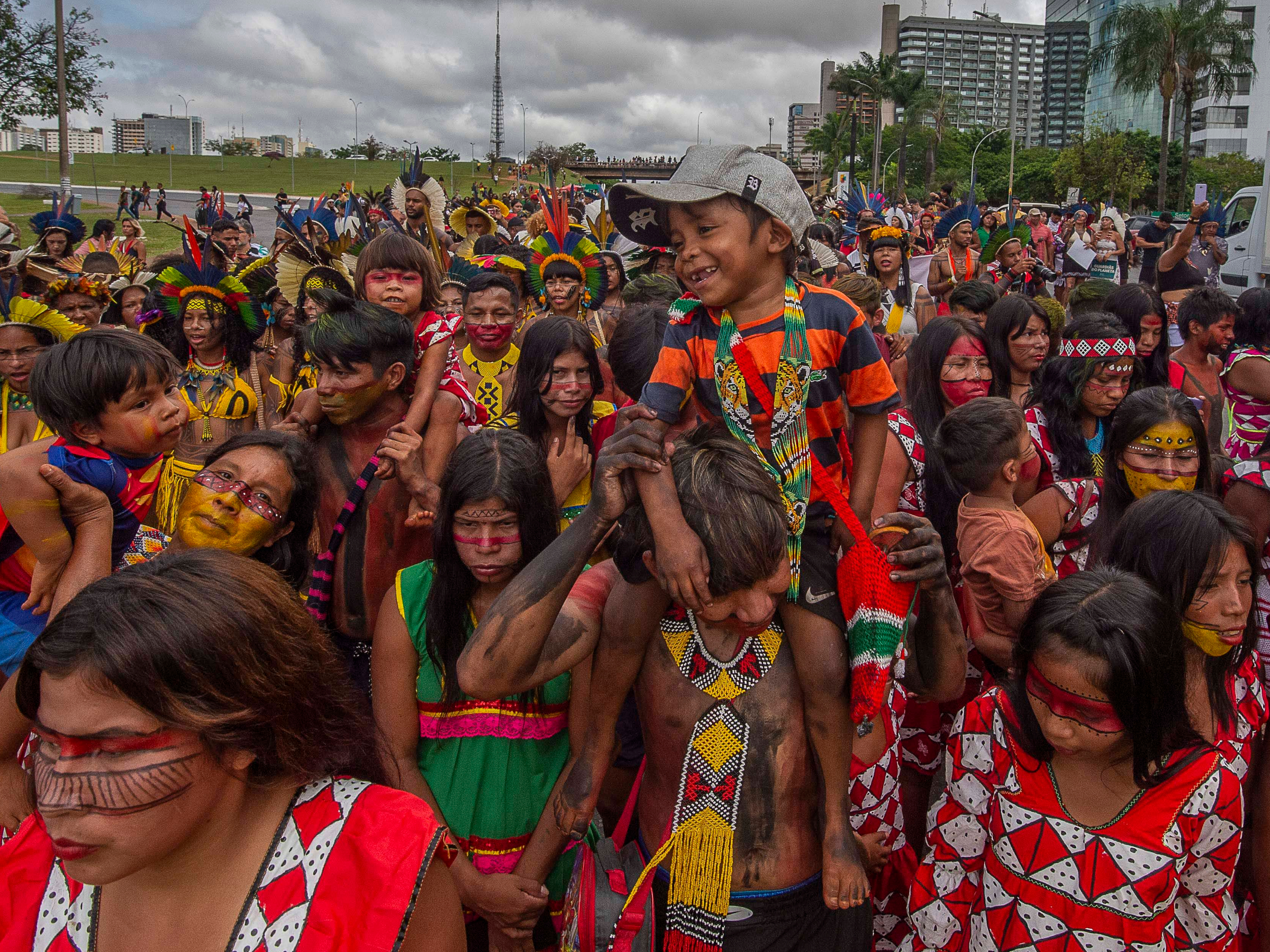
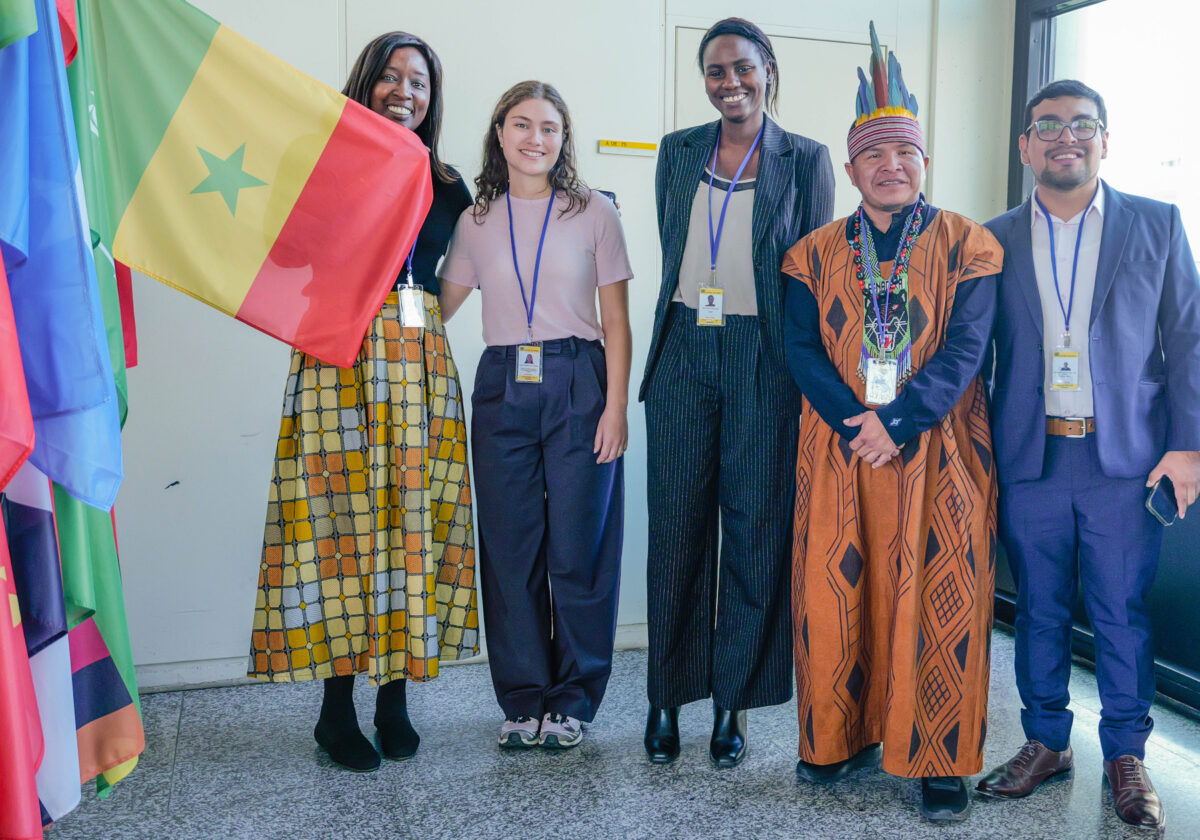
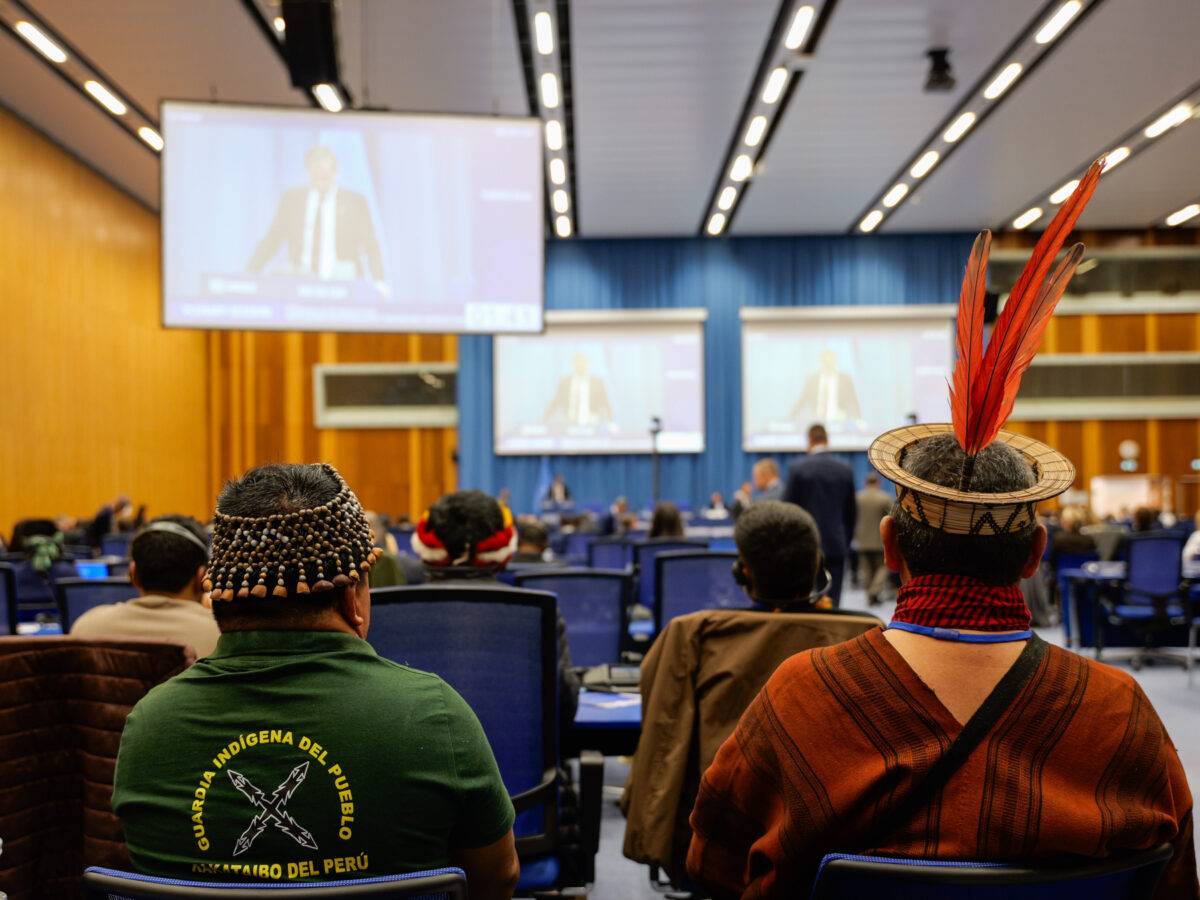
After two years of campaigning and a week of intense advocacy at COP13 in Vienna, ten Indigenous leaders from Brazil, Colombia, Ecuador, and Peru helped secure a historic U.N. decision to negotiate a global protocol against environmental crime. They made this happen. Now they are fighting for a seat at the table where it will be written.
“I am Galois Flores, spokesperson for the Autonomous Territorial Government of the Wampís Nation, where 65 communities have governed and cared for their home for more than 7,000 years.” It was a long way from the Santiago and Morona rivers to a United Nations conference hall. But the message he carried had been forged over generations of defending the forest.
On October 22, Galois took the floor at the 13th Conference of the Parties to the U.N. Convention against Transnational Organized Crime in Vienna. His words captured the message the delegation carried all week, through dozens of meetings with negotiating delegations and international institutions, informal conversations, and seven declarations to the plenary session: there is no security without Indigenous Peoples.
One day later, governments voted 83 to 12, with 27 abstentions, to open negotiations on a new protocol against crimes that affect the environment, explicitly recognizing the role of Indigenous Peoples in fighting them.
A crime that crosses every border
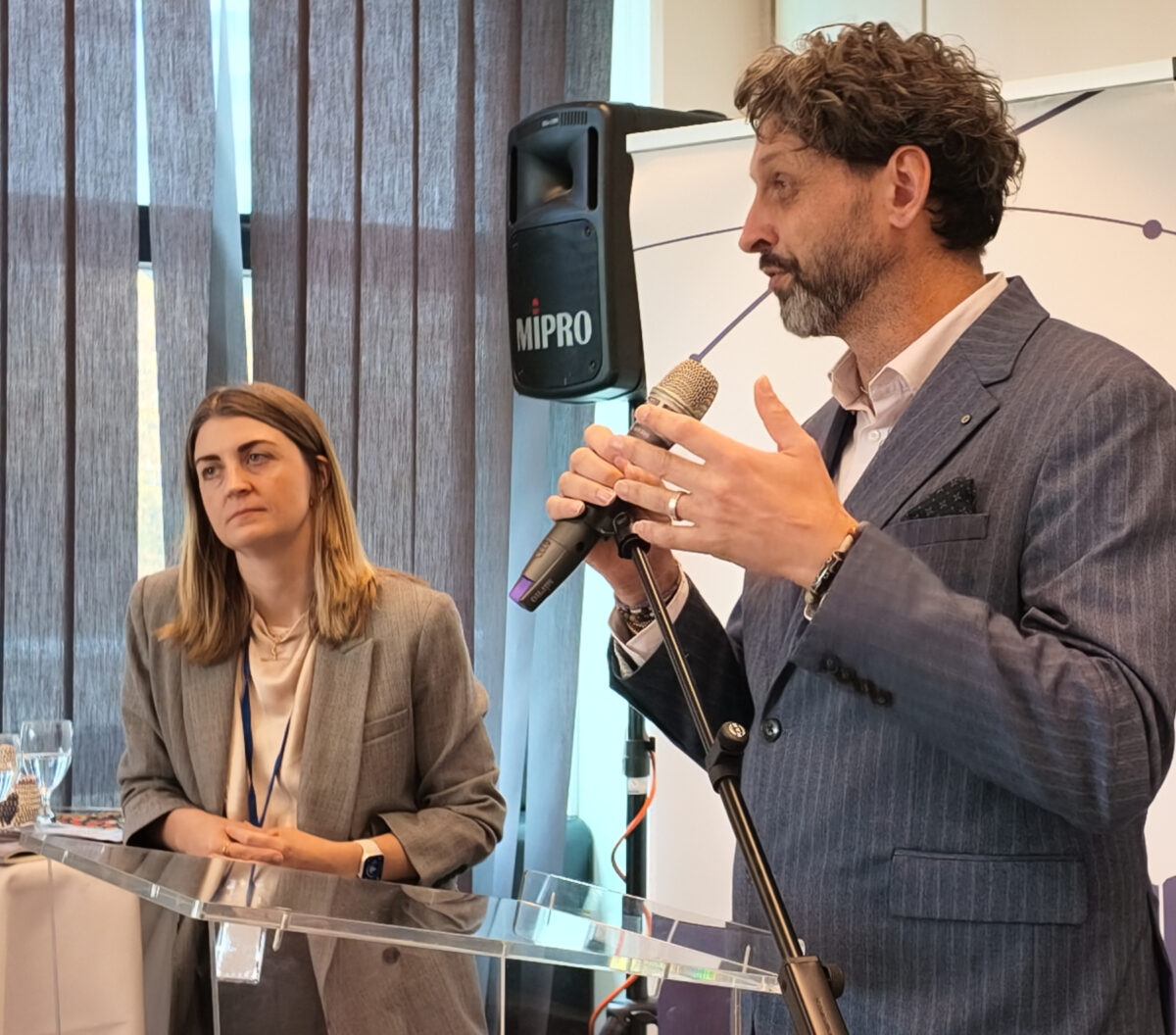
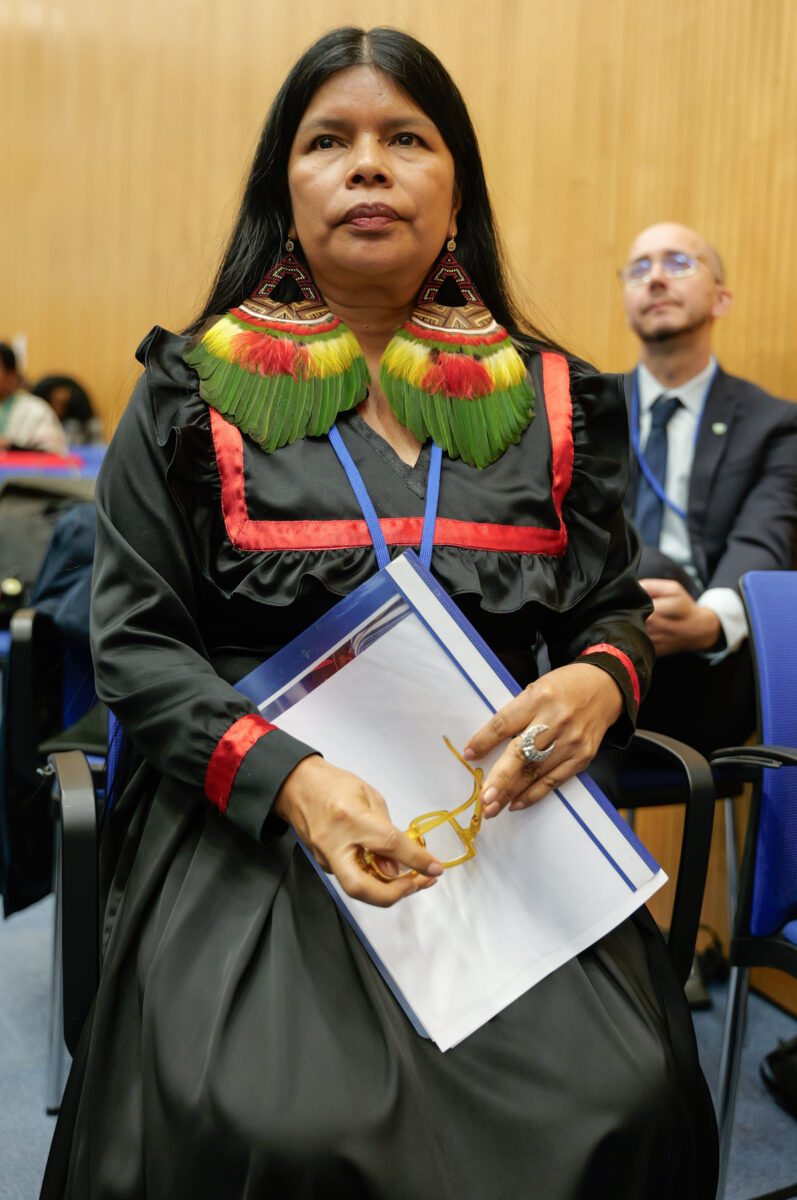
Opening the conference, Patricia Gualinga, Kichwa leader from Sarayaku and member of the U.N. Permanent Forum on Indigenous Issues, described what Amazonian peoples face:
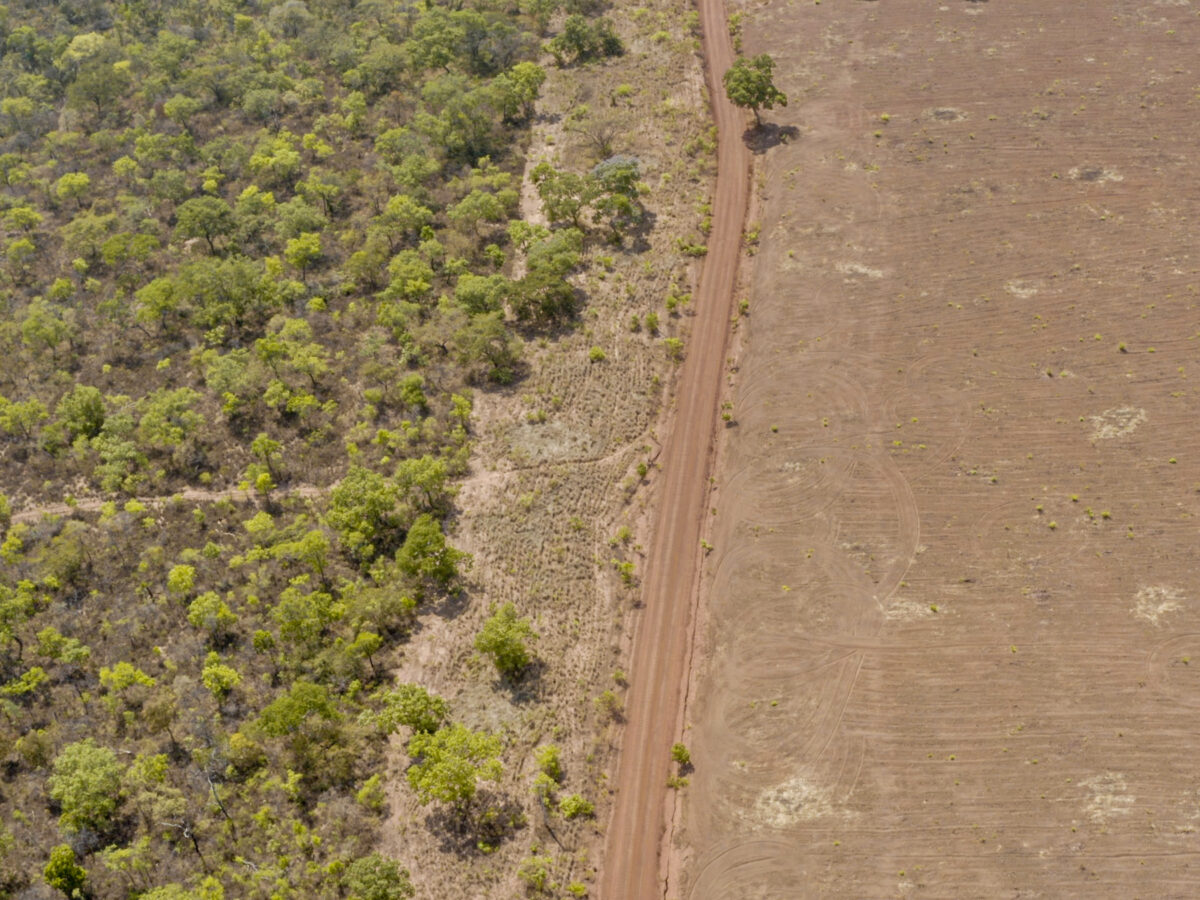
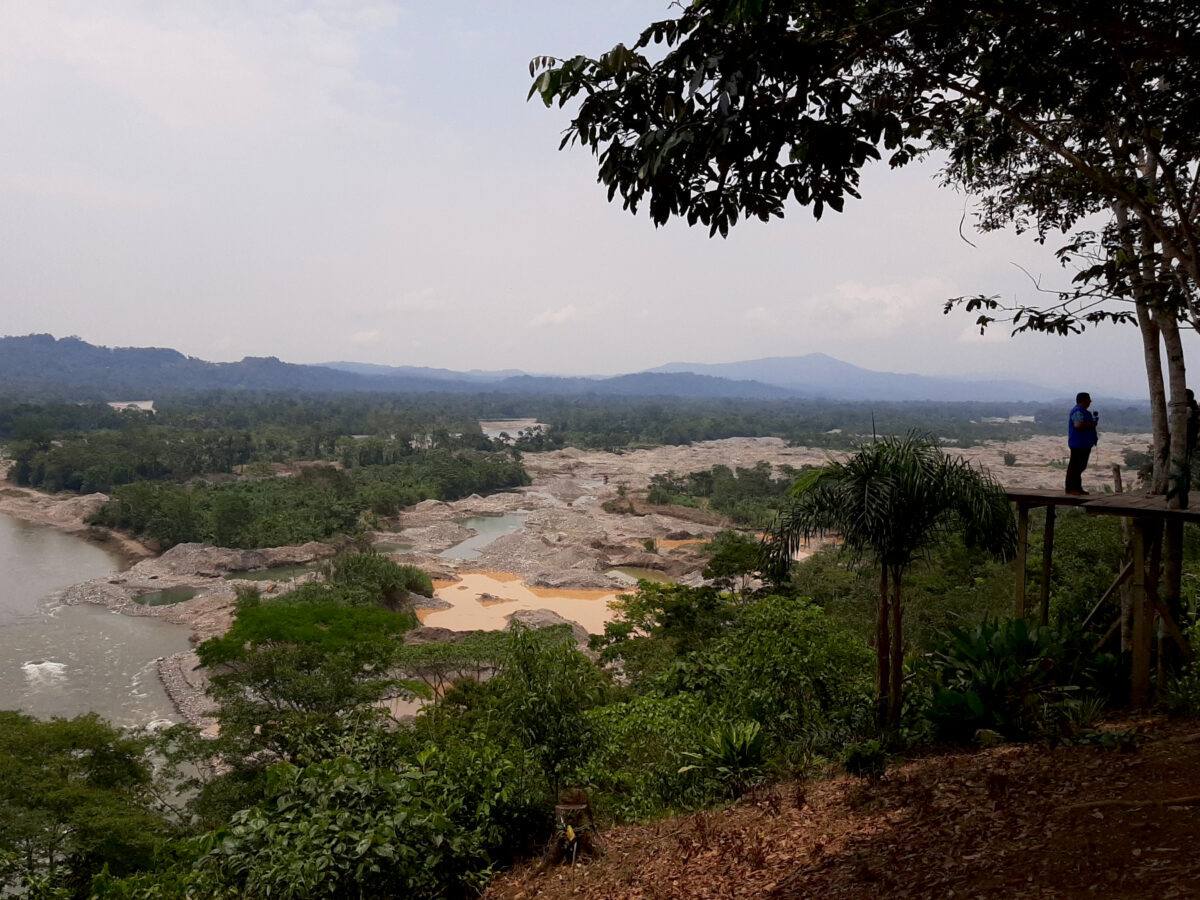
“In our territories, organized crime is no longer something distant. Illegal mining, drug trafficking, logging and human trafficking share routes, money and weapons. There are groups that collect taxes, impose rules and recruit our young people. Mercury poisons the rivers and our food. And those who defend the forest pay with their lives: at least 296 defenders were killed in the Amazon between 2014 and 2022.”
Patricia Gualinga
These networks reach far beyond the forest. “The poisoned gold and cocaine that leave the Amazon end up in markets in Europe, North America, and Asia,” said Marcelo Odicio, president of the Kakataibo federation FENACOKA, whose people have lost six leaders in six years, “and the money comes back as weapons, bribes, and control over entire territories.”
Governments too often respond with militarized raids that miss the financiers and gold buyers who profit most. “More weapons have not meant more security for our peoples,” Galois Flores warned. The Wampís know first-hand how deep State complicity runs across the Amazon: some of the illegal miners they detained in their territory turned out to be police officers.
Illicit economies and organized crime are tearing through the Amazon and the government responses meant to stop them are making things worse. Confronting this crisis demands coordinated international action that supports Indigenous Peoples’ struggles on the ground. Yet the U.N.’s organized crime convention, which has protocols on human trafficking, migrant smuggling, and firearms, includes nothing for the crimes devastating the Earth’s largest rainforest.
Today, criminal networks thrive on the gaps between countries: legal loopholes, weak cooperation, and border zones they use for logistics and cover, as our reports on the tri-border area of Colombia, Ecuador, and Peru have shown. A new protocol could allow countries to follow the money, target corruption, and strengthen cooperation and intelligence. For the people living on the frontlines, this is a question of survival, not just a policy debate.
From the rivers of the Amazon to the halls of the U.N.
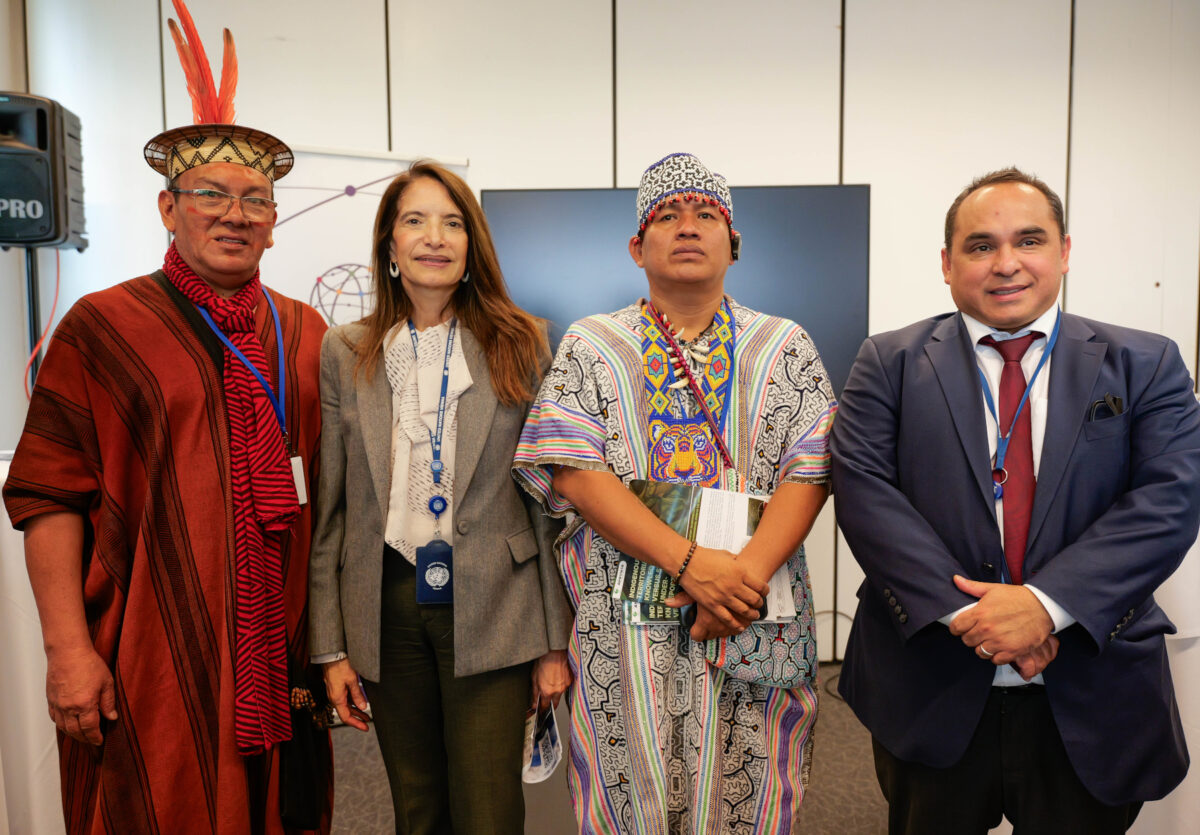
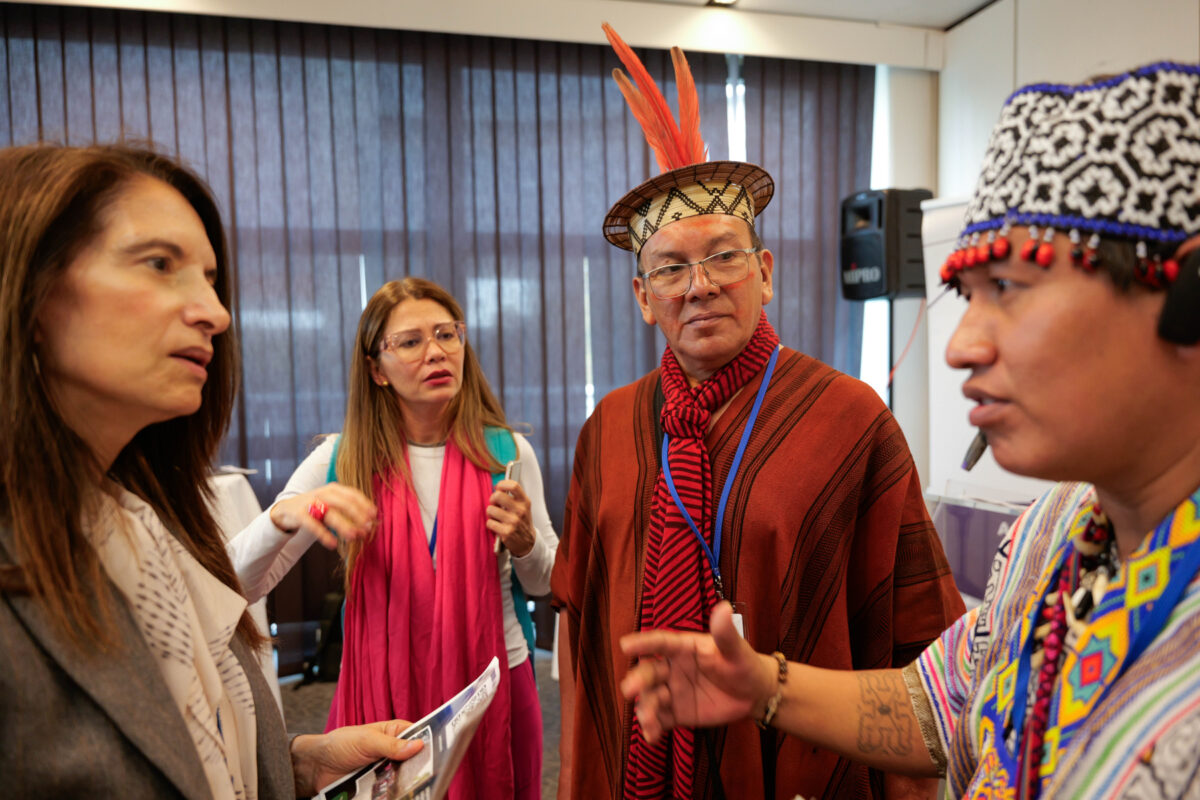
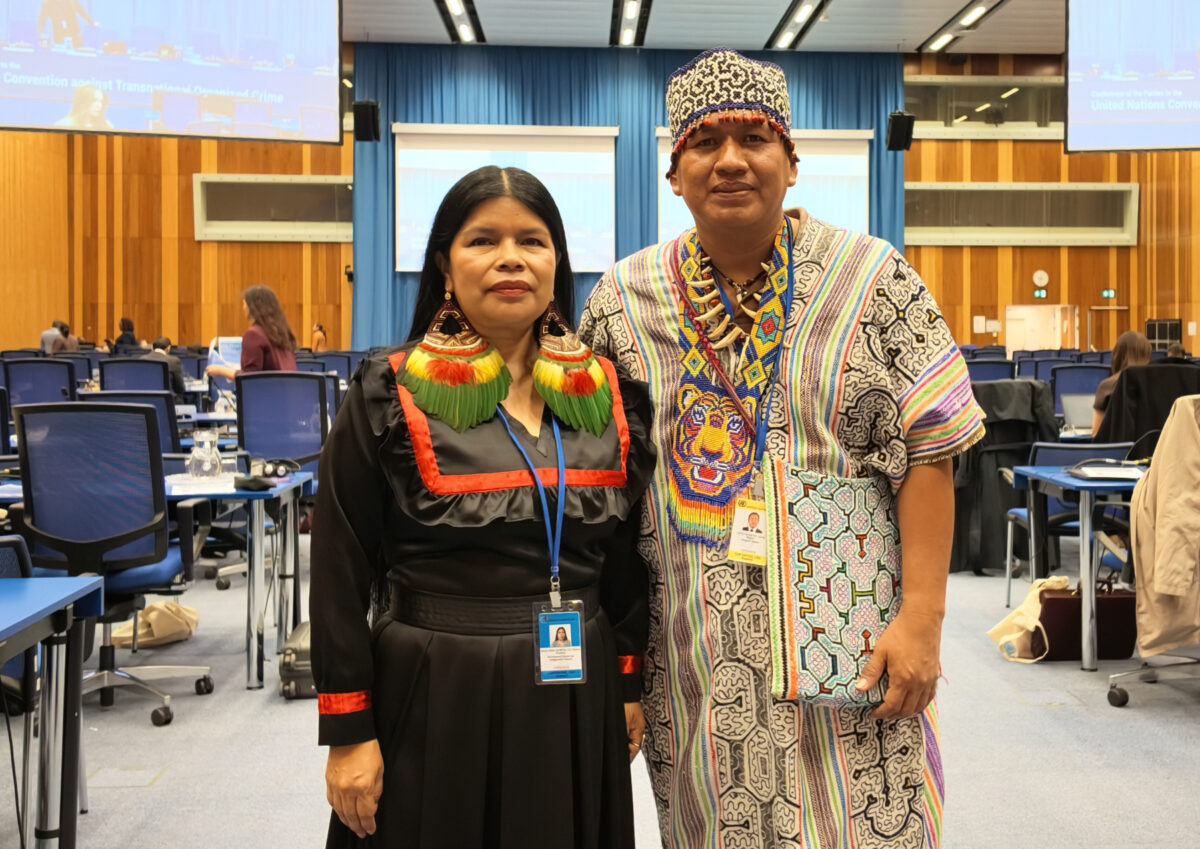
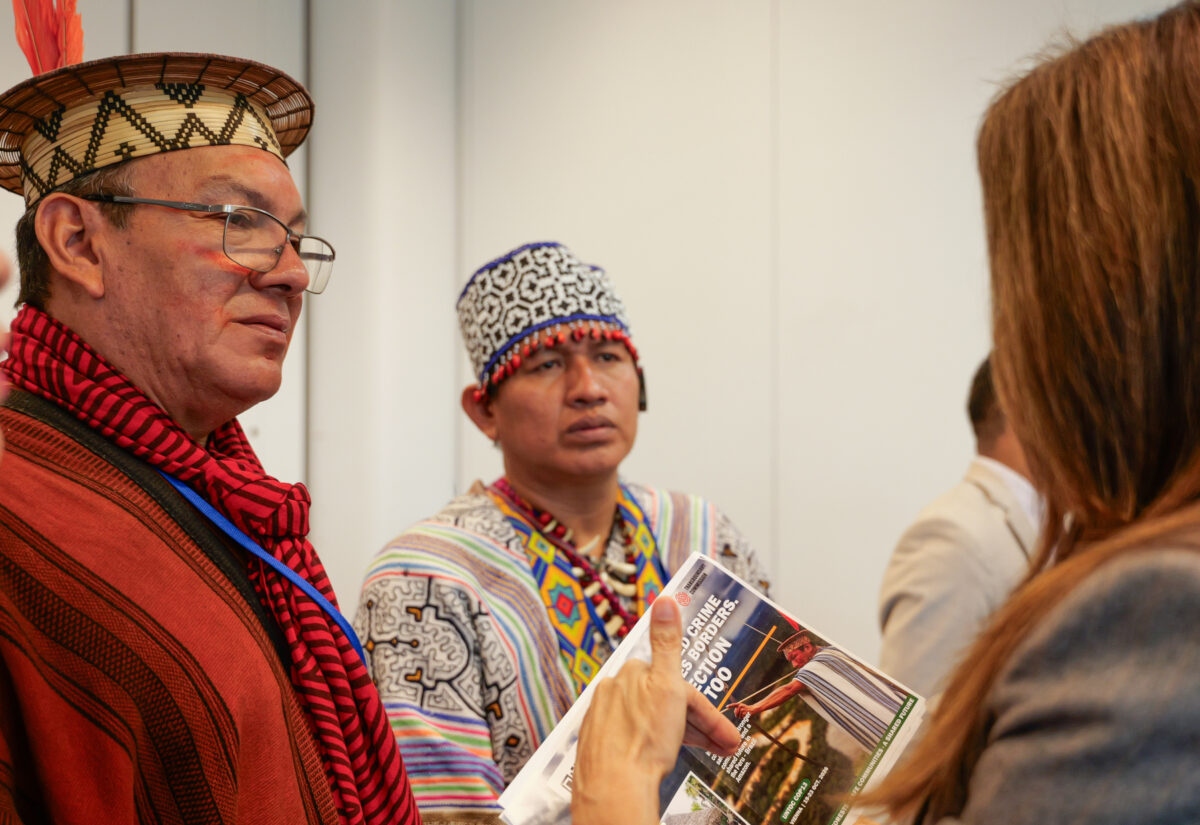
From October 15 to 24, a delegation of 22 people brought the Amazon to Vienna. Authorities of the Kichwa of Sarayaku, Wampís, Kakataibo, Inga, Shipibo, and Asháninka peoples from Brazil, Colombia, Ecuador, and Peru, joined by Patricia Gualinga, U.N. Special Rapporteur on the rights of Indigenous Peoples Albert Barume, journalists, and experts. They carried the mandate of the February 2026 Pucallpa Declaration.
“Our guards, our monitoring, and our own governments protect the best-conserved territories on the planet. Where the government coordinates with our authorities, there are results. Where it arrives only with isolated operations, violence shifts onto the communities.”
Patricia Gualinga
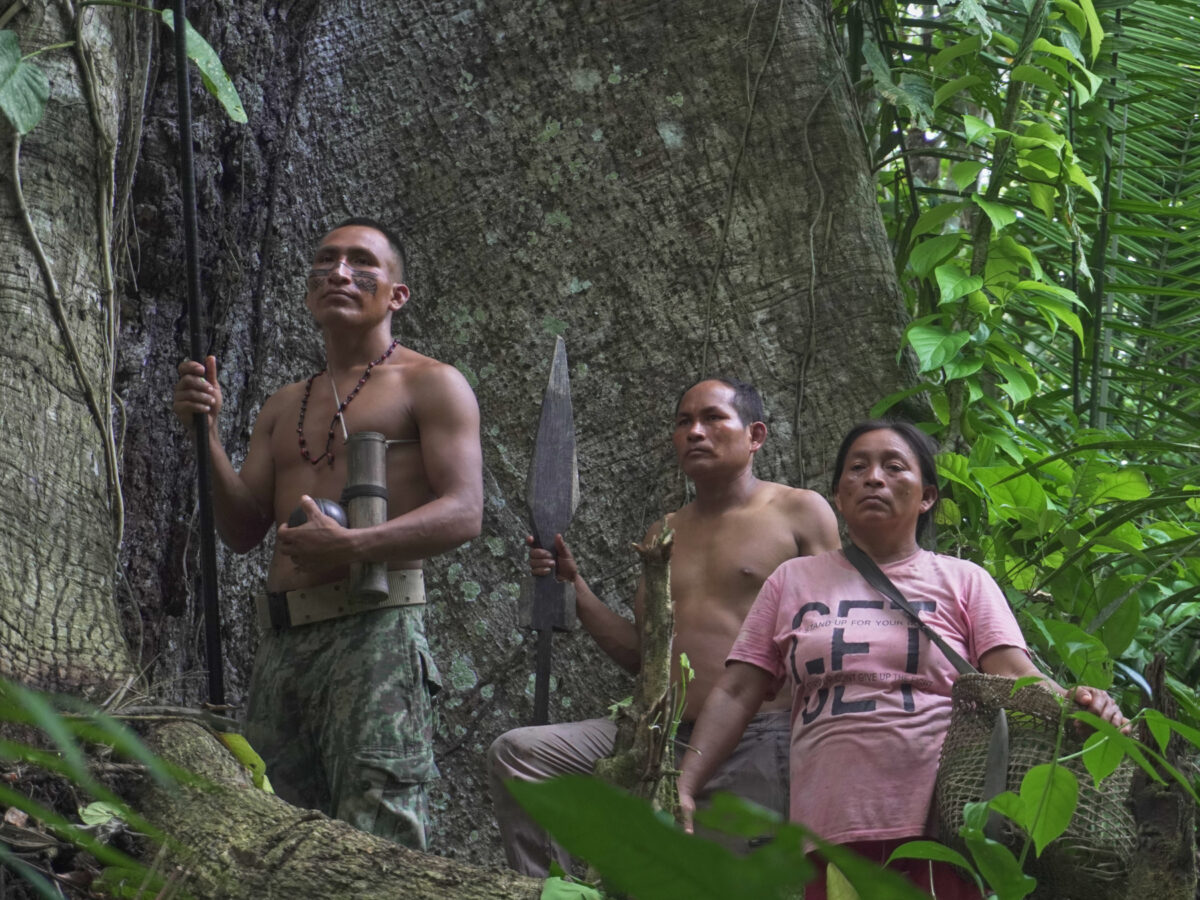
The leaders brought proof from their own territories. Galois Flores described how the Wampís created Charip: Lightning in the River, an Indigenous Guard that keeps illegal gold miners out and secures their rivers. Francisco Piyãko explained how, on the Peru–Brazil border, the Asháninka, Shipibo, and other peoples formed a Cross-Border Commission and reclaimed a border checkpoint the government had abandoned. And Ingry Mojinajinsoy of the Inga people stressed that a strong cultural identity and spiritual practice, together with local economic alternatives, are essential to halting the advance of illicit economies. These are not stories of victims waiting to be rescued. They are stories of people who are building the solutions for which the world is still searching.
The Special Rapporteur, Dr. Albert Barume put it to diplomats this way: “Security cannot be outsourced to Indigenous Peoples; it remains a national duty. However, for governments to be effective, they need to acknowledge Indigenous Peoples’ contribution and build on it. Indigenous Peoples have territorial knowledge, protect their livelihoods and maintain alternative economies. It is a strategic mistake for governments not to recognize this.”
The win: a vote that once seemed lost
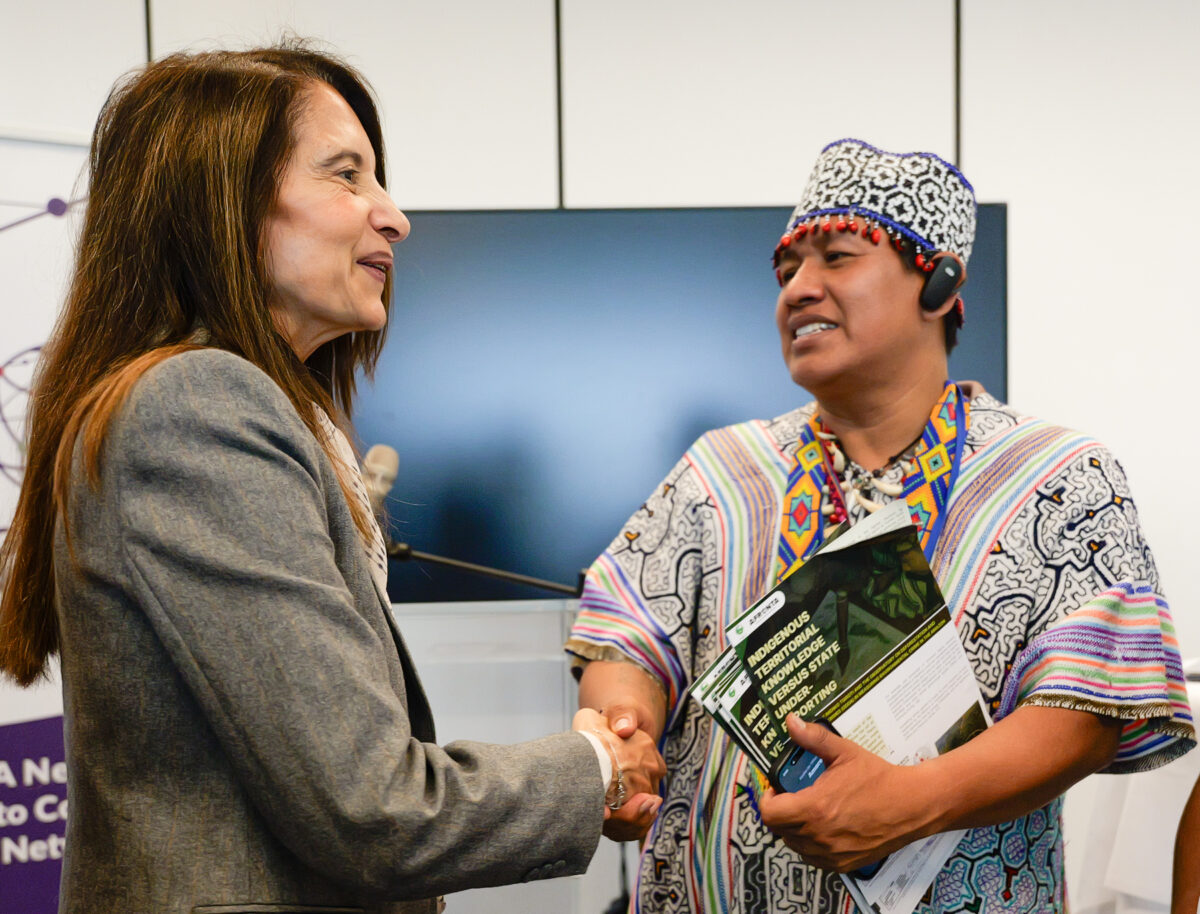
The week delivered concrete results. When Marcelo Odicio asked United Nations Office on Drugs and Crime (UNODC) Executive Director Monica Juma how her office would guarantee Indigenous participation, she made a public commitment: threats must be understood “through the eyes of the communities,” and Indigenous Peoples must help shape the policies that affect them, under the U.N. Declaration on the Rights of Indigenous Peoples. UNODC teams committed to exploring how to put this vision into practice.
Most importantly, Resolution CTOC/COP/2026/L.4/Rev.1 passed 83–12 with 27 abstentions, clearing the required two-thirds majority despite fierce opposition from the United States. Led by Brazil with ten co-sponsors, including Bolivia, Colombia, Ecuador, and Peru, the resolution:
- Opens negotiations through an ad hoc committee that will meet four times, aiming for a draft protocol at COP14.
- Targets the crimes tearing through the Amazon: illegal mining, gold trafficking, wildlife and timber trafficking, and waste trafficking.
- Recognizes Indigenous Peoples and local communities for their role in combating these crimes and related corruption.
Several embassies said the Indigenous presence marked a turning point in a vote that at one moment looked at risk, and at least one undecided government credited Indigenous Peoples for its change of position, whilst others committed to supporting the delegation moving forward after COP13.
But this historic decision will only be effective if the protocol is discussed, designed, and implemented with the meaningful participation of Indigenous Peoples. The resolution recognizes their role, yet it does not create a mechanism guaranteeing their place in the talks.
Amazon Watch’s role
Amazon Watch coordinated the delegation through our Stop Amazon Crime campaign, ensuring Indigenous voices reached, and were heard in, the rooms where decisions were made.We briefed the leaders before the trip and ran a full-day workshop in Vienna. We secured nine bilateral meetings, co-hosted a diplomatic lunch with GI-TOC and Global Witness, and shared our report Indigenous Territories Under Siege, working daily with the NGO Alliance on environmental crime.
Vienna was just the beginning. El País, AP, The Washington Post, EFE, La Silla Vacia and O Globo carried the leaders’ message to a global audience. Hundreds of thousands watched their statements on social media – two videos produced with Peru-based media collective Sapiens alone reached almost one million views. And 10,000 supporters signed on, their signatures delivered directly to government delegations urging a yes vote.
The beginning of the road
The vote opens the negotiations, but it does not decide what the protocol will mean for the Amazon. Over the next two years, the ad hoc committee will decide who sits at the table, what safeguards the text contains, and whether it reaches the networks that finance crime or ends up criminalizing communities.
Amazon Watch and the delegation will keep pushing for a dedicated channel for Indigenous Peoples in the negotiations, for UNODC to follow through on its commitments, and for a protocol that follows the money, protects defenders, and supports Indigenous economies. The vote in Vienna was a beginning, not an end. The protocol will be written over the next two years, and Indigenous Peoples must have a seat at the table where it is negotiated. Meanwhile, we will keep supporting communities on the ground to hold their ground in the face of attacks by organized crime, and militarized government responses.
As Patricia Gualinga told the plenary: “There will be no security in the Amazon, nor in any Indigenous territory, without Indigenous Peoples.”