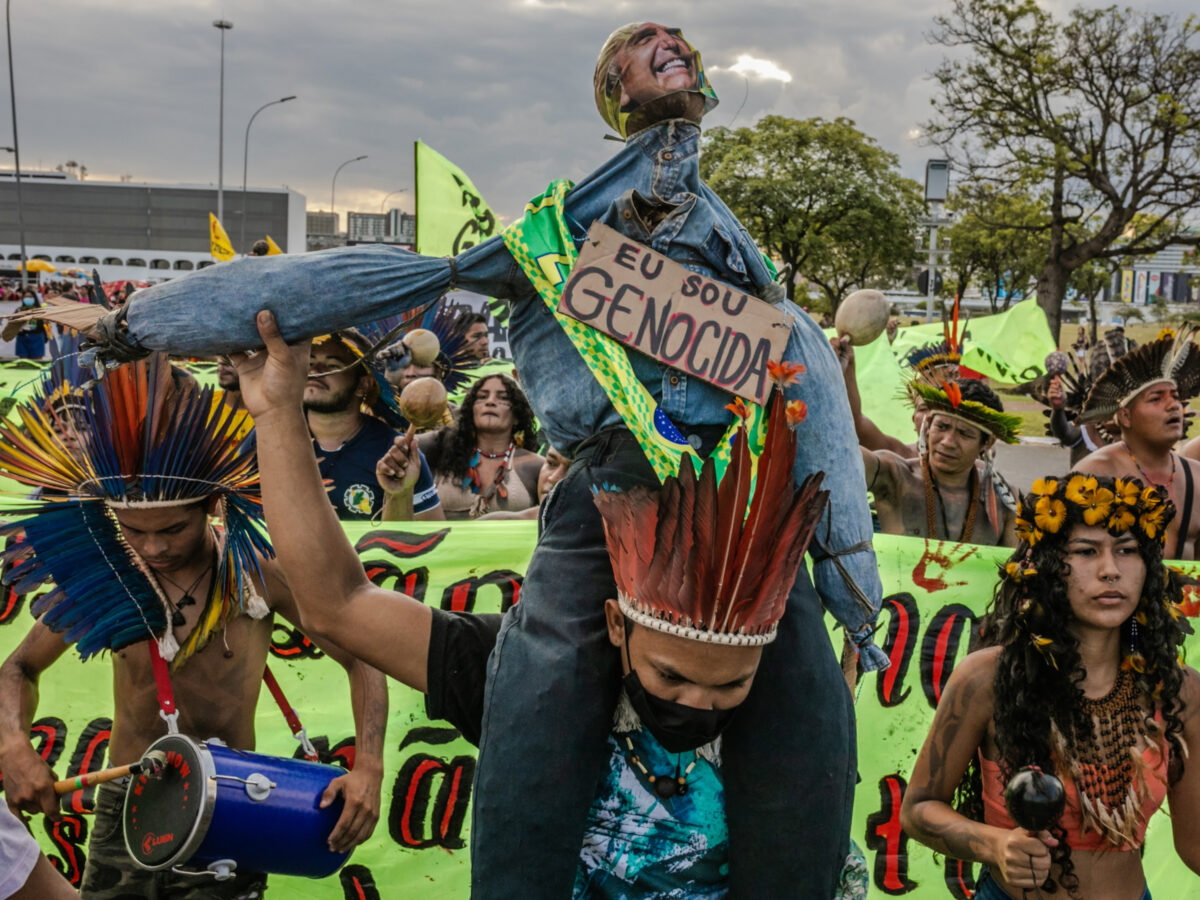
Brazil’s October 4 elections delivered a dangerous shift in power for Indigenous Peoples and the Amazon. The far-right Liberal Party (PL), the Bolsonaro family’s party, won 121 of the Chamber of Deputies’ 513 seats and will hold 28 of the Senate’s 81 seats in 2027. While the PL cannot govern either chamber alone, it will be the largest party in both, and that matters. These gains strengthen the forces pushing to dismantle the territorial protections of Indigenous Peoples and traditional communities and open the Amazon to a disastrous era of unfettered extraction.
Brazil’s presidency remains undecided. Flávio Bolsonaro took 47% of votes to President Luiz Inácio Lula da Silva’s 45%, pushing both to a runoff on October 25. But whatever the outcome, Indigenous Peoples will confront a significantly more hostile Congress. Understanding that threat means looking beyond party arithmetic to whose territories, rivers, and lives are at stake.
Indigenous campaigns built power beyond the ballot box
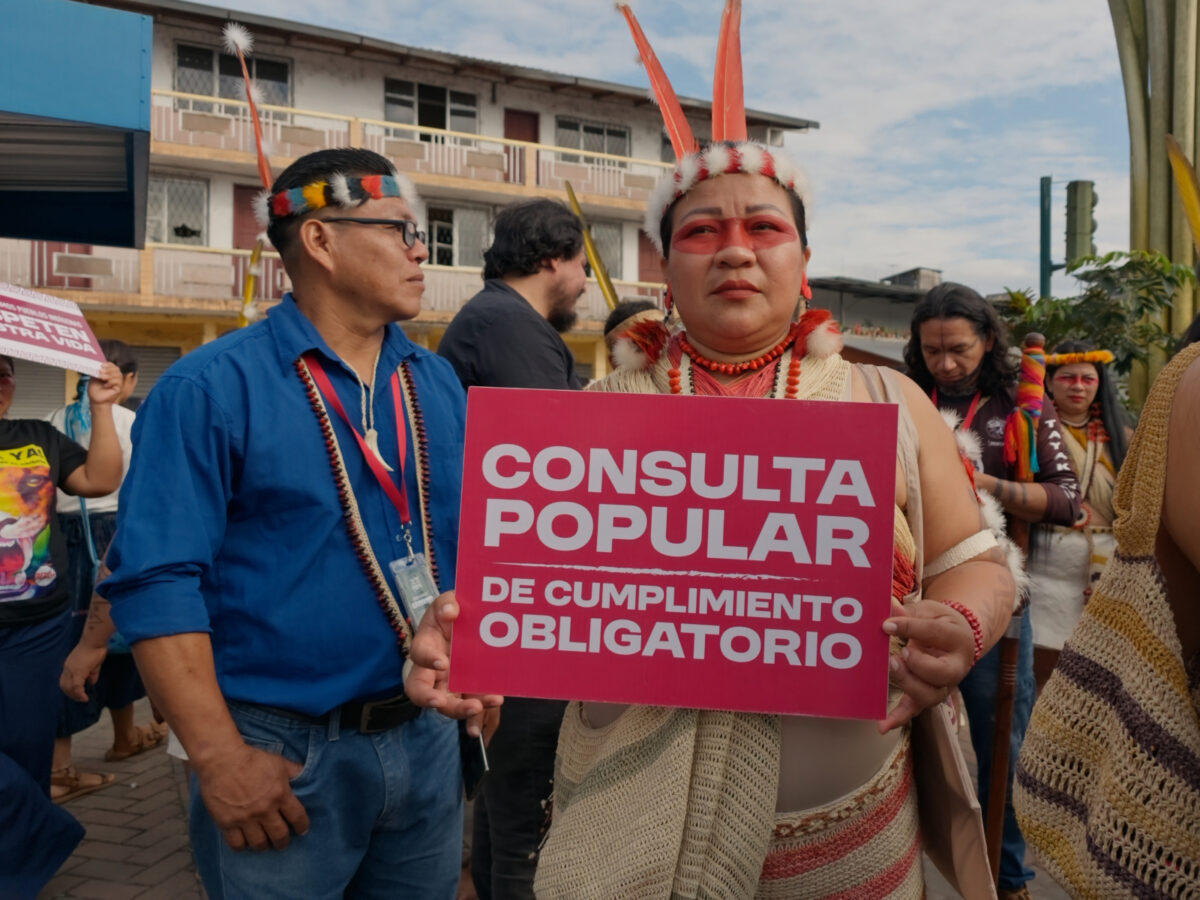
Indigenous Peoples entered these elections with a political project rooted in their territories. The Association of Brazil’s Indigenous Peoples (APIB) and its regional organizations brought together 56 movement-backed candidacies, including 33 for state assemblies and 19 for the Chamber of Deputies. Their platform, Nosso Território, Nossa Vida – “Our Territory, Our Life” – places demarcation, self-determination, and climate protection at the center of Brazil’s future.
Sonia Guajajara’s reelection in São Paulo preserves a crucial voice in Congress. But the movement suffered losses elsewhere. Célia Xakriabá did not secure reelection in Minas Gerais, and Joenia Wapichana fell short in Roraima. Joenia, Brazil’s first Indigenous woman elected to the Chamber, had been fighting to reclaim her seat after losing reelection in 2022. Together, these setbacks weaken the movement’s capacity to confront powerful interests from inside the legislature, and make stronger organization and mobilization outside formal institutions more urgent than ever.
In Pará, the Munduruku leader, Goldman Environmental Prize winner, and coordinator of the Pariri Indigenous Association Alessandra Korap ran for the Federal Chamber of Deputies. While she did not win a seat, she attracted nearly 30,000 votes. Her campaign brought the struggle against destructive mining, illegal logging, land grabbing, and deforestation into the electoral arena and demonstrated that protecting Indigenous lands and rights has broad public support. That support does not vanish without an electoral mandate – it remains a powerful force for defending the forest and challenging destructive economic projects. Alessandra is a visionary Indigenous leader, and her experience in the electoral process will strengthen her leadership and further advance the Munduruku people’s struggle to defend their territory and way of life.
APIB’s post-election message acknowledges the dangerous situation without surrendering to it: the next cycle will demand resistance, and the movement’s strength lies in unity and mobilization. Indigenous political power begins in communities and endures between elections.
A National Congress set for predatory extraction
The PL’s record offers little reason to expect restraint. Brazil’s Indigenous Missionary Council’s voting analysis found that 95.9% of the party’s votes went against Indigenous rights between 2019 and 2026. Other parties on the right showed similarly hostile records. This is an established political agenda gaining strength, not a new threat emerging without precedent.
This agenda brings together attacks on Indigenous land demarcation, support for the garimpo – small-scale mining, much of it illegal – and targeted efforts to expand industrial extraction. The agribusiness lobby (known as the ruralists) is pushing to weaken limits on land grabbing and gut enforcement of environmental law. Environmental outlets have documented lobbying to curb embargoes on illegally cleared land, while NGOs described a broader ruralist offensive against environmental safeguards. Removing these limits will give powerful economic actors greater freedom to exploit land and water while communities and the planet bear the consequences.
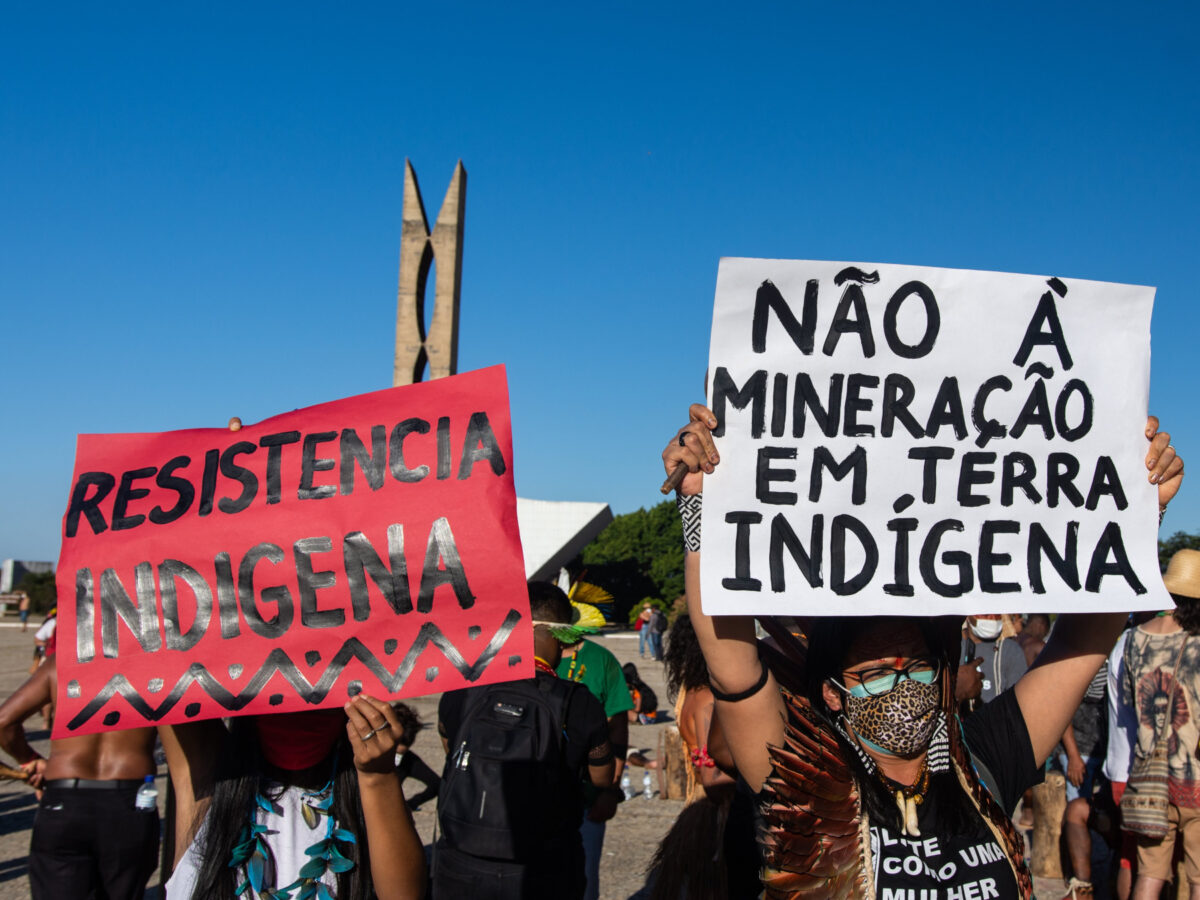
Opening Indigenous lands to mining is an urgent threat and the Senate is already considering several bills on the issue. A working group is pushing to approve mining on Indigenous lands, which is currently forbidden by Brazil’s Constitution as it lacks specific regulation. The Indigenous movement has largely condemned this working group, which has made limited progress over the past year. A stronger presence of pro-mining interests could, however, accelerate efforts to advance the mining agenda and weaken socio-environmental protections during legislative negotiations.
The global demand for critical minerals to fuel a clean energy transition cannot justify a new wave of predatory dispossession in the planet’s largest tropical forest. APIB warns that Brazil’s new minerals policy leaves territorial safeguards inadequate, and that general dialogue cannot substitute legally-required community consultations to which Indigenous Peoples are entitled. A transition marketed as “green” cannot come at the expense of Indigenous territories, rights, and self-determination.
The Supreme Court is also in the crosshairs
The Senate’s lurch to the right matters because it has the constitutional power to try STF justices for alleged crimes and authorize their impeachment. Removal requires two-thirds of all senators: 54 votes. The PL’s projected 28 seats fall well short, and even the four right-wing parties grouped together total 43. Impeachment would require additional allies and legal proceedings; it is not an automatic consequence of the election.
Nevertheless, a stronger anti-STF bloc increases the danger of political intimidation. The STF serves as a vital arena for challenging the “Marco Temporal” (time limit) restriction, which seeks to deny land rights to peoples absent from their territories on October 5, 1988, including those forcibly displaced during Brazil’s dictatorship. Pressure to remove STF justices could undermine judicial independence precisely when corporate and ruralist interests are seeking fewer constraints. Defending Indigenous rights therefore also means defending institutions capable of enforcing them.
Forest protection faces a harder fight
The incoming legislature inherits an environmental rollback already well underway. In 2025, Congress overturned many presidential vetoes to the new environmental licensing law, weakening protections and opening new pathways for destructive projects to bypass conventional licensing. Indigenous and environmental organizations warn that these changes leave vulnerable communities exposed. A stronger extractive industry bloc in Congress will only deepen that damage and advance restrictions on enforcement.
Recent progress shows what is at stake. Brazil’s Amazon deforestation alerts fell 36% between August 2025 and July 2026, reaching the lowest level recorded in Brazil’s Real-Time Deforestation Detection System (DETER) monitoring series. These alerts are an important indicator of deforestation trends and guide enforcement efforts, but they do not represent the final estimate of annual deforestation.
The election has not reversed that progress, but the gains are not guaranteed. Weakening environmental enforcement, undermining Indigenous territorial rights, and opening the door to greater pressure on forests could erode the policies and protections that helped drive this decline.
U.S. intervention demands scrutiny
The heavy-handed actions of the Trump administration also helped determine the electoral context. A new 25% U.S. tariff on certain Brazilian goods took effect in July, at the launch of the presidential election campaigns. Brazilian officials and civil society claim the tariffs were instituted to weaken President Lula and strengthen the candidacy of the extreme right. Reuters reported that Donald Trump hosted and publicly praised Flávio Bolsonaro. Such signals lend international legitimacy to the far right, while their impact on actual votes remains uncertain.
More troublingly, reports emerged that the U.S. State Department proposed a $1 million award to support Brazilian civil society groups challenging the Supreme Court. The department has not confirmed the reported funding, and no direct payments to Bolsonaro’s campaign have been established. Brazil’s intelligence agency warned of interference risks, but the electoral court’s president found no evidence of foreign intervention in the first round. These developments demand scrutiny and point to how an interventionist U.S. administration may have strengthened Brazil’s extreme right.
The struggle continues
Preventing a Bolsonaro presidency is a paramount priority. A Bolsonaro administration alongside Brazil’s incoming Congress could align executive power with the drive to weaken territorial and environmental protections. The presidential runoff will shape the balance of power, but the outcome alone will not resolve the congressional threat. Even under a Lula government, a Congress determined to expand mining and weaken environmental protections could continue to advance this agenda.
Hope rests in organized resistance, not promises that any election will settle the struggle.
“We are at a decisive moment. The results of the first round showed that the threats to our territories and our rights may increase in the coming years. But the election isn’t over yet. We must remain mobilized, strengthen our alliances, and defend our very existence. Flávio promised not to demarcate any Indigenous lands during his government. To make matters worse, he has already given every indication that he will hand over our lands to Trump for the extraction of strategic minerals, making him an accomplice to a global crime against Indigenous peoples. That is why our struggle must become even stronger. Our lives are at stake,” said Alessandra Korap Munduruku.
Alessandra’s message calls for sustained solidarity: defending demarcation, protecting threatened leaders, and holding the companies and financiers behind extraction accountable. Brazil’s Indigenous peoples have not stopped building political power. Standing with them means ensuring that adverse election results do not become permission to strip away their rights.