
Photos available here (Credit: Mullu TV)
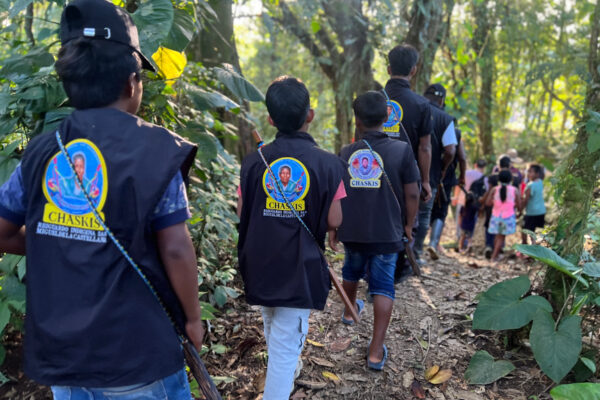
Napo, Ecuador – Today, on World Amazon Rainforest Day and the International Day of the World’s Indigenous Women and Girls, the Kichwa community of Capirona, in collaboration with the Indigenous film and communication platform Mullu TV and Amazon Watch, is releasing a song and video that carry the community’s resistance to illegal gold mining beyond the borders of the Amazon.
The song, Capirona, performed by Kichwa singer, Kimberly Silva, tells the story of a fight unfolding now on the Puní River in Ecuador’s Napo Province. Criminal networks drive illegal gold mining upstream and poisoning the rivers that Capirona families depend on for drinking water, fishing, and food. These networks use mercury, fuel violence, and dismantle Indigenous governance. The community has refused to allow mining in its territory, but mercury has already contaminated its waters.
“We are defending the life of the entire planet, that is why we ask ourselves: will we one day make a soup of gold or a soup of dollars? No.. what we must defend is life. And what is life? It is water. That is why we fight – because we are very clear that we stand between life and death, above all for our children.”
Galo Villamil
The Kichwa community of Capirona lives between the Puní and Shalkana rivers in Ecuador’s Napo Province – where it defends its territory, waters, and ways of life against illegal extraction. The community’s resistance forms part of a broader regional crisis that Amazon Watch documents through its Stop Amazon Crime campaign. Across the Amazon Basin, criminal networks operating illegal gold mining, drug trafficking, and other illicit economies are consolidating territorial control, contaminating waterways with mercury, and threatening the physical and cultural survival of Indigenous peoples.
A regional crisis with a global dimension
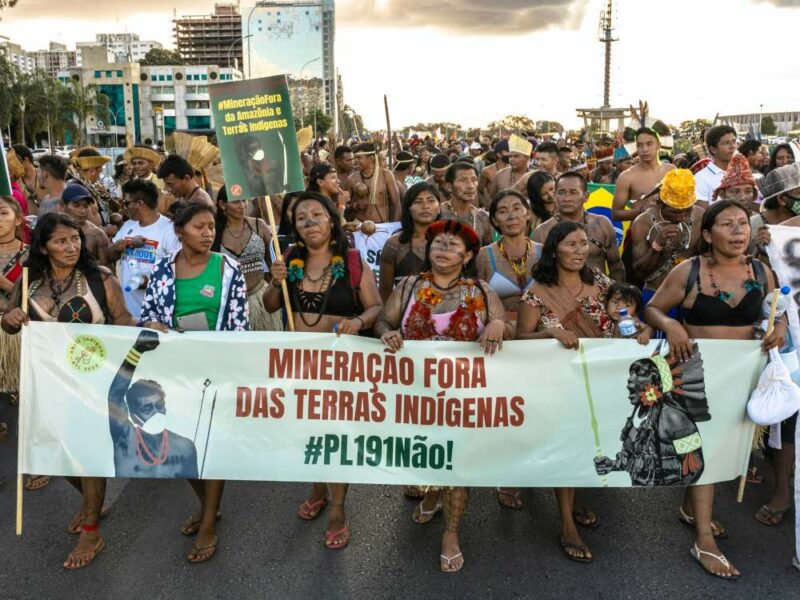
The contamination threatening Capirona is not an isolated case. Across the Amazon, illegal gold mining poisons rivers with mercury, destroying fisheries, and undermining the Indigenous governance systems that protect some of the world’s most biodiverse and climate-critical ecosystems. In Ecuador’s Napo Province alone, the Federation of Indigenous Organizations of Napo (FOIN) has documented the expanding reach of criminal networks. These networks threaten both environmental health and the autonomy and safety of Indigenous communities that resist extraction.
Amazon Watch and allied organizations call on the international community to recognize illegal gold mining as an existential threat to Indigenous peoples. They also urge the international community to support rights-based responses that strengthen Indigenous territorial governance instead of militarized approaches, which have repeatedly failed to protect frontline communities.
Watch and share
On September 5, the Kichwa community of Capirona asks the world to amplify its resistance.