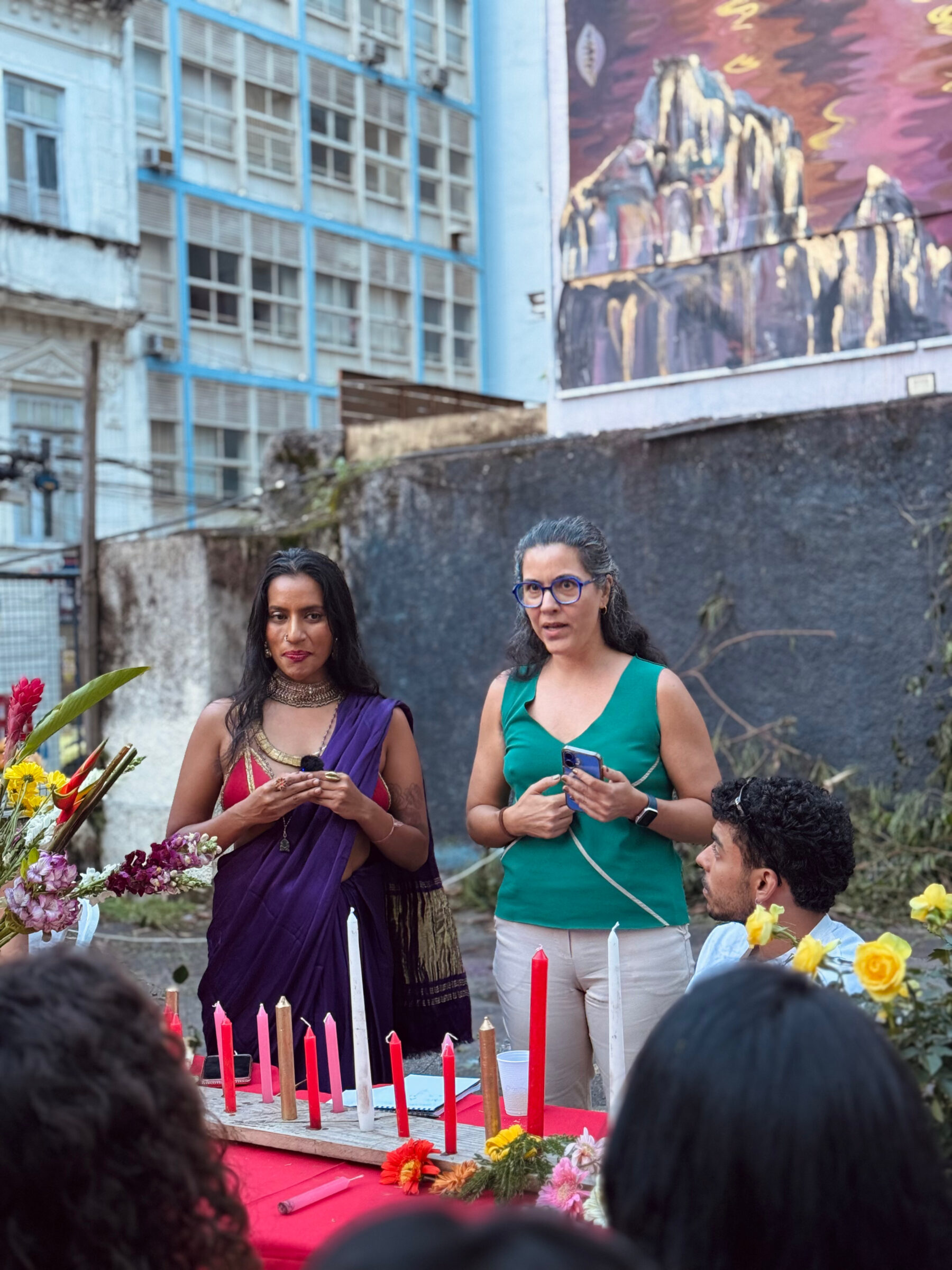
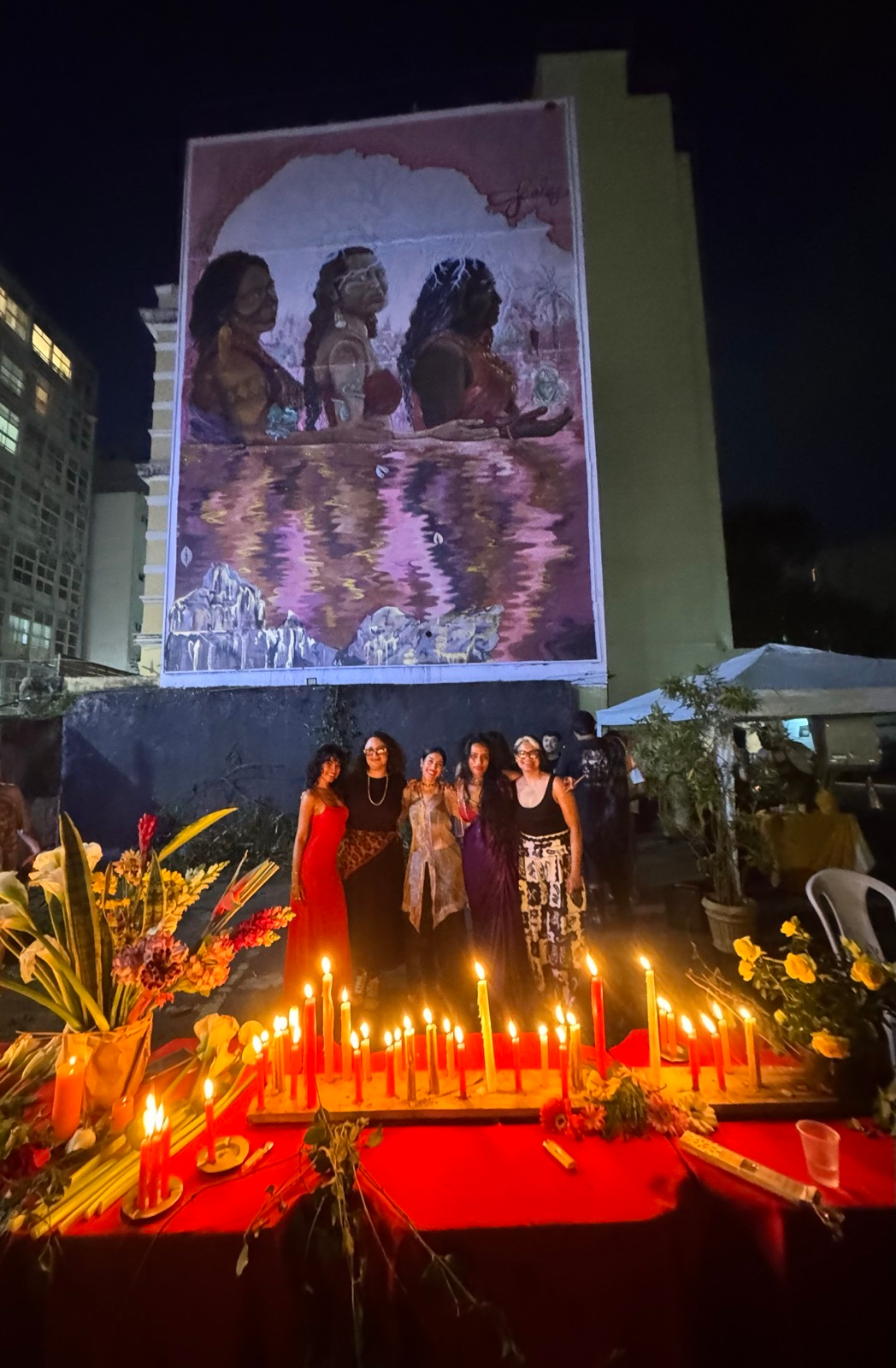
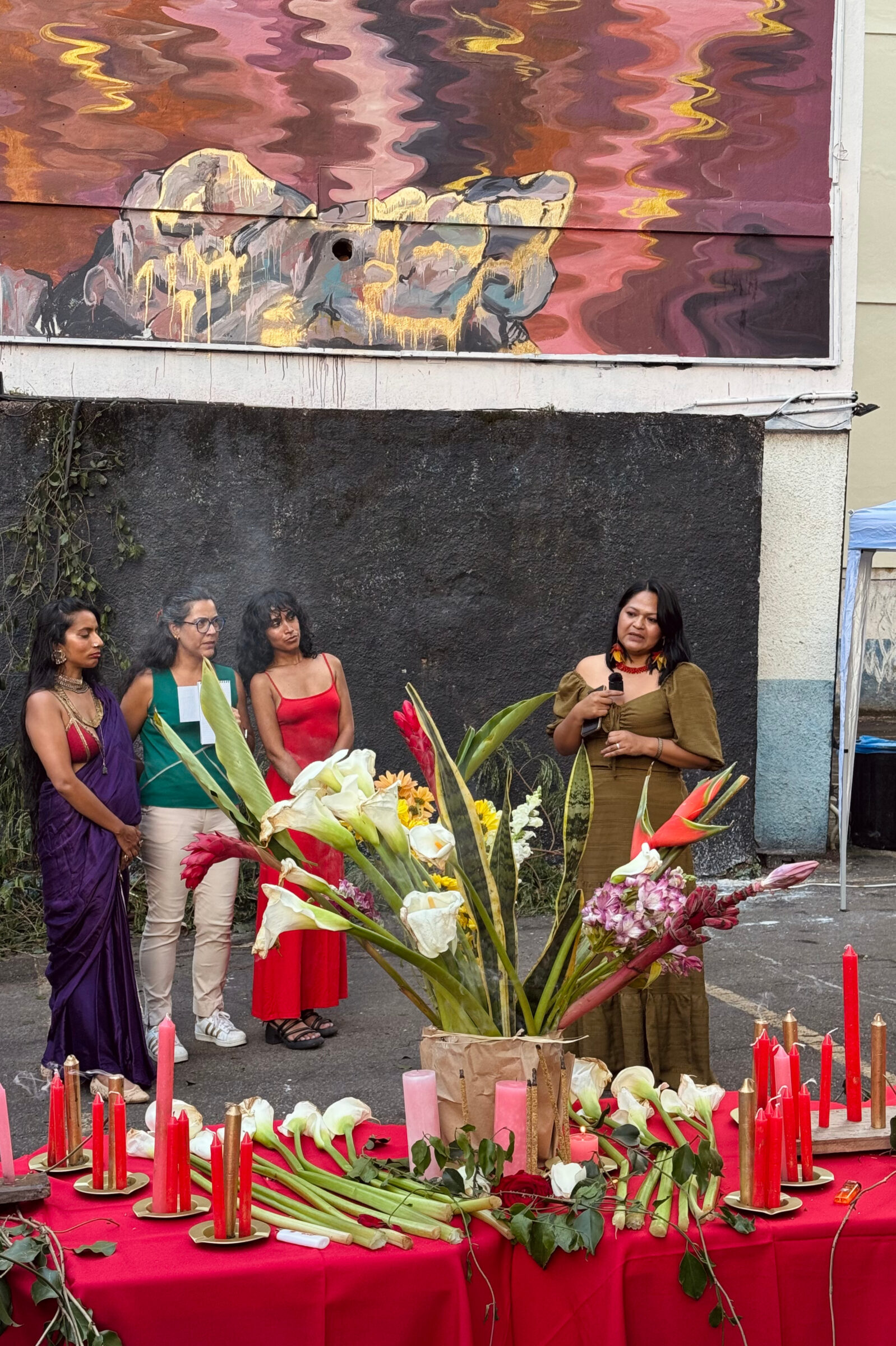
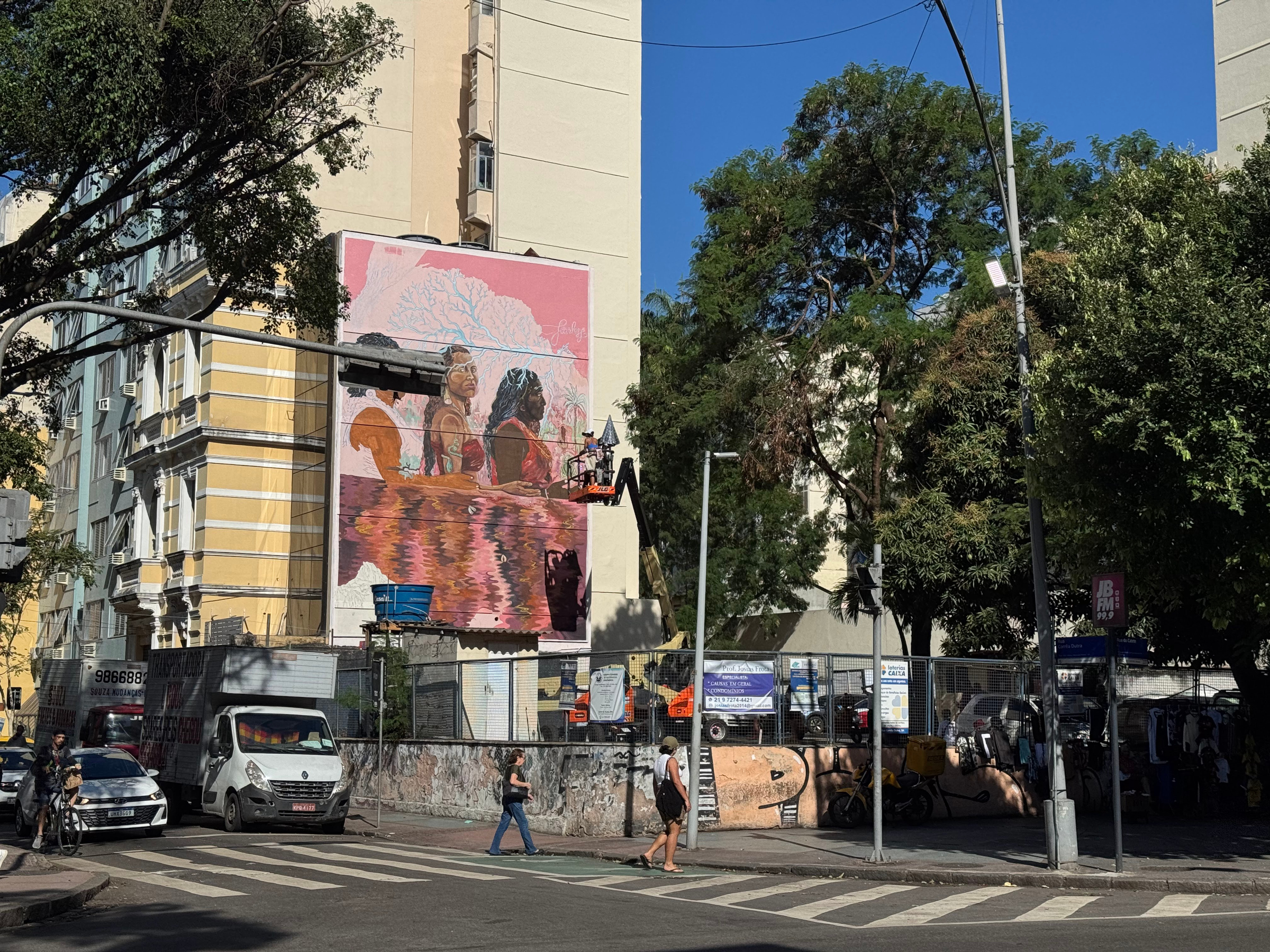
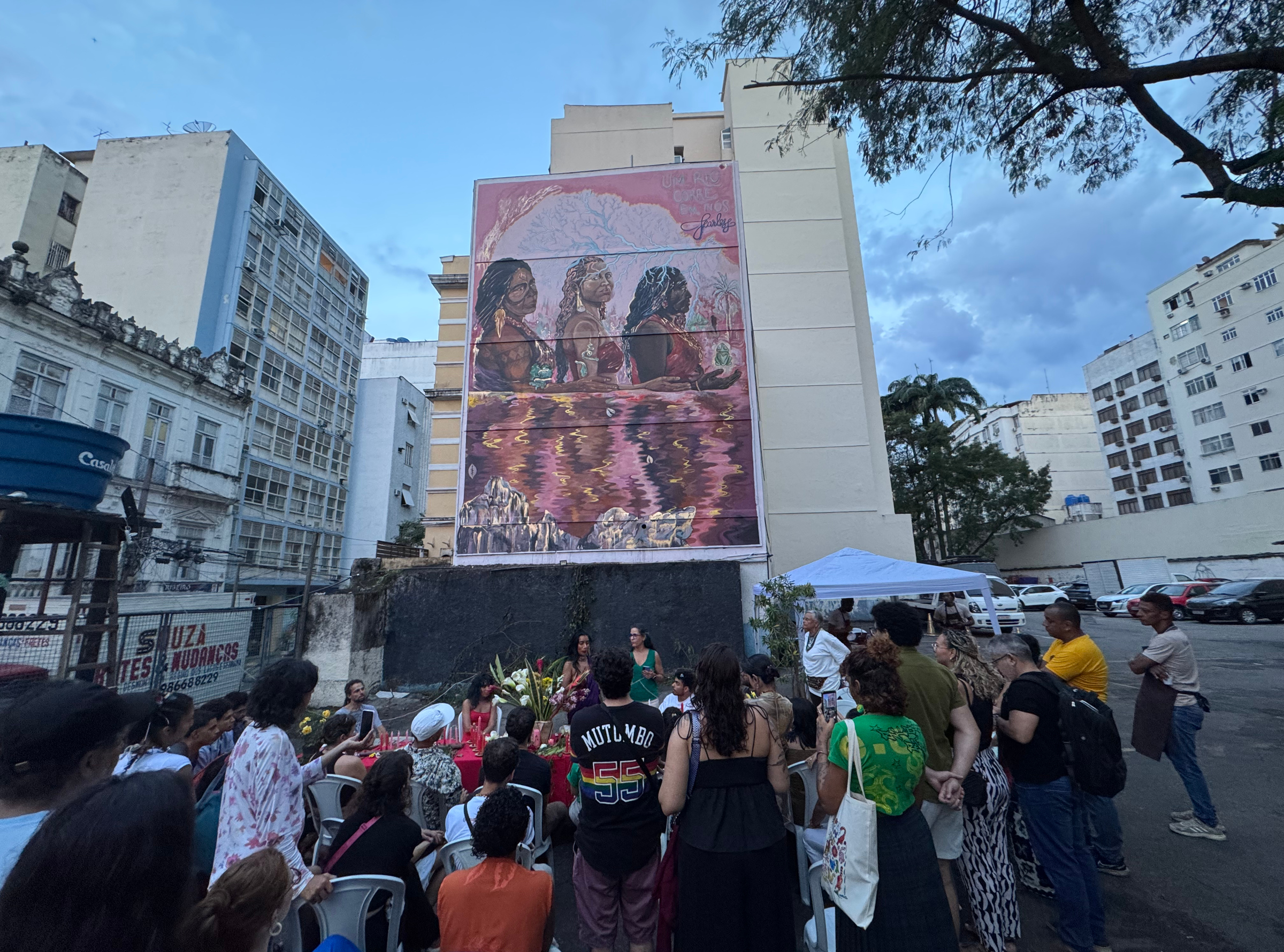
Yesterday, I participated in the inauguration of a monumental new mural in Rio de Janeiro celebrating Indigenous, Quilombola, and riverine women who defend the Amazon’s rivers and territories.
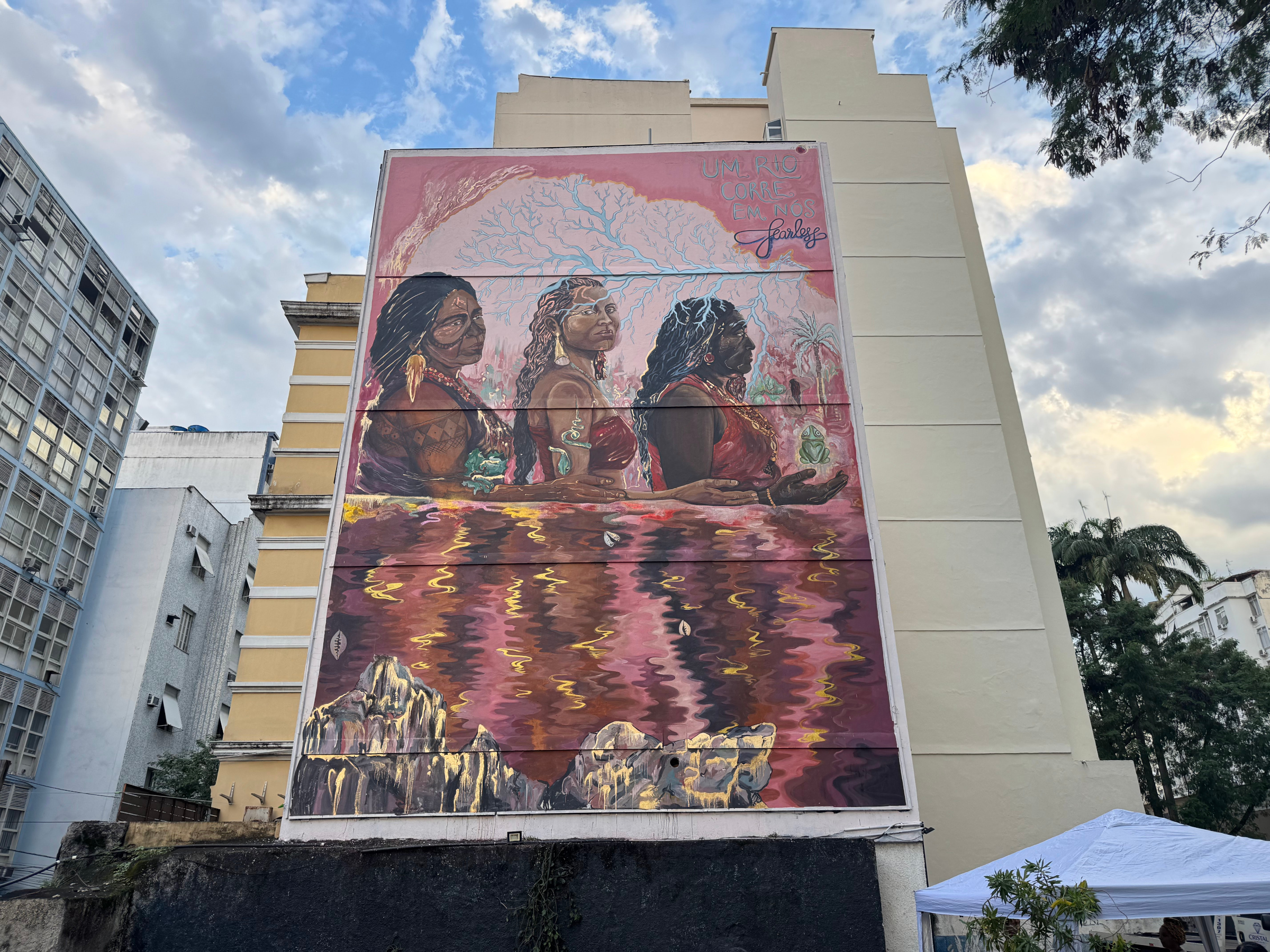
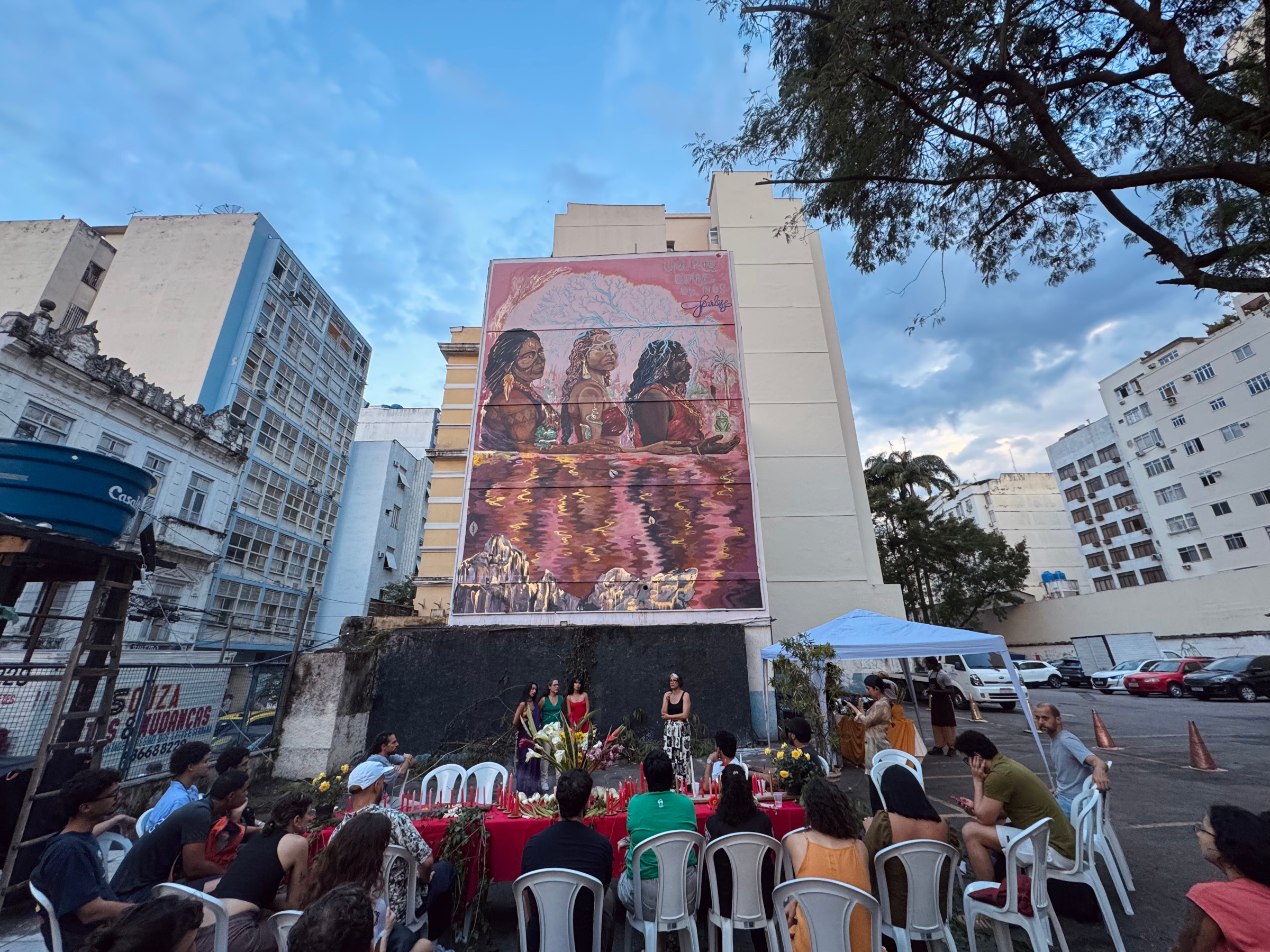
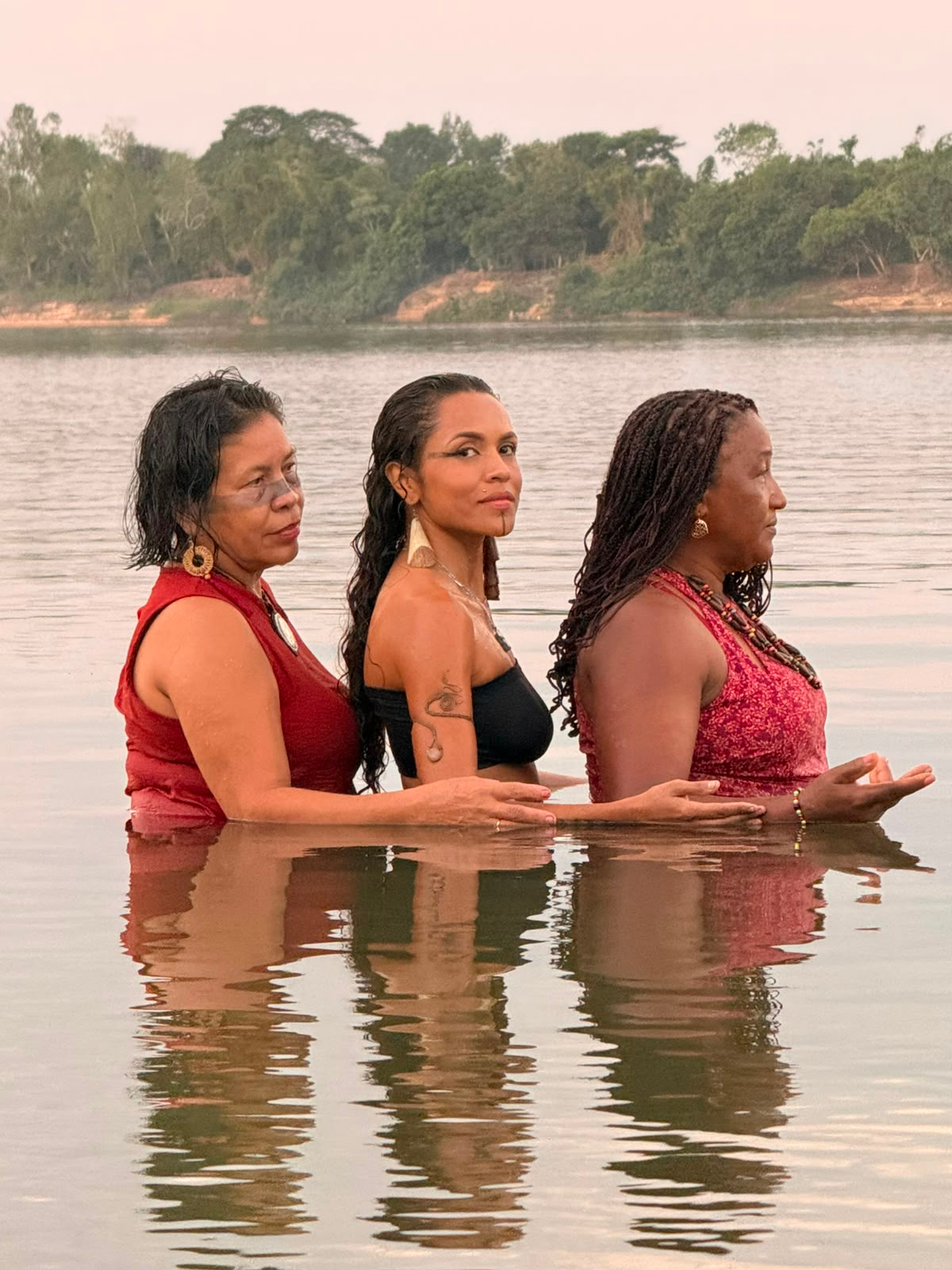
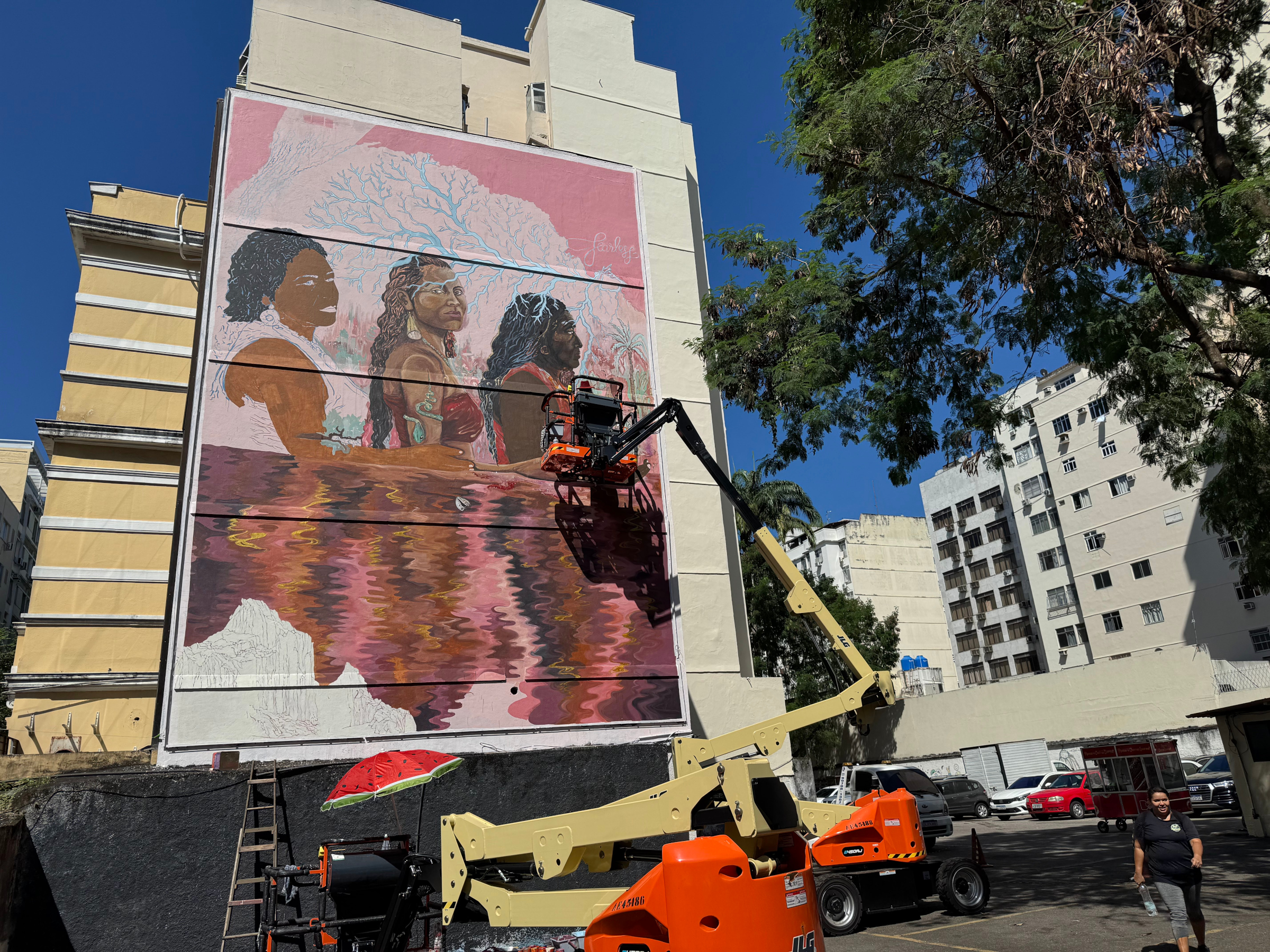
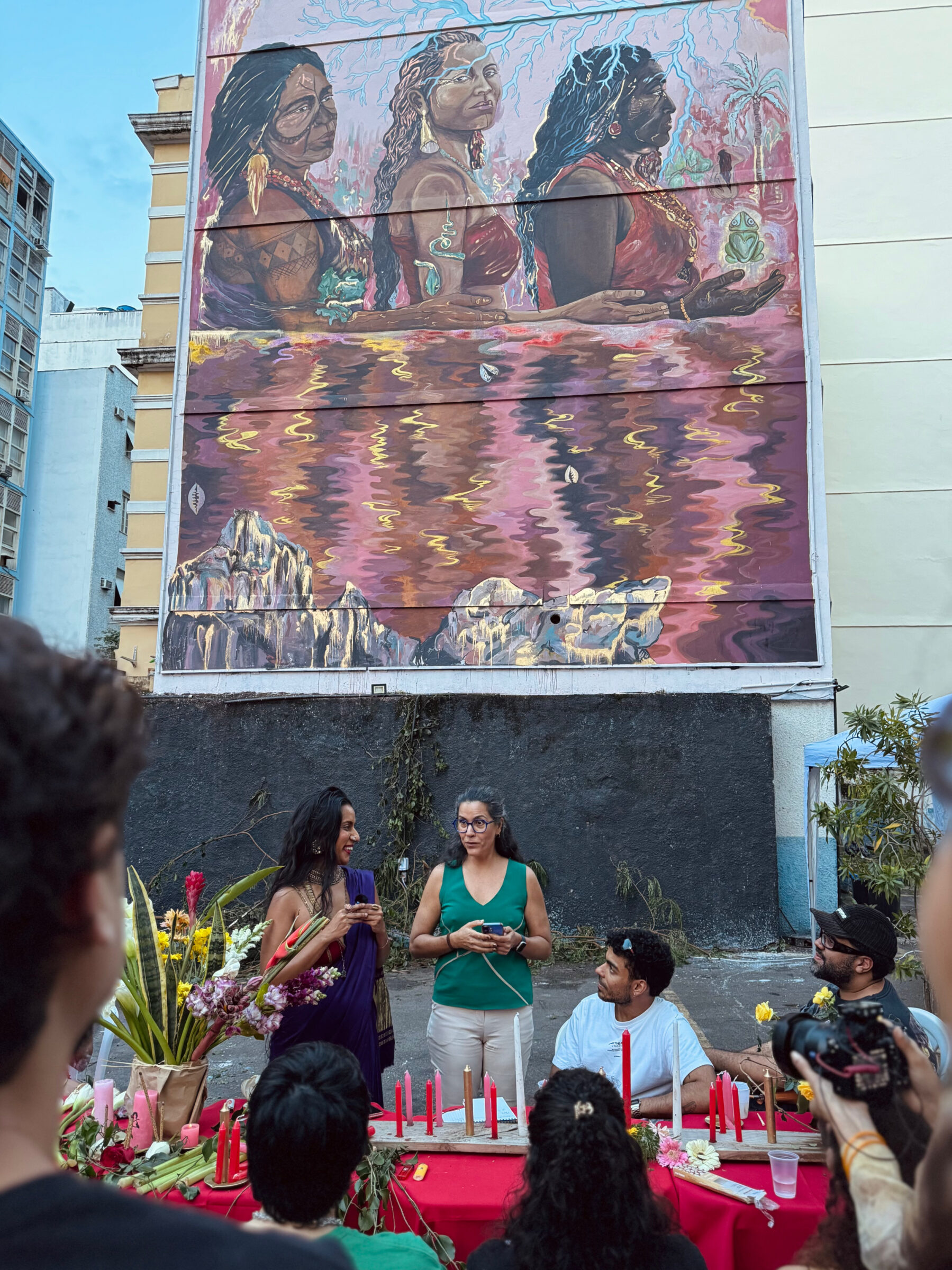
At the event in the Catete neighborhood, organizers unveiled Confluence, which towers across more than 11 meters of wall and portrays three women intertwined with the waters that sustain their communities. Its colors carry those territories, too: the pigments incorporate mud from the Tocantins River, ash from the Amazon forest, and minerals from India. The event capped more than two weeks of activities that began on the banks of the Tocantins and ended in one of Brazil’s largest urban centers.
Indian artist Shilo Shiv Suleman and the Fearless Foundation for the Arts created the mural in collaboration with the Enough Soy Alliance, of which Amazon Watch is a member. Their creative process included exchanges with communities from the Tocantins, Tapajós, and Madeira river basins. Before coming to Rio, the artists spent time in Vila Tauiry, Pará, where they worked alongside residents to create a first mural dedicated to the Pedral do Lourenção (Lourenção Rocks) and the communities’ relationship with the Tocantins River.
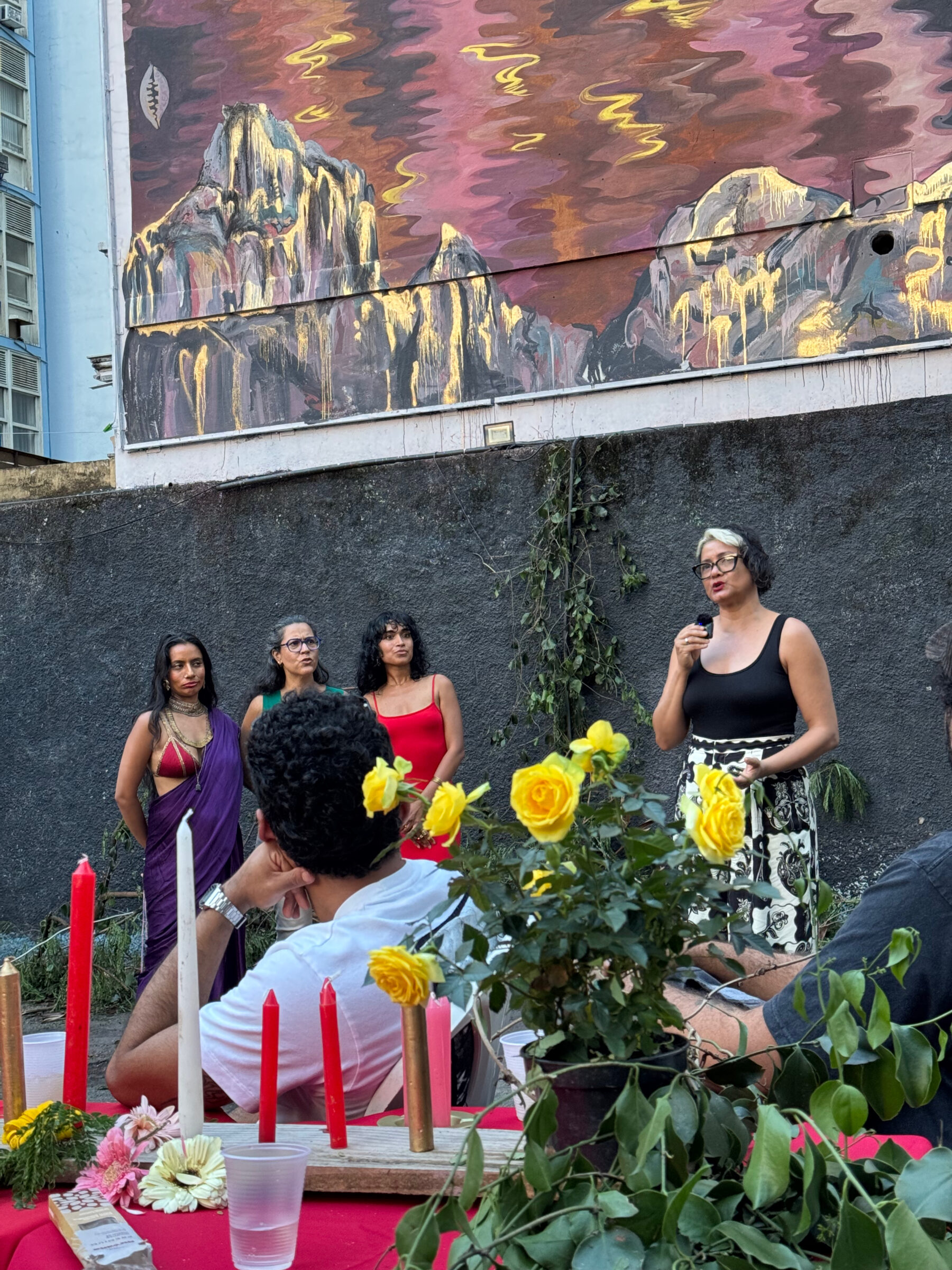
The Pedral came to Rio de Janeiro, too. At the base of Confluence, the mural depicts this rocky ecosystem, which provides habitat for fish and sustains fishing, local knowledge, and cultural traditions. It also forms part of the lives of communities that have lived alongside the Tocantins for generations. Today, a blasting project tied to the expansion of cargo navigation threatens it. The struggle to protect the Pedral is part of a broader mobilization of riverine communities, fisherfolk, family farmers, Indigenous peoples, and social movements resisting waterways, dredging, ports, and other commodity export corridors that are transforming Amazonian rivers.
During the inauguration, Shilo explained how the time the artists spent in Tauiry, Pará, helped shape the mural. By living alongside a community whose members do not see rocks, water, fish, and people as separate things, the artists found an image that became central to Confluence: no clear boundary divides women’s bodies from the waters they defend. The work takes that relationship as a starting point to connect with women-led movements in other parts of the world and with a shared struggle against the exploitation of bodies, land, and water.
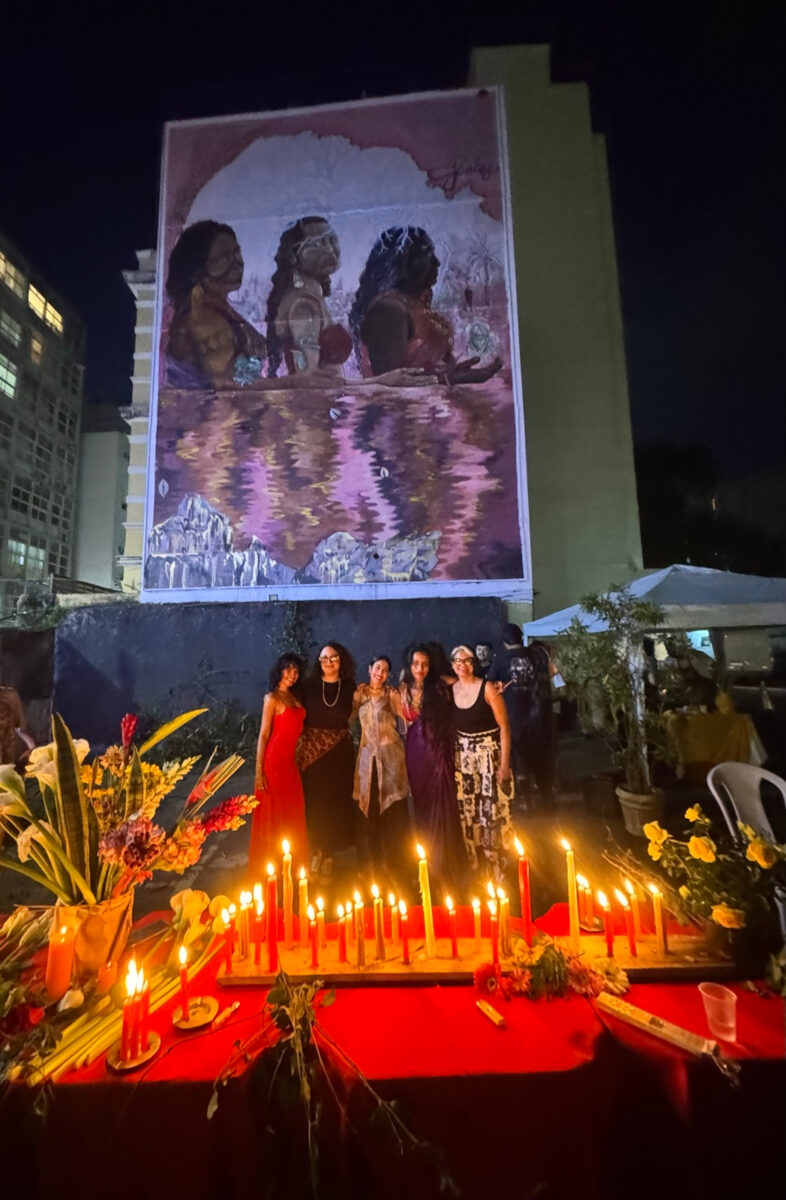
When I saw the finished mural, that continuity moved me most. The rivers flow through the women’s bodies until, at a certain point, it becomes difficult to tell where one ends and the other begins. Their lives continue into the water; the water continues through them.
I immediately thought of veins and arteries, the pathways that allow blood to circulate and keep our bodies alive. We all understand that we must care for our circulatory system, keep it healthy, and allow blood to flow through it. Looking at the mural, it is hard not to think about rivers in the same way: What happens when we interrupt, dry up, or destroy the pathways through which the life of a territory circulates?
But the women in Confluence are not portrayed only in resistance. They are smiling. They are free and surrounded by references to their beliefs, including the encantados – spiritual beings deeply present in Amazonian cosmologies.
That detail also stayed with me because we risk telling the stories of women who defend their territories solely through the threats they face. Life in these places is much larger than conflict. There is spirituality, food, memory, joy, knowledge, family, and belonging. Defending a territory also means defending the right to continue experiencing all of that.
This is also where the presence of artists from South Asia took on an even deeper meaning for me. In India, rivers are sacred to millions of people. On opposite sides of the world, peoples and communities understand water as something that cannot fit within the definition of a “natural resource.” Their histories, cultures, and realities are very different, but they share an understanding that a river can be a source of life, memory, spirituality, and identity. Confluence came to embody that encounter too: the knowledge that people living so far away can recognize our struggles, see themselves in them, and choose to join forces to protect what sustains life.
This connection is unfolding at a moment when political disputes center on the very rivers that appear in the mural. In early 2026, Amazon Watch supported and amplified an Indigenous-led mobilization against a federal decree that threatened stretches of the Tocantins, Tapajós, and Madeira rivers without proper consultation with affected peoples. After weeks of mobilization and sustained national and international pressure, the Brazilian government revoked the decree. It was an important victory, but proposed waterways continue to put pressure on these territories through dredging, ports, and other infrastructure designed primarily to move commodities for export.
That is why bringing Confluence to Rio de Janeiro matters so much. In a major urban center, amid its daily pressures, people can easily imagine that what happens to an Amazonian river is far removed from everyday life. It is not. Climate, water, and forests are part of systems that do not follow the boundaries between states or between rural areas and cities. The same disruptions threatening Amazonian territories are part of a climate crisis that cities already experience through extreme heat and increasingly intense weather events.
In Rio, these stories now command a monumental wall in one of Brazil’s most visible and internationally connected cities, reaching the countless people who pass by it each day. It was moving to look up at those enormous women in Catete and think about the distance between that wall and some of the communities that appear there – places that too often receive little attention from public authorities and remain largely invisible to much of the country. Of course, these women’s existence and strength do not depend on their inclusion in a work of art. The mural does not give them importance. What it does, even if only for a moment, is reverse the scale of that visibility: stories that society so often pushes to the margins now occupy a public space that is impossible to ignore.
That takes on another dimension in an election year. Bringing these questions into the middle of a city also invites people who may never have visited the Tocantins, Tapajós, or Madeira to recognize that they have a stake in what happens to these rivers. From there, they can ask what kind of future we want to build and how much weight our political decisions should give to protecting the climate, water, territories, and the peoples who defend them.
Perhaps that is, for me, the greatest power of Confluence. The mural transforms a complex idea into an image that people can immediately understand: the rivers continue through the women’s bodies, and the women’s bodies continue into the rivers. If the life of one depends on the life of the other, then defending one also means defending the other.