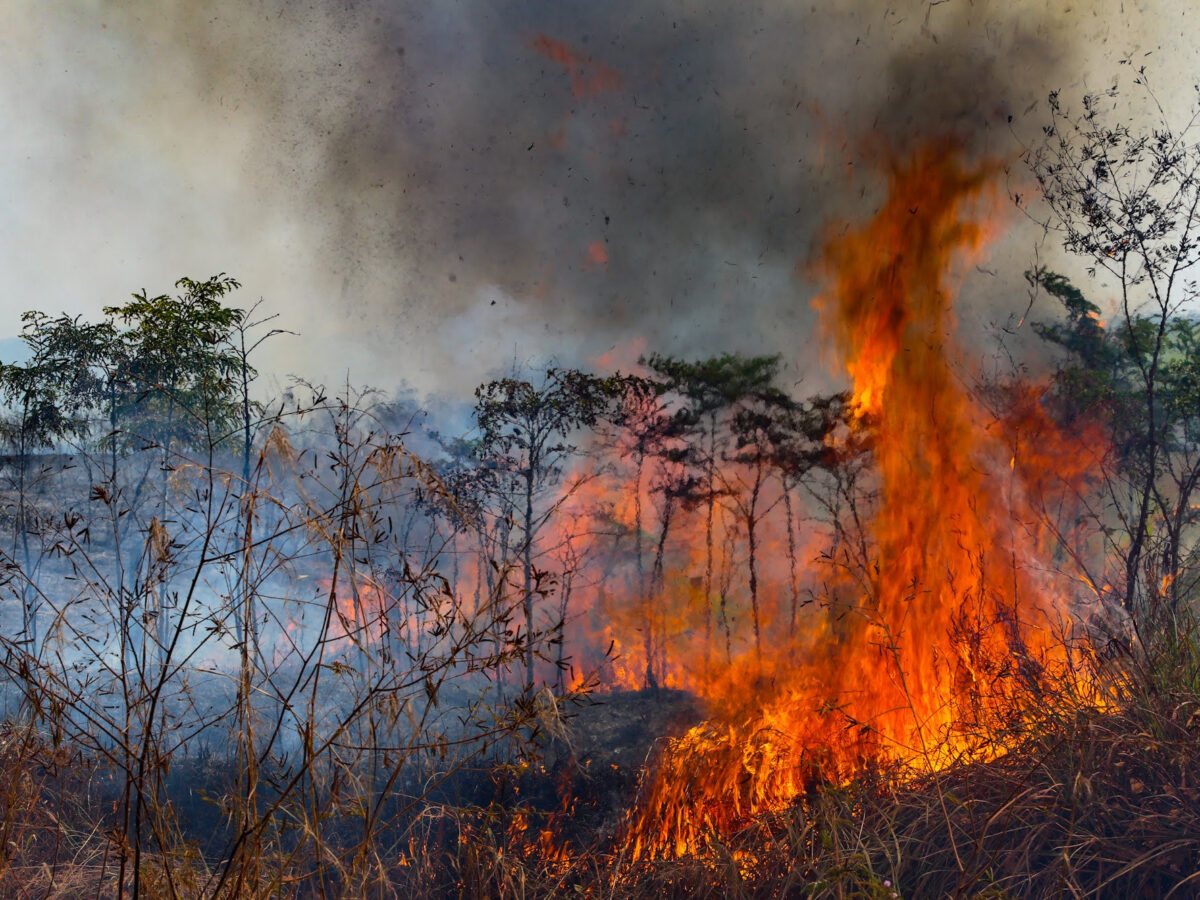
In Brazil’s Lower Tapajós region, thick smoke hangs over communities as fires spread through forests that Indigenous Peoples have protected for generations. Local fire brigades battle flames above and below ground, often without sufficient equipment or resources. The fires threaten homes, wildlife, water sources, sacred sites, and the forests that sustain entire communities.
Volunteer firefighters are exhausted from doing work that should be the state and federal government’s responsibility. Some have suffered burns while facing the flames barefoot. They are not paid for this dangerous and arduous work. While local fundraisers can help cover logistics and protective gear, they don’t make up for the income volunteers lose when they have to take time off work, nor do they cover the health and emotional impacts of frontline response. These are people with families to support, forced to put their livelihoods on hold to respond to fires they didn’t start.
The Lower Tapajós region is only part of a much wider fire emergency. Across Pará state, more than 3,500 fire hotspots were detected in the first ten days of November, three times the number recorded during the same period in 2025, while other Amazonian states suffer huge fire outbreaks.
A crisis fueled by human activity
Earlier this year, Amazon Watch warned that El Niño could bring another devastating period of drought and fires. The El Niño phenomenon disrupts rainfall patterns, drying out forests and making fires more likely to spread.
These fires are not simply natural disasters. Indigenous leaders in the Lower Tapajós report that people are deliberately setting fires to clear forest for land grabbing and speculation, and eventually for cattle ranching, industrial agriculture, and other destructive activities. Climate change and El Niño make fires more dangerous, allowing flames to spread into forests that would otherwise resist burning.
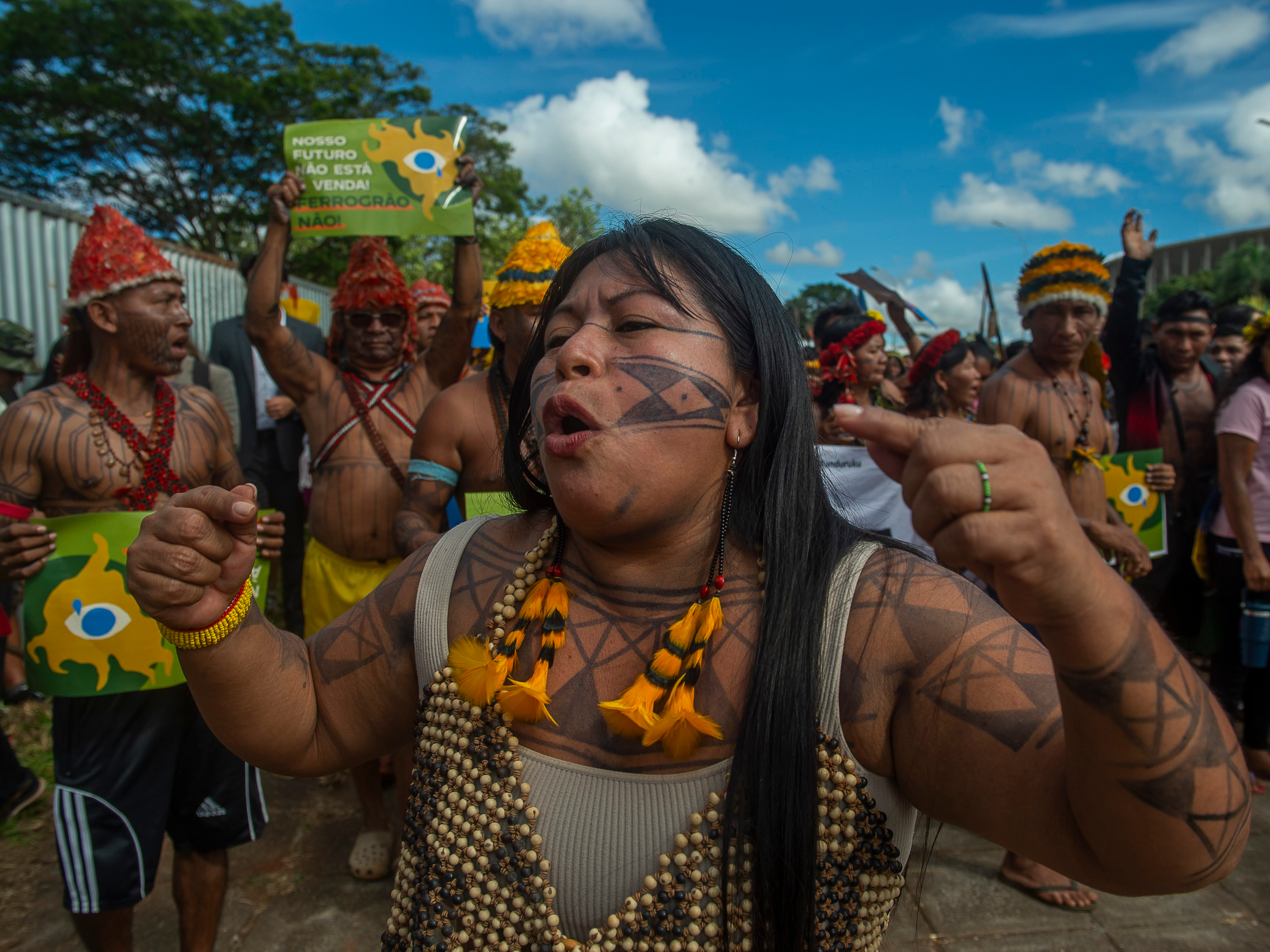
Indigenous leader and Goldman Prize winner Alessandra Korap Munduruku describes this dynamic:
“El Niño dries out the forest and makes fires spread faster. But drought doesn’t set the forest on fire to clear pasture, plant soy, or sell plots of land. We need to investigate who’s doing that and who profits from the burned land. Agribusiness clears the forest for crops and cattle, making the climate crisis worse. When they talk about railways, waterways, and ports, they calculate how much grain they can ship out of here. We have a different question. What will be left of this river for our children if the forest keeps turning to ash and pesticides from the fields keep ending up in our streams?”
Tainan Kamaruara, a leader of the Kamaruara Guardians fire brigade operating on the Tapajós-Arapiuns Extractive Reserve (RESEX), described to Amazon Watch how criminal arsonists are shifting tactics to avoid detection, moving large burning logs to set fires in standing forests. The scale and sophistication of these operations, and the absence of local and state authorities, are creating a perfect storm for the devastation of vast forests.
In 2024, fires burned across more than 17 million hectares of Amazon rainforest, devastating ecosystems and isolating communities as rivers dried up. Scientists warn that the current El Niño could bring even more severe conditions in 2027, threatening to push the Amazon past its tipping point. The crisis demonstrates how deforestation, industrial expansion, and the failure to recognize Indigenous territories leave forests increasingly vulnerable.
Indigenous communities are on the front lines
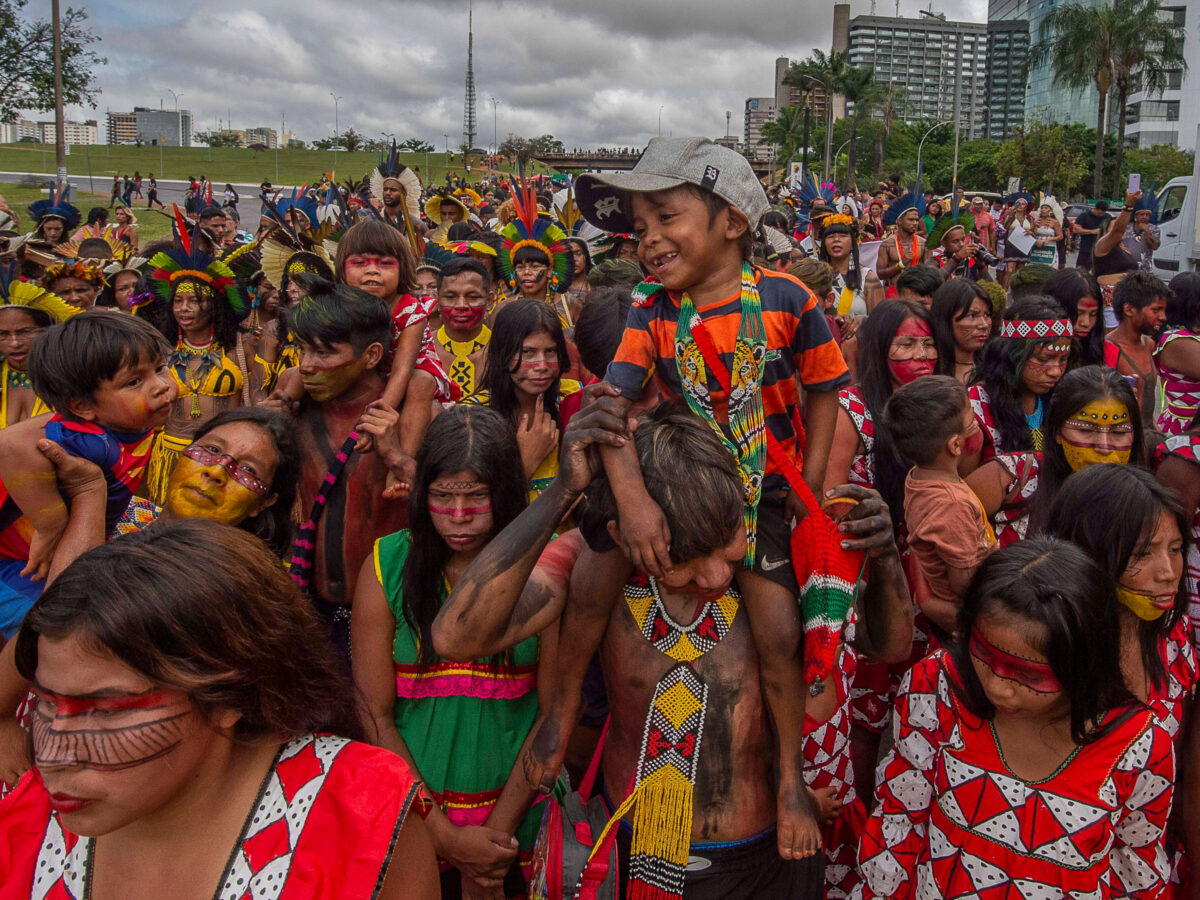
As fires spread, Indigenous communities are also resisting industrial projects that threaten their territories. On November 14 and 15, more than 600 Indigenous people halted oil and soy barges on the Tapajós River as part of a mobilization known as the Ancestral Cry. As smoke from nearby fires filled the air, they demanded land demarcation and protection from industrial expansion.
Gilson Tupinambá, chief of the Tupinambá people, described the connection between the fires and the struggle for territorial rights:
“We want our lands demarcated and protected, and we don’t want fire to clear the way for more soy where we live.”
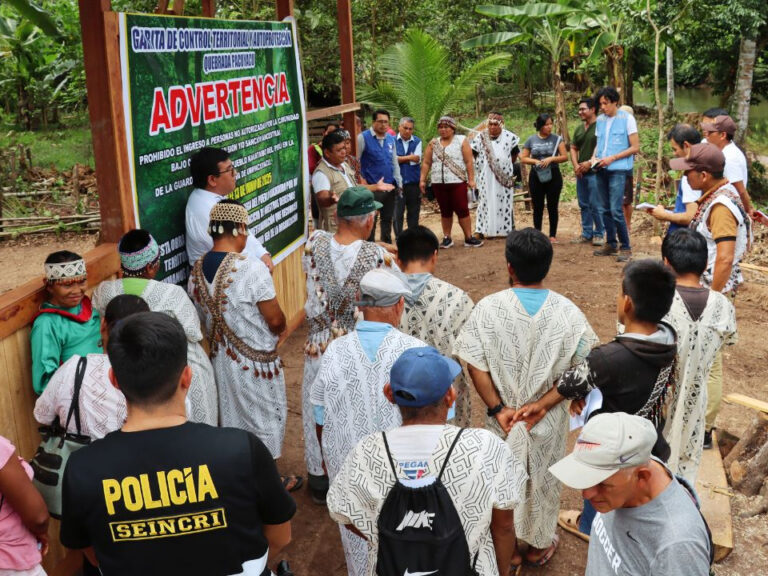
Across the region, Indigenous Peoples and local volunteers lead the response to the fires themselves. Community brigades contain the flames, protect homes, and prevent further destruction, frequently without adequate equipment, transportation, or funding. The story of these fires cannot be separated from the actions on the river. Communities cannot wait until the fires are again extinguished to confront a wave of destructive agribusiness-oriented infrastructure that continues to drive destruction of forests and waterways. They’re being asked to defend the long-term future of the very places they are struggling to protect from burning today.
Their efforts are essential, but the scale of the crisis is overwhelming their capacity to respond. Indigenous territories have some of the lowest rates of deforestation and fire in the Amazon, demonstrating why securing land rights and supporting Indigenous territorial governance are among the most effective ways to protect the rainforest.
Amazon Watch is working with Indigenous brigades, such as the Kamaruara Guardians, not only to respond to what has now become an annual crisis but also to prepare for the flames. Through funding from the Center for Disaster Philanthropy, the Guardians were able to purchase key equipment and conduct trainings with volunteers – critical preparation that preserved the RESEX while its surroundings burned.
Responding to the fires and preventing the next crisis
The destruction extends far beyond the communities facing the flames. The Amazon regulates rainfall, stores huge amounts of carbon, and sustains extraordinary biodiversity. Every major fire season further weakens the rainforest’s resilience and accelerates the global climate crisis.
Donations can get equipment to brigades now. But preventing future emergencies requires government action. Brazil’s government must investigate deliberate burning, fund community-led fire prevention, and formally recognize Indigenous lands. The countries and industries that have contributed most to global warming must cut emissions and phase out fossil fuels. A just transition from fossil fuels means letting Indigenous Peoples and other traditional communities help shape those decisions, rather than asking them to bear the costs of inaction.
Preventing future disasters requires stopping illegal deforestation, strengthening environmental enforcement, securing Indigenous land rights, and investing in community-based fire prevention.
Through our Amazon Fire Response Fund, Amazon Watch supports Indigenous-led firefighting efforts, emergency assistance, equipment, and long-term strategies to protect threatened forests.
Indigenous communities are showing how to confront the fire crisis, but they cannot do it alone.