
The Achuar of the Pastaza and Morona

"Leave us in peace. We want to live free, breathe pure air. The Creator made this land here so we could live peacefully."Pitiur Unti Saant, Achuar elder and leader

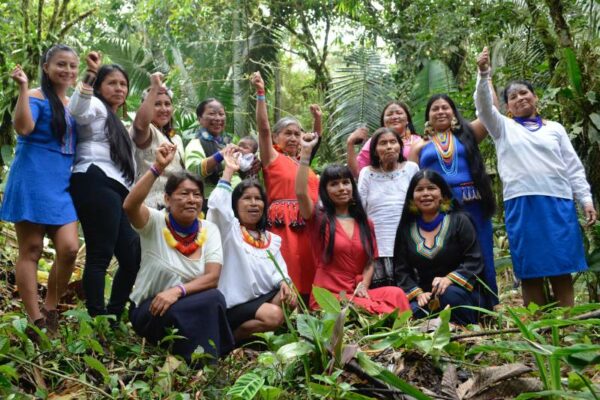
The Achuar indigenous people live in the remote headwaters of the Amazon rainforest on the Pastaza, Morona and Corrientes Rivers, on both sides of the Peru-Ecuador border. On the Corrientes river in Peru, the Achuar have suffered devastating environmental and health impacts from 35 years of oil drilling in Block 1-AB.

The Achuar of the Pastaza and Morona, however, continue to live in a rainforest free from contamination and abundant in fish and wildlife.  The Achuar hold deep historical, cultural and spiritual ties to this land.  Since 1996, they have also been fighting a planned oil project for the area. Talisman Energy, from Canada, holds a license to Blocks 64 and 101 in Achuar territory. The company has  already cut seismic testing lines and drilled exploratory wells in a remote watershed which the Achuar rely upon for hunting and fishing, and the communities report environmental damages occurring.

Amazon Watch works with the Achuar to defend their Amazonian homeland against further destruction.  Urgent action is needed to support the Achuar both to protect their land from new oil projects and to demand a full cleanup of the Corrientes River region devastated by Block 1-AB.

The Achuar People

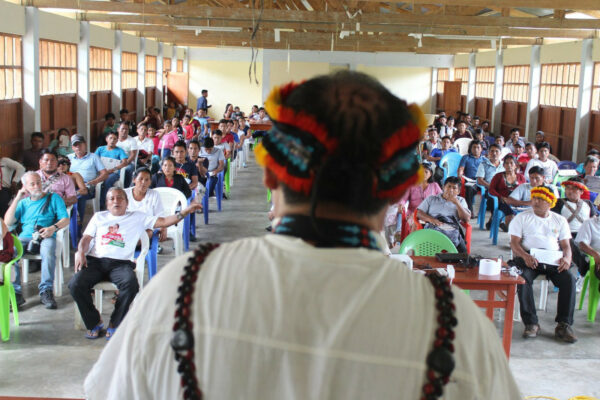
The Achuar live in the Pastaza, Corrientes, and Morona River basins on both sides of the Peru-Ecuador border, and are members of the Jivaro linguistic family. Their total population is estimated to be from 5,000 to 16,000 people in Ecuador and 11,000 in Peru.  The communities are situated on riverbanks and in interfluvial areas, connected by a network of paths. The Peruvian Achuar living in the Pastaza have two main representative federations, ATI and ORACH, united within the national Achuar federation FENAP. These federations carry out internal projects and provide political representation for the communities at the local and national levels.

The Achuar's surroundings give them everything they need to survive. The rivers and forests provide the Achuar with water for drinking and bathing, and fish, animals, wild fruits, insects, and mushrooms to eat. It also provides all the materials they require to build their large oval houses and make the canoes, baskets, stools, ceramic bowls, bags, feather crowns, musical instruments and other items they need and use on a daily basis. They also have large gardens where they grow many different agricultural crops including plants for eating, making drinks, painting and adorning their bodies, making household utensils, medicines, poisons and some with special properties used in the Achuar sacred spiritual practices. Among all the species the Achuar grow, they believe that wayus, manioc and tobacco are the most crucial to nurturing the Achuar mind, body and spirit.

The Achuar Territory

An Achuar map of their territoryThe Achuar have occupied the Pastaza River basin for many generations, and all the elements in their landscape such as old gardens, rivers and streams, waterfalls and footpaths serve to remind them of their ancestors and how they transformed the forest. There are many stories about things that happened in different places such as wars, witchcraft accusations, meetings with forest spirits, large parties and ritual ceremonies. River names in particular are testimony to the recording of history and memory in the landscape.

The land and its resources are completely integrated into the social, economic and emotional worlds of the Achuar, and are fundamental to their physical and spiritual wellbeing. Their territory is the source of their identity and provides the link between the past and the present necessary to form future generations. Without their territory, the Achuar could not continue as a cohesive people, as they would not simply be missing food and shelter, but all the resources – both material and immaterial – which create Achuar minds, bodies and spirits, and sustain their social and cultural activities and memory.

The Peruvian State has recognized the Achuar's occupation of their land with Native Community titles. However, these titles only cover a third of the ancestral lands they use daily for hunting, collecting forest products, during visits to other communities and on their traditional spiritual quests.

Oil Drilling

"We demand that the Peruvian government immediately annuls the contracts for blocks 64 and 101 and that Talisman immediately withdraws from our territory." Achuar public statement, March 28th 2010

Map of oil concessions on Achuar landThe Achuar territory is entirely overlapped by oil blocks 64 and 101, currently held by Talisman Energy of Calgary, Canada. These two blocks cover roughly 4 million acres (1.7 million hectares) of pristine tropical rainforest.

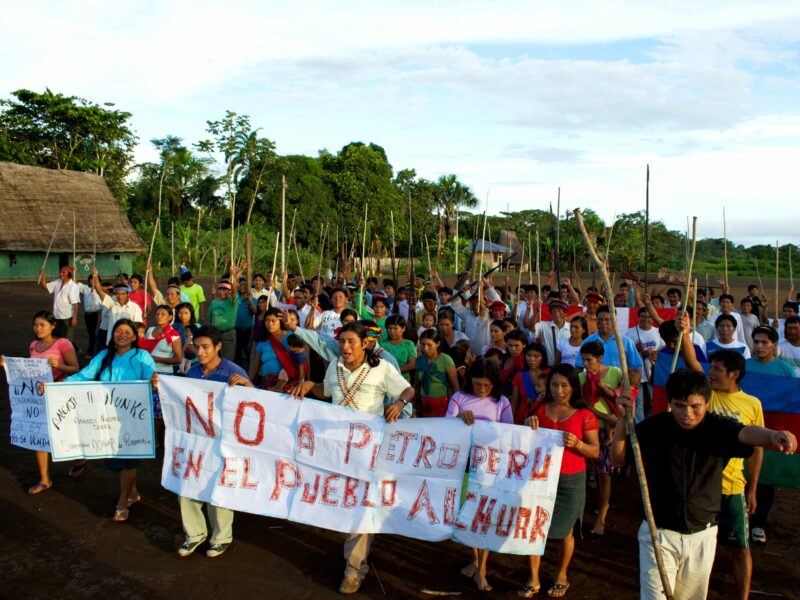
The Achuar have made clear through their representative federations that they oppose these oil blocks and any company beginning oil activities on their land. Despite this, Talisman has gone ahead with seismic testing and exploratory drilling, saying it has the agreement of a handful of communities that it claims are the only people directly affected by their operations. The Achuar point out that the wildcat wells are in a remote watershed between the Pastaza and Morona river basins that all the Achuar people rely on for fishing and hunting, and activities must not continue without the consent of all the Achuar people.

The Achuar of the Pastaza's resistance to oil development comes from their desire to protect the environment on which their livelihood and cultures depend. They are determined not to allow a repetition of the tragedy that has befallen the land of their relatives, the Achuar of the Corrientes River, where the rivers and forests have been polluted and the local ecosystem devastated by almost 40 years of oil operations. Given that their existence depends entirely upon the water, flora and fauna, any damage to these will inevitably have serious implications on their own wellbeing.

They are particularly worried about the health of their children. Clinical tests carried out by the Peruvian Ministry of Health have shown that most of the children living in the oil-affected areas of Corrientes have dangerously high concentrations of lead and cadmium in their blood.

Support the Achuar

"We have seen with our own eyes how the company has worked here the last ten years. Now the rivers are polluted, the land polluted, the air polluted, the forest too." Pitiur Unti Saant, Achuar leader and elder from Unkum,

The Achuar have made a decision that they do not want development based on oil drilling and the unsustainable extraction of natural resources. They want the Peruvian government to recognize their rights to their land, territory and resources, and they want Talisman Energy and other oil companies to respect their decision to live without oil contamination and pursue their own model of development in harmony with the natural environment.

In May 2010, three Achuar leaders traveled over 12 days by foot, boat, bus and plane from their Achuar home to the United States and Calgary to confront Talisman's CEO and Board of Directors at their Annual General Shareholder meeting. At the meeting, they demanded that the company immediately cease operations and withdraw from their Amazonian homeland.

Talisman Energy's exploratory drilling poses an immediate threat to the Achuar's rainforest homeland and has already caused contamination that has severely harmed hunting and fishing grounds. The Achuar urge you to take action to support their struggle to keep their rainforest homeland free from oil drilling.

Share & Comment:

Related Multimedia

Current Highlights