
Altamira, Brazil – Brazil’s Federal Public Ministry (MPF) stunned Canadian Belo Sun Mining Corporation last week when it issued recommendations warning against the issuing of environmental licenses for a gold mine in the Brazilian Amazon. The MPF cited serious irregularities including inadequate socio-environmental impact studies and the lack of consultation with indigenous communities in the region. The move raised concerns among the company’s investors, prompting stock to drop 7.5% immediately following reports on growing scrutiny from Brazil’s federal authorities.
The MPF’s petition to the environmental agency of Pará State (SEMA) is the latest blow against Belo Sun’s gold mining ambitions in the Amazon. Controversy over the proposed mine has cost the $366 million company nearly 19% of its value in the Toronto stock exchange over the last month, casting doubt over its ability to maintain a project timetable that would break ground in late 2013.
“We applaud the MPF for taking vigorous steps to uphold Brazilian environmental and human rights legislation, putting the brakes on a project that would heap further tragedy on the communities already faced with the disastrous Belo Monte dam,” said Christian Poirier of the environmental and human rights organization Amazon Watch. “Another welcoming sign is that Belo Sun’s investors have responded accordingly, pulling their money from this toxic mine.”
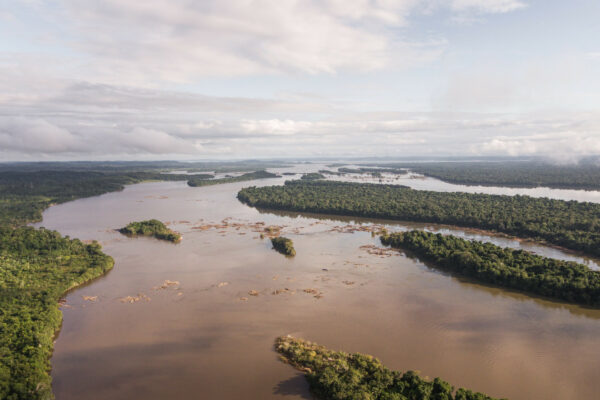
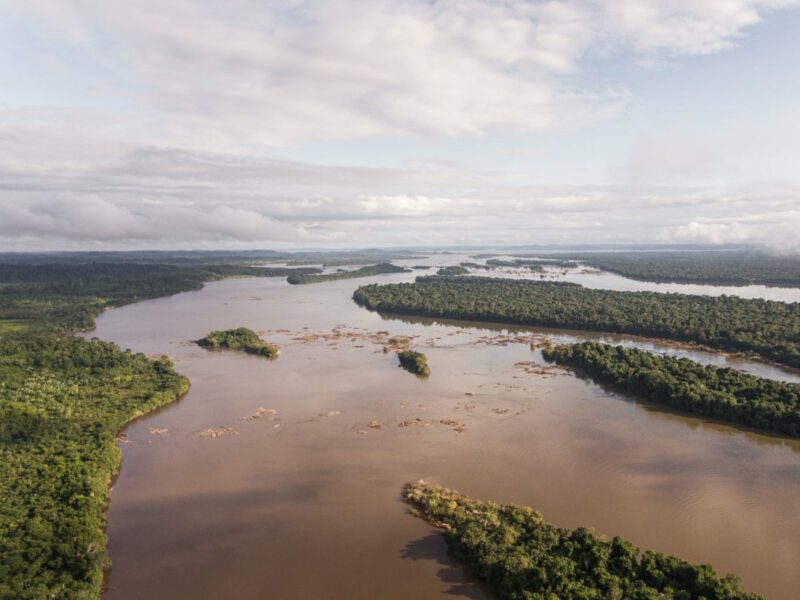
Belo Sun’s $1 billion “Volta Grande Project” would be the largest gold mine in Brazil and sit directly adjacent to the controversial Belo Monte dam complex on the Xingu River, threatening major environmental and social impacts in a region already seriously affected by the construction of the world’s third largest dam.
The construction of the Belo Monte dam aims to divert 80% of the Xingu River’s flow into an artificial canal, leaving its “Big Bend” with less water than in its history. Directly downstream of the dam, Belo Sun seeks to install the gold project in the Xingu’s dried riverbed a mere nine kilometers from an indigenous territory, causing further damage to the rivers, forests, and communities of an environmentally exhausted region.
“Mining companies are among the largest shareholders and consumers of hydropower in the Amazon, consuming nearly 20% of all industrial electricity produced in Brazil,” said Zachary Hurwitz, Policy Coordinator at International Rivers, an environmental organization tracking Brazil’s dam expansion in the Amazon. “It’s a double hit to an already weakened ecosystem.”
The MPF recommendations state that no license should be conceded without first conducting rigorous environmental impact studies and constitutionally mandated consultations with indigenous people living in the region who are threatened with cumulative impacts from both mega-projects. Belo Sun’s mine is almost entirely located within the Belo Monte dam’s area of direct impact with a concession spanning over 1,305 km2 and containing an estimated 4.1 million ounces of gold, for which 37.8 metric tons of earth and rock will need to be excavated over 11 years.
According to the MPF, any evaluation of the mine’s viability must “be assessed based on whether the fragility imposed by the Belo Monte dam to the Big Bend of the Xingu permits the presence of another large project in the region, especially one that provokes people’s displacement, the intensive use of polluting substances, and recognized environmental impacts.”
The MPF’s recommendations mirrored those of Brazil’s Socio-Environmental Institute (ISA), which sent SEMA a technical opinion in late January calling for a “declaration of infeasibility” of the Belo Sun mine.
“The population of the Xingu’s Big Bend is already living with uncertainties caused by the reduced flow of the river, resulting from the construction of Belo Monte. They should not have to live with the installation of a large mine and with the imminent risk of accidents that further pollute an already weakened environment,” said Biviany Rojas, an attorney at ISA. “What type of extreme situation is the Brazilian State willing to impose upon the indigenous and riverine people of the Xingu in exchange for energy and gold for private companies?”
At public hearings organized by Belo Sun, the company repeatedly argued that its gold mining “will not interfere with the reduced flow of the Xingu,” and that they “have no influence over this.” Critics have argued that SEMA cannot accept these claims, demanding instead that detailed studies be conducted to measure the accumulated impacts of both the mega-dam and planned mine.
Carrying out such studies would require obtaining constitutionally mandated free, prior, and informed consent from indigenous peoples, which would further delay the project’s calendar and could cause investors to punish the company and undermine its chances of beginning operations this year.