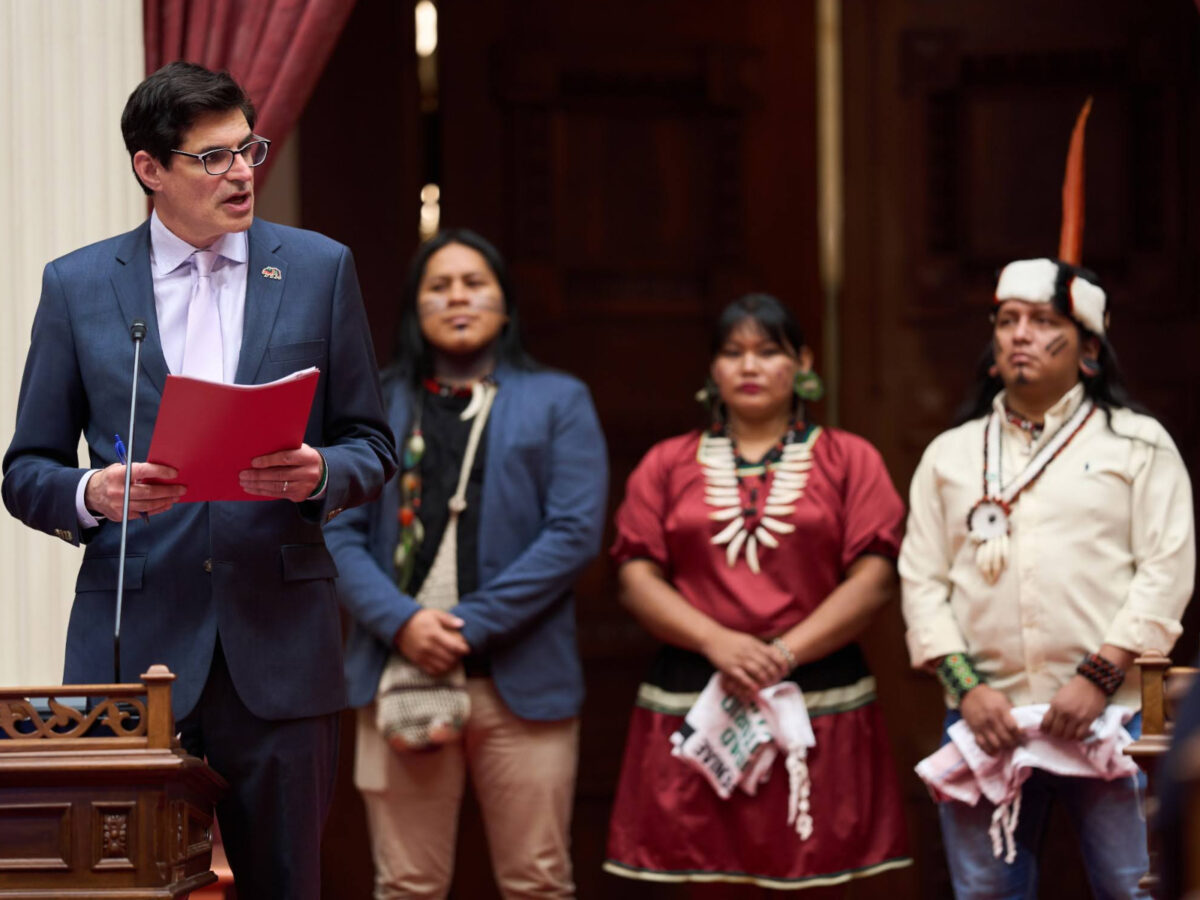
Read the joint statement from California State Senators here.
Antalya, Turkey – California State Senators Ben Allen, Josh Becker, and Henry Stern called on Ecuador to cancel its planned December oil auction and urged companies and financial institutions not to participate in or finance the proposed expansion into Indigenous territories in the Amazon. Their statement, issued during COP31 in Antalya, Turkey, warned that California’s oil consumption must not drive new destruction of the rainforest.
Amazon Watch welcomed the joint statement as a significant signal from elected officials in a major market for Amazon crude. The senators linked the climate emergencies facing California communities to the destruction of forests essential to climate stability and recognized the state’s responsibility to address the impacts of its remaining oil imports.
“Companies and investors should understand that California’s transition means declining demand for oil, not a growing market for crude from new onshore Amazon projects,” the senators said in their joint statement.
The proposed “Optimization and Exploration Round,” scheduled to launch in December, combines some 1.4 million hectares of new exploration in 14 oil blocks in the remote southeastern Amazon along the border with Peru, investment to increase production from 11 Petroecuador-held fields in the north, development of the Pungarayacu extra-heavy crude deposit in Block 20 in the central Amazon, and 11 offshore oil blocks.
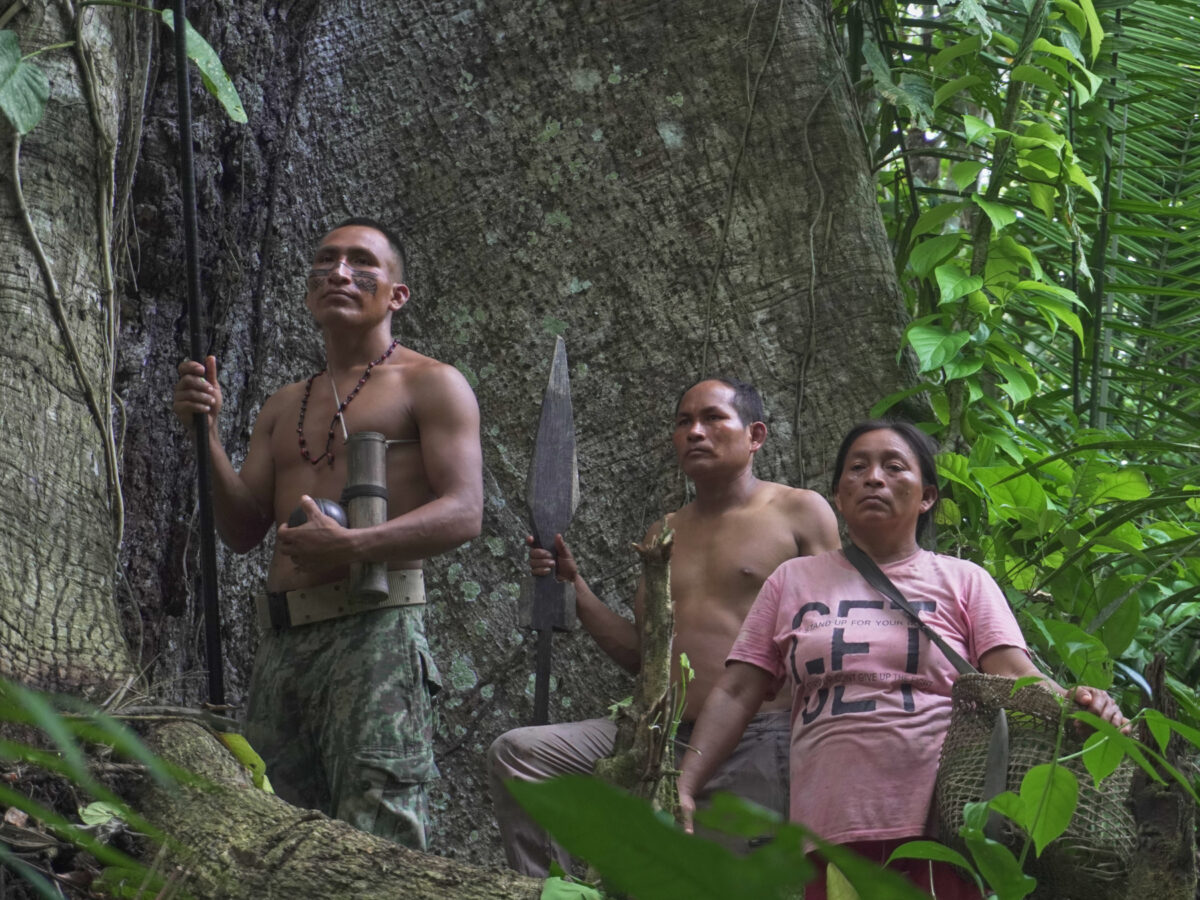
On October 1, the seven affected Indigenous nationalities by the southern Amazonian blocks – Achuar, Andwa, Kichwa, Sapara, Shiwiar, Shuar, and Waorani – issued a joint declaration rejecting the bidding plans and warning companies and investors of legal challenges and financial risks.
“The blocks being offered are our legally recognized ancestral territories. For more than four decades, we have rejected every attempt to put them up for bid. We have not given our consent,” the seven nationalities stated in their declaration.
The senators echoed those concerns, citing sustained Indigenous opposition, high infrastructure costs, potential delays, and uncertain returns. They called on Ecuador to respect Indigenous Peoples’ decisions about their territories.
Ecuador also continues to produce illegal crude from Yasuní’s Block 43 in defiance of the binding 2023 referendum and its own Constitutional Court’s order to end extraction and decommission operations, violating voters’ mandate and posing an existential threat to the Tagaeri and Taromenane Indigenous Peoples living in voluntary isolation.
“California’s role as a major importer of Amazon crude makes this a warning investors cannot ignore. The Indigenous nations have rejected oil extraction in their territories for decades, and California is reducing its dependence on petroleum. Companies betting on a new Amazon oil frontier face both sustained resistance and a shrinking market,” said Kevin Koenig, Climate, Energy, and Extractive Industry Director at Amazon Watch.
The 2021 Linked Fates report by Amazon Watch and Stand.earth found that California received approximately half of all crude oil exported from the Amazon. That market connection gives the state an opportunity to discourage new investment in extraction as it reduces petroleum demand and expands electrification. Ecuador is the largest producer of onshore Amazon crude, and in 2025, approximately 35 million barrels of rainforest oil arrived to California ports and refineries.
The senators also called for follow-through on Senate Resolution 51, introduced by Senator Josh Becker and adopted unanimously in 2025. The resolution commits the Senate to investigating California’s consumption of Amazon crude and exploring changes to state policies and practices that could help protect the rainforest.
Their statement recognizes that California must plan for reliable fuel supplies during the transition while protecting consumers from price spikes and supply disruptions. It calls for remaining imports to align with declining demand and avoid encouraging decades of new Amazon production.
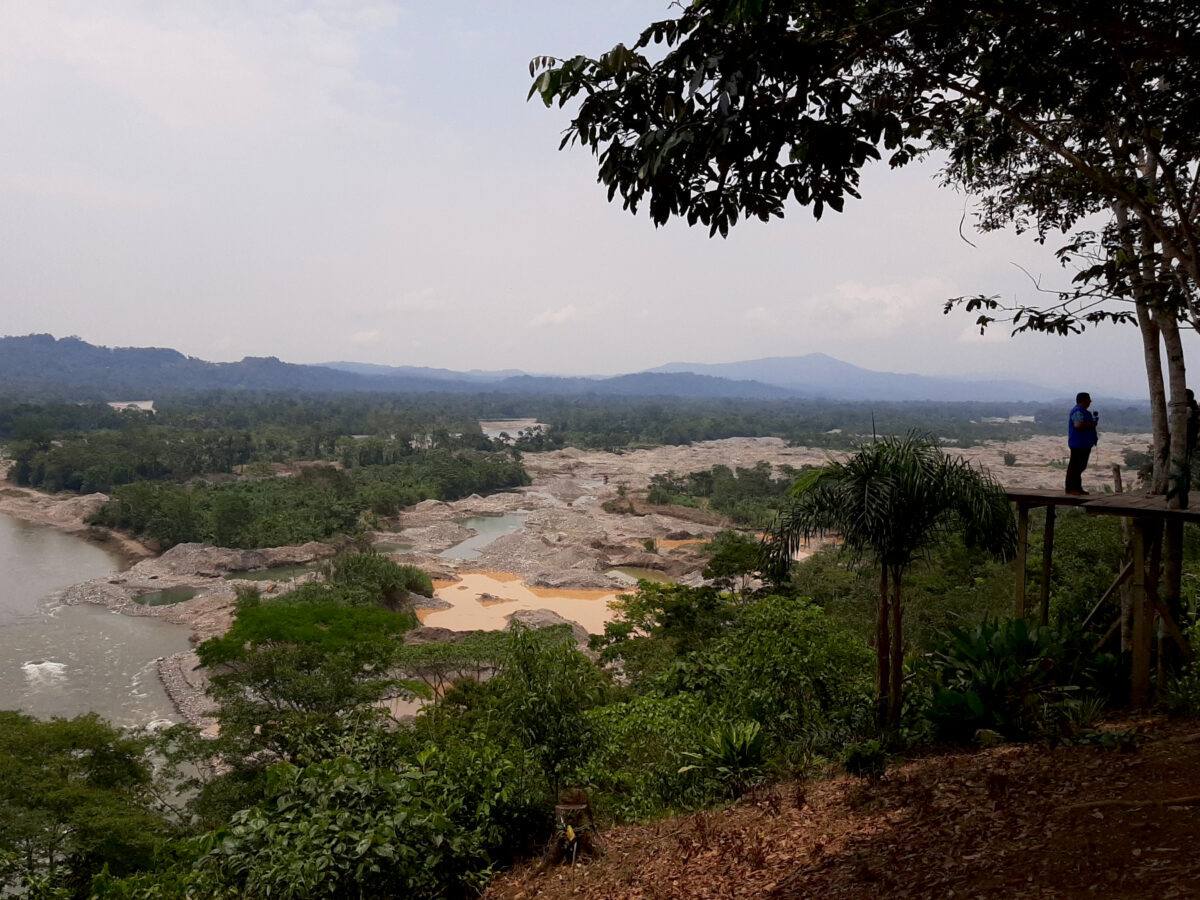
Oil expansion drives deforestation in the western Amazon, clearing forests and opening remote territories through roads and related infrastructure, pushing the rainforest closer to an ecological tipping point. Contamination of rivers, soils, and air threatens Indigenous Peoples’ health, food sources, and livelihoods, while emissions from extraction and combustion accelerate climate change. Indigenous Peoples whose territories overlap the proposed blocks have repeatedly rejected these proposed projects for decades, preventing exploratory drilling in the proposed southeastern blocks.
Amazon Watch urges companies and financial institutions to heed the Indigenous declaration and the senators’ warning: sustained opposition, legal challenges, high development costs, and declining demand in a major export market could leave projects stalled, capital stranded, and infrastructure obsolete before investors recover their capital. Participating in Ecuador’s proposed auction means betting against Indigenous resistance and the energy transition.
The senators’ call underscores the need for governments at COP31 to incorporate Brazil’s roadmap for transitioning away from fossil fuels and the outcomes of April’s Santa Marta conference into the U.N. climate process. Convened by Colombia and the Netherlands, the first international conference on transitioning away from fossil fuels (TAFF) advanced cooperation among 60 nations on overcoming economic dependence, financing the transition, and reducing fossil fuel supply and demand. The process will continue with a second conference in Tuvalu in 2027, co-hosted by Tuvalu and Ireland.