Few places concentrate today’s security challenges in the Amazon as clearly as the triple border between Colombia, Ecuador and Peru. The geopolitical scenario is particular: right-wing governments aligned with trends of militarization, extractivism and heavy-handed rule, and with closer ties to the United States around the so-called “war on narco-terrorism.”
We are facing a scenario where extractive activities and illicit economies present in the region (around gold, critical minerals, cocaine, oil – all highly profitable due to global markets) converge with highly adaptive armed actors and with states that are weak, absent, corrupt, or violent against their own populations. The recipe is dangerous.
Abelardo de la Espriella, who will become president of Colombia on August 7, speaks of “90 days” for armed groups to surrender and of ending any peace process in Colombia. Keiko Fujimori, Peru’s president, promises the construction of mega-prisons and Peru’s withdrawal from the Inter-American Court of Human Rights to “restore order.” And Daniel Noboa of Ecuador has already declared his “total war.” All three – who know little about the Amazon – have Washington’s backing, which has rebranded the problem as a fight against “foreign terrorist organizations” and launched the Shield of the Americas to “regain control of its hemisphere” and its natural resources, according to its own national security strategy.
Militarization and criminalization are not effective responses to a structural problem: states should indeed enforce the law and take cross-border security seriously, but the question is how. The recent report by Amazon Underworld on this triple border, published in July, warns precisely about the risks of returning to old formulas that have already failed, and proposes a different peace and security strategy – one that puts communities at the center and aims to dismantle the systems that enable crime.
War rhetoric and spectacle actions contribute little to this and put the lives and rights of local populations at risk, as has been evident in recent months. On March 3, Ecuadorian forces set fire to what was presented as a “narco-terrorist” camp in Sucumbíos and, three days later, bombed it with support from the U.S. Southern Command. According to later reports, it was actually a cattle ranch: no weapons were found, and there were allegations of torture. In June, three Shuar community members died in an anti-mining operation, also in Sucumbíos, with conflicting accounts from the community and the Army. In addition, for months now the Colombia-Ecuador Amazonian border has remained closed, affecting the Indigenous peoples and local communities living on both sides of a line they did not draw, while posing little obstacle to organized crime.
The armed actors at the border are not invading armies. They are embedded in the local economy and daily life of thousands of families, as well as in the political and institutional life of the biome. Amazonian populations live under threats, extortion, recruitment and confinement, but they are also affected by repression and state abandonment, while the expansion of illegal gold mining contaminates their rivers and harms their health. No strategy that ignores this can be called a security strategy. States will not reverse the situation with soldiers and bombings, but by building trust and working with local communities.
The peace process with the Border Commands (CDF) in Colombia proves there is another possible path, but it also has its limits. Homicides in Putumayo fell from 183 in 2024 to 41 in 2025; nearly 13,000 families signed crop substitution agreements for illicit-use crops, and in June of this year, 99 members of the group entered a Temporary Location Zone, the most concrete step toward their demobilization. But the contradictions are just as real: the group denies operating outside Colombia while expanding its control in Ecuador and Peru; it stopped buying coca paste locally only to shift cultivation to the Peruvian side and pivot its business toward gold; and it continues exercising territorial and social control over communities. Colombia’s Ombudsman’s Office warned that the process is moving forward without sufficient guarantees or independent oversight. Even so, breaking it by decree, as President De la Espriella has announced, would not bring an end to violence, but rather its escalation or displacement, leaving communities – and those who have already demobilized – unprotected.
Peru faces a particular risk in this scenario: it combines the weakest border institutional framework in the region with a legal framework that restricts the state’s capacity against organized crime, due to successive legislative initiatives in recent years. As repressive strategies advance in neighboring countries, the Peruvian Amazon could become a refuge and platform for expansion of the illicit economies that sustain the region’s armed actors.
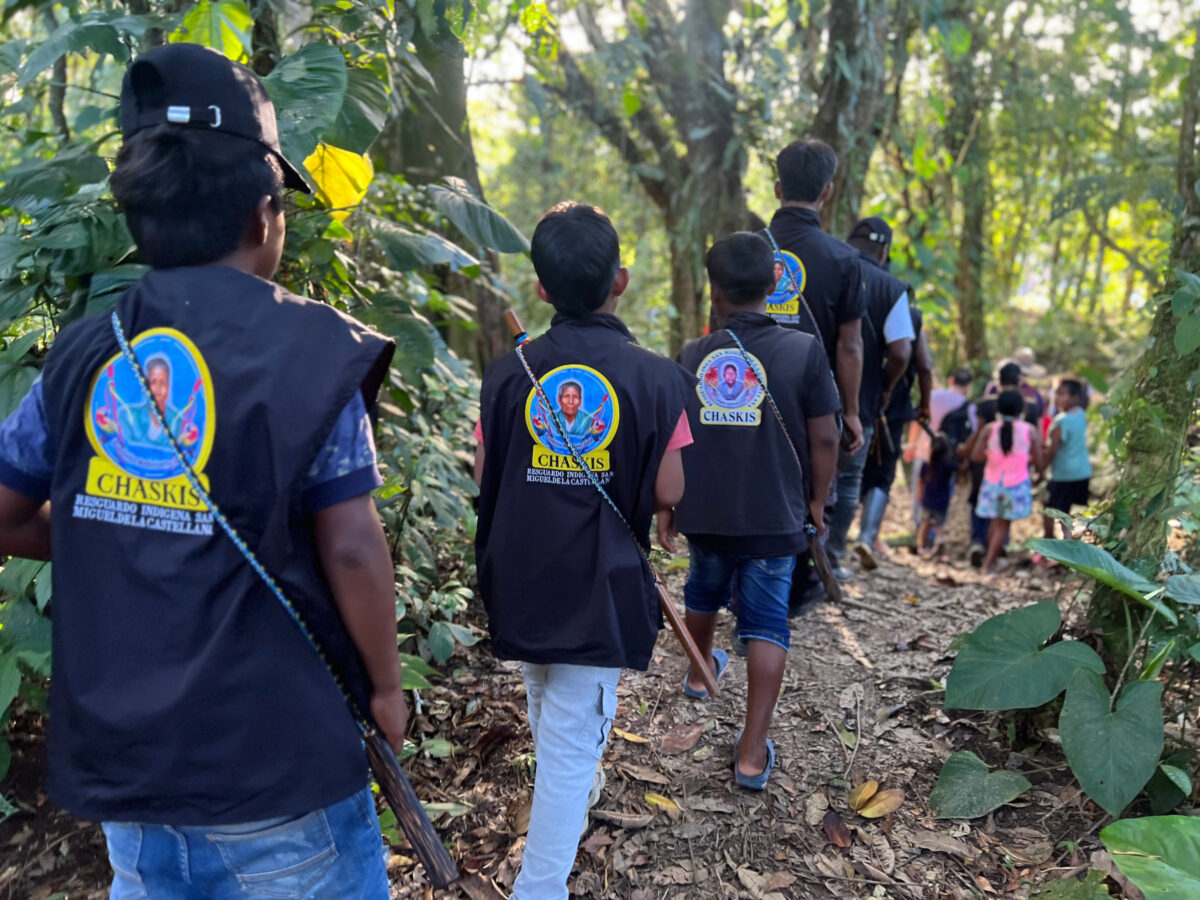
Faced with the question of what a government that truly wanted security in the triple border would do, the answer comes in five parts. First, it would go after the money from illicit activities: the routes for mercury, fuel, machinery and money laundering. Second, it would sustain the process with the CDF, under firm conditions, rather than declaring it dead. Third, it would recognize and fund Indigenous territorial monitoring networks and local economic alternatives, the first line of early warning and protection for the Amazon. Fourth, it would combat corruption and strengthen a state presence that serves the local population. Finally, it would strengthen the regional Amazonian cooperation that has advanced in recent years and would condition all foreign military cooperation on respect for humanitarian law and independent oversight.
The Amazonian triple border faces a crucial political decision. It can once again become the laboratory for a new “war on crime” that leads illicit economies to adapt and relocate without resolving the issue at its root, while local populations bear the cost. Or it can drive a security architecture based on regional cooperation, where communities are a central part of the strategy rather than a target in the crosshairs. The window to choose that path is closing fast, and the signs are not encouraging.
Raphael Hoetmer is director of Amazon Watch’s Western Amazon Program, and Jeanneth Valdivieso is editorial coordinator of Amazon Underworld.