

Eye on the Amazon: The Official Blog of Amazon Watch
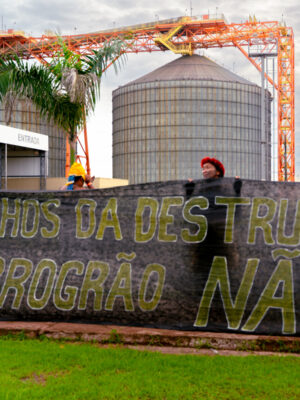
Dilma's Dilemma: Urge Brazil to Veto Forest Code
May 16, 2012

Take Action Now!
Brazilian President Dilma can save the Amazon from destruction. Tell her to veto the new Forest Code!
Following years of intense pressure from the agribusiness sector, Brazil's parliament has approved destructive reforms to the country's forest protection. President Dilma has just 9 remaining days to veto this hatchet job before it becomes law. With the world watching, which side of history will she choose to be on? Will her legacy be Amazon ruin? Or, will she demonstrate courage and act on behalf of future generations?
This article appeared in the New York Times today.
YOU can urge President Dilma to do the right thing for Brazil, the Amazon and the planet. Take action now by signing this petition, tell her to veto the new Forest Code!
Jungle Justice: Ecuador Recognizes Rights Violations in Sarayaku Case
An unprecedented site visit by the IAHCR sheds light on testimony of abuses and a surprising admission from the state
May 15, 2012 | Kevin Koenig
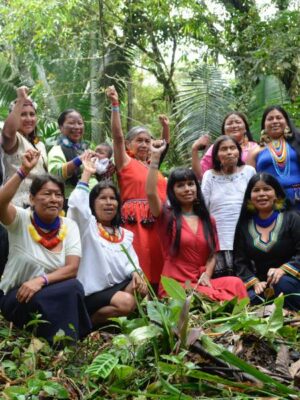
Sarayaku in Ecuador is one of the more unique places in the Amazon. The community has beaten back oil drilling plans on their lands for over a decade. They have better internet in their roadless, remote rainforest community than in the capital city of Quito. Their leaders have risen to national prominence; an award-nominated young filmmaker from the community just completed his 4th documentary. Solar panels are powering a good share the region's energy needs, and their plan de vida for future development and land management is visionary – and does not include oil extraction. Or any resource extraction for that matter.
Sarayaku is the name of both the community and a people – a subgroup of Amazonian Kichwa that number roughly 2,000. The name means "pueblo del medio dia" or People of Midday – for the time when the sun is at its zenith directly above their lands. They have come to symbolize the indigenous resistance against oil, logging, and mining in the indigenous rainforest lands of Ecuador’s southeastern Amazon that stretches to the Peruvian border. And Sarayaku is leading the charge in a little known lawsuit against the Ecuadorian government that has wide sweeping implications for indigenous rights over resources in the Americas.
So it was par for the course that Sarayaku was able to turn a late April ploy by the government to delay a verdict in their nine year legal case against the state into a jujutsu move in the community's favor. Sarayaku originally filed the case in 2004 before the Inter-American Human Commission for Human Rights (IAHCR) against the Ecuadorian government over rights abuses suffered when an Argentine oil company began conducting seismic testing in search of oil reserves with the aid of Ecuador's military. The entrance of the oil company into Sarayaku lands occurred without the consultation or consent of the community. Their territory was militarized, and community members were threatened, intimidated, and several detained and abused by the military at a company facility.
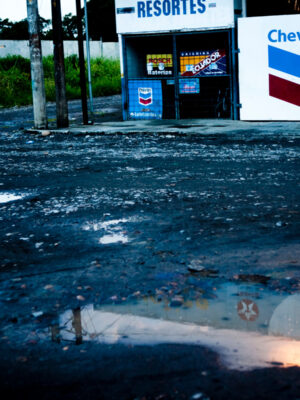
Epic Greenwashing From Chevron
May 10, 2012 | Robert Collier
Apparently believing that no outright whopper can't be repeated again and again, Chevron has issued a report bragging about the company's "commitment to respecting global human rights." The 2011 Corporate Responsibility Report, issued May 10th, is a glossy, 50-page masterpiece of corporate greenwashing. Here are some of its claims:
- In Nigeria, Chevron "has delivered more than 200 projects in 425 communities, villages and chiefdoms benefiting some 850,000 people. Chevron launched the Niger Delta Partnership Initiative and announced a five-year, $50 million endowment, including a partnership with USAID, to build capacity and promote long-term economic sustainability."
- In Angola, Chevron has "committed $4 million over four years to support the Angola Sickle Cell Initiative, the country’s first comprehensive sickle cell treatment program."
- In Kazakhstan, "Chevron signed a partnership agreement with Nazarbayev University in the country’s capital city, Astana, to provide funds to the Center for Energy Research for studies in energy, the environment and sustainable development, and to provide the Social Development Fund to support young researchers."
What the report doesn't tell you is the underside of these nice projects. For example:
- Nigeria – Chevron has a long track record of pollution and collusion with government human-rights abuses. Chevron is accused of involvement in the shootings of Nigerian villagers who occupied an offshore barge in 1998 to protest the company's hiring and environmental policies. In January 2012, an explosion and fire at an offshore natural gas well killed two people. As of mid-May, the fire is still burning on the ocean surface as the gas escapes uncontrollably.
- Angola – Oil leaks and spills from Chevron's facilities continue unabated after many years. Fishing communities along the coast continue to complain that fish stocks have decreased significantly because of the spills and seismic activities, and the compensation process is dysfunctional.
- Kazakhstan – Residents near Chevron's Karachaganak Field have demanded for compensation and relocation to a safe and environmentally-clean location of its choosing because of years of pollution, causing widespread chronic illnesses.
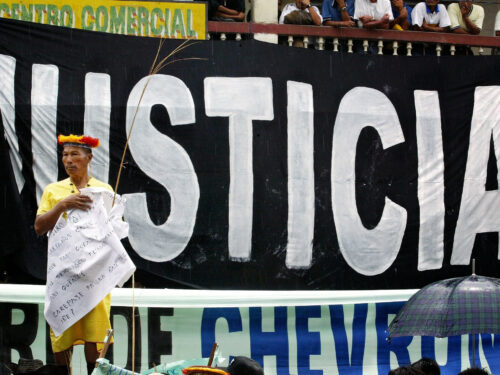
Not to mention, of course, Chevron's abominable track record in Ecuador, which has made the company a global pariah. Lots more background information on the company's global record is available at our True Cost of Chevron report.
Colombia's Road to Extinction
Current Threats Facing Colombian Indigenous Peoples
May 9, 2012 | Lily Bryan, Amazon Watch DC Advocacy Intern
Though Colombia endorsed the UN Declaration on the Rights of Indigenous Peoples in 2009, the government has taken little action that shows "[concern] that indigenous peoples have suffered from historic injustices as a result of, inter alia, their colonization and dispossession of their lands, territories and resources, thus preventing them from exercising, in particular, their right to development in accordance with their own needs and interests."
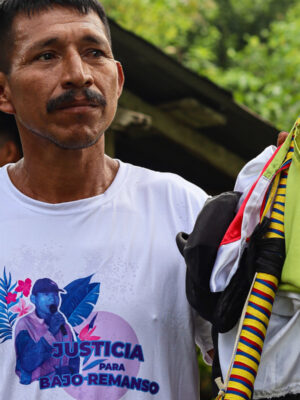
Instead, indigenous groups in Colombia continue to face unjust violence, colonization, dispossession of lands, displacement due to armed conflict and climate change, stunted recovery and development due to ethnic discrimination, forced assimilation, and cultural degradation. Yet unlike the conquistadors that threatened indigenous peoples centuries ago, today's antagonists wear the masks of extractive industries, guerrilla soldiers, paramilitaries, and poorly-functioning government assistance programs.
Violence appears to be omnipresent in Colombia. For several decades guerrilla armies and paramilitaries have engaged in an ever-evolving conflict of arms, each guerrilla attack countered by an even deadlier military attack. And when President Santos took office earlier this year, he made it clear that he would maintain an armed offensive against "drug-running insurgents."
Talisman's Very Bad Day
May 4, 2012 | Robert Collier
John Manzoni's mouth was frozen in an outraged pout, as if he were undergoing some unspeakably undignified surgery. He waved his gold-rimmed glasses slowly in the air, hovered just above the tabletop. For the CEO of Talisman Energy, his meeting with the face-painted Achuar leaders was not going well at all.
Manzoni and other Talisman executives were meeting in their Calgary headquarters this week with a delegation of Achuar leaders who were partway through a 17-day journey across Canada.
Manzoni was doing his best to sell the company's PR line about why it insisted on drilling for oil in ancestral Achuar territory.