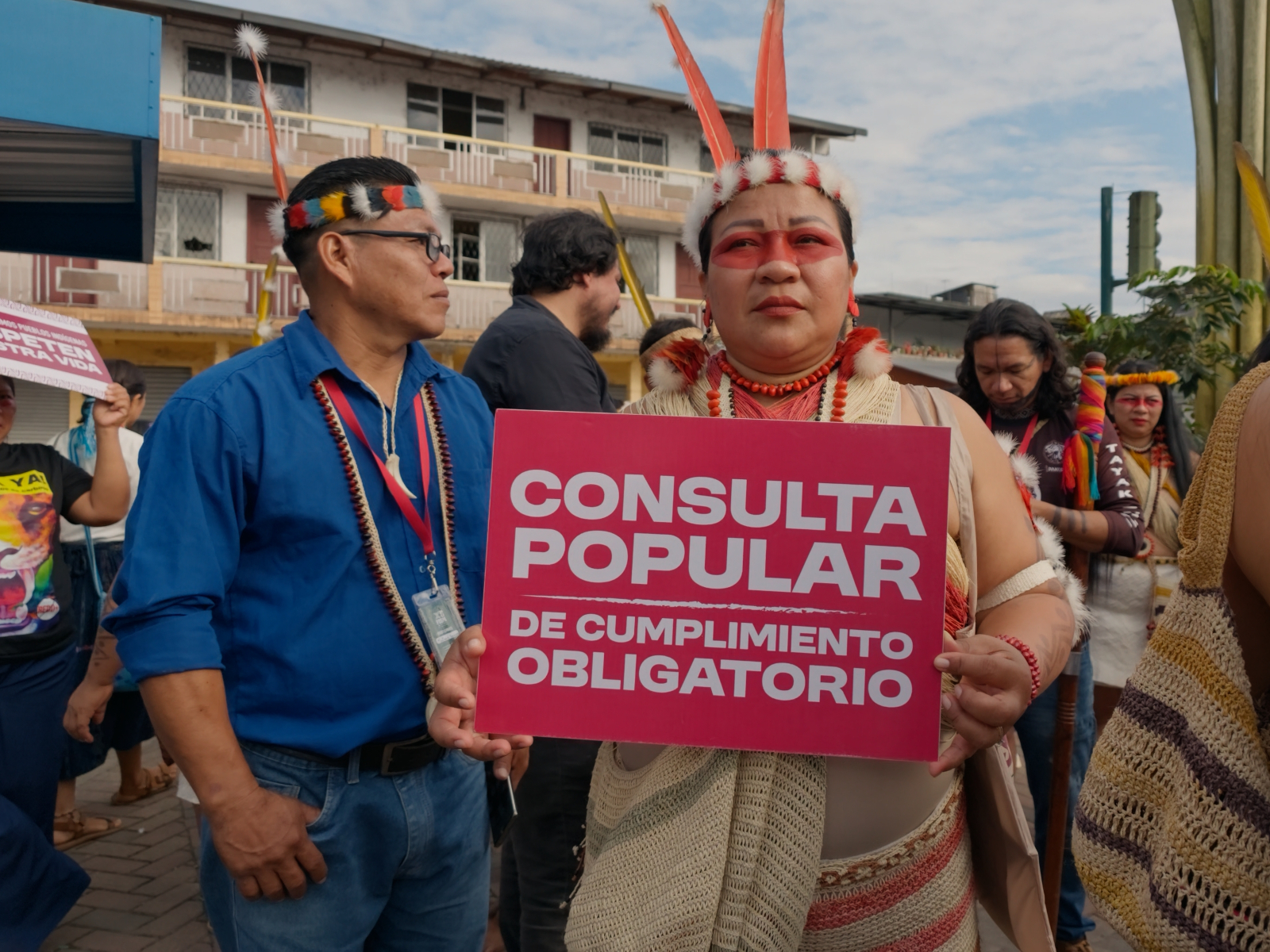
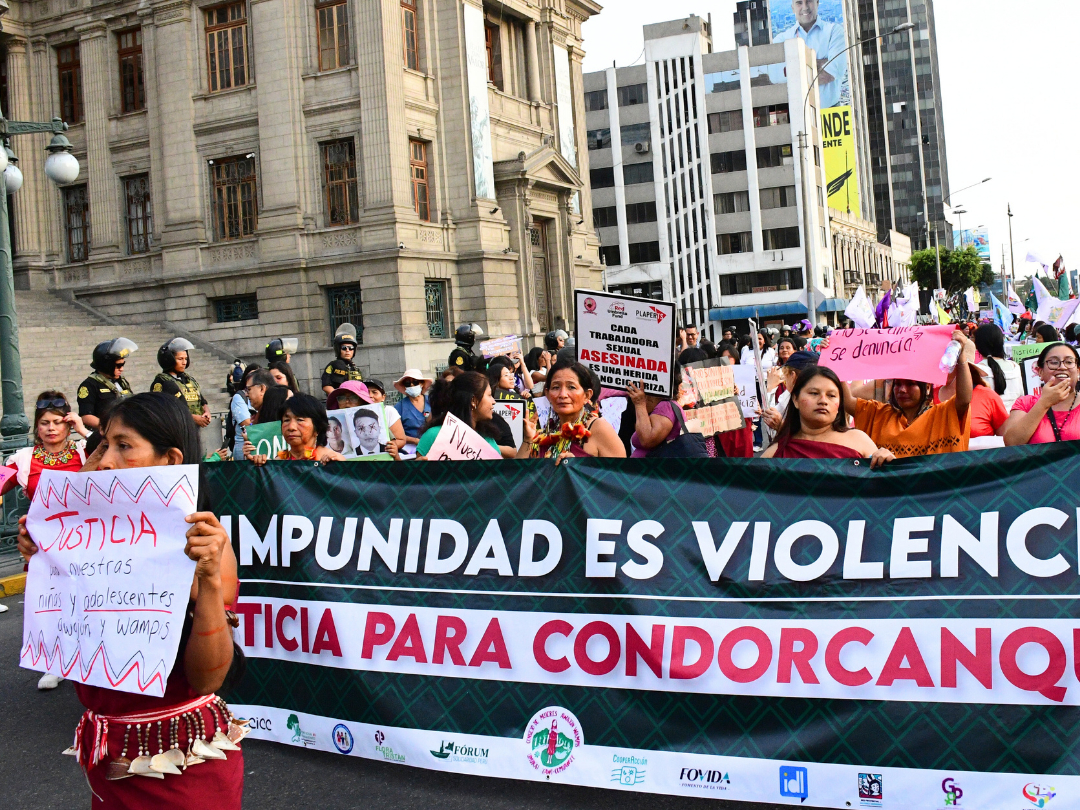
More than two years ago, courageous Awajún and Wampis survivors and women defenders broke the silence.
In 2024, the Awajún and Wampis Women’s Council (COMUAWUY) exposed more than 500 cases of sexual violence and abuse against Indigenous children in Condorcanqui, in Peru’s northern Amazon. The Peruvian state had failed to confront this crisis. The women forced it into the national spotlight and they haven’t stopped since.
Their sustained advocacy won specialized prosecutors’ offices, interpreters and itinerant services that bring justice closer to remote Awajún and Wampis communities. Earlier this year, when budget cuts threatened those gains earlier this year, they mobilized again and demanded that the services continue.
Experts from the Follow-up Mechanism to prevent gender based violence of the Organization of American States (OAS) recently traveled to Peru to assess the state’s response to violence against Indigenous girls and women in Condorcanqui. Following the visit, the mission presented preliminary recommendations to the Peruvian state.
Justice must reach the territory
COMUAWUY welcomed the OAS mission and the chance for survivors and defenders to be heard. But the Council is clear that progress isn’t measured by how many institutions are created or services announced. What really matters is whether they are implemented and work.
Access to justice must consider how long investigations take, whether protection measures are impactful, whether survivors receive culturally appropriate care and comprehensive reparations, and whether state institutions actually have the personnel and resources needed to reach remote communities.
When COMUAWUY first brought the crisis to national attention, more than 500 cases had already been documented and since then the number of reported cases has continued to rise.
COMUAWUY warns of a gap between the policies announced in Lima and the services that actually reach Indigenous communities. When staff turnover is high, survivors can be forced to recount their experiences again and again to new personnel. Limited logistics, too little transportation and underfunded operations keep state institutions from reaching communities spread across an enormous river territory.
Too often, Indigenous women step in to fill these gaps themselves. COMUAWUY’s 18 community defenders respond first, accompany survivors, and sometimes pay for rescues and transportation out of their own pockets. They do this while facing threats, with little protection from the state. With no state shelter available, COMUAWUY opened its own in 2025. Nuwa Tajimtaji, a multipurpose space in Nieva, offers survivors temporary refuge and has already welcomed 140 survivors and family members.
From recommendations to action
The OAS visit and its preliminary recommendations have brought renewed attention to Condorcanqui. The timing is especially important. As Peru makes decisions about its 2027 public budget, the coming months represent a window of opportunity to secure the resources needed to maintain protection, care, and justice services in Condorcanqui.
Amazon Watch is working in solidarity with COMUAWUY to amplify its demands and help turn the attention generated by the OAS visit into action. This builds on our ongoing support for the Council’s advocacy and mobilization and our work to bring the voices of Awajún and Wampis women into national and international debates on protecting Indigenous women from gender based violence.
Stand with Awajún and Wampis women
Amazon Watch and COMUAWUY are collectively launching a call to action asking people in Peru and around the world to send a message to the Peruvian government in support of three urgent demands from the women of Condorcanqui:
Send a high-level government commission to Condorcanqui, led by Peru’s Ministers of Women and Vulnerable Populations and Development and Social Inclusion, to meet directly with Indigenous women, survivors, and defenders, and establish concrete commitments and timelines.
Build and operate a state-run temporary shelter in Santa María de Nieva, so survivors and their families can access protection in their own territory. Establishing such a shelter is one of COMUAWUY’s explicit recommendations to the state.
And secure dedicated and sustainable funding in Peru’s 2027 public budget for the professionals providing protection, care, and access to justice in Condorcanqui. COMUAWUY has identified staff turnover and insufficient resources as major barriers to effective services.