
Eye on the Amazon: The Official Blog of Amazon Watch
Talisman's Very Bad Day
May 4, 2012 | Robert Collier
John Manzoni's mouth was frozen in an outraged pout, as if he were undergoing some unspeakably undignified surgery. He waved his gold-rimmed glasses slowly in the air, hovered just above the tabletop. For the CEO of Talisman Energy, his meeting with the face-painted Achuar leaders was not going well at all.
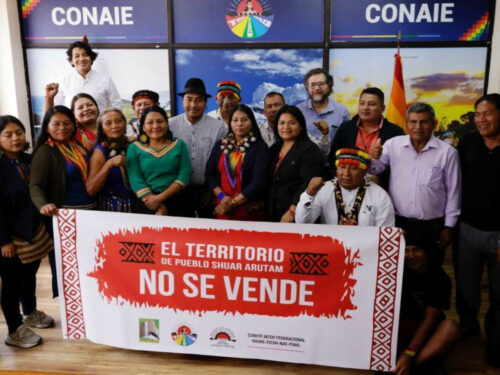
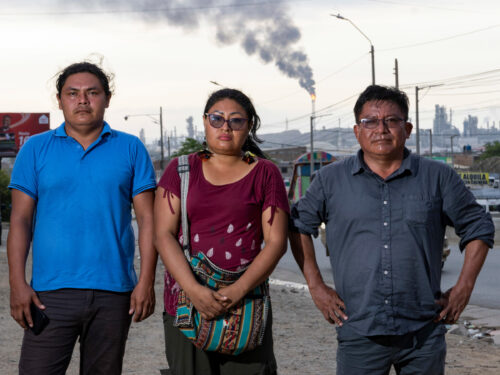
Manzoni and other Talisman executives were meeting in their Calgary headquarters this week with a delegation of Achuar leaders who were partway through a 17-day journey across Canada.
Manzoni was doing his best to sell the company's PR line about why it insisted on drilling for oil in ancestral Achuar territory.
This Used to Be Forest
April 30, 2012 | Caroline Bennett
From the Amazon to Oil Sands
Achuar indigenous leaders visit First Nations in the Athabasca Tar Sands region, Alberta, Canada
Images by Caroline Bennett
The Achuar people live on both sides of the Peru-Ecuador border in the Amazon rainforest. Since 2004, Calgary-based Talisman Energy has been drilling exploratory wells in a remote watershed in the heart of Achuar territory – an important hunting and fishing ground – despite strong opposition from the majority of Achuar people who live in Oil Block 64, which overlaps the majority of Achuar territory in Peru. Talisman is accused of creating divisions and provoking conflict in the region in efforts to get sign-off on their drilling in local communities, and continues to ignore calls from Achuar leadership to leave Achuar territory.
The delegation is in Canada to demand that Talisman Energy cease oil drilling in their ancestral territory. The group recently visited Ottawa, where they met with members of Parliament and NGO allies; and Fort McMurray, where they worked to build alliances with First Nations and raise awareness about Talisman's abuses against their rights.
Learn more and get involved:
Return of the Achuar to Turtle Island
April 27, 2012 | Andrew E. Miller
Be a part of this epic journey. Join the Cause!
At the outset of an international advocacy mission featuring Amazon Watch's indigenous partners, a million things can go wrong: Visas can be denied, flights can be missed, travelers can be detained by immigration officials, etc. So our team was relieved to see our Peruvian allies appear at the Ottawa airport's baggage claim. They emerged near an indoor waterfall, evoking the sacred waterfall featured in the new documentary Chumpi and the Waterfall. The Achuar had again returned to Turtle Island – as Canada is known by some of its First Peoples – to continue their struggle for self-determination within their Amazonian homeland.
The warm welcome among friends soon collided with the harsh reality of Ottawa's frigid climate. Just outside the airport doors awaited a first taste of the inhospitable and alien environment that the Achuar would have to endure.
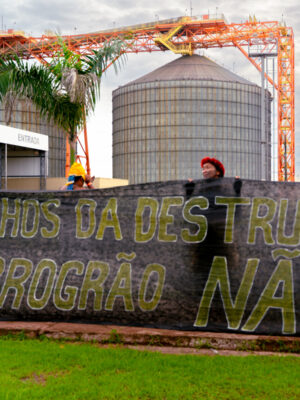
President Dilma: Veto This Forest Code Hatchet Job!
April 26, 2012
Take Action Now!
Brazilian President Dilma can save the Amazon from destruction. Tell her to veto the new Forest Code!
Following years of intense pressure from the agribusiness sector, Brazil's parliament yesterday afternoon approved sweeping reforms to the country's forest protection law that spell destruction for the Amazon rainforest.
President's veto power
President Dilma has 14 days to veto this hatchet job before it becomes the law. All eyes are on her now. It is unbelievable that the forest code is being eroded weeks before Brazil hosts the Earth Summit in Rio.
Driving the Company Off an $18 Billion Cliff
Ecuadoreans In Europe Highlight Chevron Management’s Misguided Litigation Strategy
April 19, 2012 | Mitch Anderson
Ecuadorean indigenous leaders Humberto Piaguaje and Guillermo Grefa began a one week European tour today. They will be educating major institutional investors in Chevron Corporation, including prestigious funds such as the Church of England Investment Fund and the Central Finance Board of the Methodist Church, about the oil giant's grim environmental and human rights legacy in the Amazon. The fact that European investors are concerned about the American oil company's growing multi-billion liability over its Amazon disaster comes as no surprise.
Chevron was found guilty for environmental crimes in Ecuador in February of 2011 and fined upwards of $18 billion. Since that historic decision, Chevron's litigation prospects in the long-running environmental trial have dimmed considerably.
On January 3, 2012, an Ecuadorean appeals court confirmed the $18 billion verdict against Chevron, and two months later, on March 12th, an appellate court declared that the judgment is final and enforceable. Chevron has appealed the ruling to the National Court of Justice in the Andean capital city of Quito, but simultaneously refused to post a bond that would be required to stop enforceability of the verdict. In sum, after 19 years of litigation, the plaintiffs (more than 30,000 indigenous peoples and campesinos of Ecuador) have won an internationally valid judgement that can be enforced in Ecuador or any other country across the globe.