

Eye on the Amazon: The Official Blog of Amazon Watch
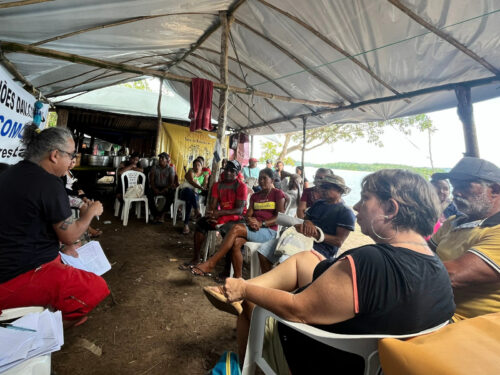
Voices of the Xingu: Interview with Maini Militão
March 28, 2013 | Sarah Freeman
Notes from the Amazon Watch Brazil field team, currently in Altamira.
Follow their journey directly here.
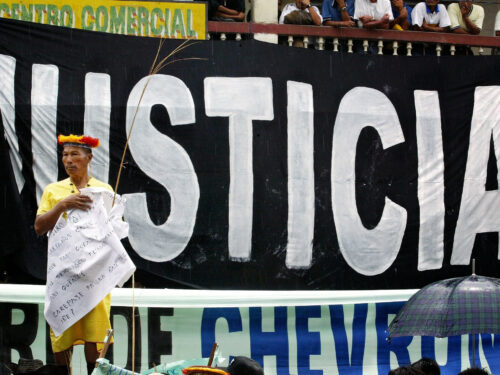
Justice Now!
Join the worldwide chorus calling for justice by urging Brazil's Supreme Court to rule on lawsuits against the Belo Monte Dam!
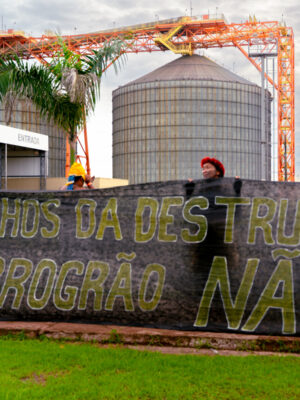
This 17-year-old girl with long hair, exuberant and full of energy, did not try to hide her anger about what happened to her family. She told me that she was now dedicating her time to studies and fighting against the Belo Monte dam.
Peruvian Government Declares State of Environmental Emergency in Pastaza Region
March 27, 2013 | Stefan Kistler
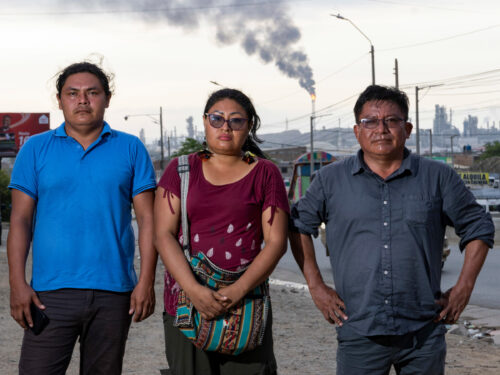
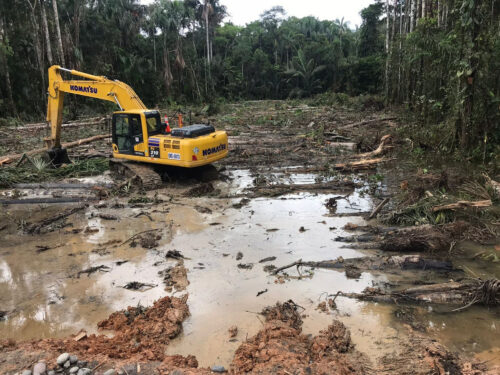
On Sunday, Panorama, a primetime Peruvian news program, aired a short documentary on the contamination in the Pastaza Basin caused by Pluspetrol Norte S.A. – Argentinian oil giant and the largest producer of oil in the Peruvian Amazon. Pluspetrol operates the oil concession 192 (former 1AB) and 8, affecting the four river basins Pastaza, Corrientes, Tigre, and the Marañon, in the northern Peruvian Amazon region of Loreto.
Although the images reported in the documentary were shocking, they are not new. The indigenous federations in the affected areas, and its allies, have long been monitoring and broadcasting to the world pictures of crude oil spills, contaminated soils, rivers, and entire lagoons which have been made to disappear by PlusPetrol to cover up contamination. Yet, the testimonies of the Quechua, Achuar, Kukama, Candoshi, among other indigenous groups, have long gone unheard in over forty years of oil exploitation in their territories.
An unexpected announcement then followed the report by Panorama, when they invited the Peruvian Minister of the Environment, Manuel Pulgar-Vidal, to do an interview. Pulgar-Vidal pronounced on the television program that a state of environmental emergency would be officially declared in the Pastaza the following day. Moreover, he stated that the Peruvian government would release a new law on environmental quality standards for soils, something which environmental groups in Peru have been demanding for over a decade.
The two pieces of legislation were officially released on March 25th, and beginning yesterday the environmental state of emergency in the Pastaza is now in place. It orders the government to take immediate action to "reduce the risk on the health and the environment in the zones affected by human activities in the Pastaza River Basin."
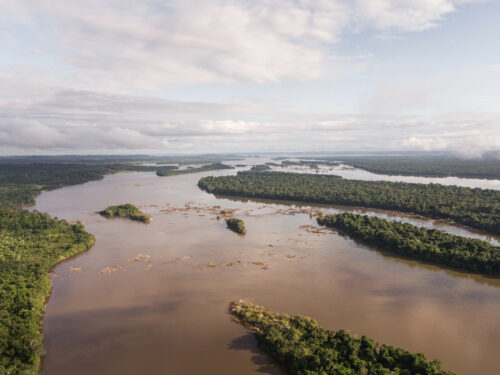
"Volta Grande do Xingu"
A poem by Luciano Gouveia de Moraes Silva, age 13
March 22, 2013 | Caroline Bennett
Take Action Now!
Please consider donating to help us keep the pressure on this devastating project. Your support puts staff on the ground in Brazil, provides legal support for Amazon Watch and our allies, and so much more.
"Caro, can I read you a poem I wrote about the river?"
"Claro (of course)!" I whispered. "Can I record it so that maybe someday all the world can know the magic secrets of the Xingu?"
Bringing the Fight over Bolivia's TIPNIS Road to Washington, DC
Bolivian indigenous leaders denounce human rights violations in Isiboro-Sécure case in Washington
March 22, 2013 | Carwil Bjork-James
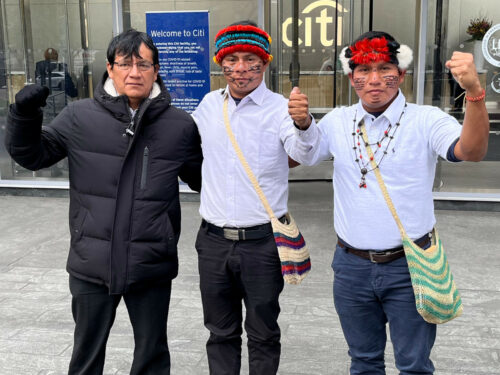
Subcentral TIPNIS leader Fernando Vargas Mosua and Adolfo Chávez, president of the Confederation of Indigenous Peoples of Bolivia (CIDOB), addressed the Inter-American Commission on Human Rights (IACHR) on Friday, March 15. The hour-long hearing was the culmination of a weeklong trip aimed at putting the Isiboro Sécure situation on the hemispheric human rights agenda. The visit came in the third year of high-profile campaign to prevent the Bolivian government from building a highway through the Isiboro-Sécure National Park and Indigenous Territory (TIPNIS).
Since their march to La Paz in 2011, residents of TIPNIS have experienced restricted freedom of movement. Military detachments, variously labeled an "environmental brigade," an anti-narcotics measure, and part of "integrating the territory under state control," restrict access and have hampered the activities of external organizations. Boat fuel, the essential ingredient of mobility on the rivers, has been tightly regulated as a "narcotics precursor." Meanwhile the Bolivian government backed its own parallel leadership for CIDOB and assisted in evicting Adolfo Chávez and the rest of its elected officers from their headquarters in Santa Cruz. Domestic and Amazon Basin-wide indigenous organizations continue to recognize his leadership.
At the headquarters of the Organization of American States, the indigenous representatives offered a wide-ranging presentation concerning all of the events since the inauguration of the Villa Tunari–San Ignacio de Moxos highway project. Adolfo Chávez introduced his compatriot and to ask that indigenous and individual rights be protected by the IACHR. Fernando Vargas described the territory and the project and presented the struggle of his people as a defense of the territory, of their rights, and the natural environment. "We cannot be accomplices," he said, "to the destruction of the environment and global warming."
Water Rising…
March 19, 2013 | Maíra Irigaray

Notes from the Amazon Watch Brazil field team, currently in Altamira.
Follow their journey directly here.
Justice Now!
Join the worldwide chorus calling for justice by urging Brazil's Supreme Court to rule on lawsuits against the Belo Monte Dam!